Letter Speaking Engagement With Client In Nevada
Description
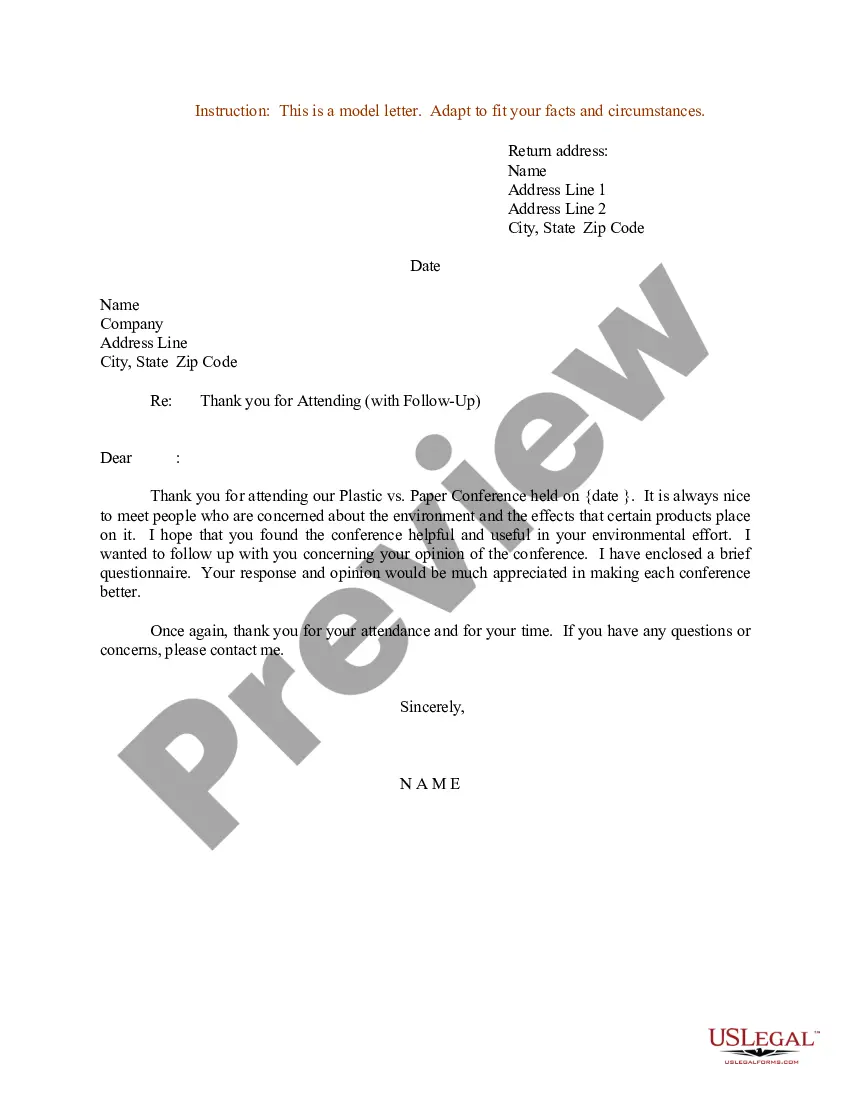
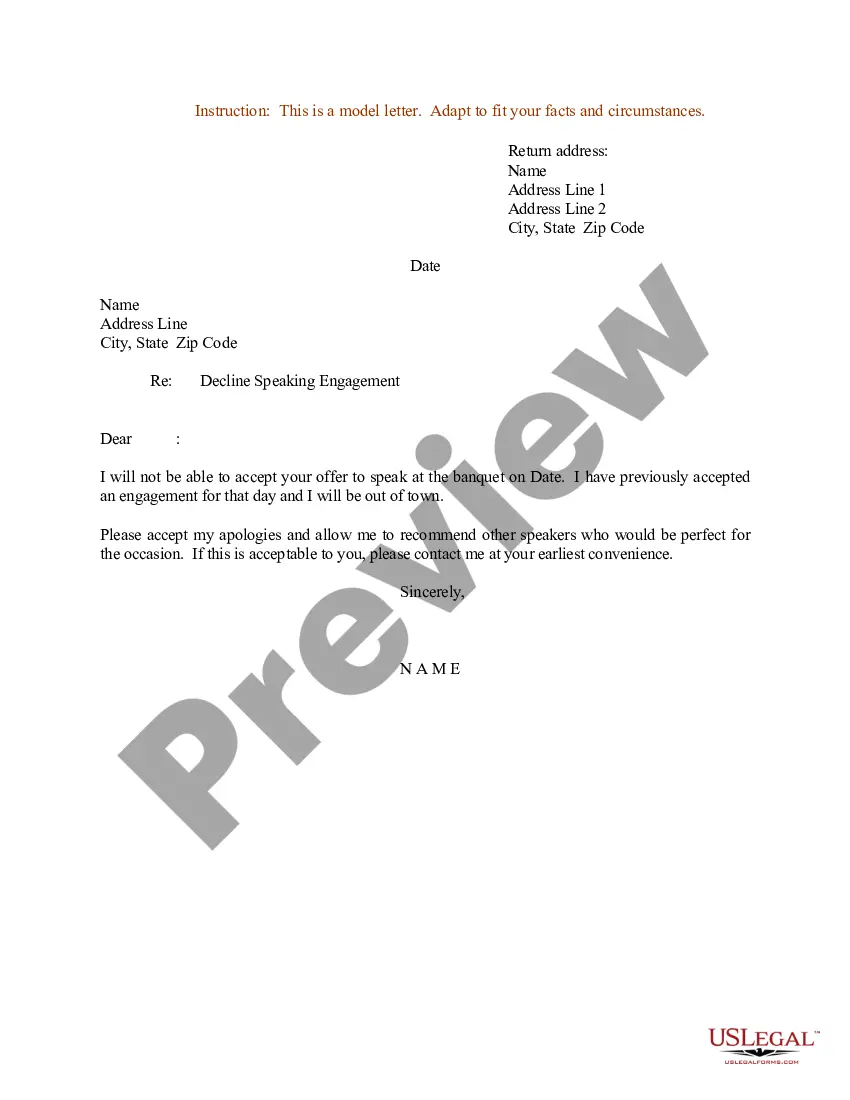
Get your form ready online
Our built-in tools help you complete, sign, share, and store your documents in one place.
Make edits, fill in missing information, and update formatting in US Legal Forms—just like you would in MS Word.
Download a copy, print it, send it by email, or mail it via USPS—whatever works best for your next step.
Sign and collect signatures with our SignNow integration. Send to multiple recipients, set reminders, and more. Go Premium to unlock E-Sign.
If this form requires notarization, complete it online through a secure video call—no need to meet a notary in person or wait for an appointment.
We protect your documents and personal data by following strict security and privacy standards.

Make edits, fill in missing information, and update formatting in US Legal Forms—just like you would in MS Word.

Download a copy, print it, send it by email, or mail it via USPS—whatever works best for your next step.

Sign and collect signatures with our SignNow integration. Send to multiple recipients, set reminders, and more. Go Premium to unlock E-Sign.

If this form requires notarization, complete it online through a secure video call—no need to meet a notary in person or wait for an appointment.

We protect your documents and personal data by following strict security and privacy standards.
Looking for another form?




Form popularity
FAQ
Yes, engagement letters are legally binding documents. They formalize the professional relationship between the accountant and the client, and can be used in a court of law if disputes arise.
An engagement letter is similar to a contract but generally shorter and less formal. However, it is equally binding to both parties.
The Notice includes the Engagement Letter as a potential executory contract that is subject to assumption and assignment by the Debtors.
Rule 1.10 - Imputation of Conflicts of Interest (a) While lawyers are associated in a firm, none of them shall knowingly represent a client when any one of them practicing alone would be prohibited from doing so by Rules 1.7, 1.9, or 2.2, unless the prohibition is based on a personal interest of the prohibited lawyer ...
Engaged is when you promise to get married. It's not legally binding, its just a personal promise to get married. Only being married is being married, and is legally binding. You don't just get engaged as a way to be together... being engaged is a promise that you're going to get married.
Engagement letters are typically created and signed at the beginning of a client relationship, though they may be reviewed, updated, and signed at a regular interval (often annually) for long-term relationships. New engagement letters may also be created for an existing client if the scope of work changes.
An engagement letter is less formal than a contract, but still a legally binding document that can be used in a court of law. 1. An engagement letter also serves to limit the scope of the company's services.
1. As noted above, a retainer agreement is a letter of engagement countersigned by both the attorney and the client, and contains all the elements that letters of engagement must contain.
Nevada Rule of Professional Conduct 1.7: (a) Except as provided in paragraph (b), a lawyer shall not represent a client if the representation involves a concurrent conflict of interest.
Rule 3.7 - Lawyer as Witness (a) A lawyer shall not act as advocate at a trial in which the lawyer is likely to be a necessary witness unless: (1) The testimony relates to an uncontested issue; (2) The testimony relates to the nature and value of legal services rendered in the case; or (3) Disqualification of the ...

