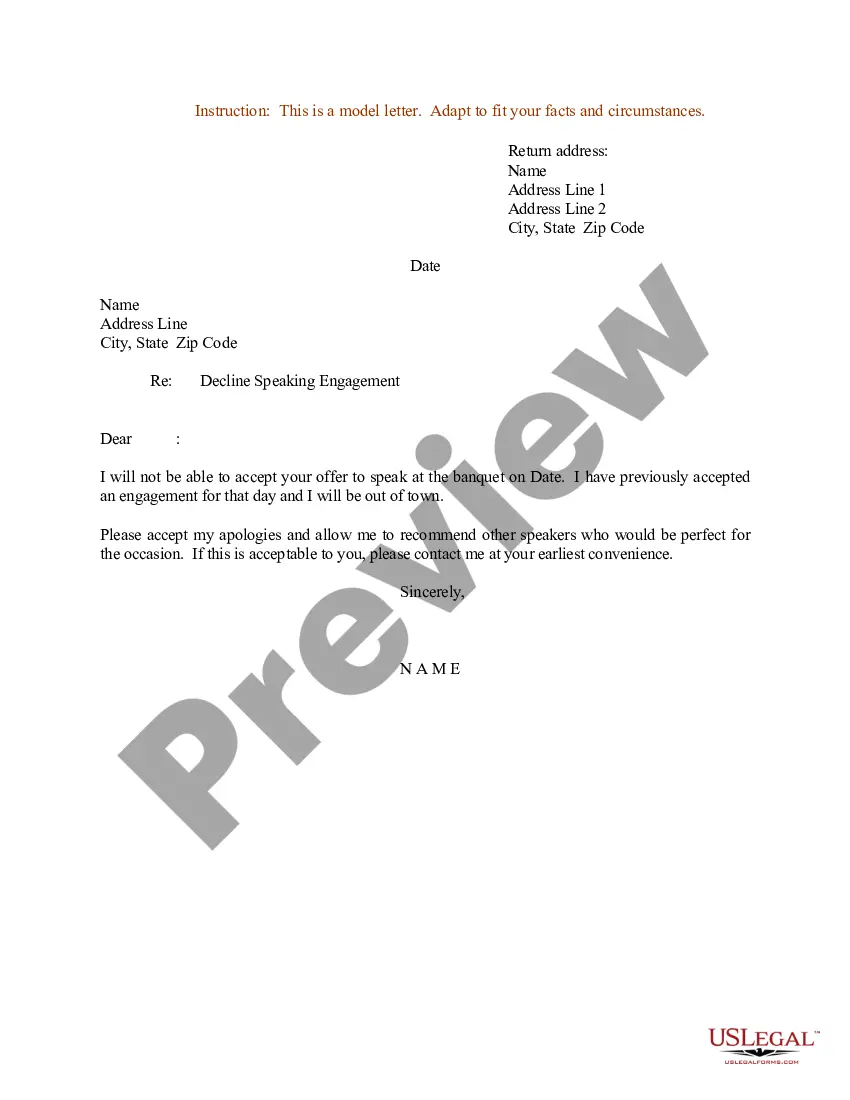
Letter Speaking Engagement Format In Kings
Description
Get your form ready online
Our built-in tools help you complete, sign, share, and store your documents in one place.
Make edits, fill in missing information, and update formatting in US Legal Forms—just like you would in MS Word.
Download a copy, print it, send it by email, or mail it via USPS—whatever works best for your next step.
Sign and collect signatures with our SignNow integration. Send to multiple recipients, set reminders, and more. Go Premium to unlock E-Sign.
If this form requires notarization, complete it online through a secure video call—no need to meet a notary in person or wait for an appointment.
We protect your documents and personal data by following strict security and privacy standards.

Make edits, fill in missing information, and update formatting in US Legal Forms—just like you would in MS Word.

Download a copy, print it, send it by email, or mail it via USPS—whatever works best for your next step.

Sign and collect signatures with our SignNow integration. Send to multiple recipients, set reminders, and more. Go Premium to unlock E-Sign.

If this form requires notarization, complete it online through a secure video call—no need to meet a notary in person or wait for an appointment.

We protect your documents and personal data by following strict security and privacy standards.
Looking for another form?



Form popularity
FAQ
Write a letter instead. Make your written request concise and clear. Specify the date first (it may be impossible, whatever comes next). Then describe the audience, purpose, topic, and what a tremendous difference you hope that speech will make in the world.
Reach Out to Contacts: Inform colleagues, friends, and professional contacts that you are available for speaking engagements. Ask for Referrals: Encourage your network to recommend you to event organizers. Create a Compelling Pitch: Outline your speaking topics, what attendees will learn, and your unique perspective.
How to get speaking engagements Get clear on why you want to speak. Listen to a lot of talks from speakers that you admire. Come up with 3-5 talk ideas. Prepare an outline for each talk idea. Build your event list. Slide into event organizers' DMs. Email your pitch. Turn your outline into a speaker proposal.
Basic components of a speaker invitation The name, date, and venue of the event. The theme or focus of the event. Why you think they would be a great speaker for your event. Why it would benefit them. How they can contact you.
Tips for a Good Speaker Engagement Proposal Understand the Audience and Theme. Make an Impact on the First Page. Clear and Engaging Title. Define Learning Objectives. Detailed Session Description. Highlight Relevance and Timeliness. Demonstrate Expertise. Keep your Contract and Proposal Separate.
Core Components of a Speaker Invitation: The name, date(s), and venue of the event. The topic, theme or focus of the event. Reasons why they would be an ideal speaker for your event. Why it would benefit them. How they can contact you.
Craft your narrative to resonate with the event's theme and audience. Speak their language, address their concerns, and watch the invitation roll in. 3. Leverage Your Network: Networking isn't just a buzzword; it's your backstage pass.
The best way to obtain a speaking slot is simply to reach out to the conference organizers and ask. Most conference websites have an enquiry form or contact form, and that's a good place to start. Reach out to them, highlighting what value you could bring to the program and what your area of expertise is.
Talk to the host, or whoever issues the invitations. Be straightforward and respectful. Explain briefly why you want the invitation and ask nicely for one. Then walk away without belaboring the point. Don't insist or beg.
Reach Out to Contacts: Inform colleagues, friends, and professional contacts that you are available for speaking engagements. Ask for Referrals: Encourage your network to recommend you to event organizers. Create a Compelling Pitch: Outline your speaking topics, what attendees will learn, and your unique perspective.

