Speaker Engagement Speaking With Silence In Georgia
Description
Get your form ready online
Our built-in tools help you complete, sign, share, and store your documents in one place.
Make edits, fill in missing information, and update formatting in US Legal Forms—just like you would in MS Word.
Download a copy, print it, send it by email, or mail it via USPS—whatever works best for your next step.
Sign and collect signatures with our SignNow integration. Send to multiple recipients, set reminders, and more. Go Premium to unlock E-Sign.
If this form requires notarization, complete it online through a secure video call—no need to meet a notary in person or wait for an appointment.
We protect your documents and personal data by following strict security and privacy standards.

Make edits, fill in missing information, and update formatting in US Legal Forms—just like you would in MS Word.

Download a copy, print it, send it by email, or mail it via USPS—whatever works best for your next step.

Sign and collect signatures with our SignNow integration. Send to multiple recipients, set reminders, and more. Go Premium to unlock E-Sign.

If this form requires notarization, complete it online through a secure video call—no need to meet a notary in person or wait for an appointment.

We protect your documents and personal data by following strict security and privacy standards.
Looking for another form?









Form popularity
FAQ
How to get speaking engagements Get clear on why you want to speak. Listen to a lot of talks from speakers that you admire. Come up with 3-5 talk ideas. Prepare an outline for each talk idea. Build your event list. Slide into event organizers' DMs. Email your pitch. Turn your outline into a speaker proposal.
Reach Out to Contacts: Inform colleagues, friends, and professional contacts that you are available for speaking engagements. Ask for Referrals: Encourage your network to recommend you to event organizers. Create a Compelling Pitch: Outline your speaking topics, what attendees will learn, and your unique perspective.
15 Tricks Of The Trade For Booking Speaking Gigs Search On LinkedIn. Describe How You Fit The Conference. Create A Portfolio. Look Outside Your Industry. Connect Before You Convert. Practice Online And Offline. Deliver Engaging Experiences. Start Small And Keep Going.
You can use silence to help you slow down and control the timing of your speech. Consider pausing after making the main point of a story or dropping a sobering statistic. Silence during these moments gives your listeners a chance to absorb what you've said and let it sink in.
Silence provides a tranquil space that promotes a sense of peace, tranquility, and mental clarity. 5. Improved Learning: Research suggests that excessive noise hinders learning, making silence essential for optimal information processing and knowledge retention.
Highlight the speaker's credentials and accomplishments to establish their credibility in the eyes of the audience. Share their relevant experience, expertise, and any notable achievements that are relevant to the topic of their presentation.
Silence should be used in a speech to emphasize key points, allow the audience to reflect on important information, create dramatic tension, and give the speaker a moment to gather their thoughts. It can also be used to control the pace of the speech and draw attention to the speaker.
You can use silence to help you slow down and control the timing of your speech. Consider pausing after making the main point of a story or dropping a sobering statistic. Silence during these moments gives your listeners a chance to absorb what you've said and let it sink in.
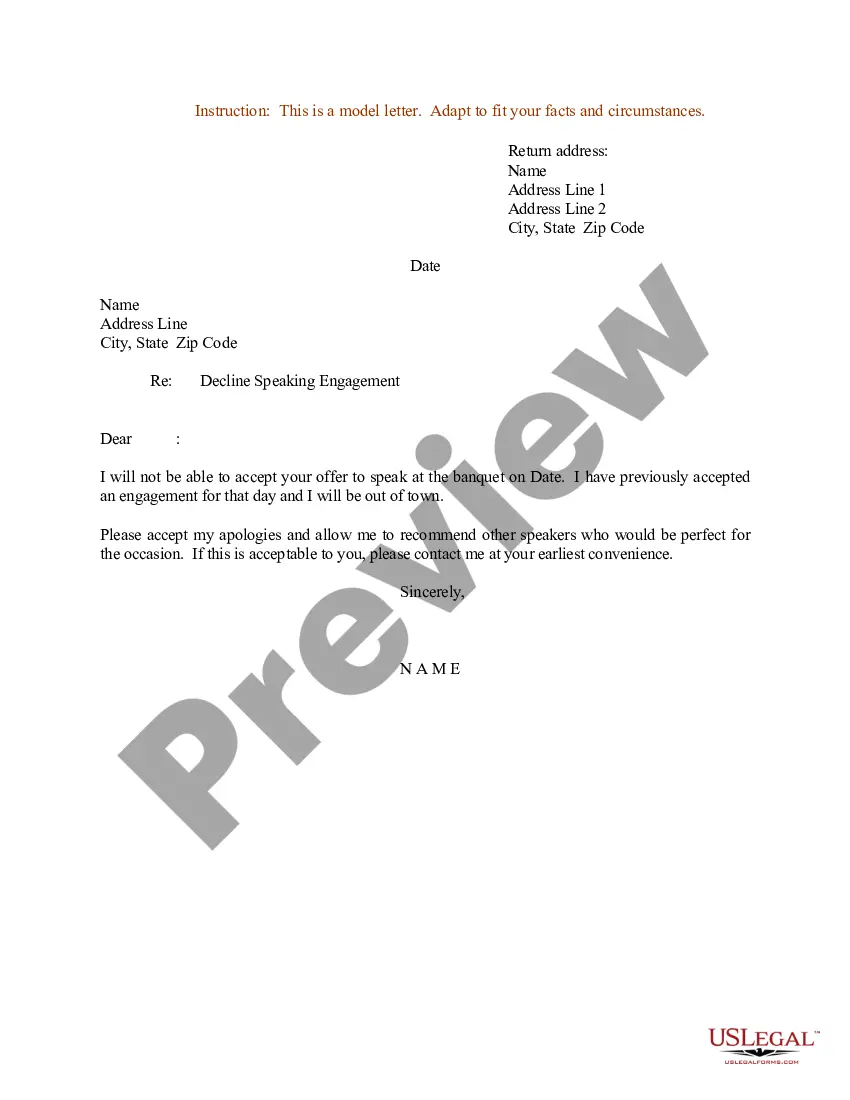
Provide a Clear, Honest Reason (If Appropriate) You don't always have to provide a reason for declining, but if you choose to do so, be honest yet diplomatic. For example, you might say the event does not align with your current focus areas or that prior commitments prevent your participation.
Silence allows you to: come across with poise and control. create more atmosphere. add variety and interest to your delivery. give your audience space to breathe too.

