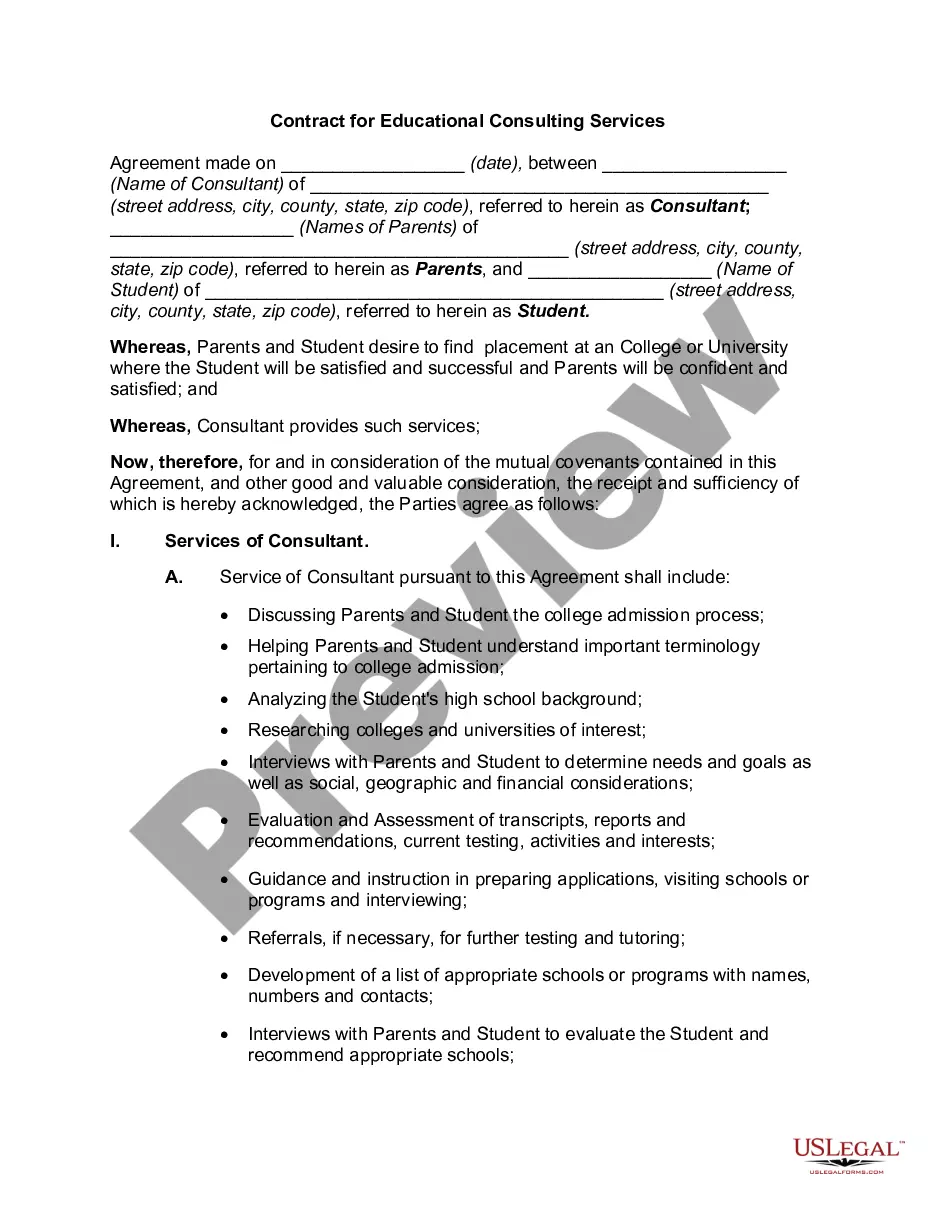
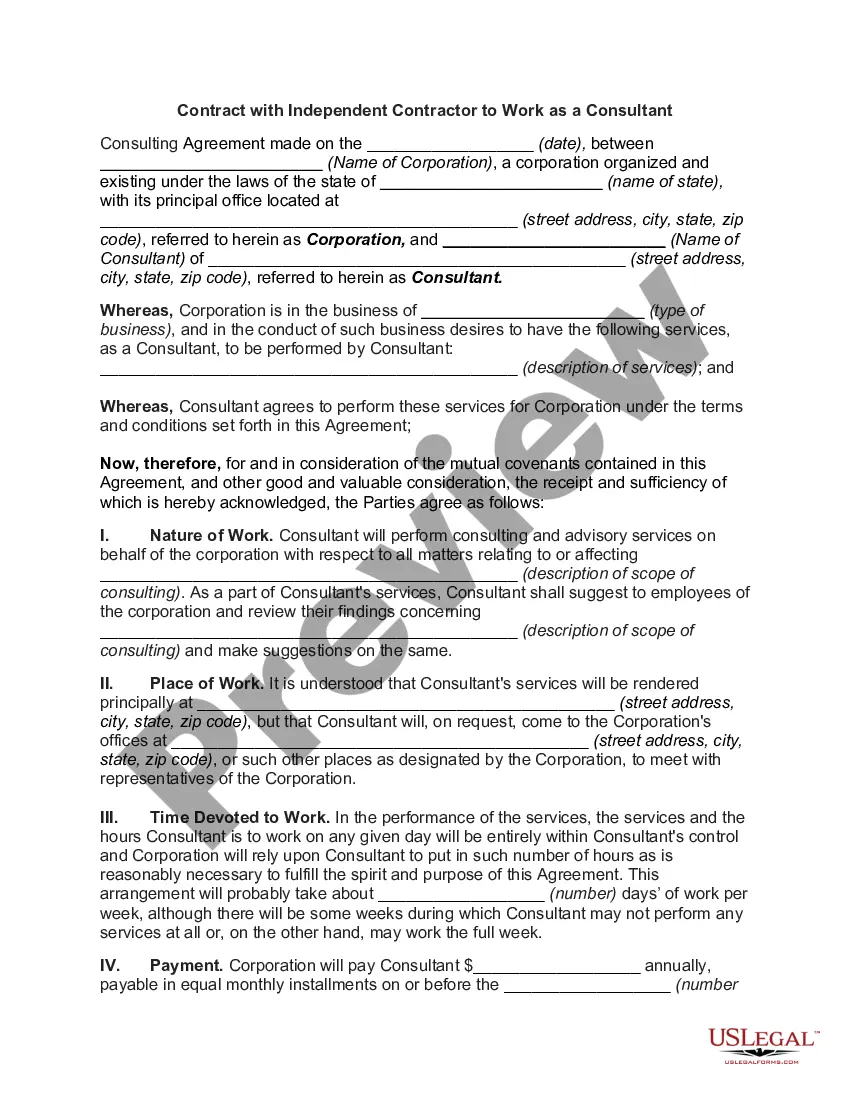
Consultant Work Contract For Construction In San Diego
Description

Get your form ready online
Our built-in tools help you complete, sign, share, and store your documents in one place.
Make edits, fill in missing information, and update formatting in US Legal Forms—just like you would in MS Word.
Download a copy, print it, send it by email, or mail it via USPS—whatever works best for your next step.
Sign and collect signatures with our SignNow integration. Send to multiple recipients, set reminders, and more. Go Premium to unlock E-Sign.
If this form requires notarization, complete it online through a secure video call—no need to meet a notary in person or wait for an appointment.
We protect your documents and personal data by following strict security and privacy standards.

Make edits, fill in missing information, and update formatting in US Legal Forms—just like you would in MS Word.

Download a copy, print it, send it by email, or mail it via USPS—whatever works best for your next step.

Sign and collect signatures with our SignNow integration. Send to multiple recipients, set reminders, and more. Go Premium to unlock E-Sign.

If this form requires notarization, complete it online through a secure video call—no need to meet a notary in person or wait for an appointment.

We protect your documents and personal data by following strict security and privacy standards.
Looking for another form?






Form popularity
FAQ
If your project has a well-defined scope of work, a lump sum contract is a straightforward solution since contractors should be able to accurately estimate costs. If the project scope is unclear, contractors can bid with time and materials contracts to mitigate risk.
10 Different Types of Contracts Type of ContractEveryday Use Implied Contracts Common in everyday transactions like dining out. Express Contracts Standard in formal business agreements. Simple Contracts Used for straightforward services or transactions. Unconscionable Contracts Often challenged in court for fairness.10 more rows •
The general contractor is responsible for delivering a fully functional and operational facility or plant. This means that the investor can focus on their core business activities while the EPC contractor handles all aspects of the project, from design to commissioning.
tier construction management consultant will carefully monitor a project's progress through each phase of construction. They will ensure that the various contractors involved in the project are doing their part to produce a quality structure that lives up to local building codes and your personal standards.
Coordinating with relevant stakeholders, both inside and outside the organization. Allocating tasks to the project management team and providing regular guidance to team members. Ensuring the scope and schedule of projects are achievable within the given time and budget.
Consultants help their clients achieve their business goals by providing expert advice in their field of proficiency. They work with their clients and advise them on matters such as business development , finance, marketing, sales, operations, customer service, accounting and financial planning, among others.
Consultants can help you with business strategy and business planning. They use experience throughout their consulting career, industry research and data, and their objectivity on your business to provide the best possible solutions to your business problems.
Key takeaways: The primary difference between a consultant and a contractor is that a consultant advises on an organization's needs and potential solutions, while a contractor executes tasks based on those requirements.
Construction consultants communicate complex construction concepts to their clients. They use their communication skills to discuss the needs and concerns of clients and explain the reasoning behind a decision. They may also communicate with suppliers either in person, over the phone or through email.
