Contract Consultant Contract With Services In San Bernardino
Description

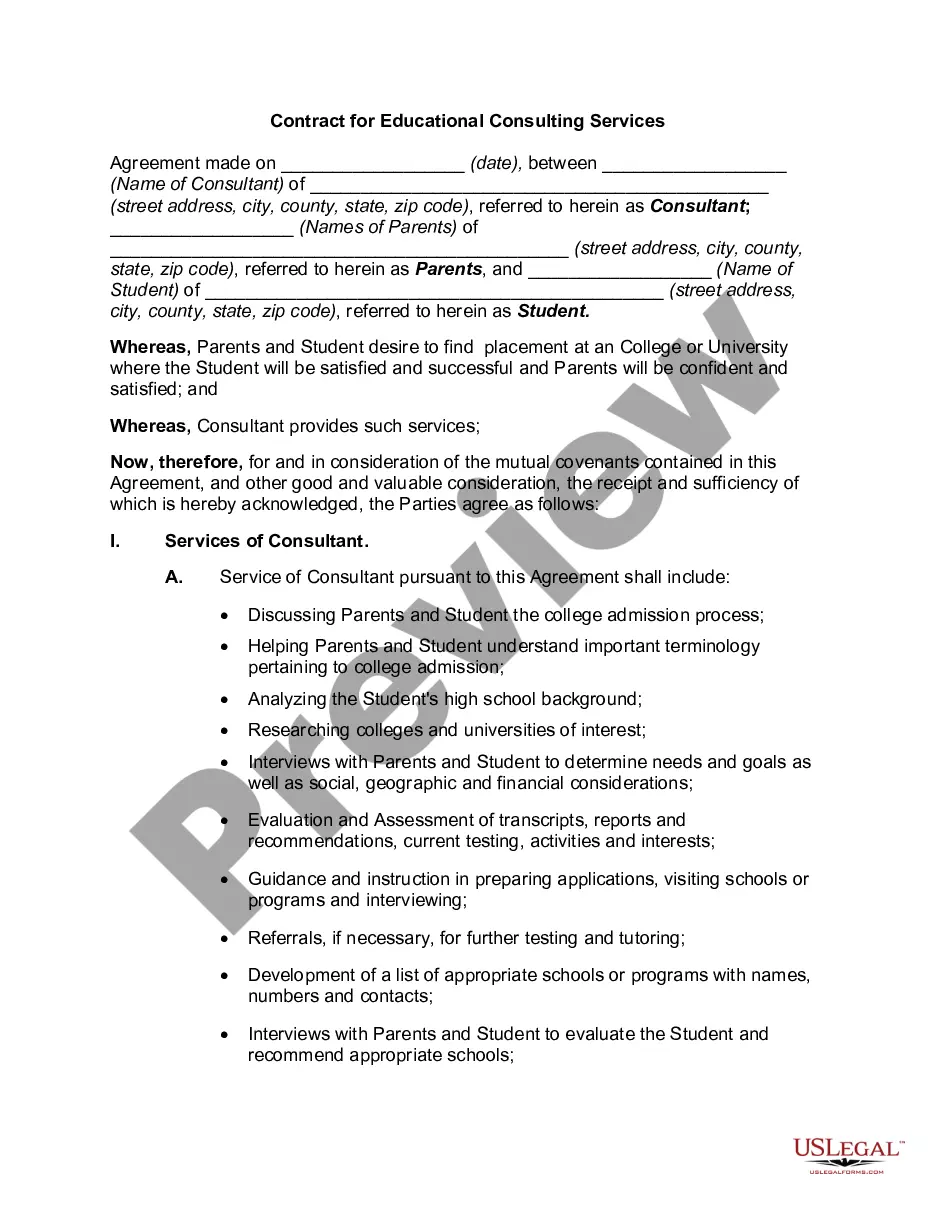
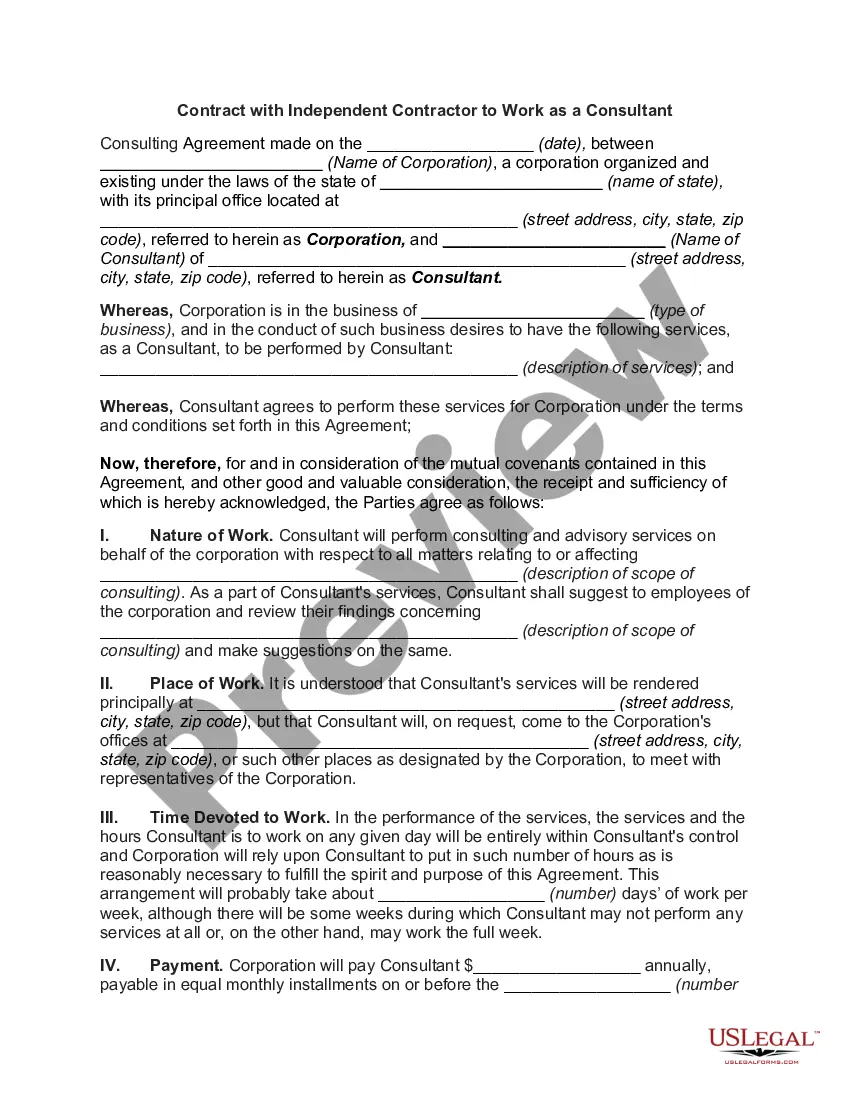
Get your form ready online
Our built-in tools help you complete, sign, share, and store your documents in one place.
Make edits, fill in missing information, and update formatting in US Legal Forms—just like you would in MS Word.
Download a copy, print it, send it by email, or mail it via USPS—whatever works best for your next step.
Sign and collect signatures with our SignNow integration. Send to multiple recipients, set reminders, and more. Go Premium to unlock E-Sign.
If this form requires notarization, complete it online through a secure video call—no need to meet a notary in person or wait for an appointment.
We protect your documents and personal data by following strict security and privacy standards.

Make edits, fill in missing information, and update formatting in US Legal Forms—just like you would in MS Word.

Download a copy, print it, send it by email, or mail it via USPS—whatever works best for your next step.

Sign and collect signatures with our SignNow integration. Send to multiple recipients, set reminders, and more. Go Premium to unlock E-Sign.

If this form requires notarization, complete it online through a secure video call—no need to meet a notary in person or wait for an appointment.

We protect your documents and personal data by following strict security and privacy standards.
Looking for another form?








Form popularity
FAQ
Basic Elements of Consulting Contracts Identify who is entering into the contract (name of companies/organizations). Identify who you/your company will be working with specifically. Detail clear payment schedules. Include clauses for how each party can end the contract. Provide a clear scope of work.
Consulting agreements spell out the exact terms of the agreement between the consultant and their client, specifying the type and quality of services the consultant will perform for the client, for how long they will perform these services, and how they will be compensated.
A consultancy agreement intended for use where a company wishes to engage a consultancy firm to provide services. This type of agreement may also be referred to as a services agreement or an independent contracting agreement.
Consulting Services means the provision of expertise or strategic advice that is presented for consideration and decision-making. A Non-consulting Service Provider is an individual or a company who contracts to provide services, other than consulting services to another individual or business.
A Master Services Agreement (“MSA”) is a client contract between a service or consulting business and that business's client or customer (referred to as “parties” in the agreement). The MSA should set out the terms of the work to be performed and the relationship between the parties.
The main difference is that a Service Agreement is for a specific service to be provided by a service provider. A Consultancy Agreement is for the provision of expert advice and guidance by a consultant.
Consulting Agreements detail the terms of specific engagements, ensuring that both parties are aligned on expectations, deliverables, and compensation. SOWs, on the other hand, provide granular detail on project tasks, timelines, and milestones, making them indispensable for project management and accountability.
Key elements of a professional services contract Scope of work. This is one of the most important sections. Timelines. Include the project start date, important milestones, and the final delivery deadline. Payment Terms. Clearly state how and when payments will be made. Confidentiality. Liability. Termination Clauses.
How to get your first clients as a consultant Create an effective online presence. Prepare your introduction pitch. Start with the people you know. Create partnerships. Use social media. Job postings. Offer valuable content. Cold pitching.
Getting hired by the consulting industry can be particularly challenging for several reasons: High Competition: The consulting field attracts a large number of applicants, including graduates from top universities and professionals with diverse backgrounds. This results in a highly competitive hiring process.
