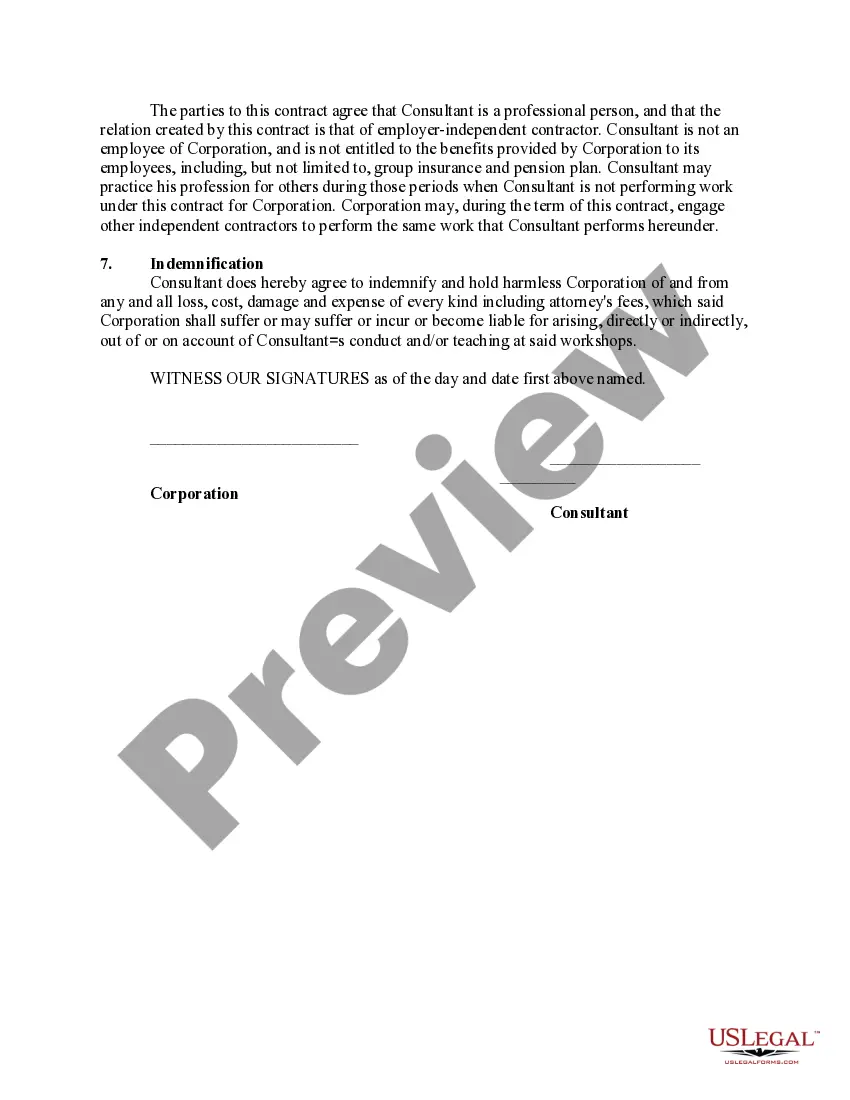
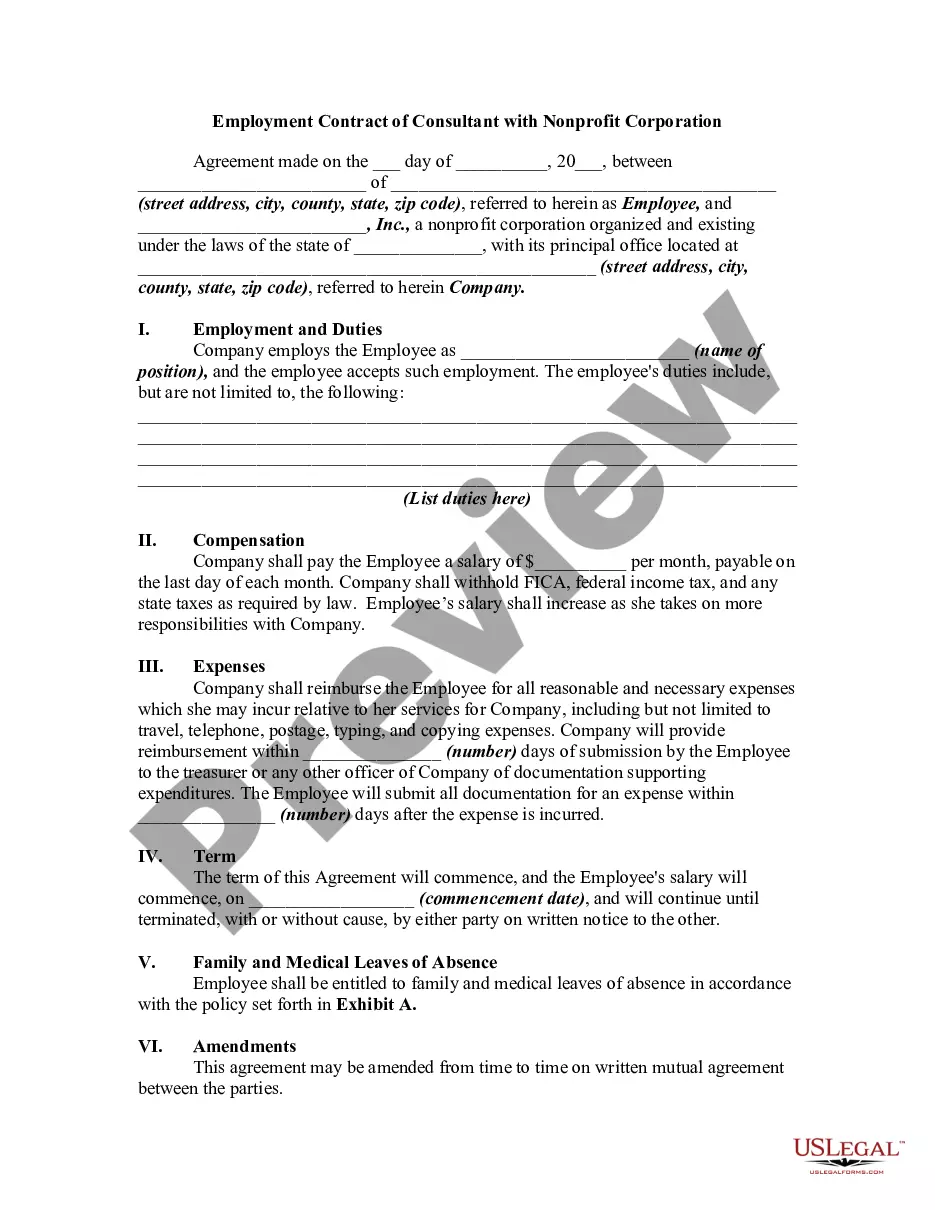
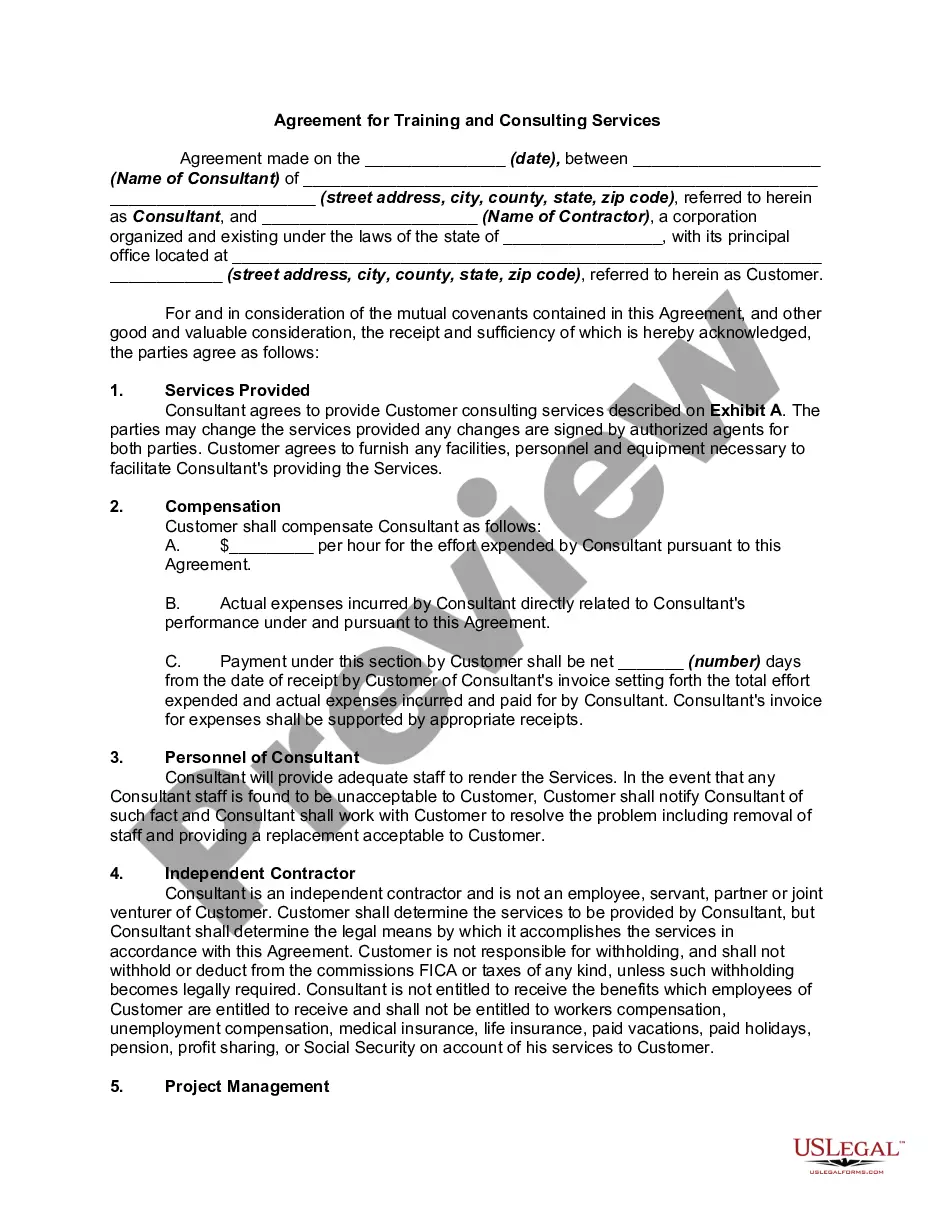
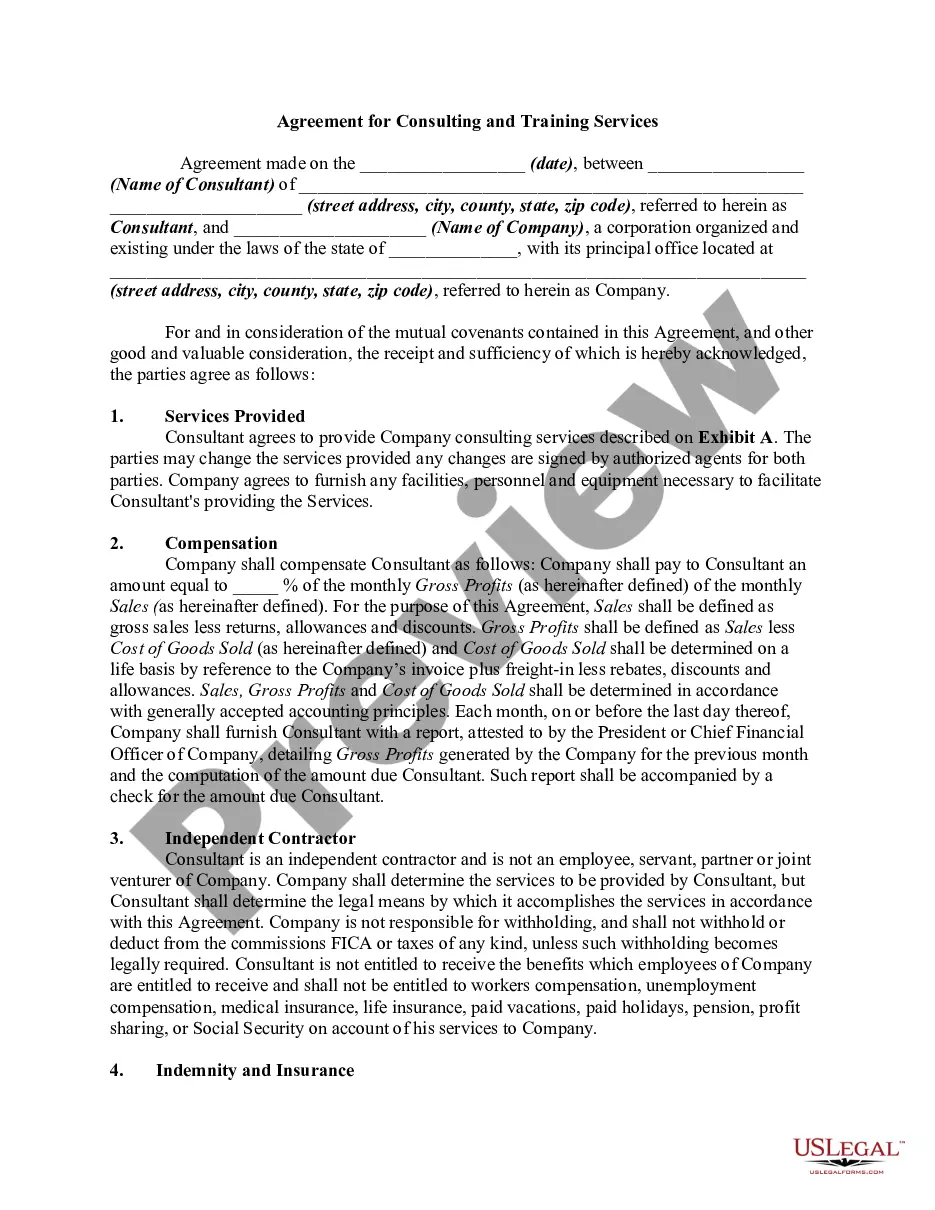
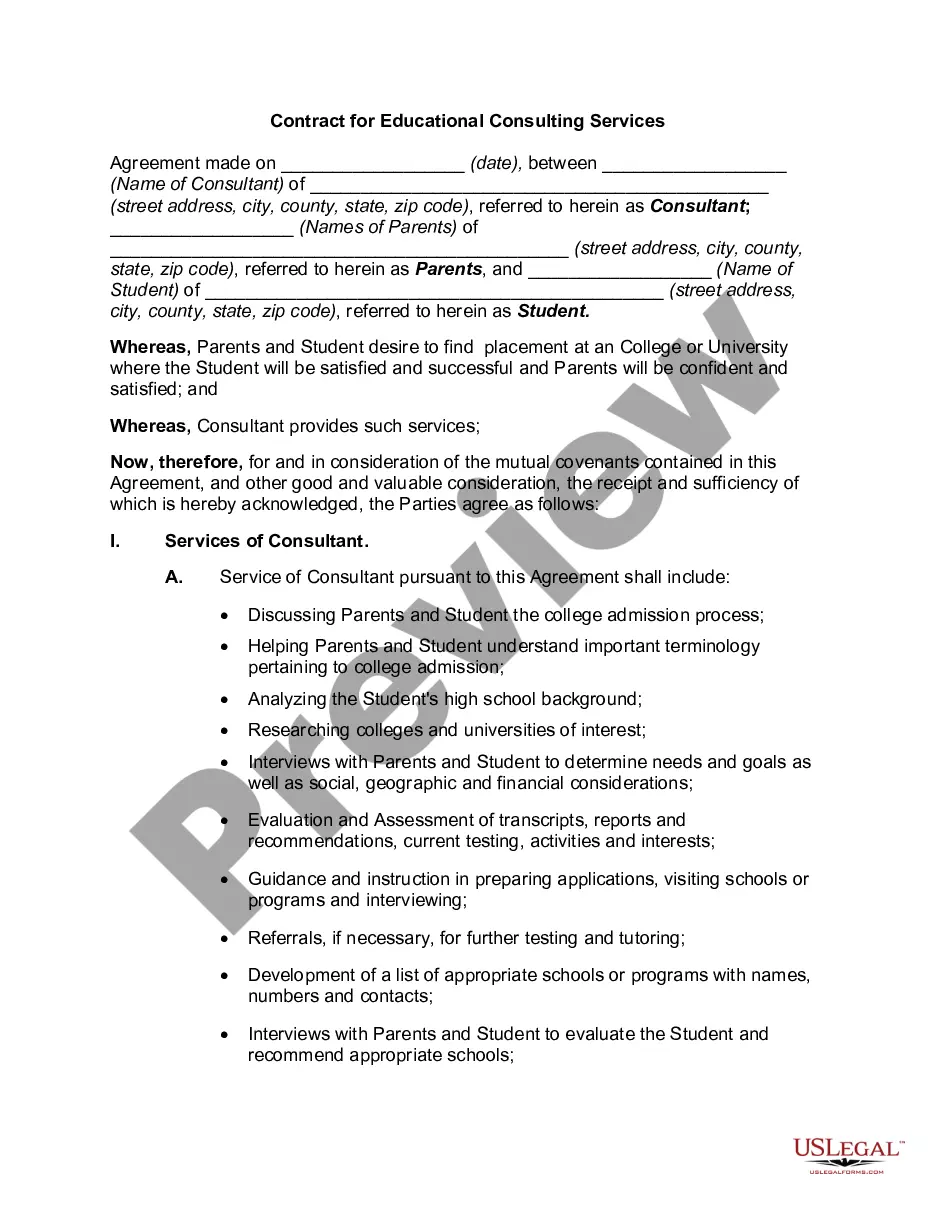
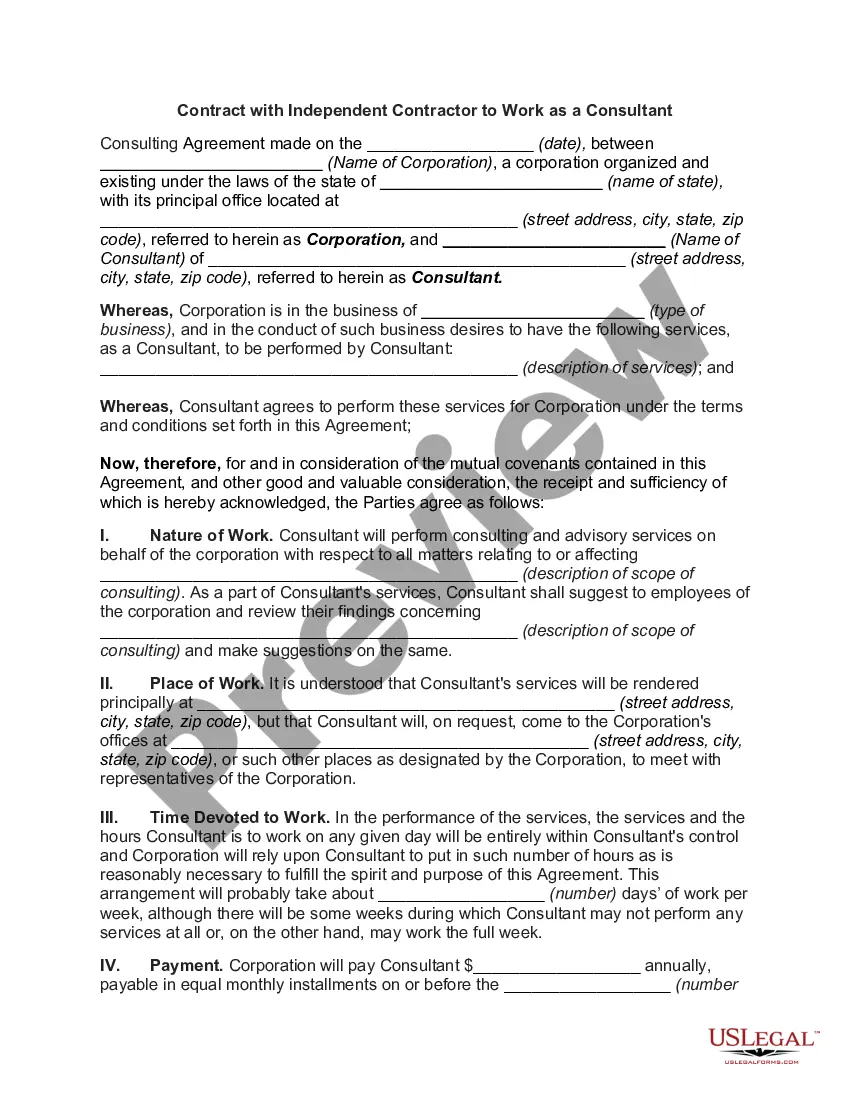
Consultant Work Contract For Taxes In Nassau
Description

Get your form ready online
Our built-in tools help you complete, sign, share, and store your documents in one place.
Make edits, fill in missing information, and update formatting in US Legal Forms—just like you would in MS Word.
Download a copy, print it, send it by email, or mail it via USPS—whatever works best for your next step.
Sign and collect signatures with our SignNow integration. Send to multiple recipients, set reminders, and more. Go Premium to unlock E-Sign.
If this form requires notarization, complete it online through a secure video call—no need to meet a notary in person or wait for an appointment.
We protect your documents and personal data by following strict security and privacy standards.

Make edits, fill in missing information, and update formatting in US Legal Forms—just like you would in MS Word.

Download a copy, print it, send it by email, or mail it via USPS—whatever works best for your next step.

Sign and collect signatures with our SignNow integration. Send to multiple recipients, set reminders, and more. Go Premium to unlock E-Sign.

If this form requires notarization, complete it online through a secure video call—no need to meet a notary in person or wait for an appointment.

We protect your documents and personal data by following strict security and privacy standards.
Looking for another form?

Form popularity
FAQ
A contract consultant analyzes client needs, provides expertise, and manages projects on a temporary basis. Skills include strong communication, problem-solving, and industry-specific knowledge. Qualifications typically involve a relevant degree, professional certifications, and a proven track record in consulting.
Essentially, they are hired to share their expertise and knowledge to help businesses reach goals and solve problems. Sometimes, companies bring on consultants to perform day-to-day work and augment or supplement staff, without the overhead costs associated with a full-time employee.
What is the difference between a consultant and an agent? Consultants offer strategic advice, requiring specialized knowledge, while agents focus on buying and selling.
Key takeaways: The primary difference between a consultant and a contractor is that a consultant advises on an organization's needs and potential solutions, while a contractor executes tasks based on those requirements.
Key takeaways: The primary difference between a consultant and a contractor is that a consultant advises on an organization's needs and potential solutions, while a contractor executes tasks based on those requirements.
Answer: Independent contractors generally report their income on Schedule C (Form 1040), Profit or Loss from Business (Sole Proprietorship). Also file Schedule SE (Form 1040), Self-Employment Tax if your net earnings from self-employment are $400 or more.
Most consultants receive 1099 forms because they work for multiple companies, while an in-house consultant would receive a W-2.
You must file Form 1040 or Form 1040-SR as a self-employed consultant. You must attach Schedule C on which you've figured out your net profit or loss after accounting for deductible business expenses. Be sure to consult a tax attorney about any additional forms that may apply to you.