Service Agreement Provider With Internet In Fairfax
Description

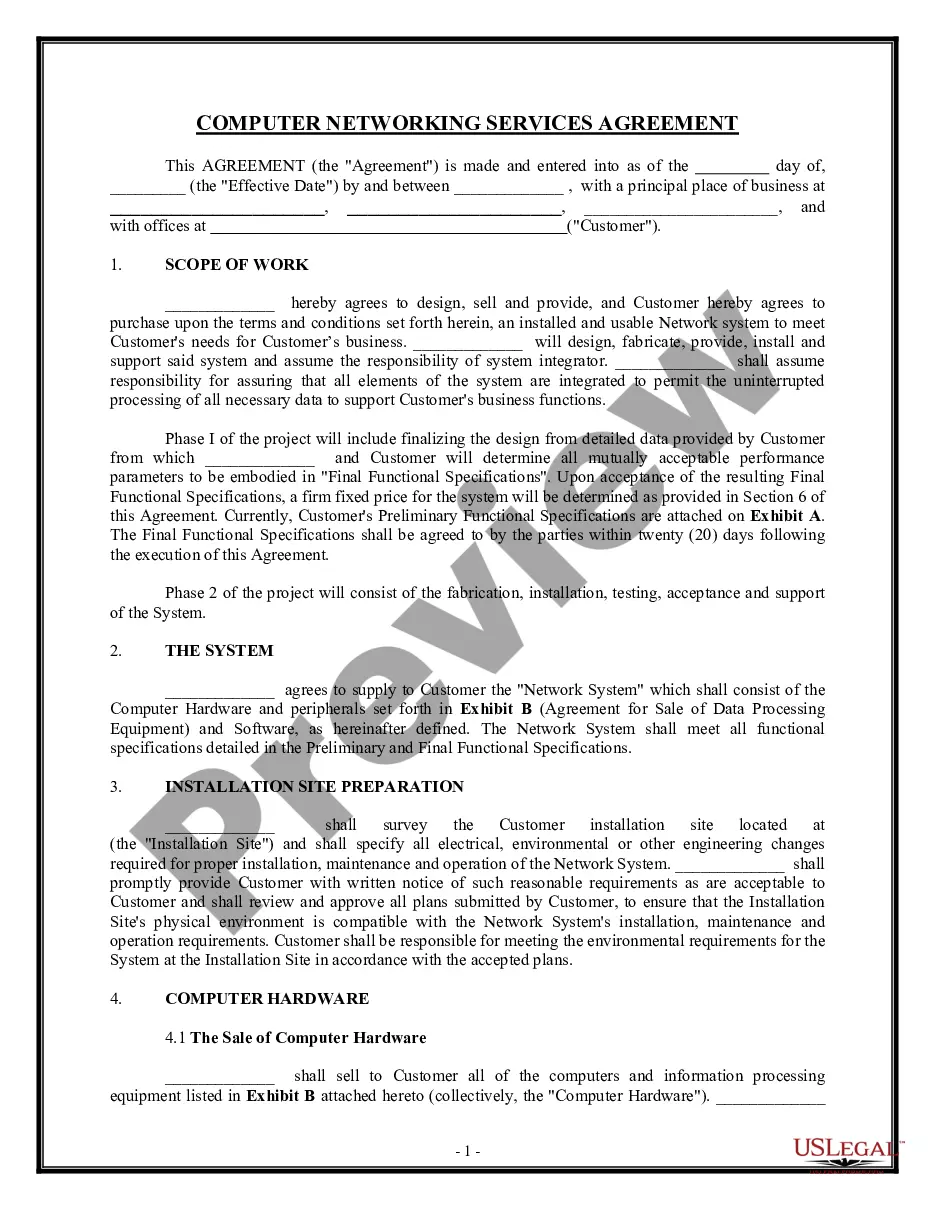
Get your form ready online
Our built-in tools help you complete, sign, share, and store your documents in one place.
Make edits, fill in missing information, and update formatting in US Legal Forms—just like you would in MS Word.
Download a copy, print it, send it by email, or mail it via USPS—whatever works best for your next step.
Sign and collect signatures with our SignNow integration. Send to multiple recipients, set reminders, and more. Go Premium to unlock E-Sign.
If this form requires notarization, complete it online through a secure video call—no need to meet a notary in person or wait for an appointment.
We protect your documents and personal data by following strict security and privacy standards.

Make edits, fill in missing information, and update formatting in US Legal Forms—just like you would in MS Word.

Download a copy, print it, send it by email, or mail it via USPS—whatever works best for your next step.

Sign and collect signatures with our SignNow integration. Send to multiple recipients, set reminders, and more. Go Premium to unlock E-Sign.

If this form requires notarization, complete it online through a secure video call—no need to meet a notary in person or wait for an appointment.

We protect your documents and personal data by following strict security and privacy standards.
Looking for another form?










Form popularity
FAQ
Examples of ISPs are: Comcast. AT&T. Time Warner Cable.
The provision of services between a service provider and a company is typically governed by a service agreement. Examples of potential service providers for a company are advisors, individual consultants, law firms, design shops and investment banks.
An ISP (internet service provider) is a company that provides individuals and organizations access to the internet and other related services. An ISP has the equipment and the telecommunication line access required to have a point of presence on the internet for the geographic area served.
An Internet service provider (ISP) is a company that provides web access to businesses and consumers. ISPs may also provide other services such as email services, domain registration, web hosting, and browser services.
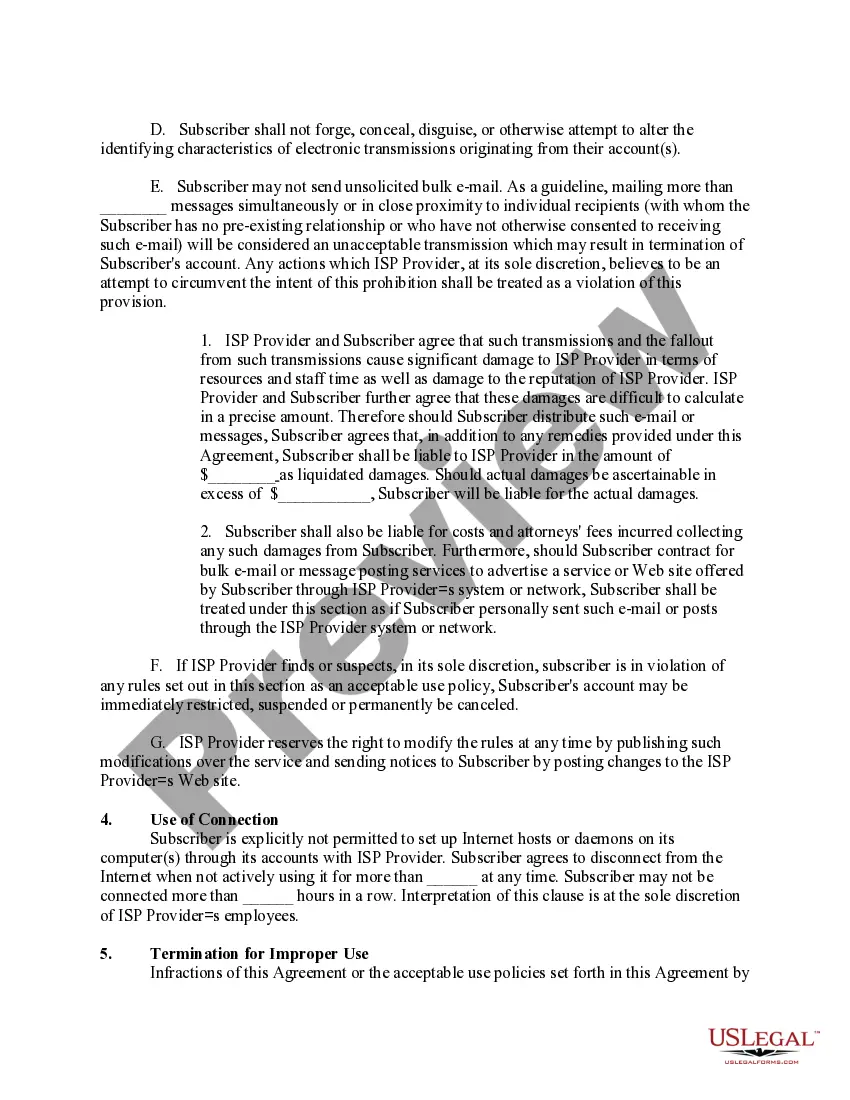
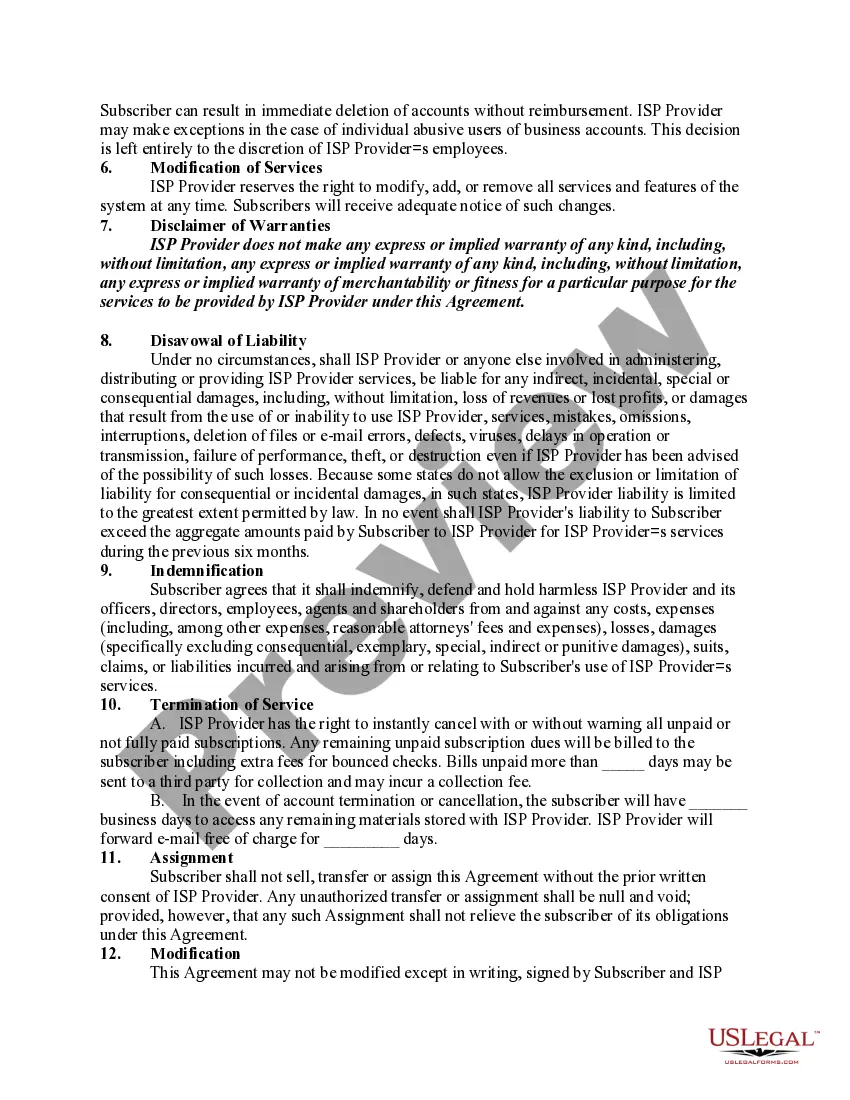
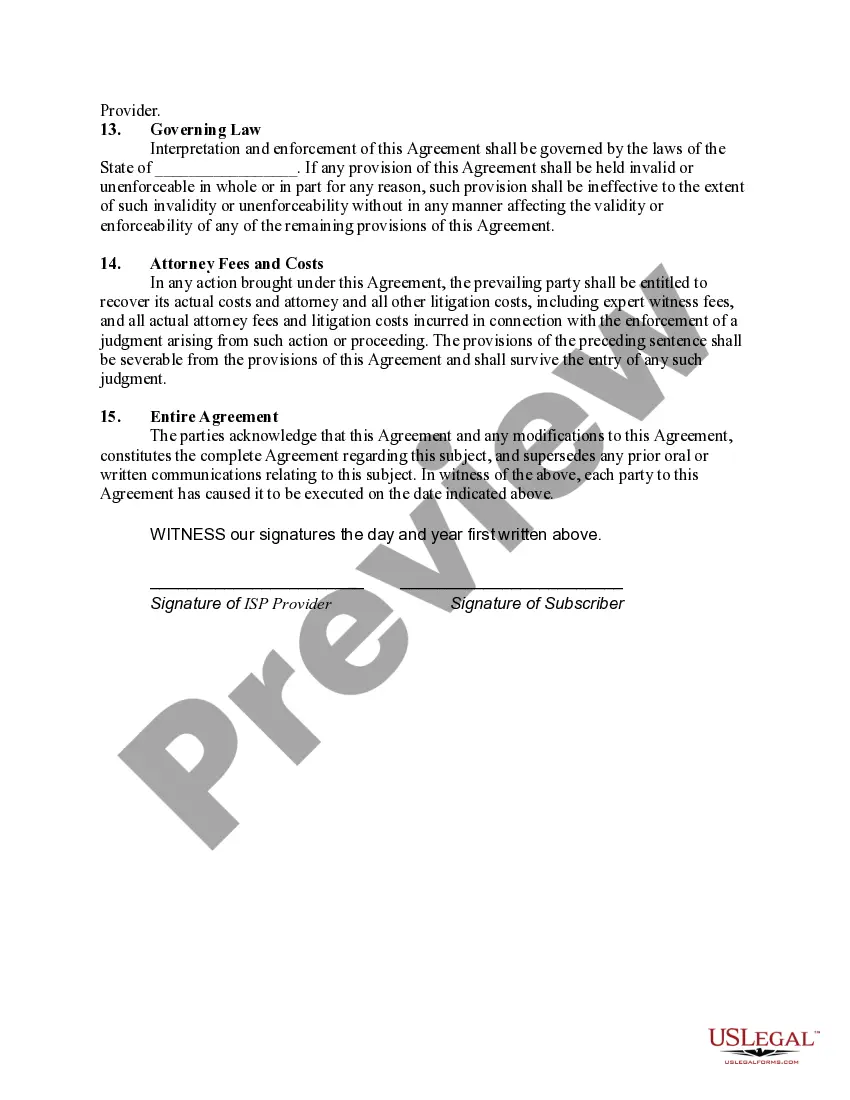
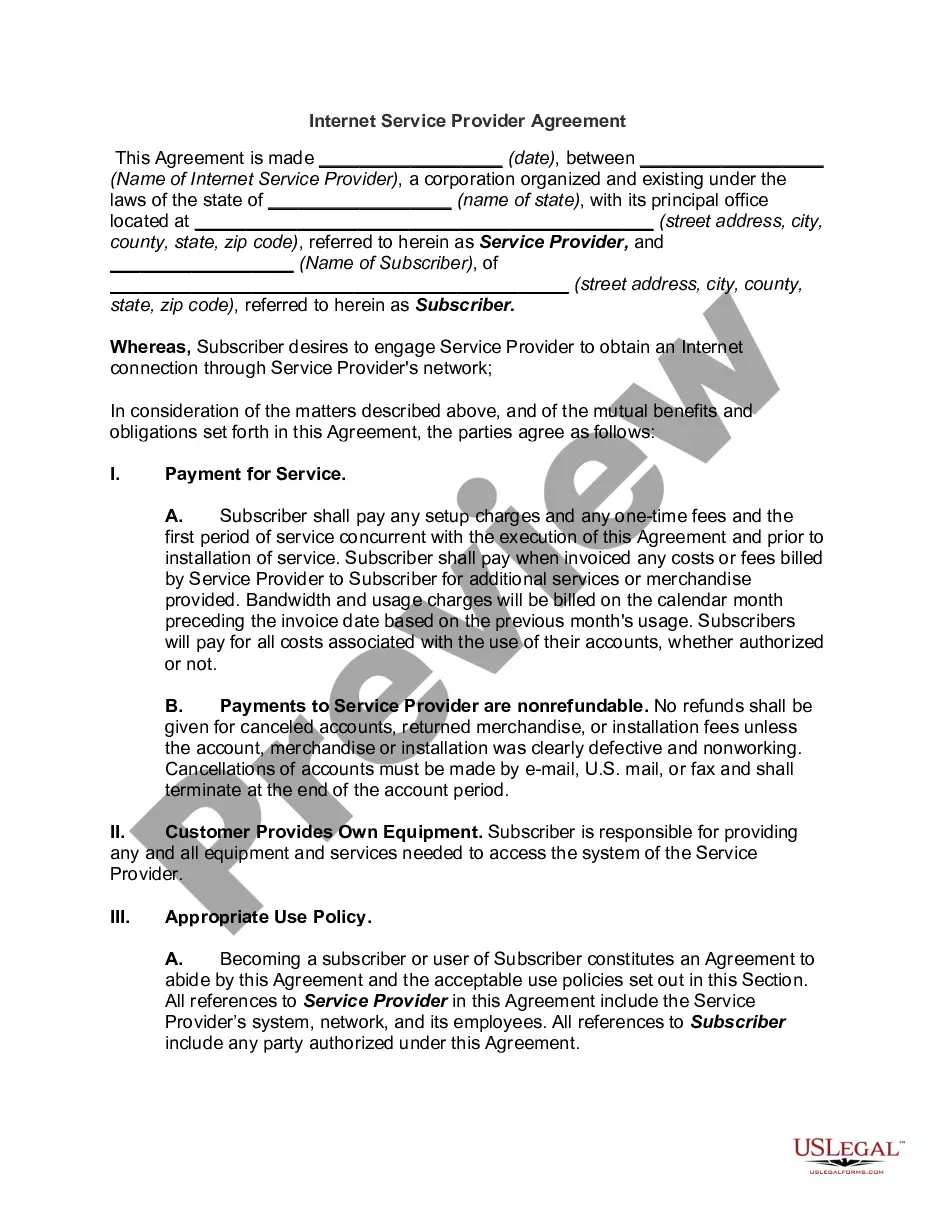
Internet service agreements are contracts that you sign with your internet service provider (ISP) when you subscribe to their service. They contain important information about your rights and responsibilities, as well as the terms and conditions of the service.
To establish connectivity, ISPs use various technologies — cables, telephone lines, DSL, satellite, fiber optics, and Wi-Fi, among others. Now, end-users must have a modem and an active account to establish a connection to their internet providers. Modems have cable outlets or a telephone line to connect to the ISPs.