Boat Names For Contractors In Hennepin
Description

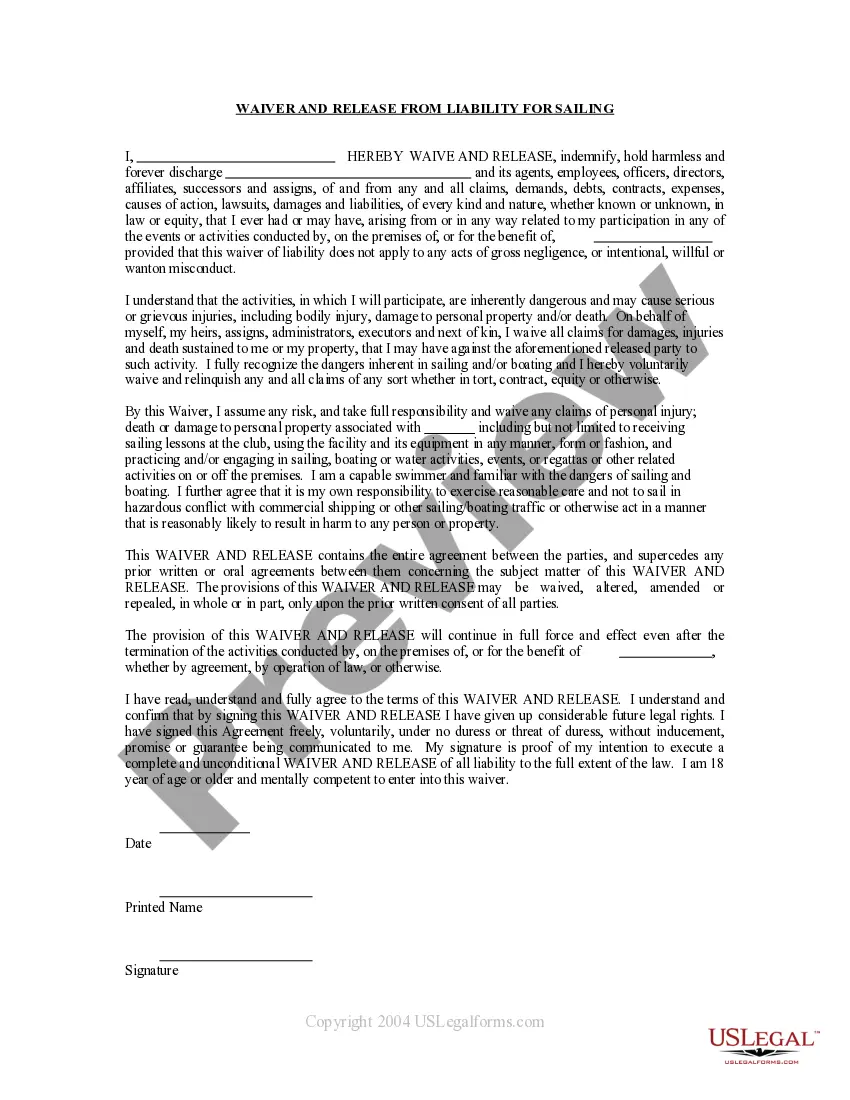
Get your form ready online
Our built-in tools help you complete, sign, share, and store your documents in one place.
Make edits, fill in missing information, and update formatting in US Legal Forms—just like you would in MS Word.
Download a copy, print it, send it by email, or mail it via USPS—whatever works best for your next step.
Sign and collect signatures with our SignNow integration. Send to multiple recipients, set reminders, and more. Go Premium to unlock E-Sign.
If this form requires notarization, complete it online through a secure video call—no need to meet a notary in person or wait for an appointment.
We protect your documents and personal data by following strict security and privacy standards.

Make edits, fill in missing information, and update formatting in US Legal Forms—just like you would in MS Word.

Download a copy, print it, send it by email, or mail it via USPS—whatever works best for your next step.

Sign and collect signatures with our SignNow integration. Send to multiple recipients, set reminders, and more. Go Premium to unlock E-Sign.

If this form requires notarization, complete it online through a secure video call—no need to meet a notary in person or wait for an appointment.

We protect your documents and personal data by following strict security and privacy standards.
Looking for another form?




Form popularity
FAQ
Yes. That superstition dates back to the early days of piracy, where after a victorious boarding of the vessel, the crew would violate the figurehead carved into the bowsprit of the boat. The figurehead was often named in theme with the boat. Never mess with a woman scorn.
Boat names must not be more than 33 characters. It may not be identical, actually or phonetically, to any word or words used to solicit assistance at sea; may not contain or be phonetically identical to obscene, indecent, or profane language, or to racial or ethnic epithets.
2) Do not use profanity, obscenity, or what may be perceived as bigotry or harmful language. Manners aside, most countries don't allow broadcasting obscenity over the airwaves, and you may need to use the radio with your boat name. 3) Long names – the USCG limit is about 33 characters, or roughly three words.
Boat naming has been around for thousands of years, started when sailors named their vessels after deities and saints in the hopes of good fortune and smooth sailing. Names were chosen very carefully since the wrong name meant the difference between a safe voyage or being lost at sea.
The name of the boat must not be identical, either literally or phonetically, to any word or words used to solicit assistance at sea (that rules out MayDay or similar names). And the name of the boat must not contain or be phonetically identical for obscene, indecent or profane language or to racial or ethnic epithets.
Usage. Historically, prefixes for civilian vessels often identified the vessel's mode of propulsion, such as "MV" (motor vessel), "SS" (screw steamer; often cited as "steam ship"), or "PS" (paddle steamer).
The original civilian ship prefix is SS, which is an acronym for “steamship.” Back in the early days of powered water vessels, shipping companies wanted a way to distinguish their newer, faster steamships from older, slower sail and oar propelled watercraft.
The RMS TITANIC was designated as a 'Royal Mail Ship,' meaning the Ship had been contracted to carry Royal (British) Mail. TITANIC was also referred to as an SS ship which stands for 'steamship', indicating that the propulsion was steam powered, but 'SS' had less prestige than 'RMS', so it was used less.
Common prefixes are MV (for Motor Vessel), MS (for Motor Ship), MT (Motor Tanker), SY (for Sailing Yacht) or MY (for Motor Yacht), while prefixes from older times were SS (for Steam Ship) and RMS (for Royal Mail Ship) or ever older HMS (for His/Her Majesty's Ship).
