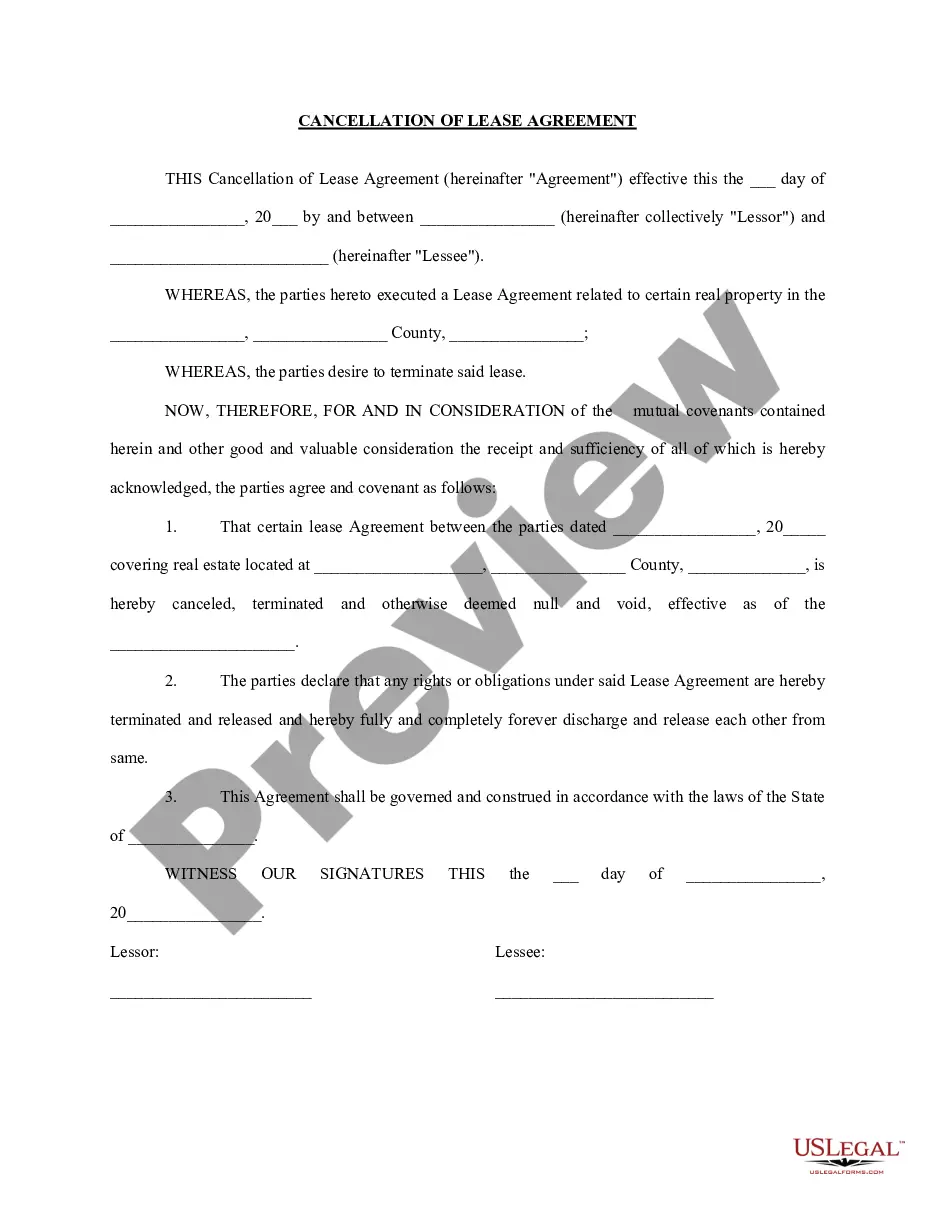
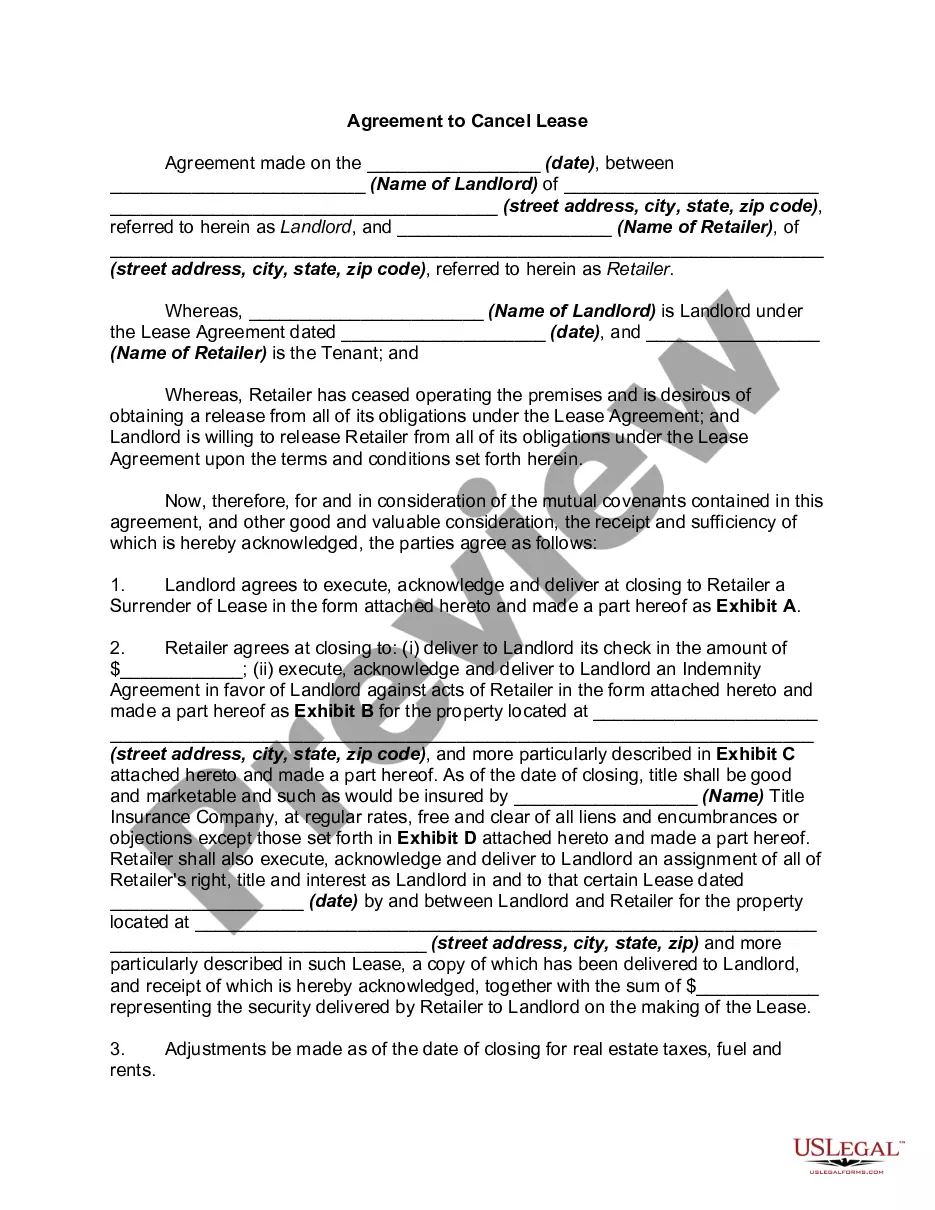
Cancellation Lease Template For Land In Suffolk
Description
Get your form ready online
Our built-in tools help you complete, sign, share, and store your documents in one place.
Make edits, fill in missing information, and update formatting in US Legal Forms—just like you would in MS Word.
Download a copy, print it, send it by email, or mail it via USPS—whatever works best for your next step.
Sign and collect signatures with our SignNow integration. Send to multiple recipients, set reminders, and more. Go Premium to unlock E-Sign.
If this form requires notarization, complete it online through a secure video call—no need to meet a notary in person or wait for an appointment.
We protect your documents and personal data by following strict security and privacy standards.

Make edits, fill in missing information, and update formatting in US Legal Forms—just like you would in MS Word.

Download a copy, print it, send it by email, or mail it via USPS—whatever works best for your next step.

Sign and collect signatures with our SignNow integration. Send to multiple recipients, set reminders, and more. Go Premium to unlock E-Sign.

If this form requires notarization, complete it online through a secure video call—no need to meet a notary in person or wait for an appointment.

We protect your documents and personal data by following strict security and privacy standards.
Looking for another form?







Form popularity
FAQ
As discussed, certain circumstances allow you to break a lease without penalty. Common reasons include: Uninhabitable conditions: Document all issues with your apartment and communicate them to your landlord. Harassment or privacy violations: Keep a detailed record of incidents.
There is often no lease in a month-to-month tenancy, which may be ended by the landlord or the tenant. However, notice must be given at least one month before your next rent payment is due. Public housing authority leases have their own regulations and specific lease conditions.
The landlord tenant laws that allow you to break a lease are different from state to state. In many places, you can get out of your lease without penalty for a number of reasons, such as domestic violence, an unsafe environment, or if you've been called up for military service.
The 30-day notice is unique in that it can only take effect on certain days: the rental due date during a periodic lease, or the end date of a term lease. For example, if a landlord wants the tenant to vacate on February 1st, they would need to give a 30-day notice at least 30 days before February 1st.
Writing the Lease Termination Letter Addressing the Landlord or Management. Clear Statement of Termination. Reasons for Termination (If Any) ... Reference to Lease Clauses. Forwarding Address and Contact Information. Signature and Name.
Your Lease Agreement is Key Read your “Early Termination” Clause: Most leases include a section outlining the terms for breaking your lease early. This is where you'll find information about: Required notice period (often 30-60 days) Lease-breaking fees (typically 1-2 months' rent)
