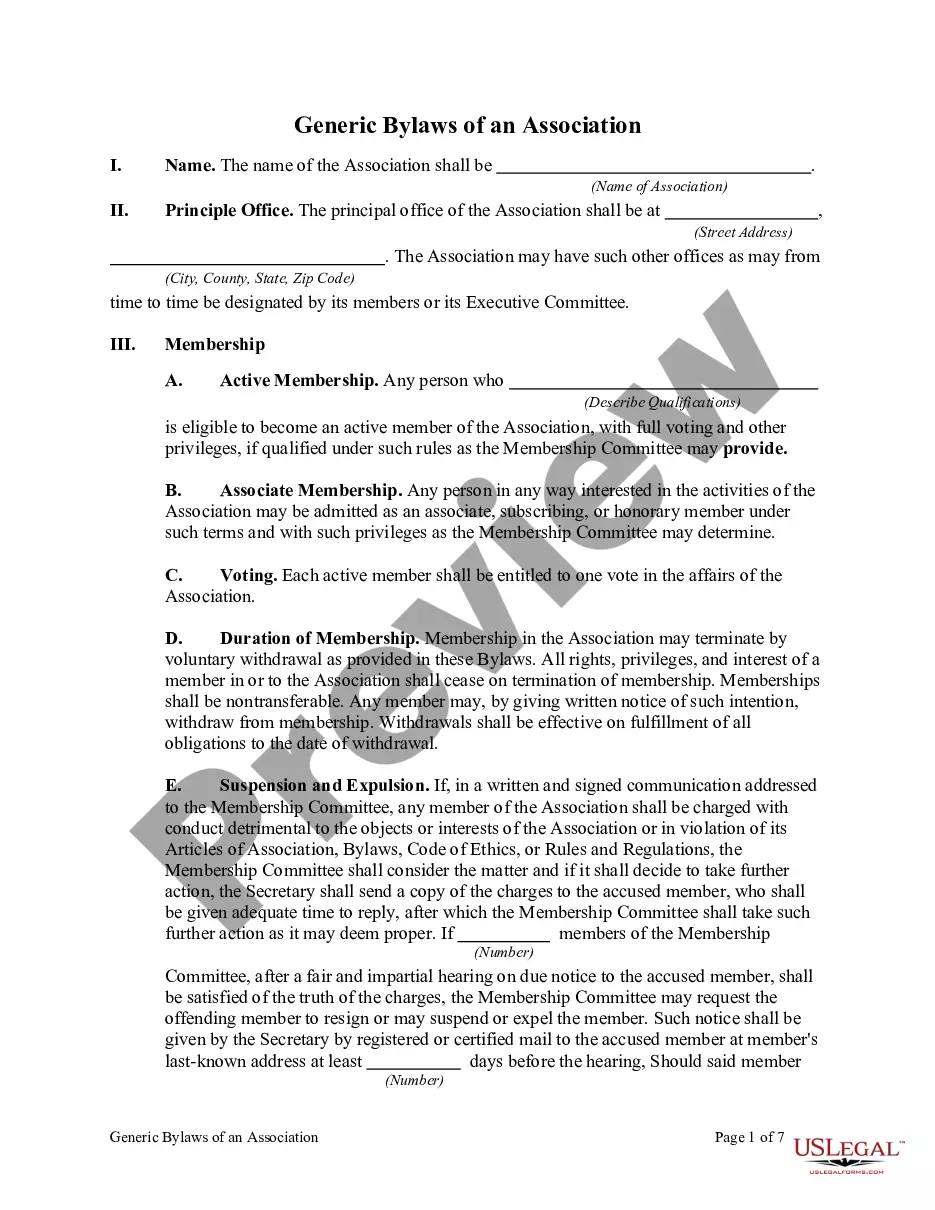
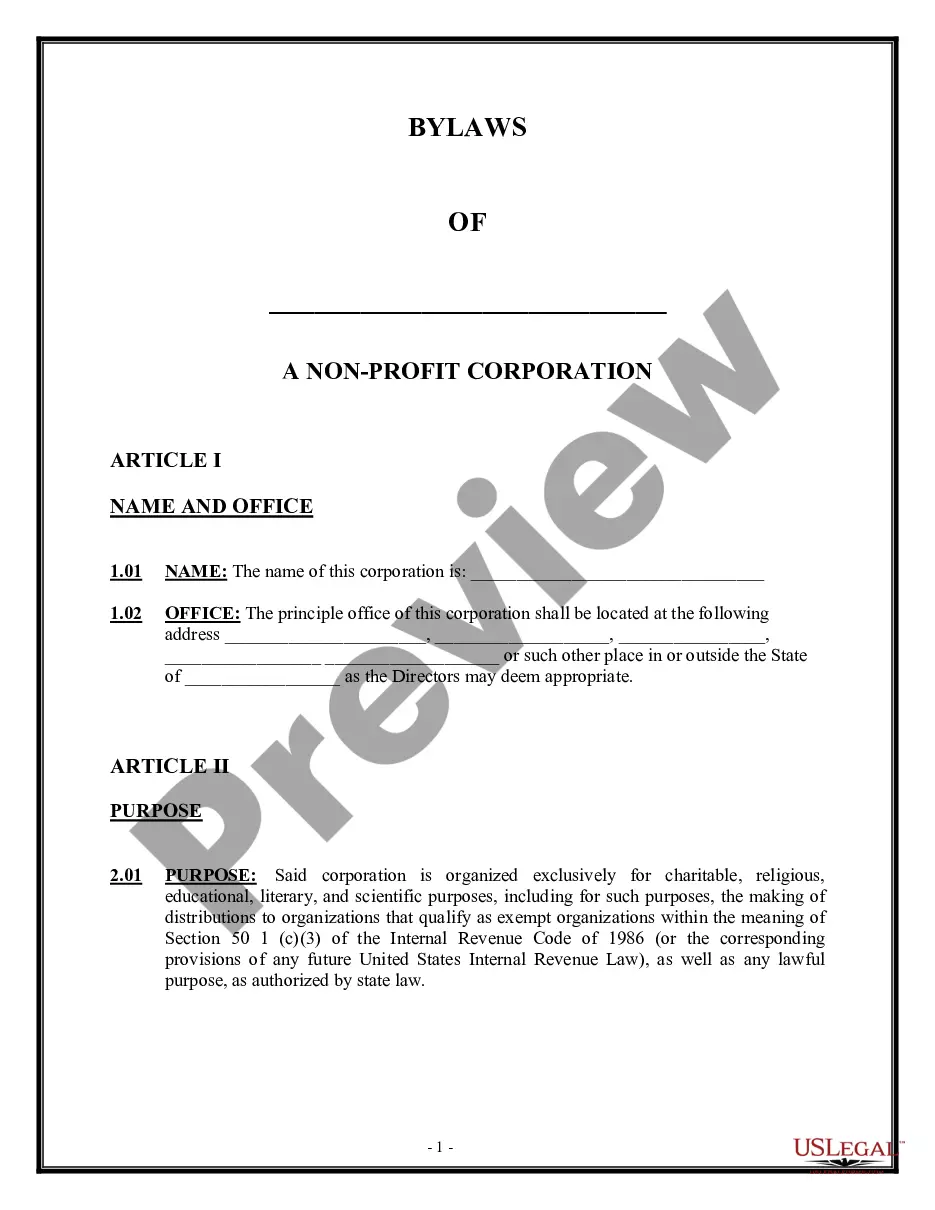
Bylaws For Church In Wake
Description

Get your form ready online
Our built-in tools help you complete, sign, share, and store your documents in one place.
Make edits, fill in missing information, and update formatting in US Legal Forms—just like you would in MS Word.
Download a copy, print it, send it by email, or mail it via USPS—whatever works best for your next step.
Sign and collect signatures with our SignNow integration. Send to multiple recipients, set reminders, and more. Go Premium to unlock E-Sign.
If this form requires notarization, complete it online through a secure video call—no need to meet a notary in person or wait for an appointment.
We protect your documents and personal data by following strict security and privacy standards.

Make edits, fill in missing information, and update formatting in US Legal Forms—just like you would in MS Word.

Download a copy, print it, send it by email, or mail it via USPS—whatever works best for your next step.

Sign and collect signatures with our SignNow integration. Send to multiple recipients, set reminders, and more. Go Premium to unlock E-Sign.

If this form requires notarization, complete it online through a secure video call—no need to meet a notary in person or wait for an appointment.

We protect your documents and personal data by following strict security and privacy standards.
Looking for another form?









Form popularity
FAQ
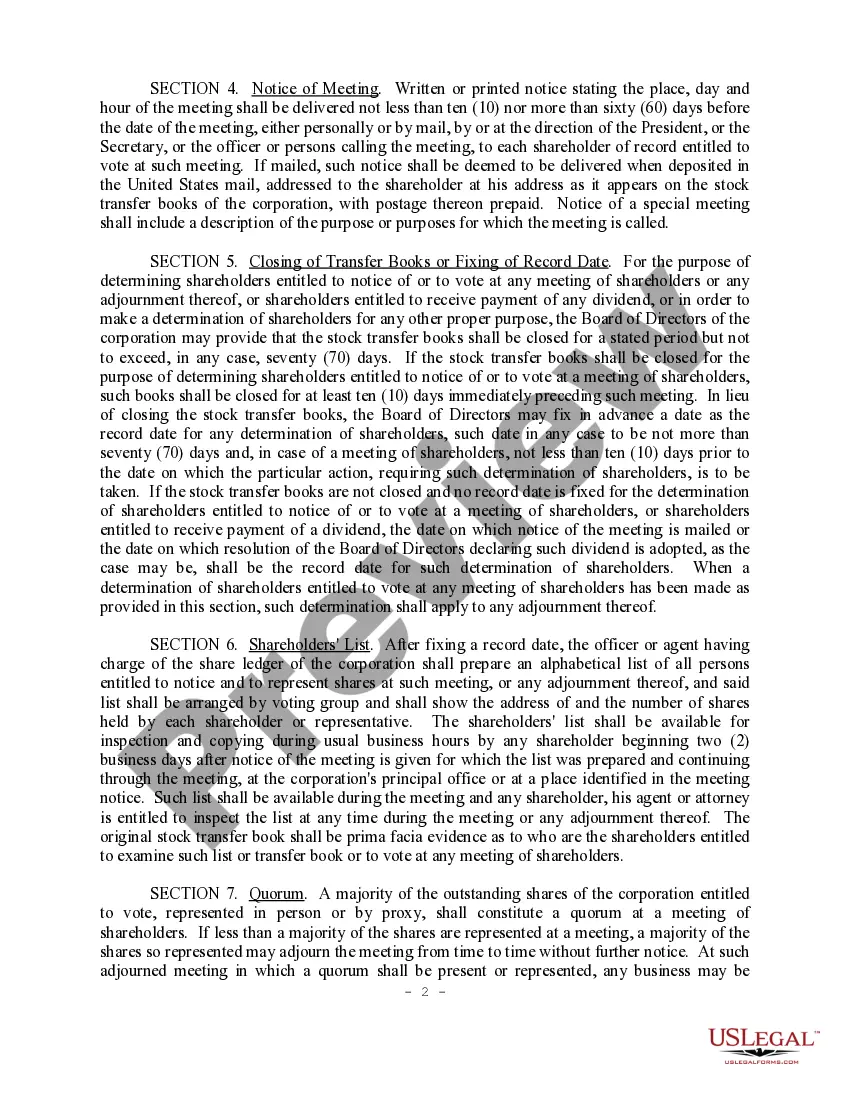
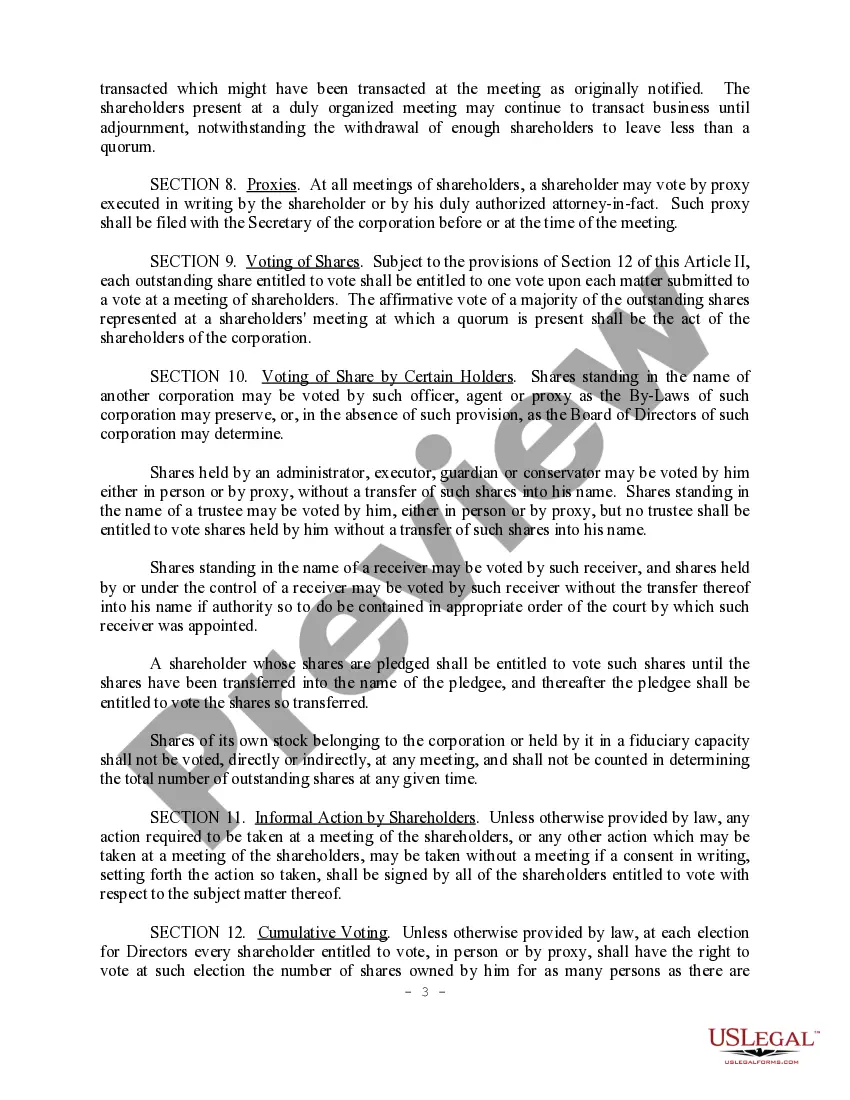
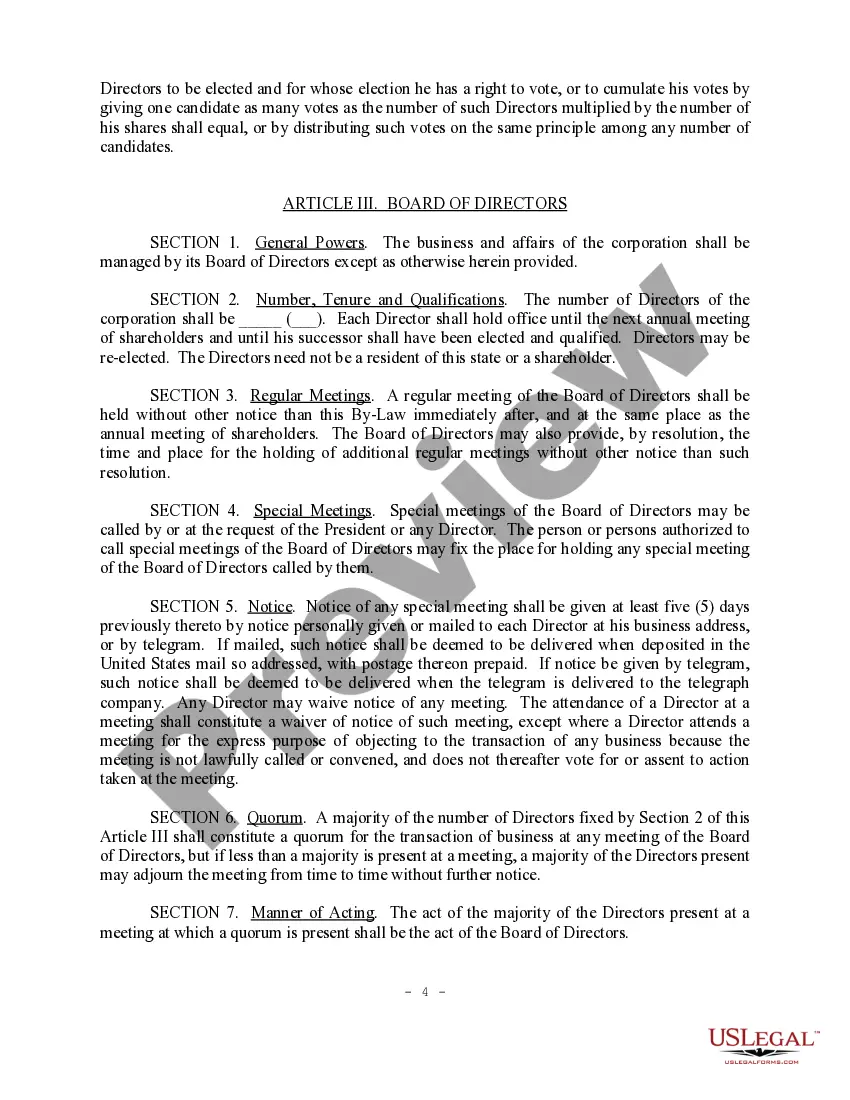
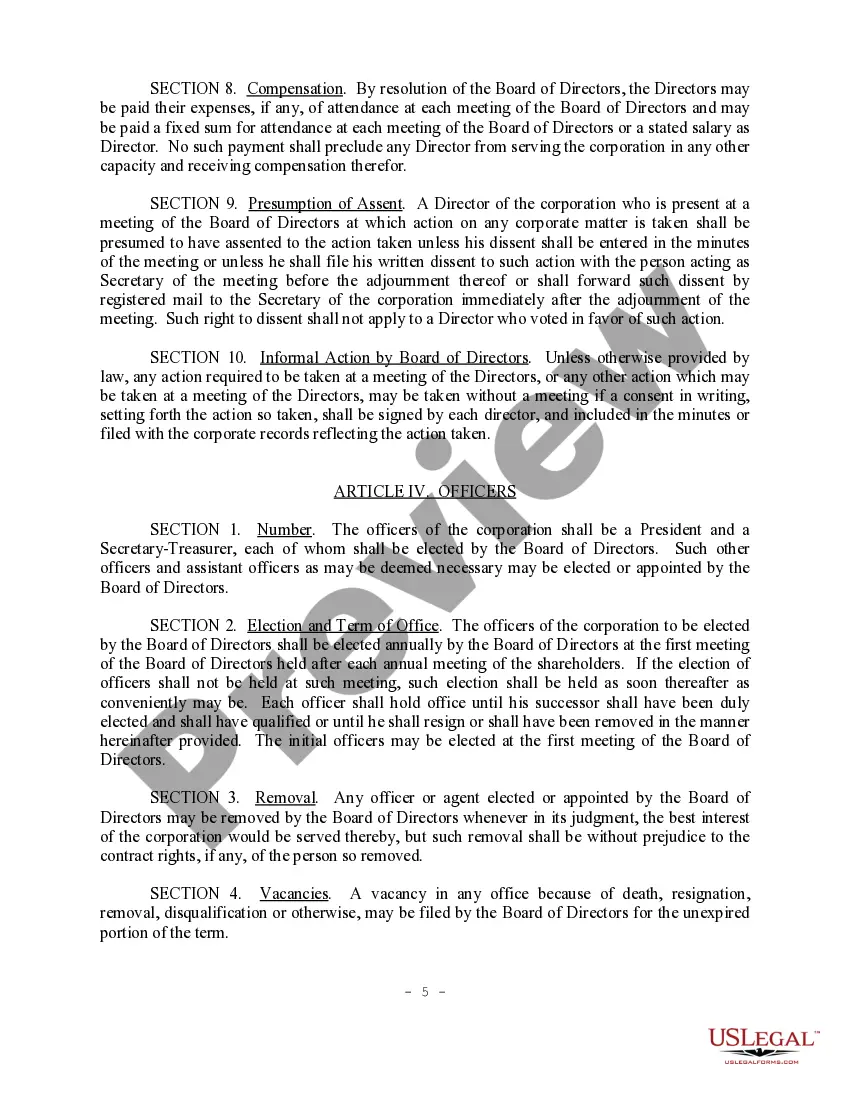
Bylaws tell people what they can expect within the organization and how to get things done, while respecting the rights of others within the group. Your bylaws are an educational tool for new members and leaders. They explain how the church embodies its vision to achieve its mission.
In general terms, these are some of the more important details typically covered in a church's bylaws: Management voting rules. Rules governing meetings. Management powers and responsibilities. Procedures for replacing directors and officers. Designating the church's mission and denomination.
Your church is at risk if clear governing provisions are absent from its bylaws. If they are missing, a judge must decide any matter brought to court on general principles of civil law.
Because bylaws contain rules for internal governance and administration, they are indispensable for both incorporated and unincorporated churches. In many churches, the bylaws were adopted long ago, and have been amended numerous times over the years.
So are church bylaws legally binding? Yes. They function as a contract among church members. Furthermore, although they are not required by law, they are necessary for your church to be tax-exempt under section 501(c)(3).
Your bylaws are legally binding—so treat them as such.
It is a set of rules and regulations that govern the practices and beliefs of a particular church or religious organization. One example of church law is the Codex Juris Canonici, which is a compilation of western ecclesiastical law that was first compiled in the 12th century.
