Nonprofit Bylaws Template For 501c3 In San Antonio
Description

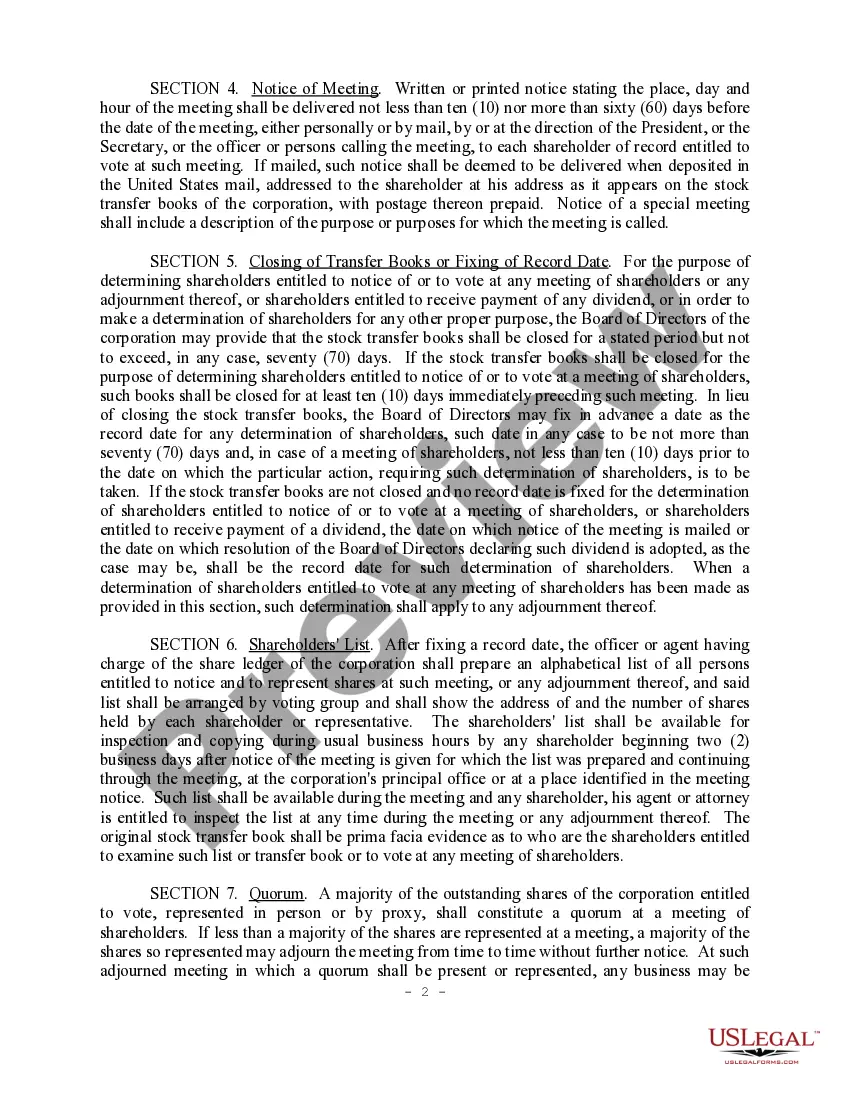
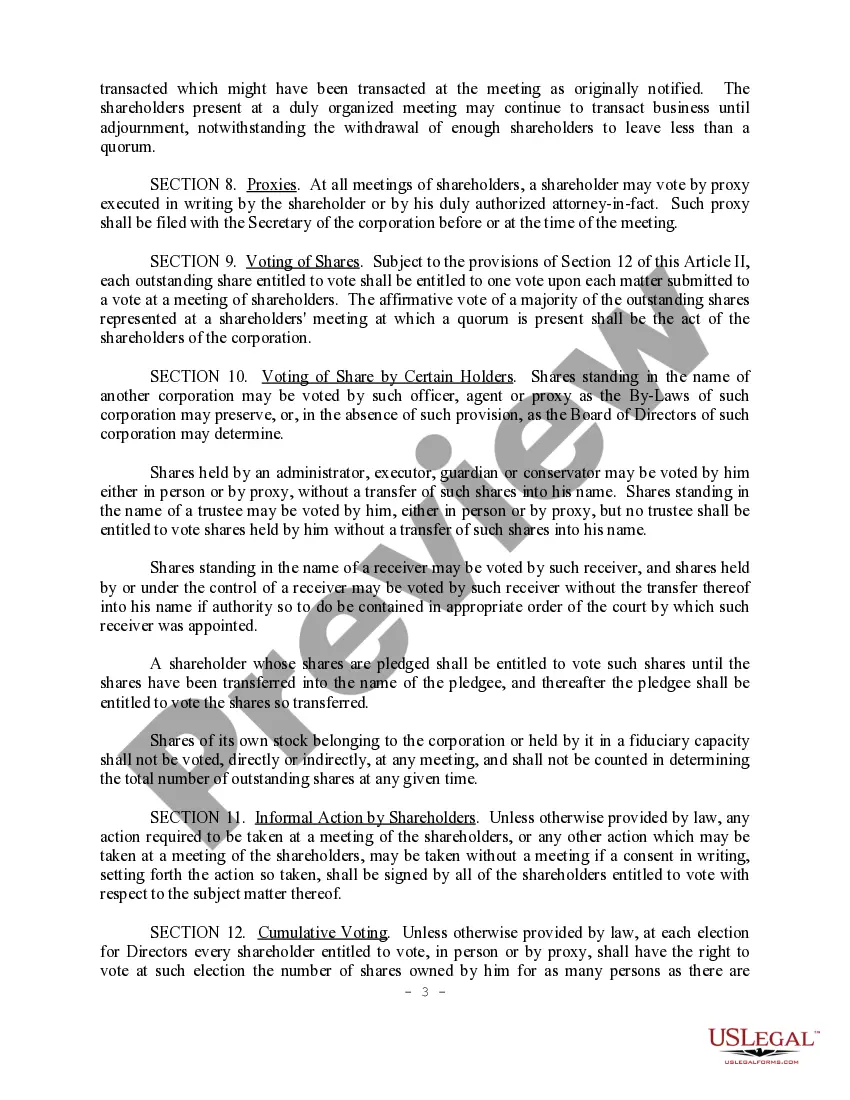
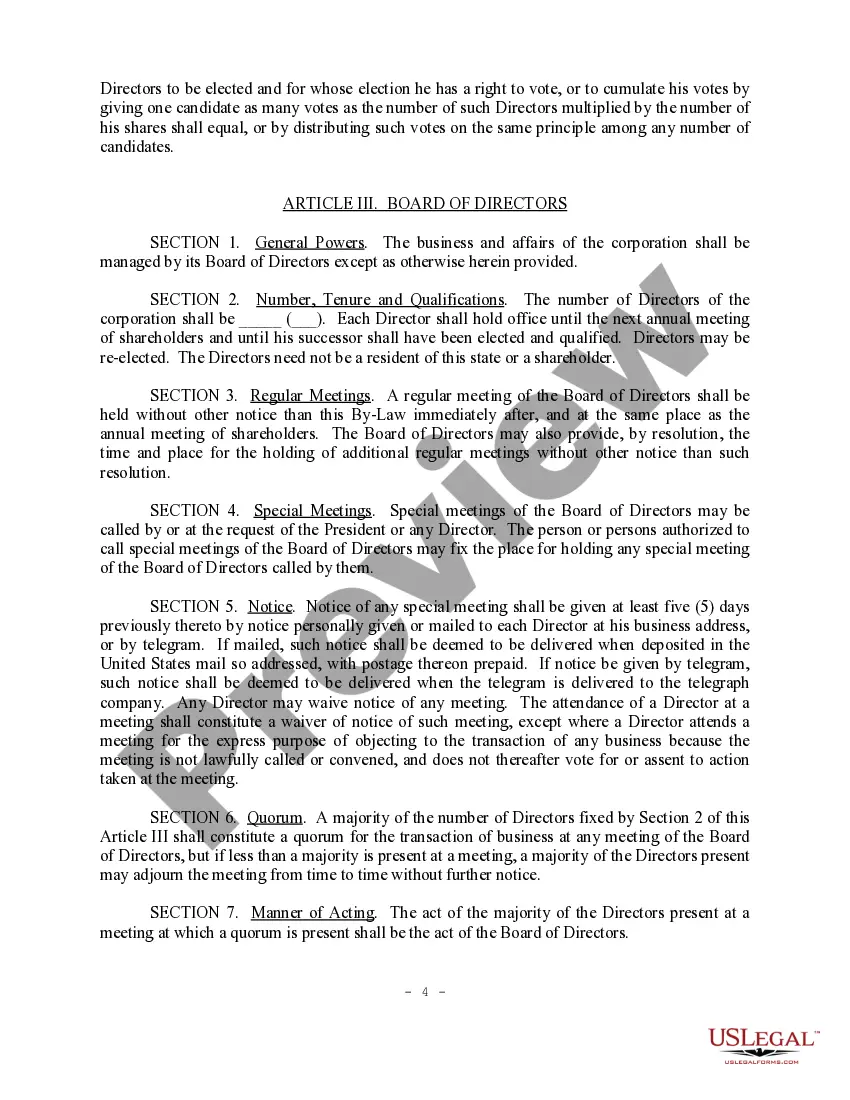
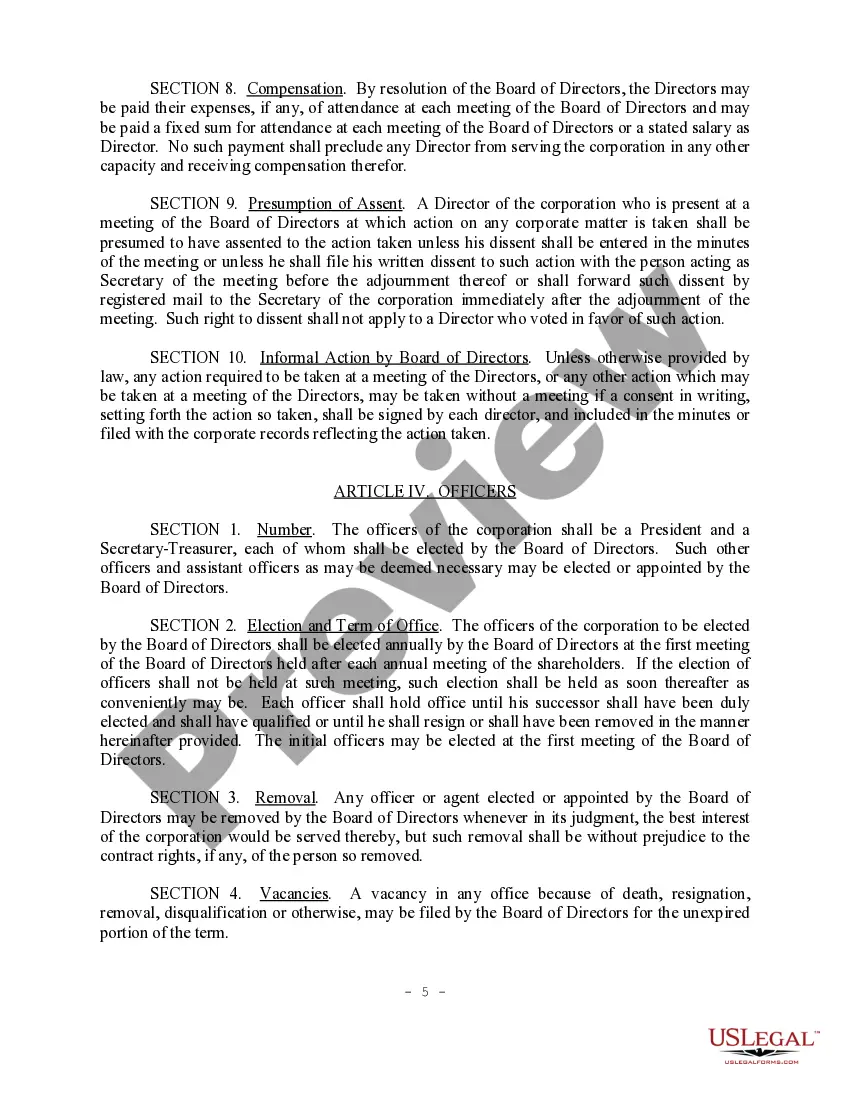
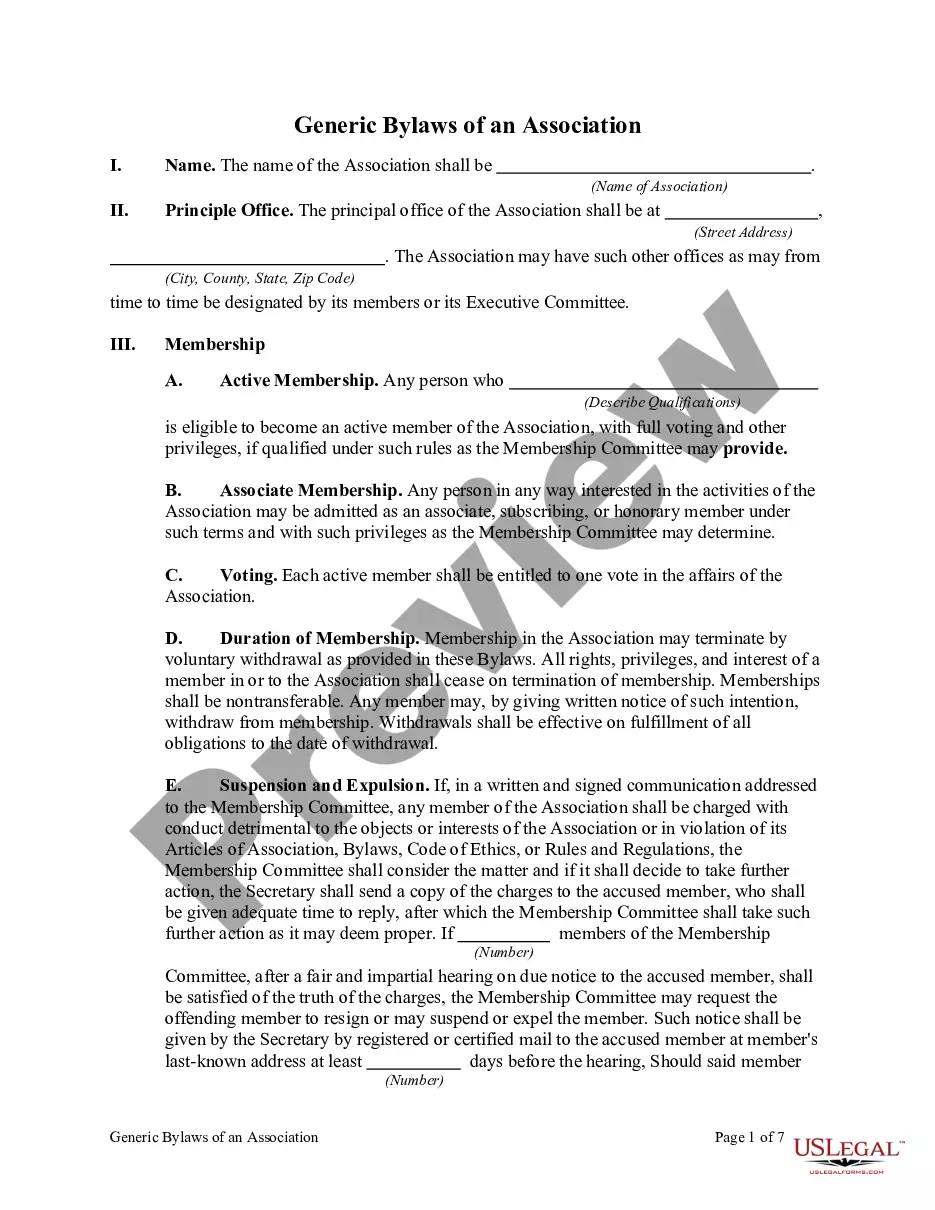
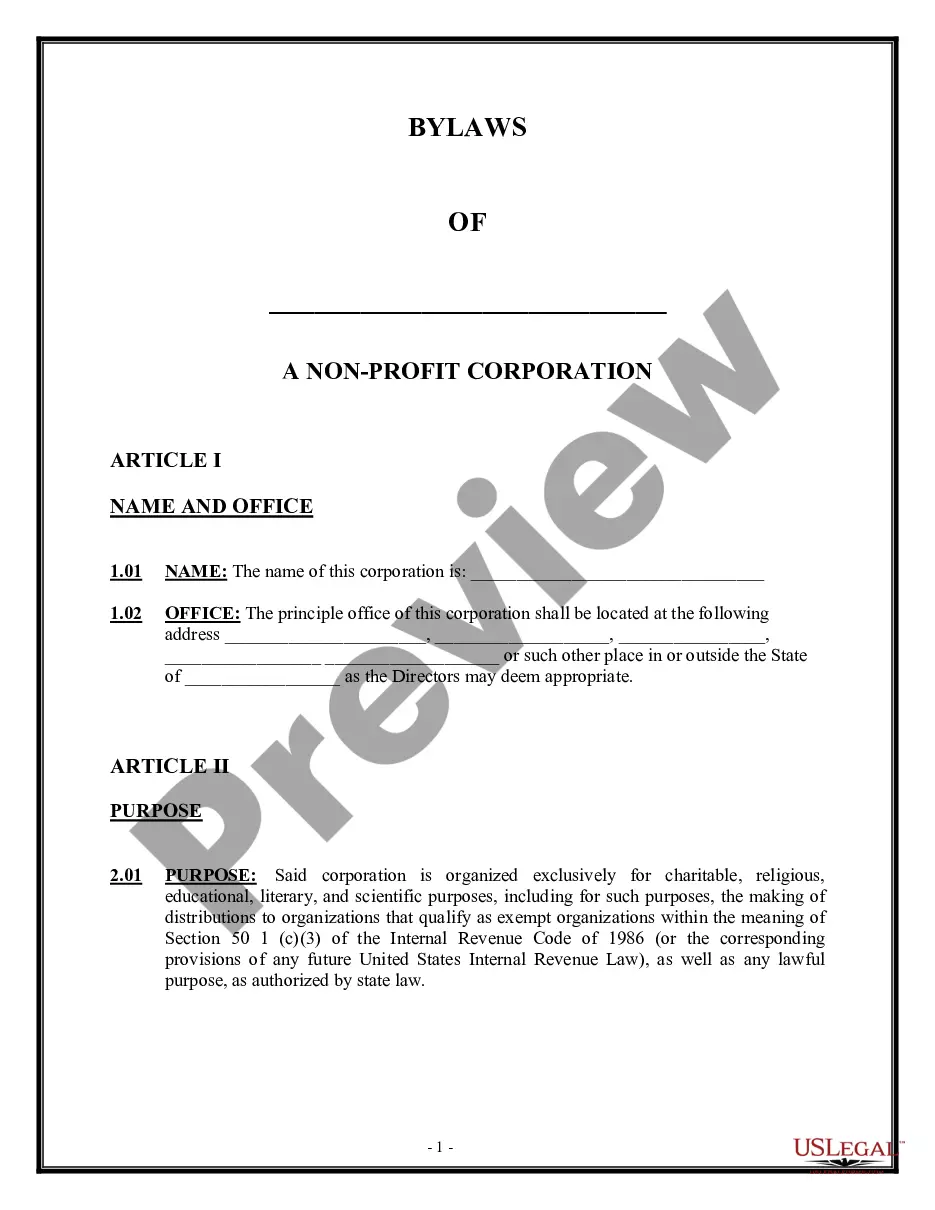
Get your form ready online
Our built-in tools help you complete, sign, share, and store your documents in one place.
Make edits, fill in missing information, and update formatting in US Legal Forms—just like you would in MS Word.
Download a copy, print it, send it by email, or mail it via USPS—whatever works best for your next step.
Sign and collect signatures with our SignNow integration. Send to multiple recipients, set reminders, and more. Go Premium to unlock E-Sign.
If this form requires notarization, complete it online through a secure video call—no need to meet a notary in person or wait for an appointment.
We protect your documents and personal data by following strict security and privacy standards.

Make edits, fill in missing information, and update formatting in US Legal Forms—just like you would in MS Word.

Download a copy, print it, send it by email, or mail it via USPS—whatever works best for your next step.

Sign and collect signatures with our SignNow integration. Send to multiple recipients, set reminders, and more. Go Premium to unlock E-Sign.

If this form requires notarization, complete it online through a secure video call—no need to meet a notary in person or wait for an appointment.

We protect your documents and personal data by following strict security and privacy standards.
Looking for another form?




Form popularity
FAQ
They are necessary. Your nonprofit does not need to file bylaws with the Texas Secretary of State, but they are required to obtain tax-exempt status with the IRS.
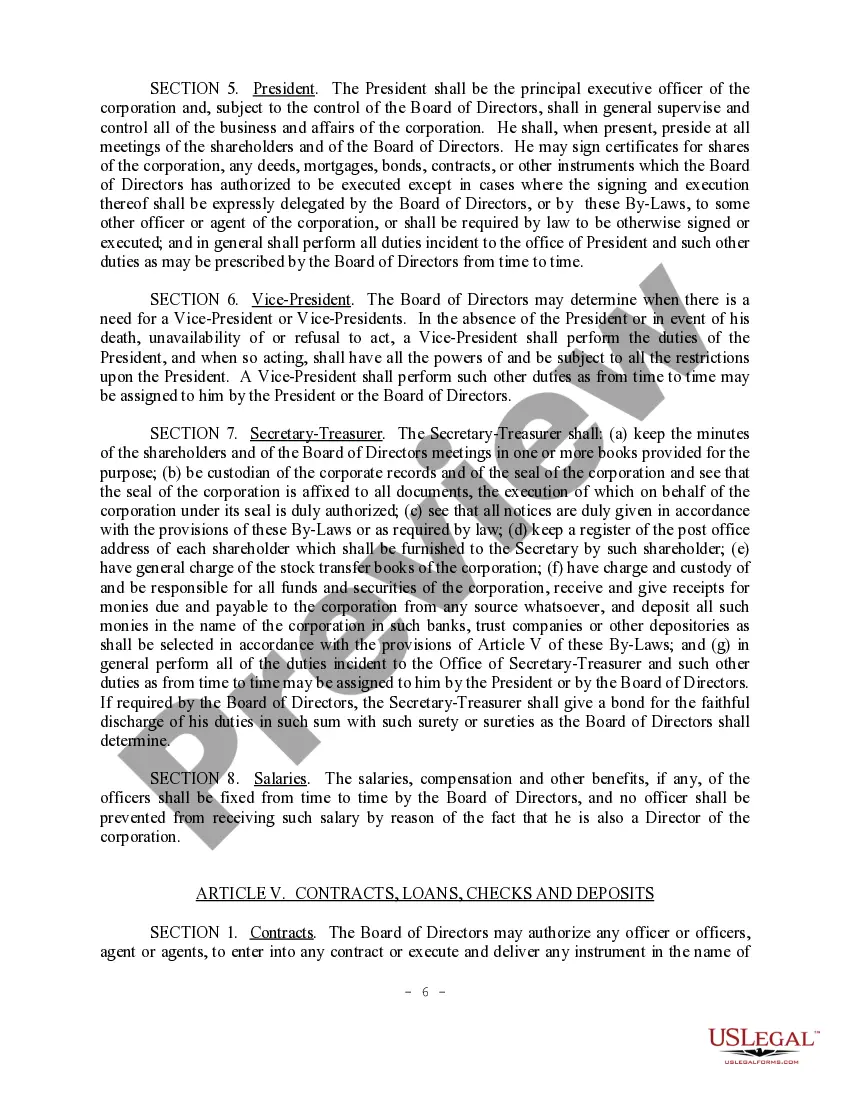
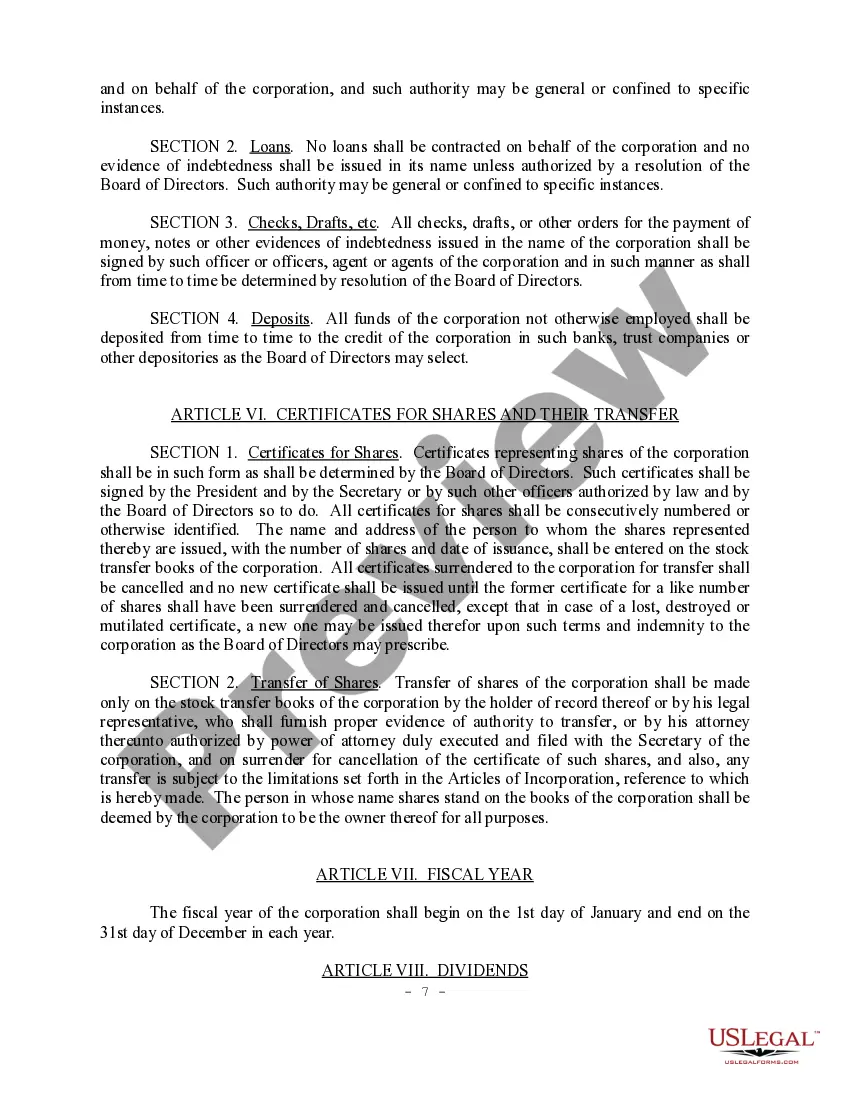
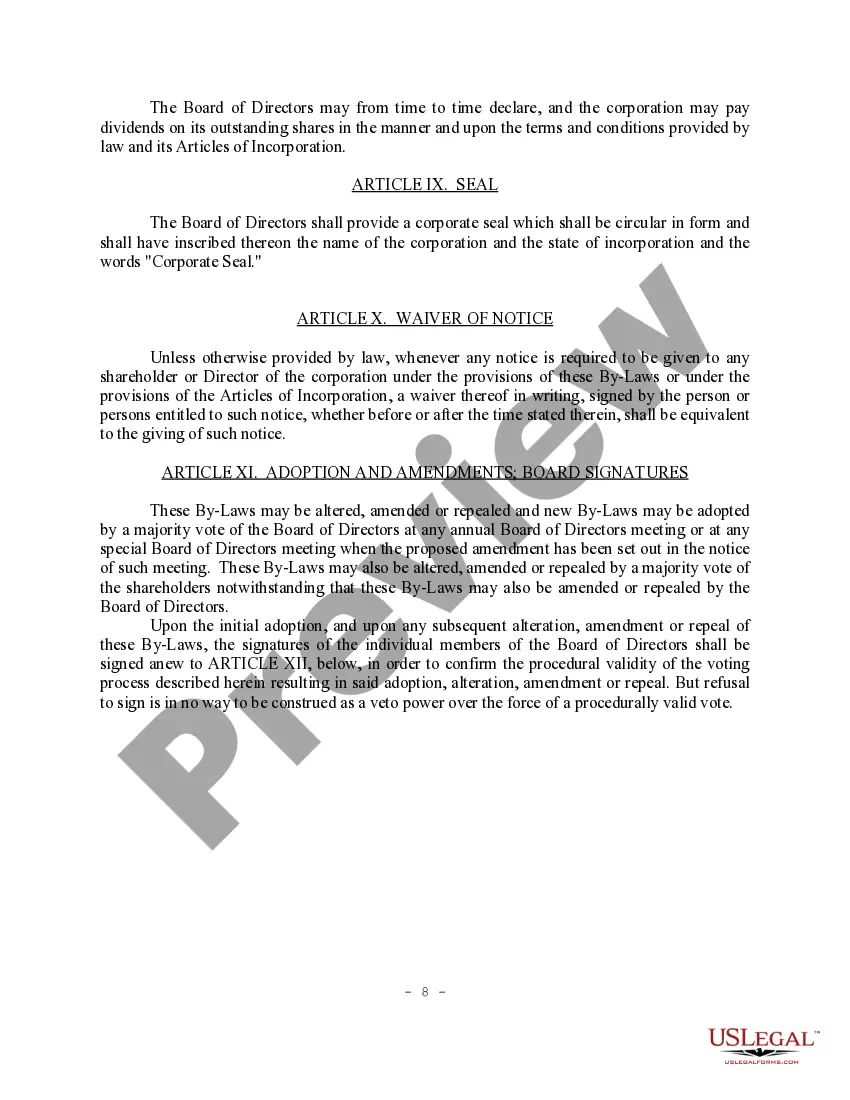
Steps for Finding Nonprofit Bylaws: Search IRS databases, request from the nonprofit directly, or check state nonprofit registries. Understanding Bylaws' Importance: Bylaws dictate governance, structure, and compliance for nonprofit operations.
Nonprofit Bylaws Tips and Best Practices Get help. Make them public. Don't include information that changes frequently. Tailor them. Know the difference between “shall” and “may” ... Don't be too ambitious. Review them regularly. Name and purpose.
501(c)(3), (4), (8), (10) or (19) organizations are exempt from Texas franchise tax and sales tax. A federal tax exemption only applies to the specific organization to which it is granted.
501(c)(3) entities are typically classified into three major categories: Public Charities: These receive a significant portion of their income from the public or governmental grants. Examples include churches, schools, hospitals, and broadly-supported charities.
How to Start a Nonprofit in Texas Name Your Organization. Recruit Incorporators and Initial Directors. Appoint a Registered Agent. Prepare and File Articles of Incorporation. File Initial Report. Obtain an Employer Identification Number (EIN) ... Store Nonprofit Records. Establish Initial Governing Documents and Policies.
The Texas Business Organizations Code requires a nonprofit corporation to have at least three directors, one president, and one secretary. The same person cannot be both the president and secretary. Officers and directors must be natural persons, but may be known by other titles.
Can I form a nonprofit LLC in Texas? The Texas Business Organizations Code (BOC) does not recognize the term "nonprofit LLC" as describing a specific type of entity, but the BOC does allow for the formation of an LLC with a nonprofit purpose.
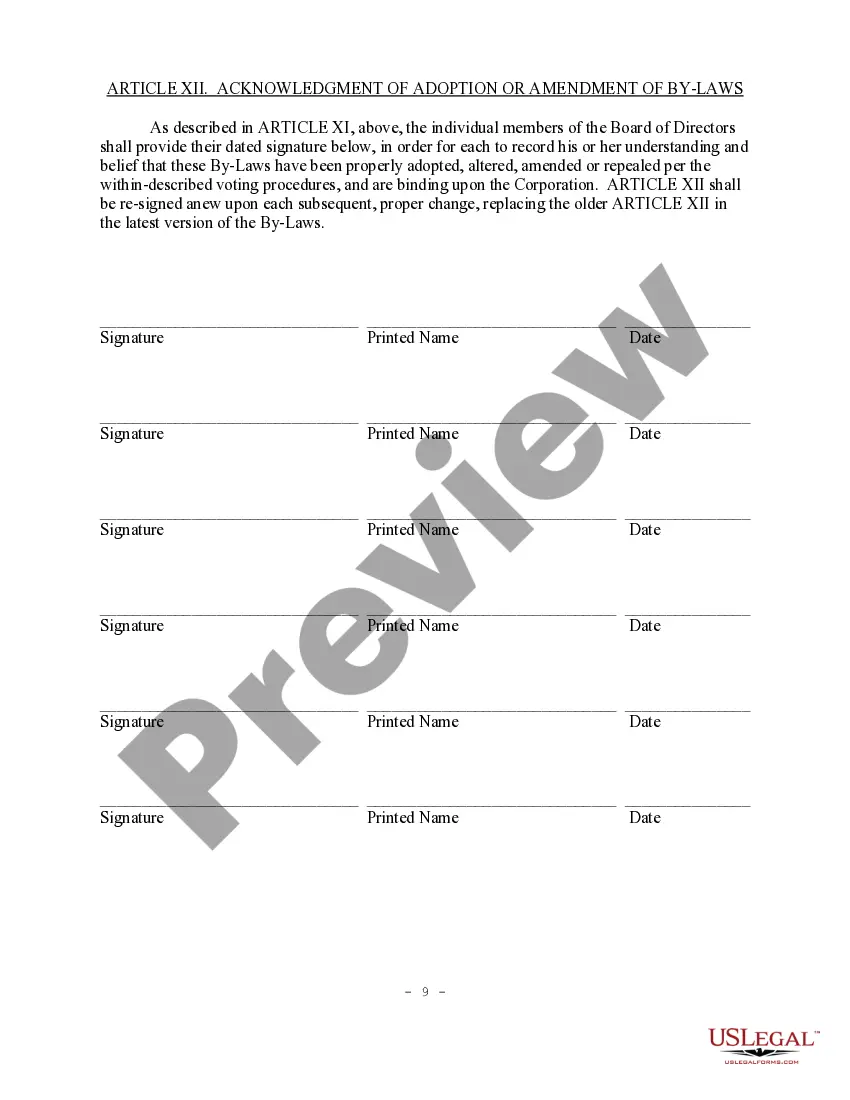
Your bylaws should help you resolve internal conflict, and demonstrate your commitment to responsibly managing donations to both the IRS and the general public. Not all states require nonprofits to draft these governing documents, but Texas does.
