Bylaws Rules And Regulations In Phoenix
Description

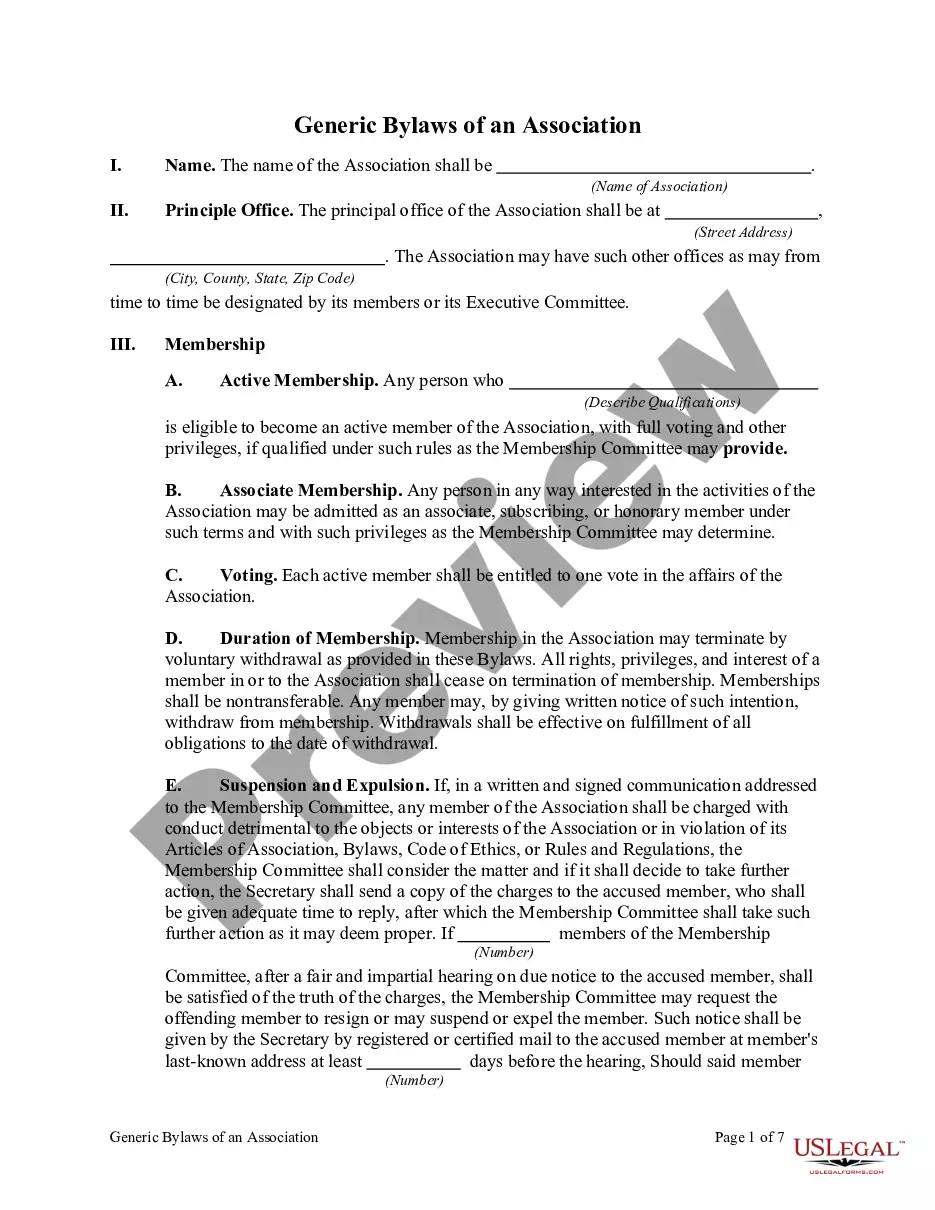

Get your form ready online
Our built-in tools help you complete, sign, share, and store your documents in one place.
Make edits, fill in missing information, and update formatting in US Legal Forms—just like you would in MS Word.
Download a copy, print it, send it by email, or mail it via USPS—whatever works best for your next step.
Sign and collect signatures with our SignNow integration. Send to multiple recipients, set reminders, and more. Go Premium to unlock E-Sign.
If this form requires notarization, complete it online through a secure video call—no need to meet a notary in person or wait for an appointment.
We protect your documents and personal data by following strict security and privacy standards.

Make edits, fill in missing information, and update formatting in US Legal Forms—just like you would in MS Word.

Download a copy, print it, send it by email, or mail it via USPS—whatever works best for your next step.

Sign and collect signatures with our SignNow integration. Send to multiple recipients, set reminders, and more. Go Premium to unlock E-Sign.

If this form requires notarization, complete it online through a secure video call—no need to meet a notary in person or wait for an appointment.

We protect your documents and personal data by following strict security and privacy standards.
Looking for another form?


Form popularity
FAQ
A Certificate of Good Standing is not a requirement for forming LLCs and corporations. Rather, Certificates of Good Standing are typically requested by banks or financial institutions to certify that a company is properly registered with the state.
Publication requirement. Arizona requires corporations to publish notice of the incorporation within 60 days of incorporation in a publication (i.e. newspaper) in the known place of business for three consecutive publications.
The minimum number of board members is set by state statute. Arizona requires one board member. Nonprofits do not need to be incorporated to receive tax exempt status from the IRS, but it is usually recommended.
Corporate bylaws are legally required in Arizona. AZ Rev Stat § 10-206 states that the “board of directors of a corporation shall adopt initial bylaws for the corporation.” This means that adopting bylaws is a legal requirement.
Arizona does not require LLCs to file an annual report. Taxes. For complete details on state taxes for Arizona LLCs, visit Business Owner's Toolkit or the State of Arizona .
Zoning is the principal tool by which the city of Phoenix implements the goals and future development plans expressed in the General Plan. Zoning regulations are intended to protect existing land uses and assure that uses are compatible with each other and with available public facilities and services.
In most residentially, zoning districts, accessory structures can be located in the rear of your property, can be as close as 3 feet to the rear and side property lines, with a maximum height of 15 feet. The building must be 6 feet away from other structures.
Unreasonable Occupancy Standards: Arizona law states that a two person per bedroom occupancy limit is presumed to be reasonable.
Note 1: The City of Phoenix maximum occupancy standards allow two persons per sleeping room. Occupancy exceptions will be considered if a family has special circumstances that are justified in writing. Exceptions will not exceed HUD's Housing Quality Standards (HQS) which allow two persons per living/sleeping room.
4 people is the maximum occupancy but some landlords push the bill. Two people per room is the norm. Arizona has no written law on the subject but that is HUD standards. Maximum occupants in a 2 bedroom home in Martinsburg west ...
