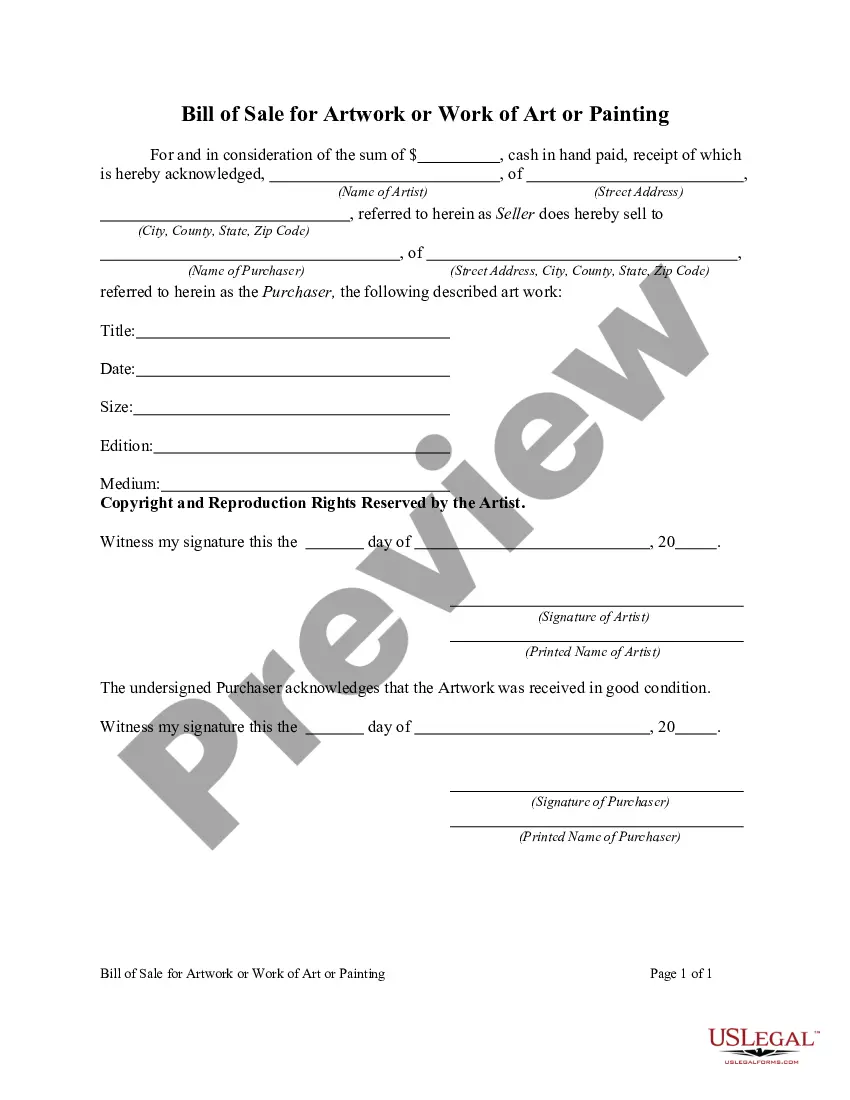
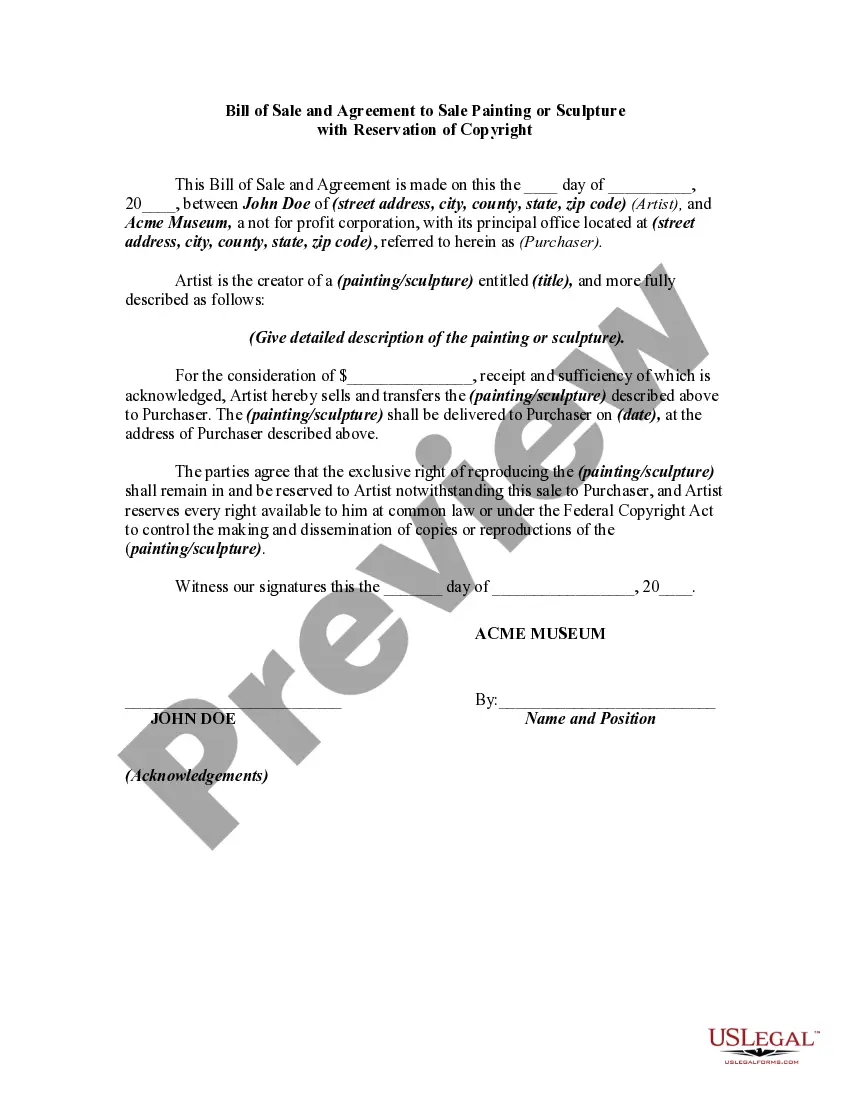
Bill Sale Art Sample With Price In Wayne
Description
Get your form ready online
Our built-in tools help you complete, sign, share, and store your documents in one place.
Make edits, fill in missing information, and update formatting in US Legal Forms—just like you would in MS Word.
Download a copy, print it, send it by email, or mail it via USPS—whatever works best for your next step.
Sign and collect signatures with our SignNow integration. Send to multiple recipients, set reminders, and more. Go Premium to unlock E-Sign.
If this form requires notarization, complete it online through a secure video call—no need to meet a notary in person or wait for an appointment.
We protect your documents and personal data by following strict security and privacy standards.

Make edits, fill in missing information, and update formatting in US Legal Forms—just like you would in MS Word.

Download a copy, print it, send it by email, or mail it via USPS—whatever works best for your next step.

Sign and collect signatures with our SignNow integration. Send to multiple recipients, set reminders, and more. Go Premium to unlock E-Sign.

If this form requires notarization, complete it online through a secure video call—no need to meet a notary in person or wait for an appointment.

We protect your documents and personal data by following strict security and privacy standards.
Looking for another form?









Form popularity
FAQ
Expensive paintings are best sold through high-end galleries, auction houses, or specialized online platforms like Artsy and Saatchi Art. Building relationships with collectors and leveraging art fairs can also provide opportunities to sell high-value artworks. For further advice, visit my Quora Profile.
What Needs To Be Included in Your Painting Invoice? Business Name and Address. This shows who you are and how to reach you. Client Name and Address. Invoice Number. Invoice Date. Line-Item Description. Hours Worked. Amount Due. Taxes.
The size of your pieces will also influence how it should be packaged. Smaller pieces and medium-sized artworks should be shipped in padded mailers or corrugated cardboard boxes, while crating is the best approach for large artwork larger than 48 inches to ensure maximum protection.
How to invoice as a freelancer: What should go on an invoice? Your name (and company name, if applicable) Address Phone number Invoice number Date of the invoice (the date you send it) An itemized list of the work you did The associated costs for the work A tally of all costs
Anatomy of an invoice Identify the parties. Include your business details (including tax number if you have one) ... Describe what's being exchanged. Describe the goods or services provided using the same language as in your quote, if you provided one. Give the payment details. Add the due date.
Invoices should contain information about: you the artist. your billing address. your client or customer. their taxable address. your tax reference code (UTR - unique tax reference code if in the UK) the tax date for the product or service rendered. description of the artwork provided or artistic service rendered.
On your invoice, you should include: Your details. Your business name and address. Your buyer's details. Your buyer's name and address. Information about the artwork. Separate line items for each product or service delivered. Information about the payment terms. Your hourly rate, if relevant.
Steps for determining the value of your art: Step 1: Determine if your artwork is a painting or a print. Step 2: Consider the provenance. Step 3: Find the Signature, and search the internet to try and find the artist. Step 4: Look at other listings by that same artist on the internet. Step 5: Find Comparable Artworks.
An art invoice template should include your personal or business contact information, client details, a list of the artwork(s) provided with detailed descriptions (title, medium, size, etc.), prices per item, and a total sum that includes any applicable taxes or additional fees (e.g., shipping, insurance).