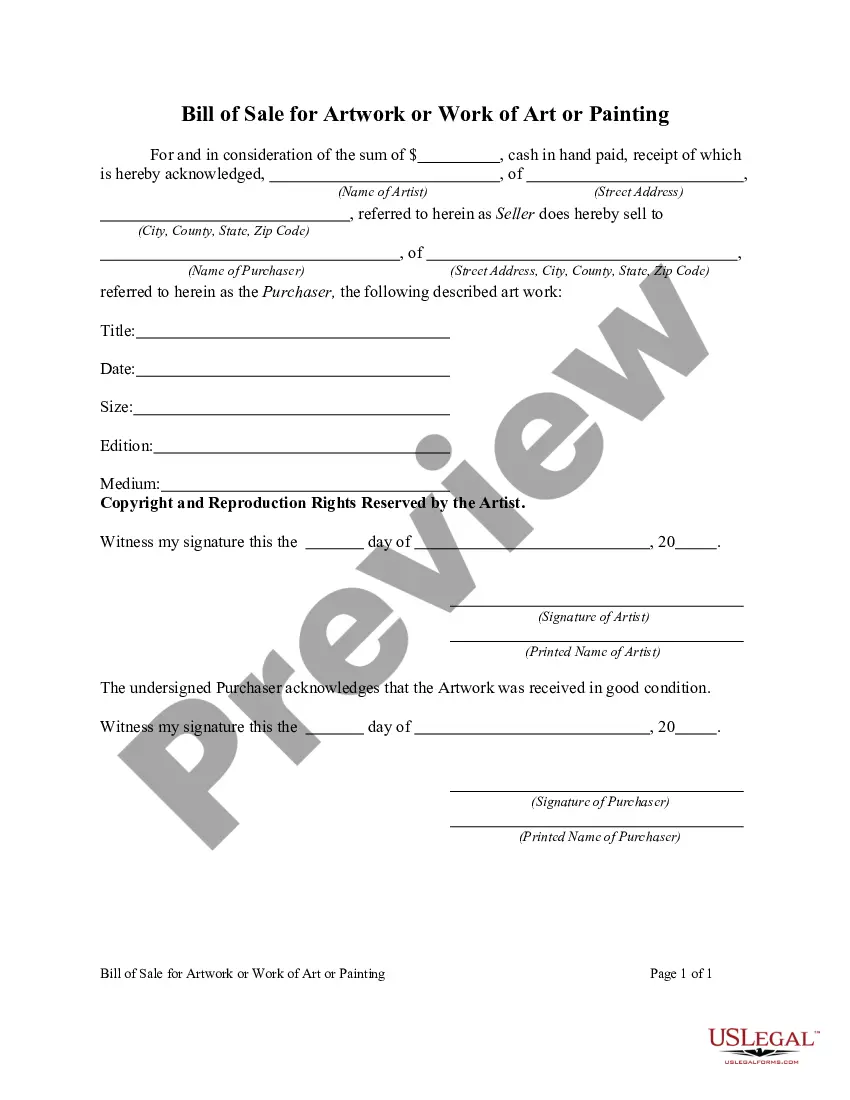
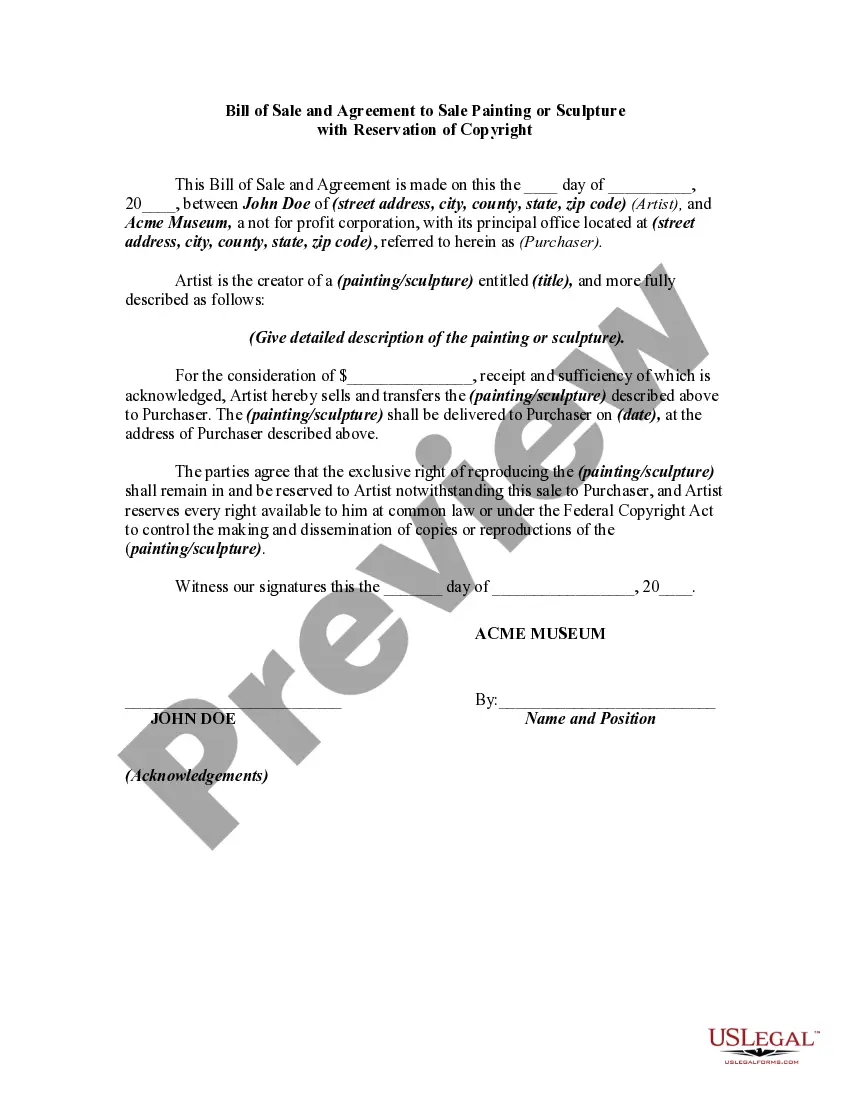
Bill Sale Art Sample For Job In Wayne
Description
Get your form ready online
Our built-in tools help you complete, sign, share, and store your documents in one place.
Make edits, fill in missing information, and update formatting in US Legal Forms—just like you would in MS Word.
Download a copy, print it, send it by email, or mail it via USPS—whatever works best for your next step.
Sign and collect signatures with our SignNow integration. Send to multiple recipients, set reminders, and more. Go Premium to unlock E-Sign.
If this form requires notarization, complete it online through a secure video call—no need to meet a notary in person or wait for an appointment.
We protect your documents and personal data by following strict security and privacy standards.

Make edits, fill in missing information, and update formatting in US Legal Forms—just like you would in MS Word.

Download a copy, print it, send it by email, or mail it via USPS—whatever works best for your next step.

Sign and collect signatures with our SignNow integration. Send to multiple recipients, set reminders, and more. Go Premium to unlock E-Sign.

If this form requires notarization, complete it online through a secure video call—no need to meet a notary in person or wait for an appointment.

We protect your documents and personal data by following strict security and privacy standards.
Looking for another form?










Form popularity
FAQ
Invoices should contain information about: you the artist. your billing address. your client or customer. their taxable address. your tax reference code (UTR - unique tax reference code if in the UK) the tax date for the product or service rendered. description of the artwork provided or artistic service rendered.
After all, this is where your customer will turn to learn more about your piece. The best artwork descriptions on Artfinder comprise two sections: one detailing the inspiration behind the piece and another presenting the bare facts.
A strong artist's statement, whether it's written on a wall label or simply the way you talk about your work, is the best way I know how to sell your art. Be ready to talk about your work, and share your passion for it when you do. Tell a story, take them on a journey.
Use Frames Choose the Right Frame: Select frames that complement your art without overshadowing it. Use Mats: Adding a mat around your print can give it a polished look and draw attention to the artwork. Display in a Grid: Arrange framed prints in a grid pattern on the wall to create a cohesive and organized display.
Verbal description should include standard information, the artists name, the title of the work, key dates, mediums, dimensions, nationality of the artist, giving the viewer/buyer, quick, relevant, facts that they can easily recall.
Title and Artist : Start with the title of the artwork and the name of the artist. Medium and Size : Describe the materials used (e.g., oil paint, watercolor, sculpture) and the size of the artwork (e.g., large canvas, small sculpture). Composition : Explain the arrangement of elements. Color Palette : Discuss the colo
How To Describe Your Art Stand in Their Shoes First. Before you start talking too much about how elegant your composition is, understand your audience. Bring Out the Touch and Feel of Your Work. Leave Your Ego at Home. Make Your Words Lively. Keep It Simple.
Participate in local and national art fairs and festivals. These events attract collectors and art enthusiasts, providing direct access to potential buyers. Utilize platforms like Etsy, Saatchi Art, or Artsy to sell your work. These platforms often have built-in audiences of collectors looking for unique pieces.
Typical commission rates for art galleries range anywhere between 30% and 60%, with the industry average being 50%.
On your invoice, you should include: Your details. Your business name and address. Your buyer's details. Your buyer's name and address. Information about the artwork. Separate line items for each product or service delivered. Information about the payment terms. Your hourly rate, if relevant.