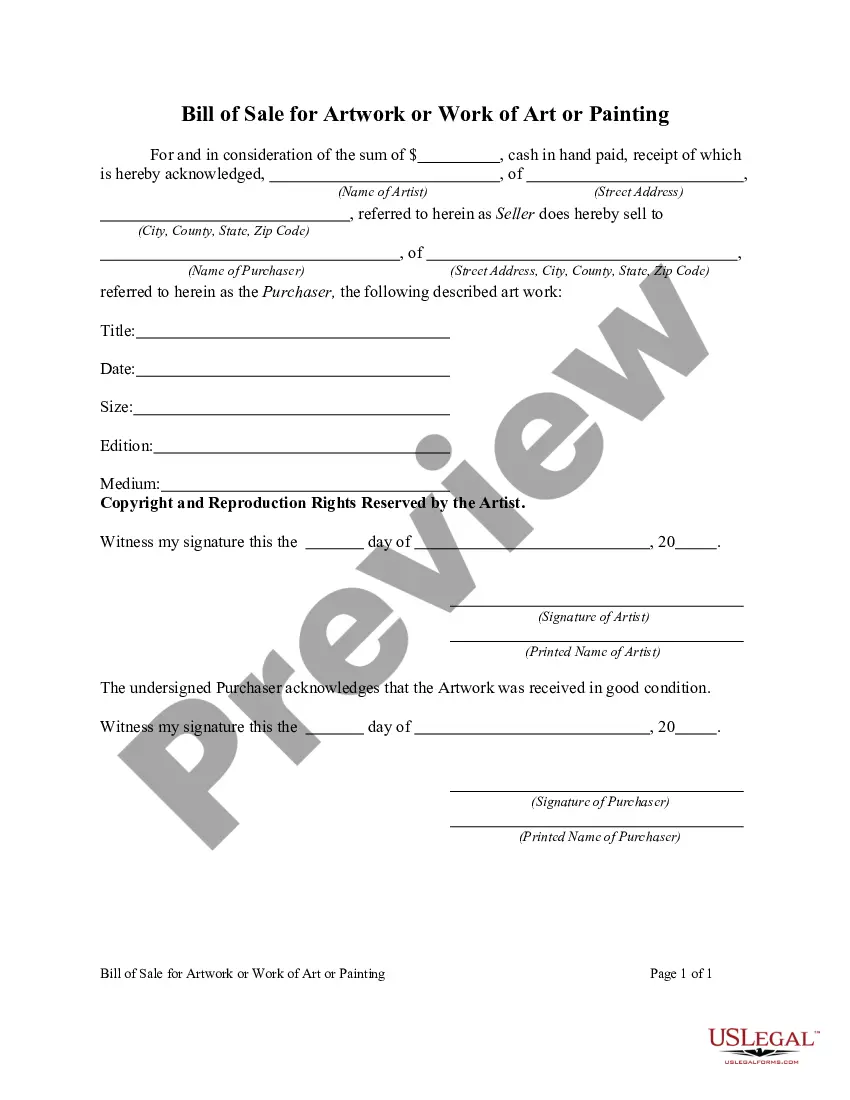
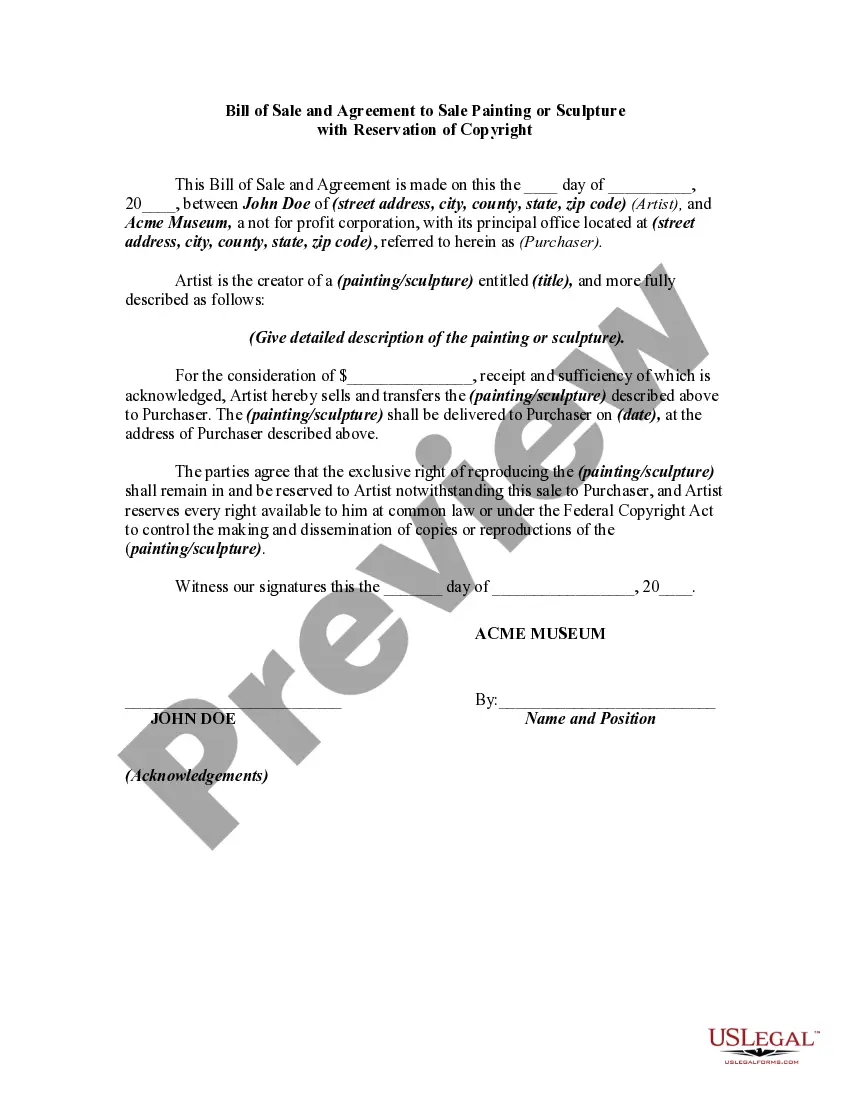
Bill Sale Art Sample Without Permission In Virginia
Description
Get your form ready online
Our built-in tools help you complete, sign, share, and store your documents in one place.
Make edits, fill in missing information, and update formatting in US Legal Forms—just like you would in MS Word.
Download a copy, print it, send it by email, or mail it via USPS—whatever works best for your next step.
Sign and collect signatures with our SignNow integration. Send to multiple recipients, set reminders, and more. Go Premium to unlock E-Sign.
If this form requires notarization, complete it online through a secure video call—no need to meet a notary in person or wait for an appointment.
We protect your documents and personal data by following strict security and privacy standards.

Make edits, fill in missing information, and update formatting in US Legal Forms—just like you would in MS Word.

Download a copy, print it, send it by email, or mail it via USPS—whatever works best for your next step.

Sign and collect signatures with our SignNow integration. Send to multiple recipients, set reminders, and more. Go Premium to unlock E-Sign.

If this form requires notarization, complete it online through a secure video call—no need to meet a notary in person or wait for an appointment.

We protect your documents and personal data by following strict security and privacy standards.
Looking for another form?


Form popularity
FAQ
It is a legal document, similar to a contract, that makes a record of the agreement to sell and receive the goods. To be legally binding, the agreement is made consciously and some actions will now be either prohibited or required, depending on the situation: A bill of sale is a piece of evidence for the sale.
If the seller withholds information from the buyer, or misrepresents the value of an item, this may render a bill of sale null and void.
Your bill of sale shows proof that both buyer and seller had legal intent to transfer ownership of any given item. Because of this, your bill of sale protects both parties involved in the sale from any malicious legal issues.
Currently, Virginia does not mandate the seller's signature to be notarized. While a notarized title document is optional, confirming it with a notary can still provide additional safeguards.
On the Application for Certificate of Title and Registration form, you can choose to receive a paper title, or have DMV keep an electronic record of the title to ensure its safety.
The provisions of §§ 46.2-1158 and 46.2-1539 requiring inspection of any motor vehicle prior to sale at retail shall not apply to any person conducting a public auction for the sale of motor vehicles at retail, provided that the individual, firm, or business conducting the auction shall not have taken title to the ...
In most cases, a Virginia bill of sale does not require notarization. However, certain transactions, such as real estate transfers, may require notarization for validity. It's always best to consult with legal professionals for specific requirements.
A motor vehicle bill of sale is required when selling a car, motorcycle, or other motor vehicle in the state of Virginia. Each document includes information such as vehicle details, model year, vehicle identification number, body type, and odometer reading (odometer disclosure statement).
Sale of vehicle without certificate of title.
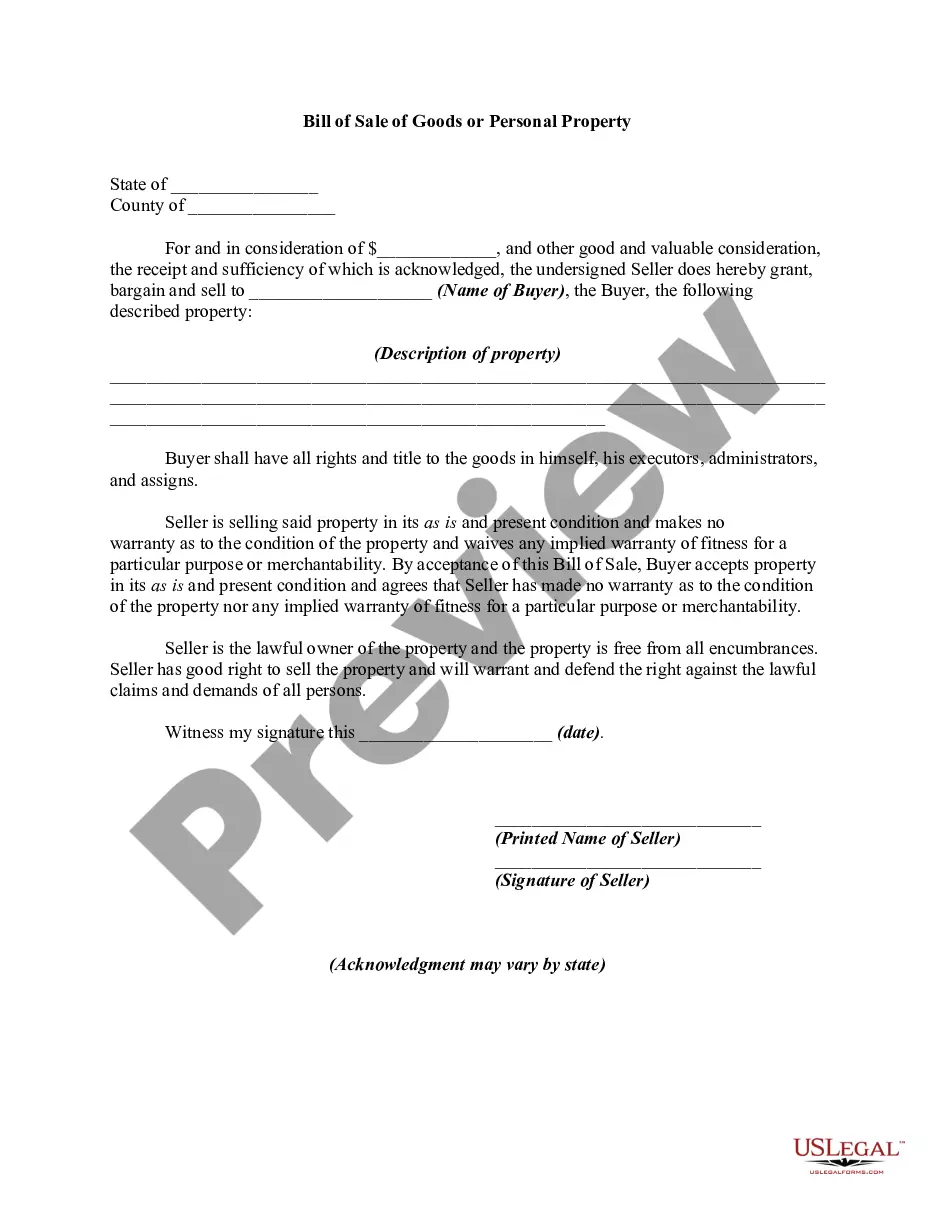
A bill of sale is generally a binding legal document that records the transfer of ownership of goods, commonly vehicles and livestock. Although similar to a contract, a bill of sale may not cover all elements such as warranties or payment terms.