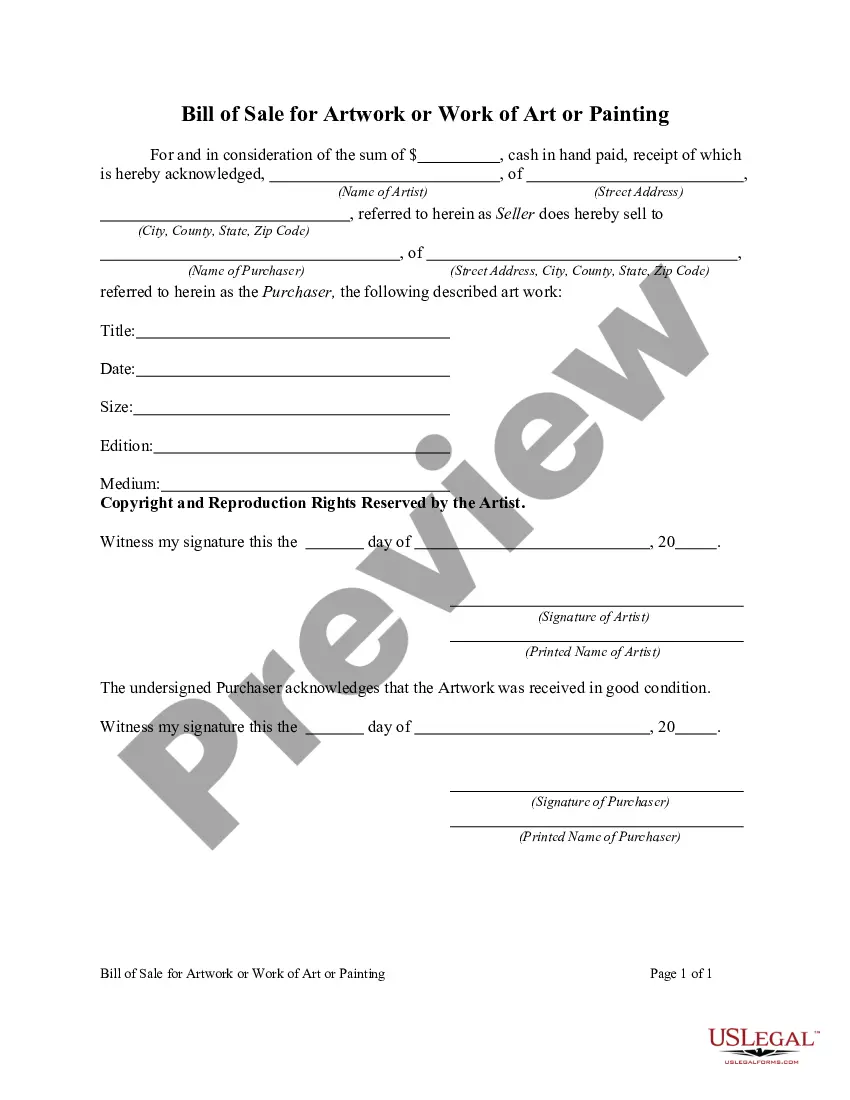
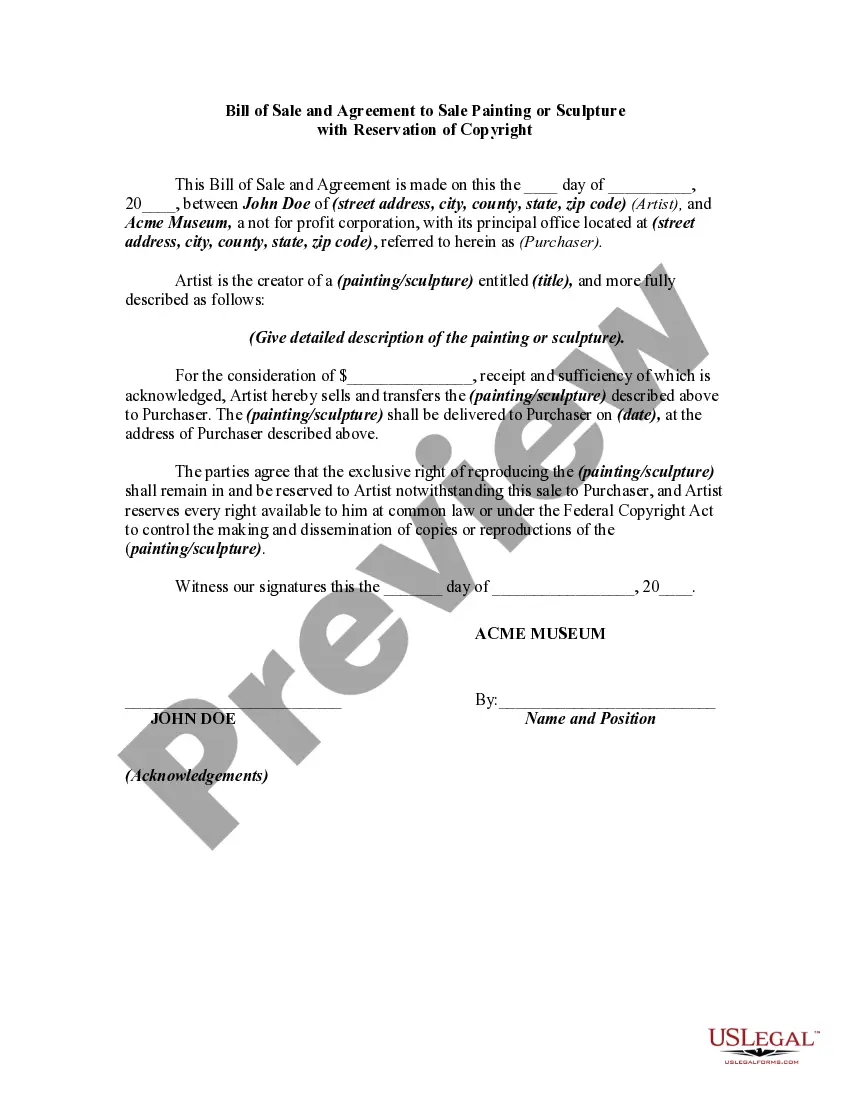
Bill Sale Art Sample Without Permission In King
Description
Get your form ready online
Our built-in tools help you complete, sign, share, and store your documents in one place.
Make edits, fill in missing information, and update formatting in US Legal Forms—just like you would in MS Word.
Download a copy, print it, send it by email, or mail it via USPS—whatever works best for your next step.
Sign and collect signatures with our SignNow integration. Send to multiple recipients, set reminders, and more. Go Premium to unlock E-Sign.
If this form requires notarization, complete it online through a secure video call—no need to meet a notary in person or wait for an appointment.
We protect your documents and personal data by following strict security and privacy standards.

Make edits, fill in missing information, and update formatting in US Legal Forms—just like you would in MS Word.

Download a copy, print it, send it by email, or mail it via USPS—whatever works best for your next step.

Sign and collect signatures with our SignNow integration. Send to multiple recipients, set reminders, and more. Go Premium to unlock E-Sign.

If this form requires notarization, complete it online through a secure video call—no need to meet a notary in person or wait for an appointment.

We protect your documents and personal data by following strict security and privacy standards.
Looking for another form?






Form popularity
FAQ
You cannot take someone's photo and draw straight from it, especially if it has copyright. That is seen as intellectual theft and the creator can sue you for it!
Contact the Infringing Parties: Reach out to the individuals or businesses selling your artwork without permission. Be professional and clear in your communication, explaining the infringement, providing your copyright registration number if applicable, and requesting the immediate removal of the infringing listings.
Copyright law is a form of intellectual property that protects the unique expression of ideas, empowering artists to control how their work is used. If you're looking to reproduce an artist's work, you'll need permission from the copyright owner in the form of a license.
Art theft, sometimes called artnapping, is the stealing of paintings, sculptures, or other forms of visual art from galleries, museums or other public and private locations.
Clearing a sample If you include a sample of someone else's music in your own work, then you need to get permission to use it. There are two bits of copyright that you need to clear and, in many cases, neither of these will be owned by the artist who performed the track.
By obtaining permission from the original musician or owner of the rights to the music, many musicians can avoid legal trouble, such as an injunction not to use the sample or even monetary damages.
There are no fixed standards as to how much of a song you can use without infringing the song owner's copyright.
Sample Clearance and Licensing to Avoid Copyright Infringement Find the Music Publisher. Find the Master Recording Owner. Compulsory License. Recreate the Music Sample. Seek Copyright Owners Who Are Happy to Clear Samples. Contact the Artist Directly. Fair Use in Music Law. Use Musical Works in the Public Domain.
It is illegal. Once any piece of work is created, it is automatically copyrighted. This includes art, photography, music, etc. You have to have the creator's written permission before you use it anyway at all. If you want more information, you can search for copyright infringement.