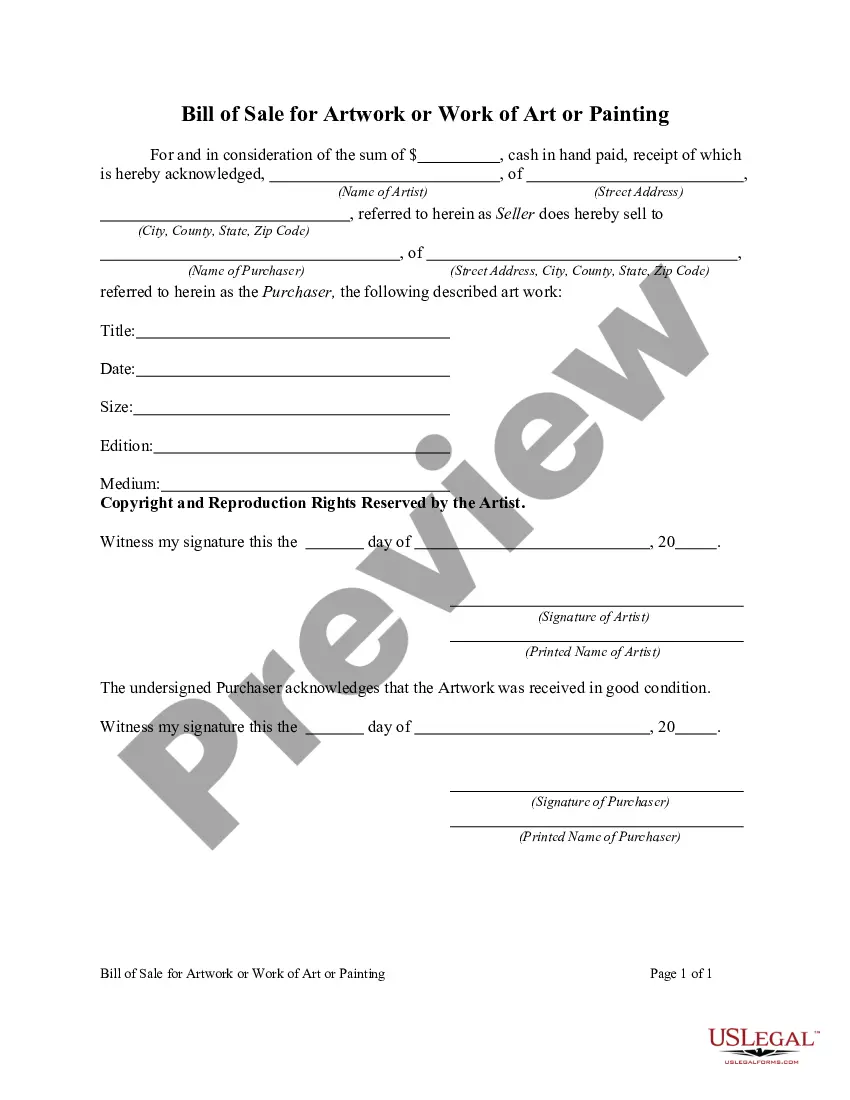
Bill Sale Art Sample Without Payment In Dallas
Description
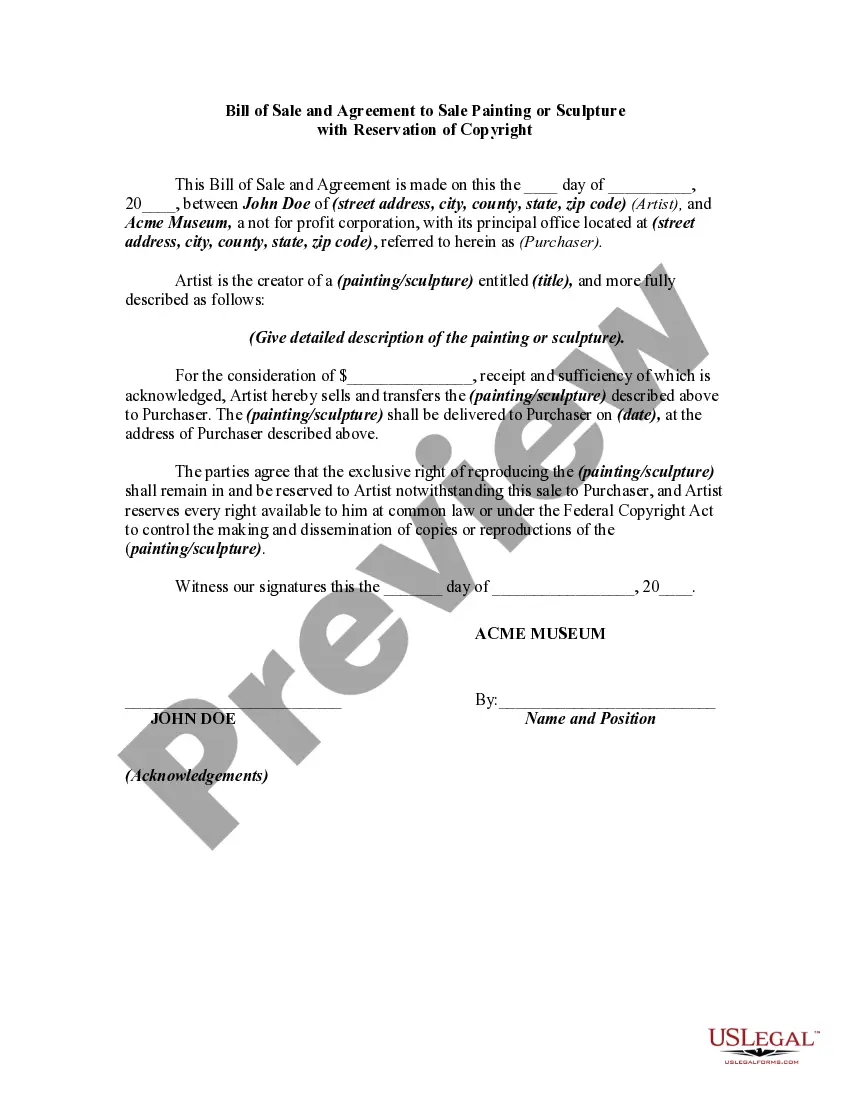
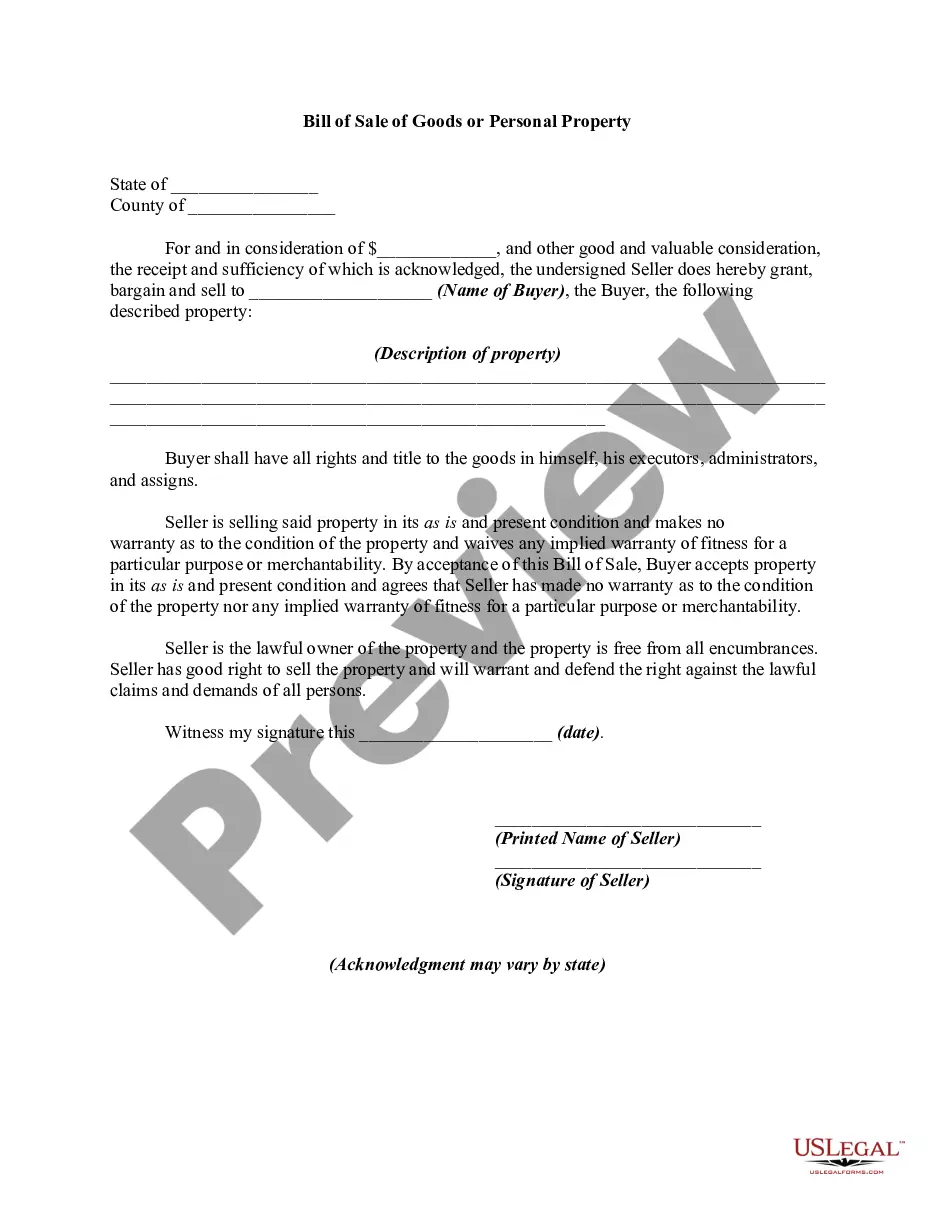
Get your form ready online
Our built-in tools help you complete, sign, share, and store your documents in one place.
Make edits, fill in missing information, and update formatting in US Legal Forms—just like you would in MS Word.
Download a copy, print it, send it by email, or mail it via USPS—whatever works best for your next step.
Sign and collect signatures with our SignNow integration. Send to multiple recipients, set reminders, and more. Go Premium to unlock E-Sign.
If this form requires notarization, complete it online through a secure video call—no need to meet a notary in person or wait for an appointment.
We protect your documents and personal data by following strict security and privacy standards.

Make edits, fill in missing information, and update formatting in US Legal Forms—just like you would in MS Word.

Download a copy, print it, send it by email, or mail it via USPS—whatever works best for your next step.

Sign and collect signatures with our SignNow integration. Send to multiple recipients, set reminders, and more. Go Premium to unlock E-Sign.

If this form requires notarization, complete it online through a secure video call—no need to meet a notary in person or wait for an appointment.

We protect your documents and personal data by following strict security and privacy standards.
Looking for another form?








Form popularity
FAQ
If you are selling any artwork yourself, it is a legal requirement to have a business license.
Artist's Bill of Sale Date of sale and invoice number. Invoice numbers can be used as a unique reference ID and will prove very helpful should you need to quickly find the documentation later. Artist's contact information. Buyer's contact information. Artwork sold. Subtotal. Taxes. Other charges. Total.
On your invoice, you should include: Your details. Your business name and address. Your buyer's details. Your buyer's name and address. Information about the artwork. Separate line items for each product or service delivered. Information about the payment terms. Your hourly rate, if relevant.
Invoices should contain information about: you the artist. your billing address. your client or customer. their taxable address. your tax reference code (UTR - unique tax reference code if in the UK) the tax date for the product or service rendered. description of the artwork provided or artistic service rendered.
What is included in a bill of sale? Buyer and seller details. You should include their full names, addresses, and contact information. Description of the item being sold. The sale agreement. Location and date of sale. Terms and conditions of the transaction. Buyer's signature and seller's signature.
Verbal description should include standard information, the artists name, the title of the work, key dates, mediums, dimensions, nationality of the artist, giving the viewer/buyer, quick, relevant, facts that they can easily recall.
Yes, Texas recognizes handwritten bills of sale as valid, as long as they contain all the necessary information and are signed by both the buyer and the seller.
If possible, make a copy of the original title showing the date of transfer and have this document notarized. In Texas, the new owner is required by law to transfer the ownership of the vehicle to their name within 30 days. The vehicles title does not have to be notarized to effect transfer of ownership.
Generally, the types of documents that require a notary are those that have legal or financial significance. Some common types of documents that require notarization are as follows: Legal documents: Like affidavits and power of attorney forms.
Both parties must sign a Texas bill of sale. The buyer and seller's signatures make the document legally binding. While notarization isn't mandatory for most transactions, it offers additional legal protection. Notarizing the document helps prevent disputes by validating the identities of the parties involved.