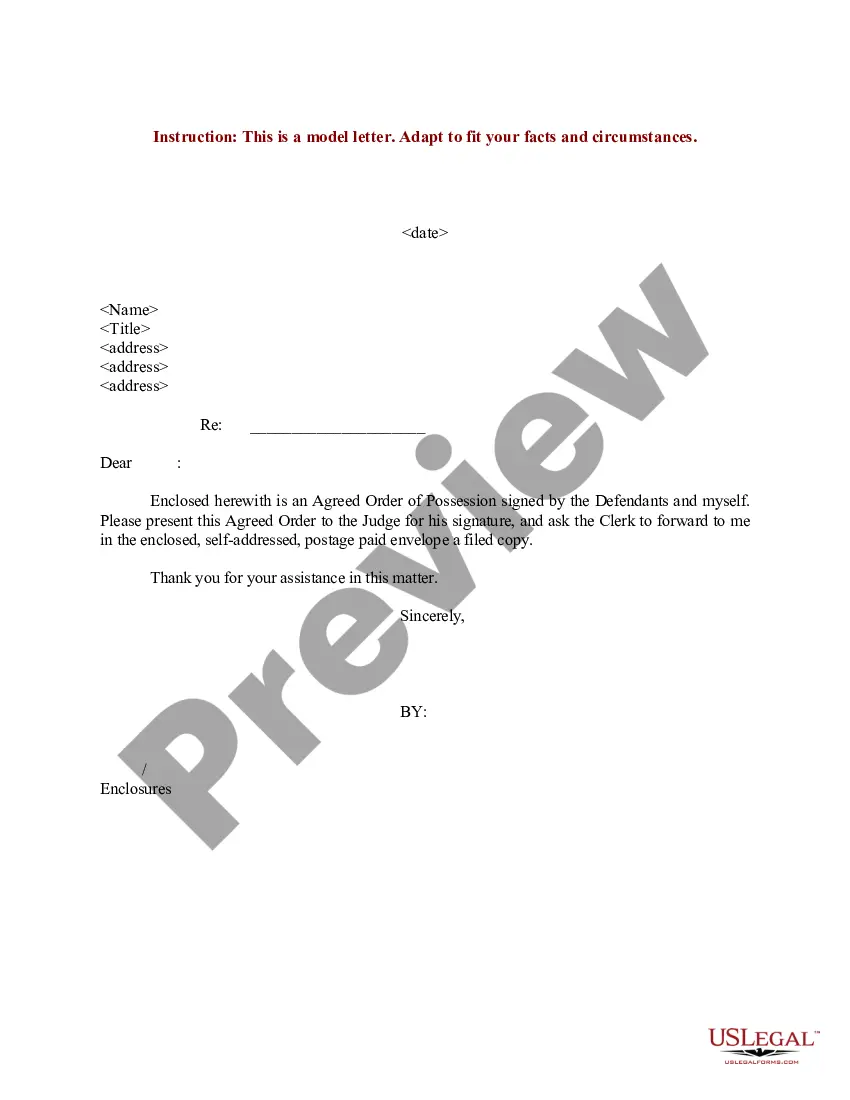
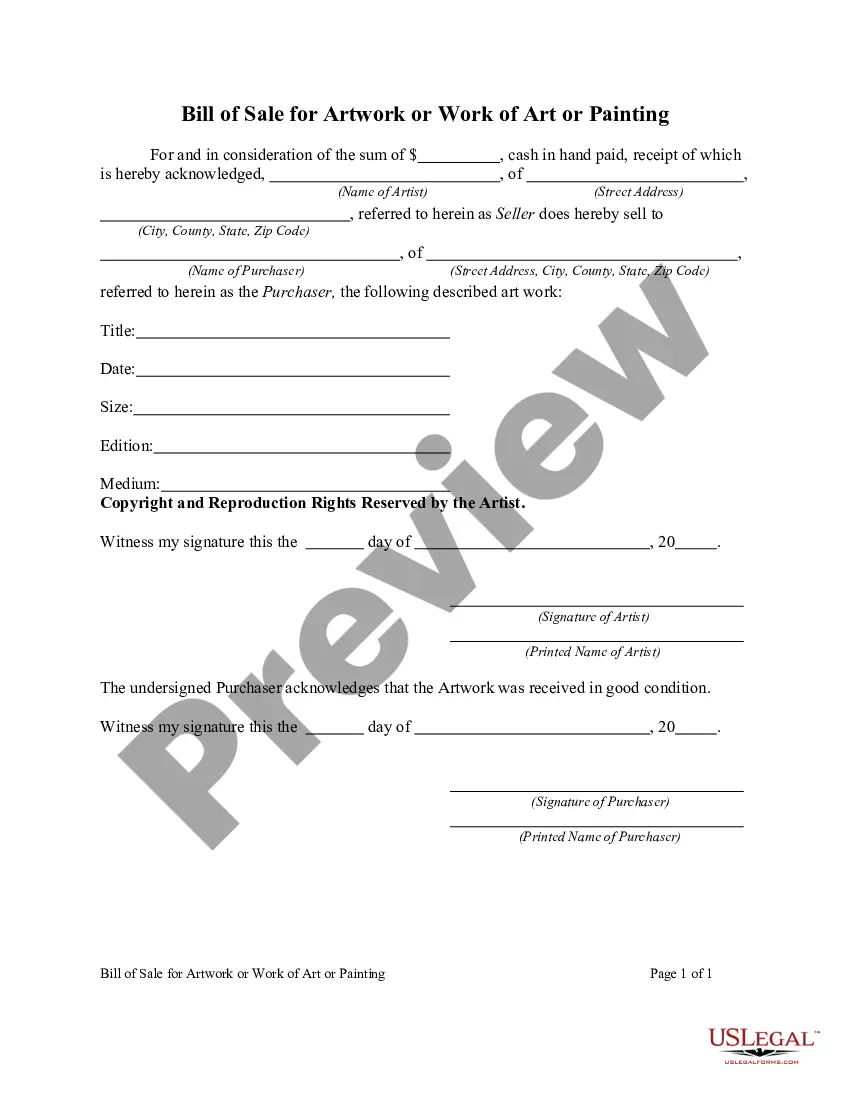
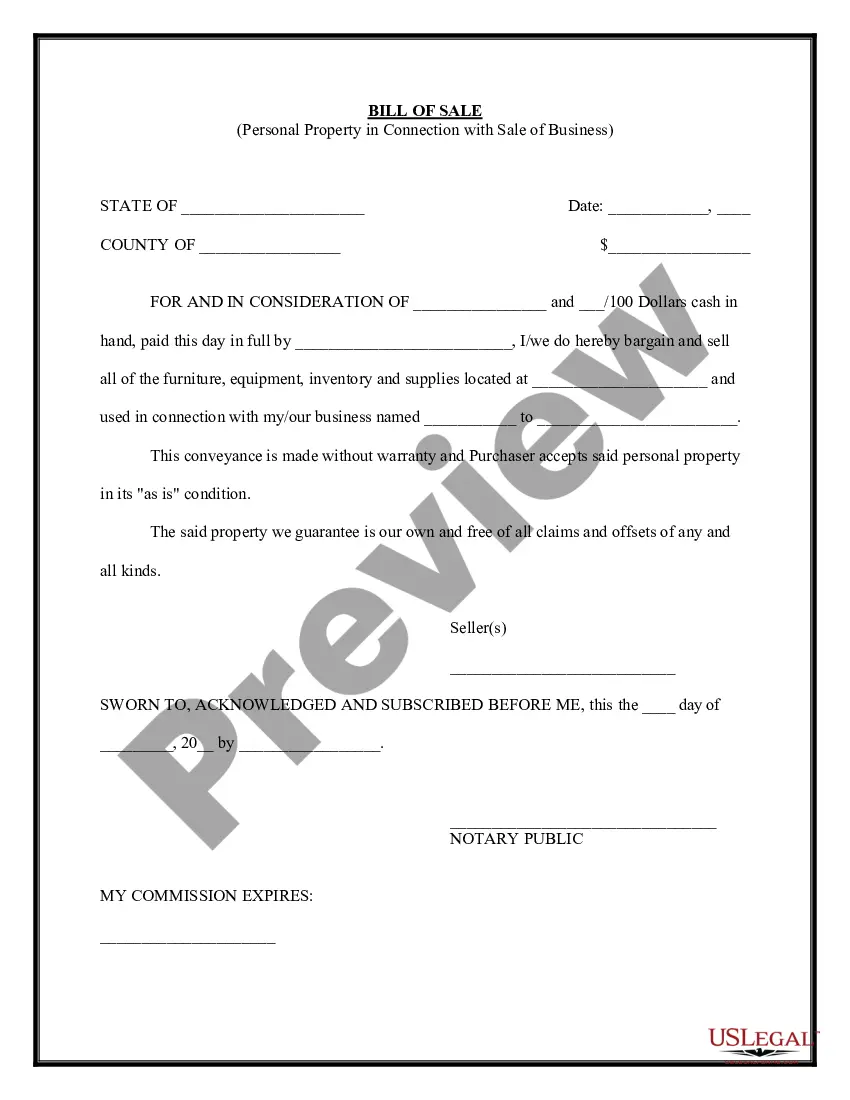
Bill Sale Art Sample Without Permission In Cuyahoga
Description
Get your form ready online
Our built-in tools help you complete, sign, share, and store your documents in one place.
Make edits, fill in missing information, and update formatting in US Legal Forms—just like you would in MS Word.
Download a copy, print it, send it by email, or mail it via USPS—whatever works best for your next step.
Sign and collect signatures with our SignNow integration. Send to multiple recipients, set reminders, and more. Go Premium to unlock E-Sign.
If this form requires notarization, complete it online through a secure video call—no need to meet a notary in person or wait for an appointment.
We protect your documents and personal data by following strict security and privacy standards.

Make edits, fill in missing information, and update formatting in US Legal Forms—just like you would in MS Word.

Download a copy, print it, send it by email, or mail it via USPS—whatever works best for your next step.

Sign and collect signatures with our SignNow integration. Send to multiple recipients, set reminders, and more. Go Premium to unlock E-Sign.

If this form requires notarization, complete it online through a secure video call—no need to meet a notary in person or wait for an appointment.

We protect your documents and personal data by following strict security and privacy standards.
Looking for another form?
Form popularity
FAQ
Claims related to injuries must hence be filed within 2 years since the occurrence of the injury. Property Damage: For issues concerning damages to property, the limitation period is either 2 years for personal property or 4 years for real property.
R. 5(B)(1) makes clear that when a notice of limited appearance has been filed by an attorney, an opposing party shall continue serving documents upon the party throughout the duration of the limited appearance while also serving the attorney.
Rule 3 - Commencement of Action; Venue (A) Commencement. A civil action is commenced by filing a complaint with the court, if service is obtained within one year from such filing upon a named defendant, or upon an incorrectly named defendant whose name is later corrected pursuant to Civ.
And some states also allow judgment liens on the debtor's personal property -- things like jewelry, art, antiques, and other valuables. In Ohio, a judgment lien can be attached to real estate only (such as a house, land, or similar property interest).
(B)(1) A judgment that is not in favor of the state is dormant and shall not operate as a lien against the estate of the judgment debtor unless one of the following occurs within five years from the date of the judgment or any renewal of the judgment, whichever is later: (a) An execution on a judgment is issued.
To collect your judgment through a bank account attachment, complete the following three steps: Find out the name of the Judgment Debtor's bank, the bank's address, and the Judgment Debtor's account number. Obtain and complete the OTW Garnishment Packet. File the "OTW" Garnishment Packet with the Clerk of Court.
(2) All cases submitted for determination after a court trial shall be decided within ni nety days from the date the case was subm i tted. (3) All motions shall be ruled upon within one hundred twenty days from the date the moti on was filed, except as otherwi se noted on the report forms.
Is sampling music legal? Sampling music is legal, as long as you get permission for the sample usage from the original artists, writers, and copyright owners. Music is protected by copyright law, so reusing any portion of music—no matter how short or long—needs to be cleared and licensed.
The owner of the song or master recording can give the artist a license to use the copyrighted music. Find the Music Publisher. Find the Master Recording Owner. Compulsory License. Recreate the Music Sample. Seek Copyright Owners Who Are Happy to Clear Samples. Contact the Artist Directly. Fair Use in Music Law.
Sampling music requires two sample clearances: Clearance from the copyright owner of the song, typically the music publisher. Clearance from the copyright owner of the master recording, typically the recording company.