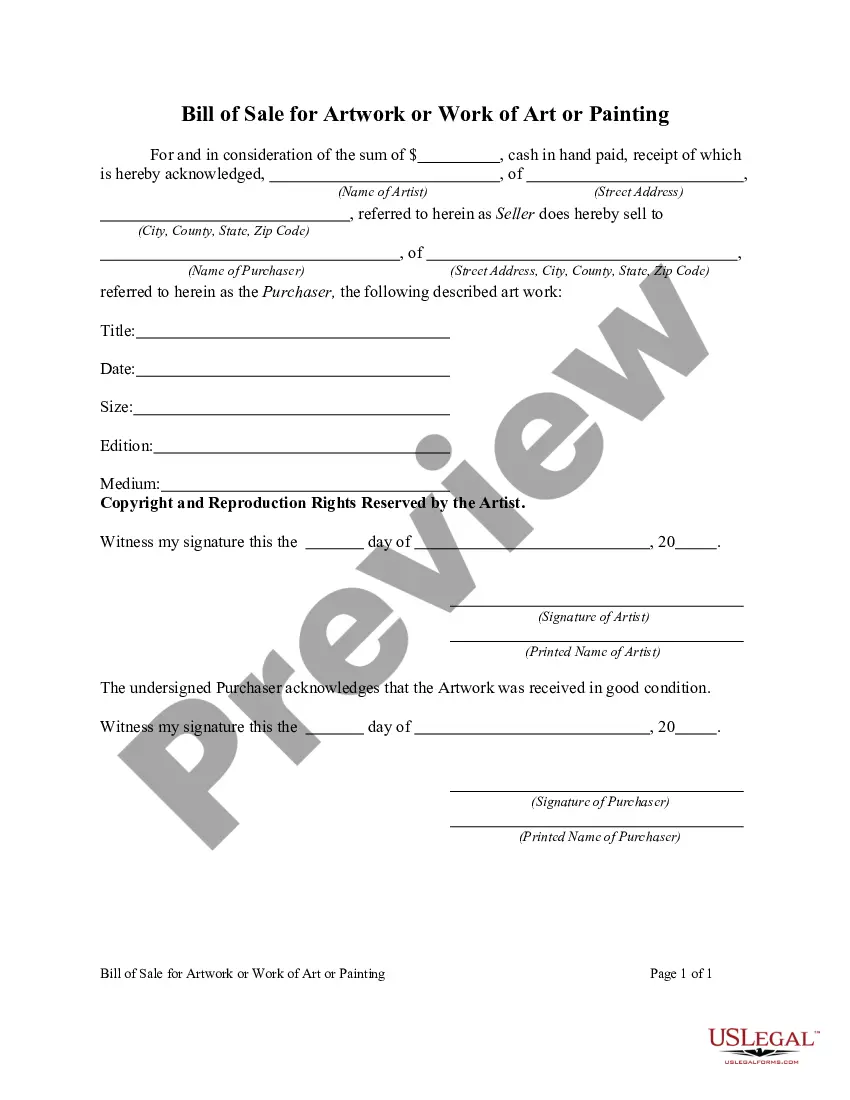
Bill Of Sale For Artwork Without Title In Clark
Description


Form popularity
FAQ
Ready to Exhibit Your Art? Here Are Steps You Can Take Try a home show and invite your friends. Connect with a local business and see if they might be interested in hanging your work in their establishment. Get together with a few other artists and rent a space for your exhibition. Enter juried exhibitions.
Selling art takes a long time, but if you are passionate enough you can absolutely make a living selling your original works. Yes, it is your hobby and yes, it is your emotional escape, however it can also be your financial institution.
The answer is simple, poster putty. I use a nail and hook to hang the picture or painting like any regular piece of art, but then I place a 1cm (1/2 inch) sized piece of poster putty on each lower corner.
The rule of thirds is a guideline commonly used in painting, photography, and design. The rule of thirds means that the subject isn't centered; rather, the main focal point can be to one side or at the top or bottom of the image.
Yes, even if you don't think of yourself as a skilled artist, you can still sell your work. The art market is vast and accommodates a range of preferences and tastes. Technical expertise and aesthetic talent can undoubtedly aid in luring shoppers.
A title provides an art judge or an art jury with a deeper insight into that piece of art. This also holds true for galleries and art buyers. A title guides and provides a hint to the viewer about what the artist was thinking when the work was created.
COAs prove the legitimacy of an item, therefore informing consumers about its origin. These certificates can be used as marketing tools and are often used in auctions or private sales to prove authenticity. COAs prove an item is genuine, untampered and prove its value.
Yes, it's always a good idea to provide a certificate of authenticity (COA) for any artwork you create, even if it's a commissioned fan art.
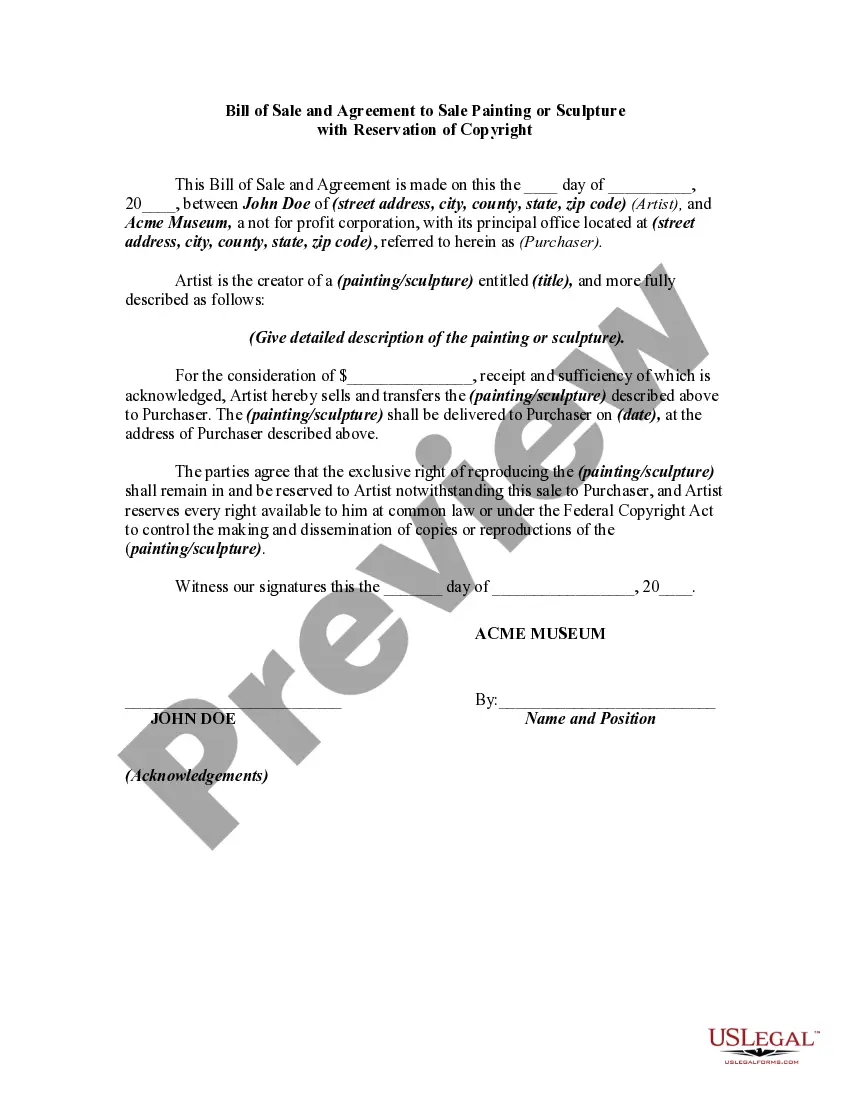
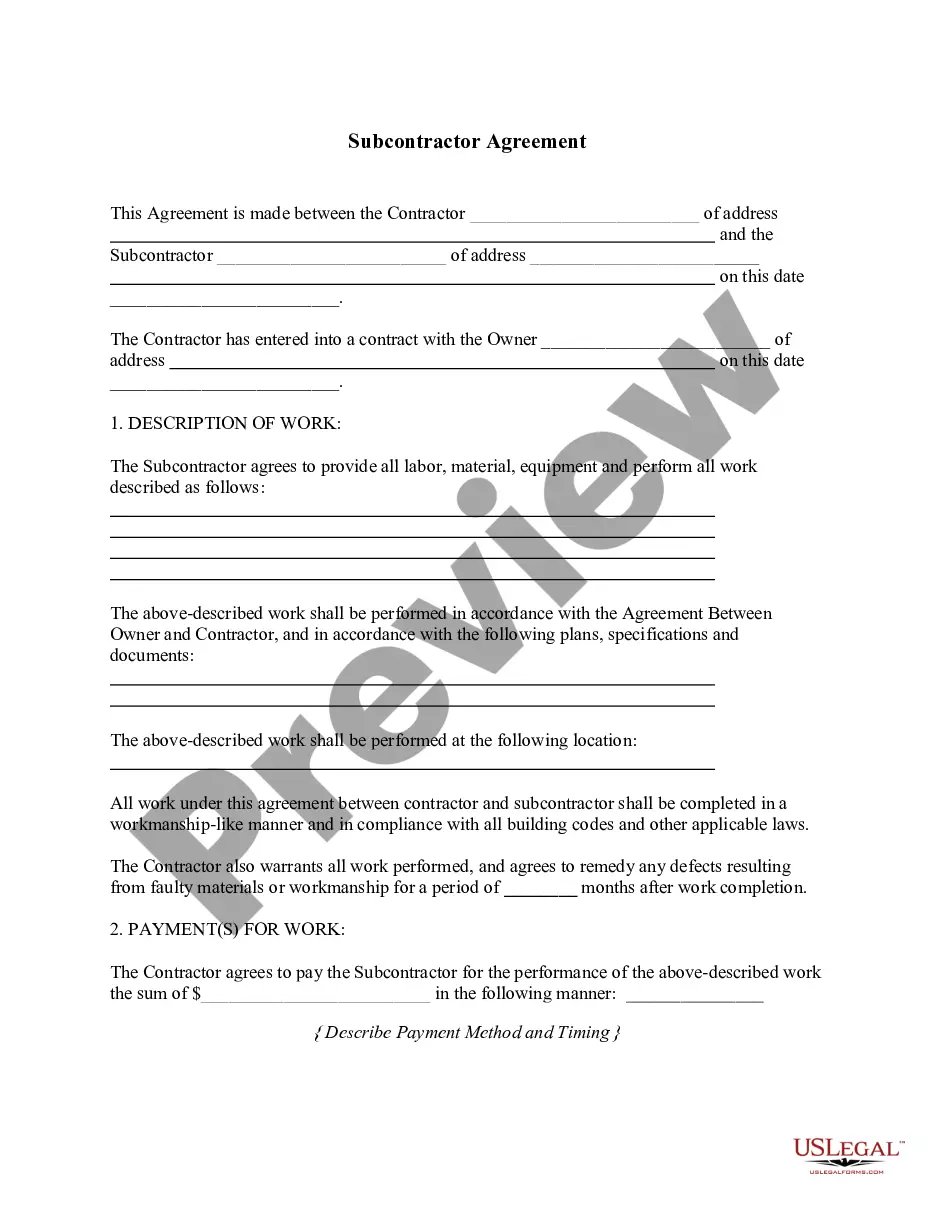
Artist's Bill of Sale Date of sale and invoice number. Invoice numbers can be used as a unique reference ID and will prove very helpful should you need to quickly find the documentation later. Artist's contact information. Buyer's contact information. Artwork sold. Subtotal. Taxes. Other charges. Total.
Artistic authenticity is a requirement for the inscription of an artwork to the World Heritage List of the Educational, Scientific, and Cultural Organisation of the United Nations (UNESCO); the Nara Document on Authenticity (1994) stipulates that artistic authenticity can be expressed through the form and design; the ...