Contingency Fee In Building Contracts In Hillsborough
Description







Get your form ready online
Our built-in tools help you complete, sign, share, and store your documents in one place.
Make edits, fill in missing information, and update formatting in US Legal Forms—just like you would in MS Word.
Download a copy, print it, send it by email, or mail it via USPS—whatever works best for your next step.
Sign and collect signatures with our SignNow integration. Send to multiple recipients, set reminders, and more. Go Premium to unlock E-Sign.
If this form requires notarization, complete it online through a secure video call—no need to meet a notary in person or wait for an appointment.
We protect your documents and personal data by following strict security and privacy standards.

Make edits, fill in missing information, and update formatting in US Legal Forms—just like you would in MS Word.

Download a copy, print it, send it by email, or mail it via USPS—whatever works best for your next step.

Sign and collect signatures with our SignNow integration. Send to multiple recipients, set reminders, and more. Go Premium to unlock E-Sign.

If this form requires notarization, complete it online through a secure video call—no need to meet a notary in person or wait for an appointment.

We protect your documents and personal data by following strict security and privacy standards.
Looking for another form?





Form popularity
FAQ
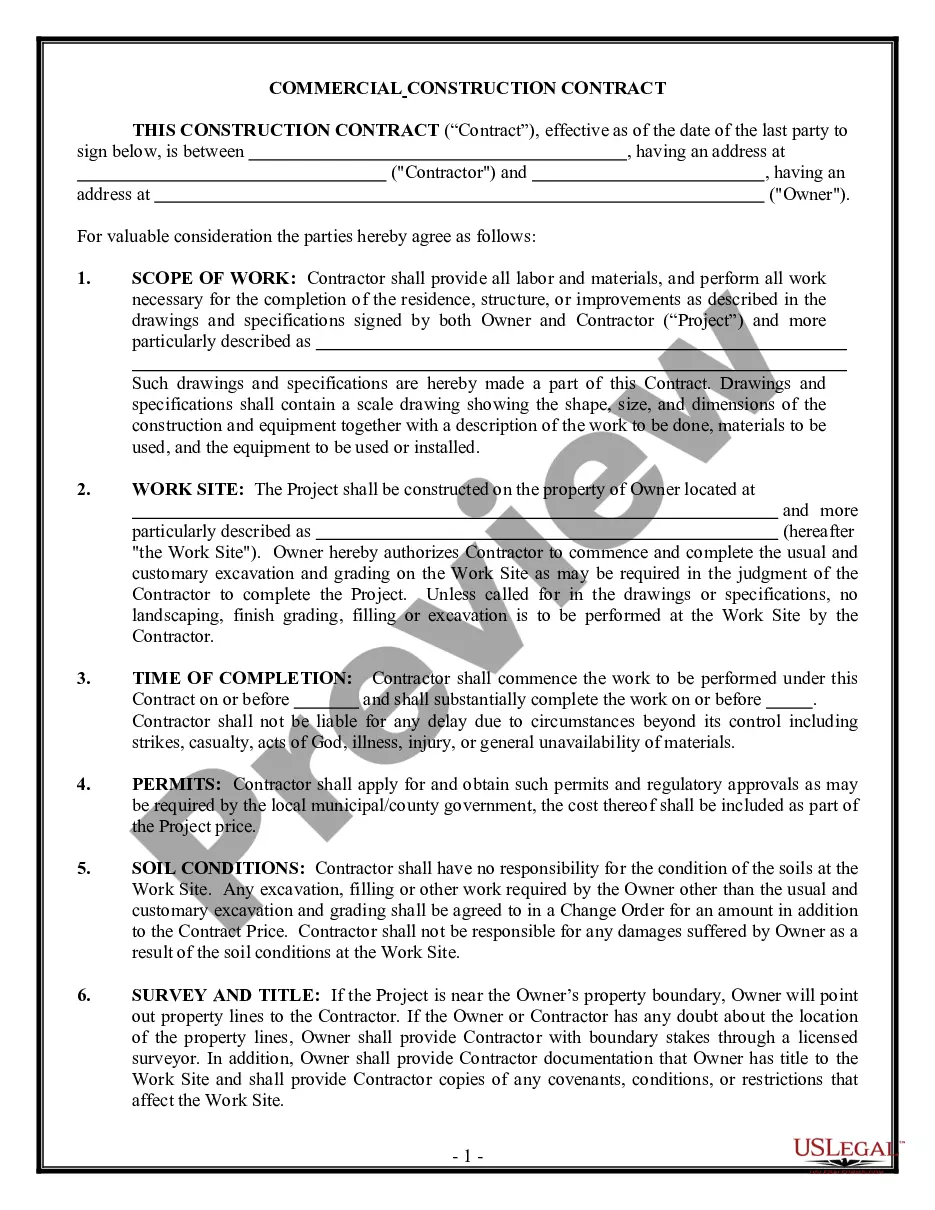
Home builders and remodelers usually allocate between 5% and 10% of a project budget for a construction contingency. This amount creates enough breathing room for unexpected costs. Anyone tracking estimates and costs manually will calculate a contingency percentage on top of all costs before profit margins are applied.
A contingency plan is a backup plan designed to address unexpected events or risks that could impact the project's timeline, budget, or quality. A contingency plan is typically implemented when a specific risk event occurs, and it outlines a series of actions to be taken to mitigate the impact of the event.
Bidding Contingency means the funding amount identified by the Owner and design professionals within the Anticipated Hard Bid to accommodate market variances or estimating errors.
It provides a safety net for unexpected expenses and ensures the project stays on track, both in terms of budget and timeline. The recommended percentage for a contingency fund is between 5-10% of the total budget, but this may vary depending on project complexity and past experiences.
