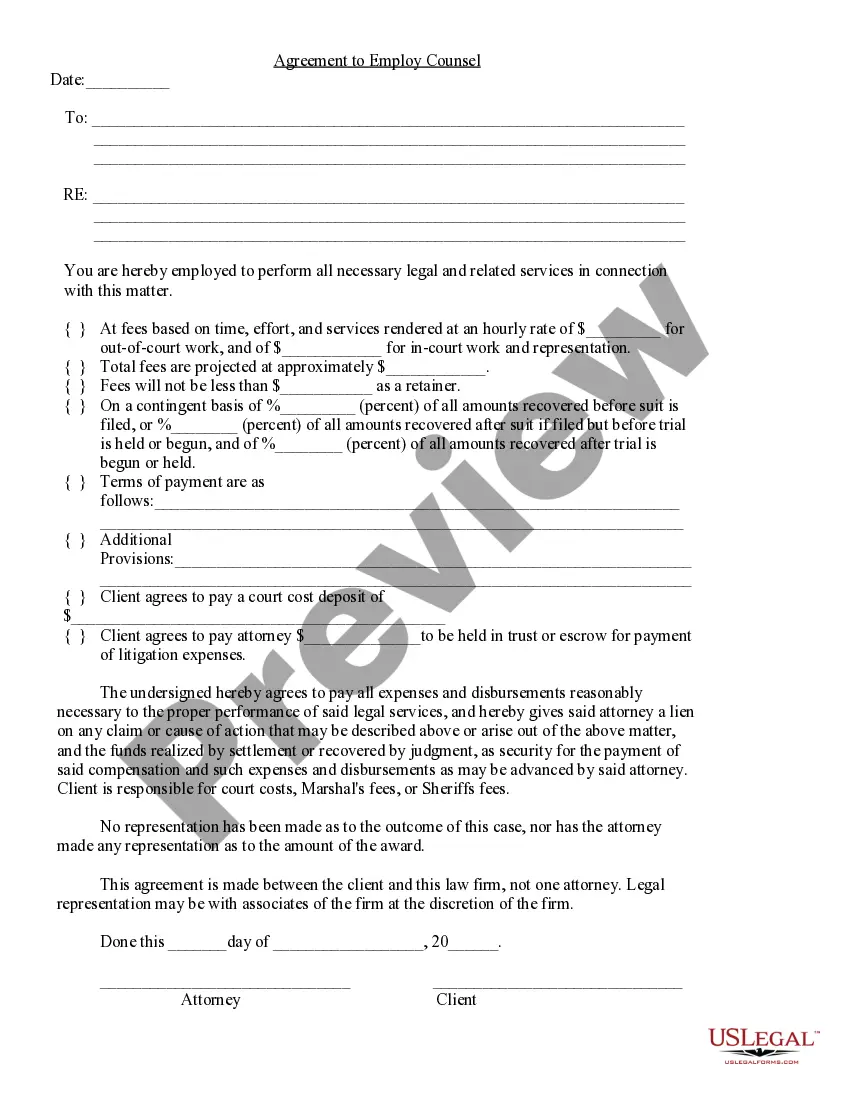
Contingency Fee In Real Estate In Bexar
Description







Get your form ready online
Our built-in tools help you complete, sign, share, and store your documents in one place.
Make edits, fill in missing information, and update formatting in US Legal Forms—just like you would in MS Word.
Download a copy, print it, send it by email, or mail it via USPS—whatever works best for your next step.
Sign and collect signatures with our SignNow integration. Send to multiple recipients, set reminders, and more. Go Premium to unlock E-Sign.
If this form requires notarization, complete it online through a secure video call—no need to meet a notary in person or wait for an appointment.
We protect your documents and personal data by following strict security and privacy standards.

Make edits, fill in missing information, and update formatting in US Legal Forms—just like you would in MS Word.

Download a copy, print it, send it by email, or mail it via USPS—whatever works best for your next step.

Sign and collect signatures with our SignNow integration. Send to multiple recipients, set reminders, and more. Go Premium to unlock E-Sign.

If this form requires notarization, complete it online through a secure video call—no need to meet a notary in person or wait for an appointment.

We protect your documents and personal data by following strict security and privacy standards.
Looking for another form?








Form popularity
FAQ
Contingencies are often used to protect the buyer from problematic home listings or unforeseen issues within the real estate transaction. Keep in mind that making a contingent offer on a property is easier if you've already found a lender you want to work with.
There are three types of group contingencies – dependent, independent, and interdependent. A dependent group contingency offers a reward to an entire group based upon the behavior or performance of one or more of its members.
For instance, a home seller may agree to an offer with the contingency that they must find a new home before they sell. If they are unable to find another home within a specified time frame, they may cancel the deal without penalty — so long as this contingency is spelled out in the contract.
The average contingency rate falls between 20-40%, with most lawyers charging around 33% to 35% of the total amount recovered in a case. The exact percentage can vary depending on the complexity of the case, the lawyer's experience, and the stage at which the case is resolved.
