Listing Agreement With Stock Exchange In Riverside
Description

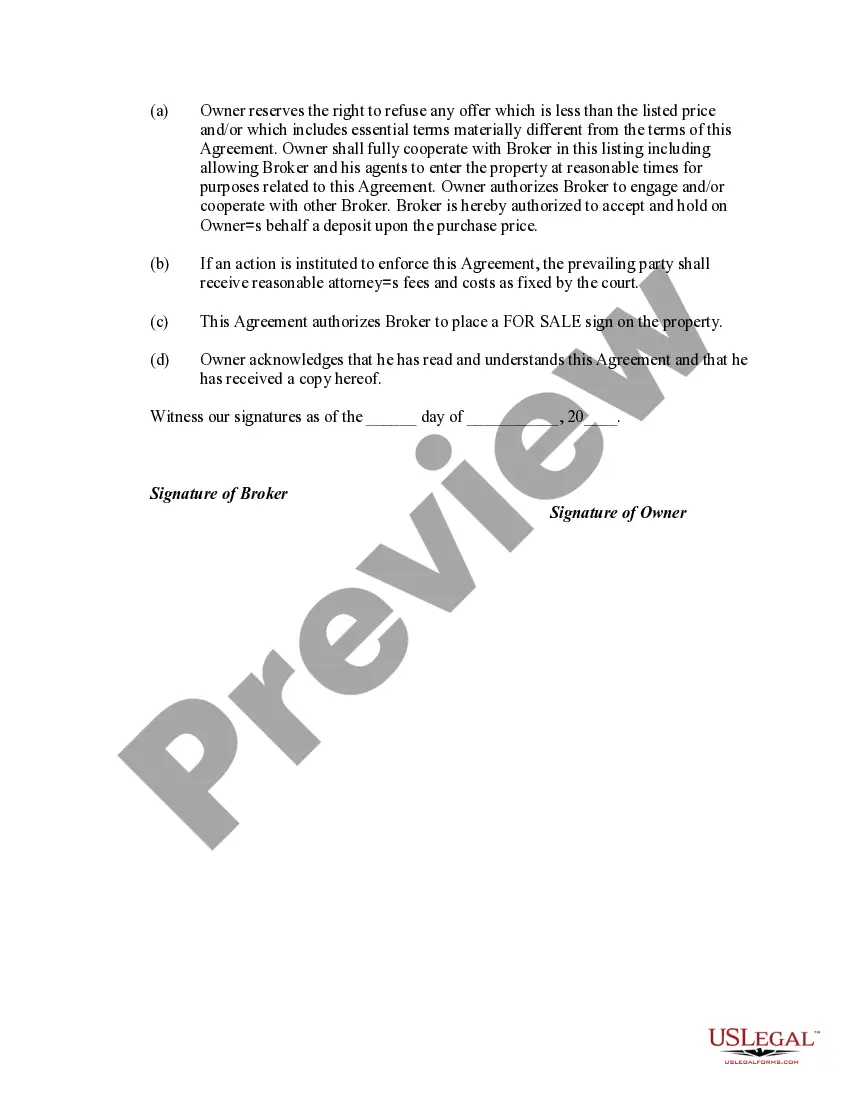

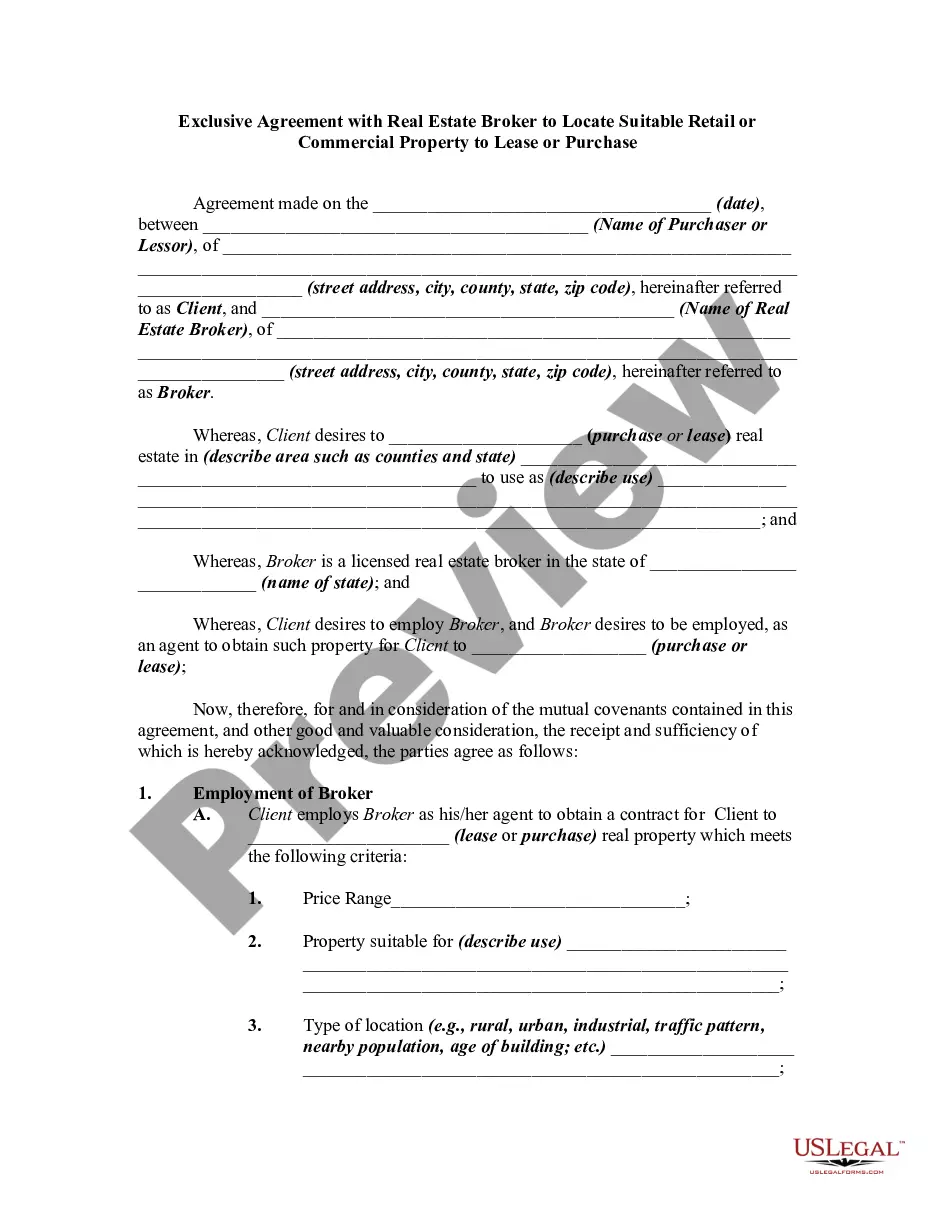
Get your form ready online
Our built-in tools help you complete, sign, share, and store your documents in one place.
Make edits, fill in missing information, and update formatting in US Legal Forms—just like you would in MS Word.
Download a copy, print it, send it by email, or mail it via USPS—whatever works best for your next step.
Sign and collect signatures with our SignNow integration. Send to multiple recipients, set reminders, and more. Go Premium to unlock E-Sign.
If this form requires notarization, complete it online through a secure video call—no need to meet a notary in person or wait for an appointment.
We protect your documents and personal data by following strict security and privacy standards.

Make edits, fill in missing information, and update formatting in US Legal Forms—just like you would in MS Word.

Download a copy, print it, send it by email, or mail it via USPS—whatever works best for your next step.

Sign and collect signatures with our SignNow integration. Send to multiple recipients, set reminders, and more. Go Premium to unlock E-Sign.

If this form requires notarization, complete it online through a secure video call—no need to meet a notary in person or wait for an appointment.

We protect your documents and personal data by following strict security and privacy standards.
Looking for another form?




Form popularity
FAQ
What is a stock exchange? A stock exchange is a centralised location where the shares of publicly traded companies are bought and sold. Stock exchanges differ from other exchanges because the tradable assets are limited to stocks, bonds and exchange traded products (ETPs).
The basic document which is executed between the company and the stock exchange (when the shares of the company are listed on any stock exchange) is the listing agreement.
Trade agreements set out the rules for buying and selling goods and services between 2 or more countries. They reduce restrictions on imports and exports, which can make trading easier and cheaper when they are used.
A stock exchange is simply a marketplace where traders buy and sell stocks. (Some other types of investments—like exchange-traded funds (ETFs) and notes (ETNs)—are also traded on stock exchanges.)
How to write a contract agreement in 7 steps. Determine the type of contract required. Confirm the necessary parties. Choose someone to draft the contract. Write the contract with the proper formatting. Review the written contract with a lawyer. Send the contract agreement for review or revisions.
A listing agreement is between the parties that own a property and the agents or brokers who will find a buyer for it. Typically, a real estate listing agreement involves the property owner and a real estate agent. The property owner, or seller, grants the agent the right to market and sell the property.
Listing agreements vary. Each type has its own advantages and disadvantages: Exclusive Right-to-Sell Listing: The most common type. It grants the broker the exclusive right to sell your home, regardless of who finds the buyer.
In California's dynamic real estate market, the listing agreement stands as a cornerstone for home sellers, ensuring a seamless and legally sound transaction. This formal contract between a property owner and a real estate broker authorizes the broker to represent the seller in marketing and selling the property.
The settlement required real estate licensees to have a written agreement with a buyer before showing properties listed on the Multiple Listing Service (MLS). AB 2992 expands this requirement to all properties, whether it is listed on an MLS or not, and also imposes several additional requirements.
