Listing Agreement For Debt Securities In Oakland
Description


Get your form ready online
Our built-in tools help you complete, sign, share, and store your documents in one place.
Make edits, fill in missing information, and update formatting in US Legal Forms—just like you would in MS Word.
Download a copy, print it, send it by email, or mail it via USPS—whatever works best for your next step.
Sign and collect signatures with our SignNow integration. Send to multiple recipients, set reminders, and more. Go Premium to unlock E-Sign.
If this form requires notarization, complete it online through a secure video call—no need to meet a notary in person or wait for an appointment.
We protect your documents and personal data by following strict security and privacy standards.

Make edits, fill in missing information, and update formatting in US Legal Forms—just like you would in MS Word.

Download a copy, print it, send it by email, or mail it via USPS—whatever works best for your next step.

Sign and collect signatures with our SignNow integration. Send to multiple recipients, set reminders, and more. Go Premium to unlock E-Sign.

If this form requires notarization, complete it online through a secure video call—no need to meet a notary in person or wait for an appointment.

We protect your documents and personal data by following strict security and privacy standards.
Looking for another form?








Form popularity
FAQ
A debt agreement, also known as a Part IX (9), is a legally binding agreement between you and your creditors. A debt agreement can be a flexible way to come to an arrangement to settle debts without becoming bankrupt.
What should a debt settlement agreement template include? Parties involved. Identify clearly the debtor and creditor, including their legal names and contact information. Debt details. Settlement amount. Payment terms. Release of claims. Confidentiality. Governing law. Signatures.
You can buy bonds through a broker, just like you can buy stocks and other investments. The bonds you buy are typically sold by investors. Depending on the interest rate market, you may be able to buy the bond at discount. You can buy government bonds directly through the federal government.
Individuals, organizations, fiduciaries, and corporate investors may buy Treasury securities through a bank, broker, or dealer. With a bank, broker, or dealer, you may bid for Treasury marketable securities non-competitively or competitively, but not both, for the same auction.
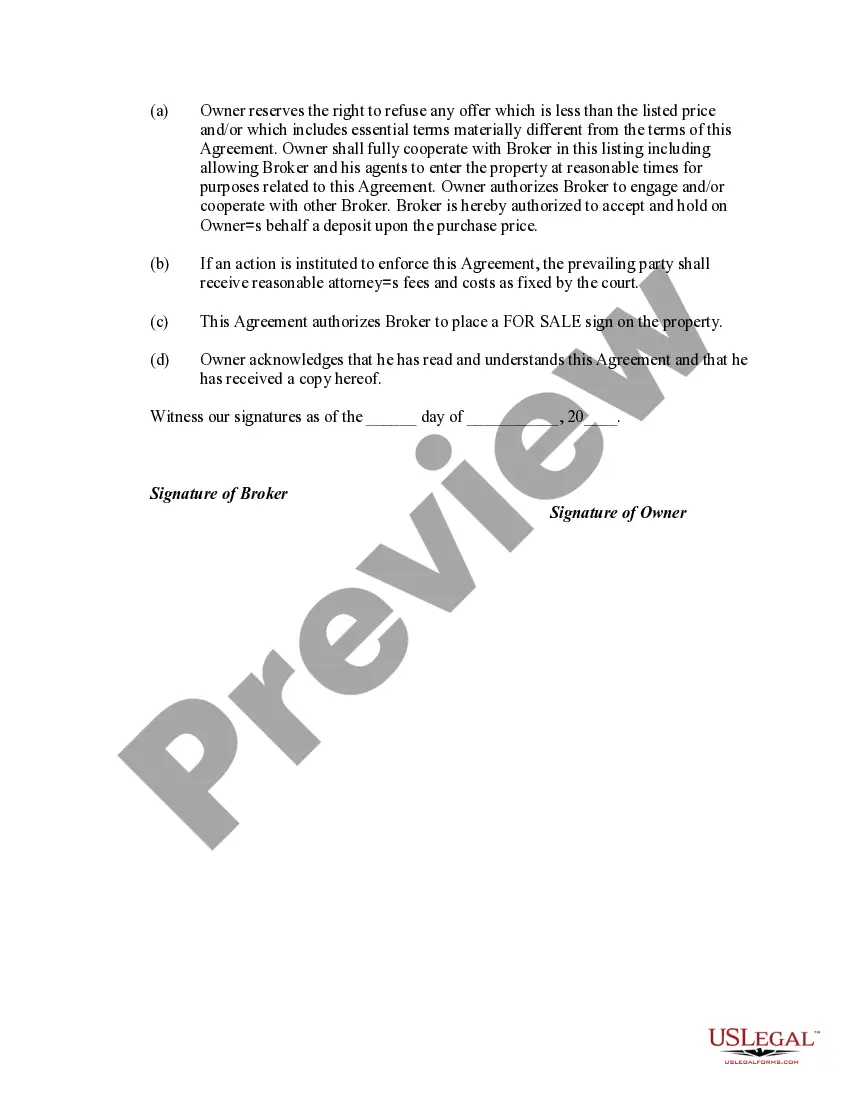
A real estate listing agreement – also known as a seller's agent agreement – is a contract between a property owner and a real estate broker. It permits the broker to sell the home on the seller's terms, locating an appropriate buyer. The property owner pays the brokerage a commission for acting as the listing agent.
A listing agreement is “a legally binding contract that creates an agency relationship authorizing a broker to serve as the agent for a principal in a real estate transaction.” In other words, a listing agreement is an employment contract between a client and a broker that spells out what the broker is responsible for ...
The concept of Listing Agreement was inserted in the Securities Contract (Regulation) Act, 1956 (“SCRA”) under Section 21 which provided that "where the securities are listed on the application of any person in any recognised stock exchange, such person shall comply with the conditions of the listing agreement with ...
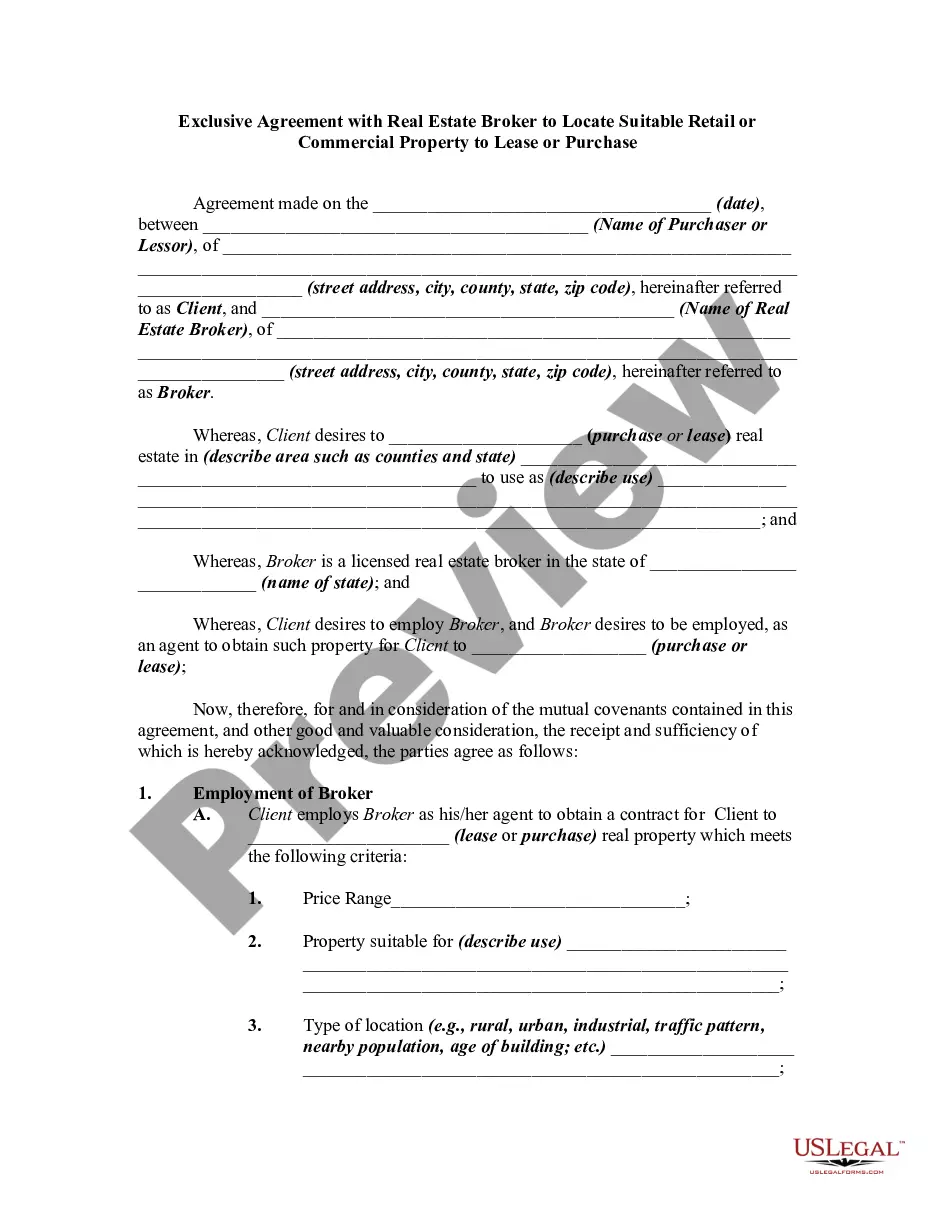
Debt exchange offer: an introduction An exchange offer is an offer, primarily by an issuer (or company in distress), to exchange its existing bonds or loans for new equity or debt. If an issuer lacks capital to repurchase existing debt instruments, a debt exchange offer may be a viable option.
A listing agreement is between the parties that own a property and the agents or brokers who will find a buyer for it. Typically, a real estate listing agreement involves the property owner and a real estate agent. The property owner, or seller, grants the agent the right to market and sell the property.
