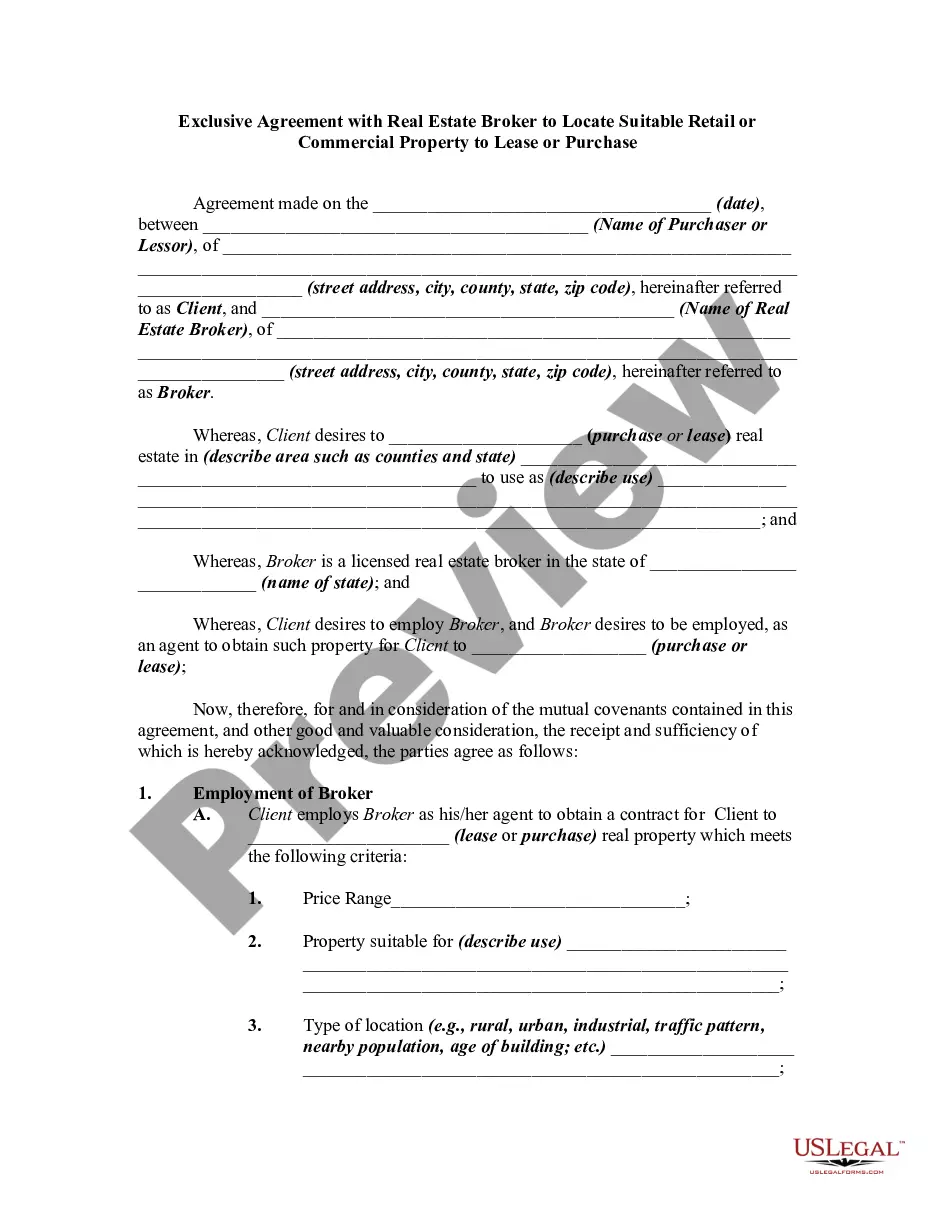
Listing Agreement For Commercial Lease In Chicago
Description


Get your form ready online
Our built-in tools help you complete, sign, share, and store your documents in one place.
Make edits, fill in missing information, and update formatting in US Legal Forms—just like you would in MS Word.
Download a copy, print it, send it by email, or mail it via USPS—whatever works best for your next step.
Sign and collect signatures with our SignNow integration. Send to multiple recipients, set reminders, and more. Go Premium to unlock E-Sign.
If this form requires notarization, complete it online through a secure video call—no need to meet a notary in person or wait for an appointment.
We protect your documents and personal data by following strict security and privacy standards.

Make edits, fill in missing information, and update formatting in US Legal Forms—just like you would in MS Word.

Download a copy, print it, send it by email, or mail it via USPS—whatever works best for your next step.

Sign and collect signatures with our SignNow integration. Send to multiple recipients, set reminders, and more. Go Premium to unlock E-Sign.

If this form requires notarization, complete it online through a secure video call—no need to meet a notary in person or wait for an appointment.

We protect your documents and personal data by following strict security and privacy standards.
Looking for another form?
Form popularity
FAQ
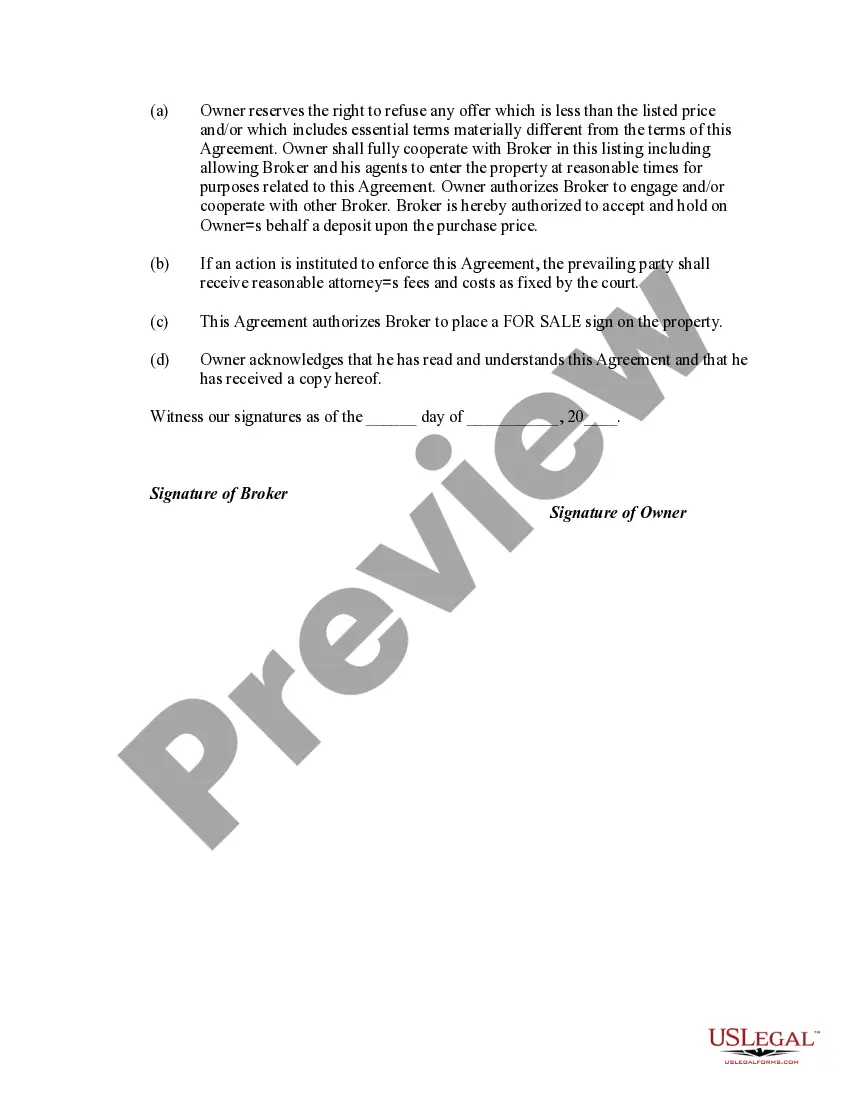
Exclusive Rights-to-Sell Listing Selling your home under an exclusive rights-to-sell listing is the most common option. This gives the real estate agent the exclusive rights to market your home and list it on MLS. They will receive the full commission as long the home is sold within the designated timeframe.
An exclusive listing usually describes a duration in which the agent is going to be given the exclusive rights to sell the home. In most cases it is three months, but the agreement can be modified, depending on the market and interest in the home.
exclusive agreement gives parties the freedom to form similar arrangements with multiple entities. Unlike exclusive contracts that lock you into working with just one partner, nonexclusive agreements open doors to numerous business relationships.
You cannot hire another broker or agent to sell your home during the contract term. The brokerage you sign with gets the exclusive right. You will owe the brokerage a commission if your property sells during the term of the Agreement, no matter who finds the buyer – you, the broker, or someone else.
Exclusive Rights-to-Sell Listing This gives the real estate agent the exclusive rights to market your home and list it on MLS. They will receive the full commission as long the home is sold within the designated timeframe. This is the preferred agreement for most real estate agents.
The exclusive designated agent always owes their statutory duties to the buyer client, and while the same duties are owed in a non-exclusive relationship, such as serving the client's best interests over the agent's own interests; in a non-exclusive relationship, neither the brokerage company nor the designated agent ...
1. Gross Lease. Gross leases are most common for commercial properties such as offices and retail space. The tenant pays a single, flat amount that includes rent, taxes, utilities, and insurance.
An exclusive right to sell agreement gives one real estate agent and their brokerage the sole right to market and sell a property. That agent is guaranteed a commission on the sale as long as it occurs during the duration of the contract, even if they did not bring in the buyer.
The triple net (NNN) lease is often considered the most prevalent form of commercial lease, particularly for retail and industrial properties, due to its predictability for landlords and clear delineation of expense responsibilities for tenants.
Types of leasehold estates The first type is most common: Estate for years: An agreement that permits occupancy between two specified dates, at the end of which the property must be vacated. Estate from period to period: A monthly tenancy that has no specified end date.
