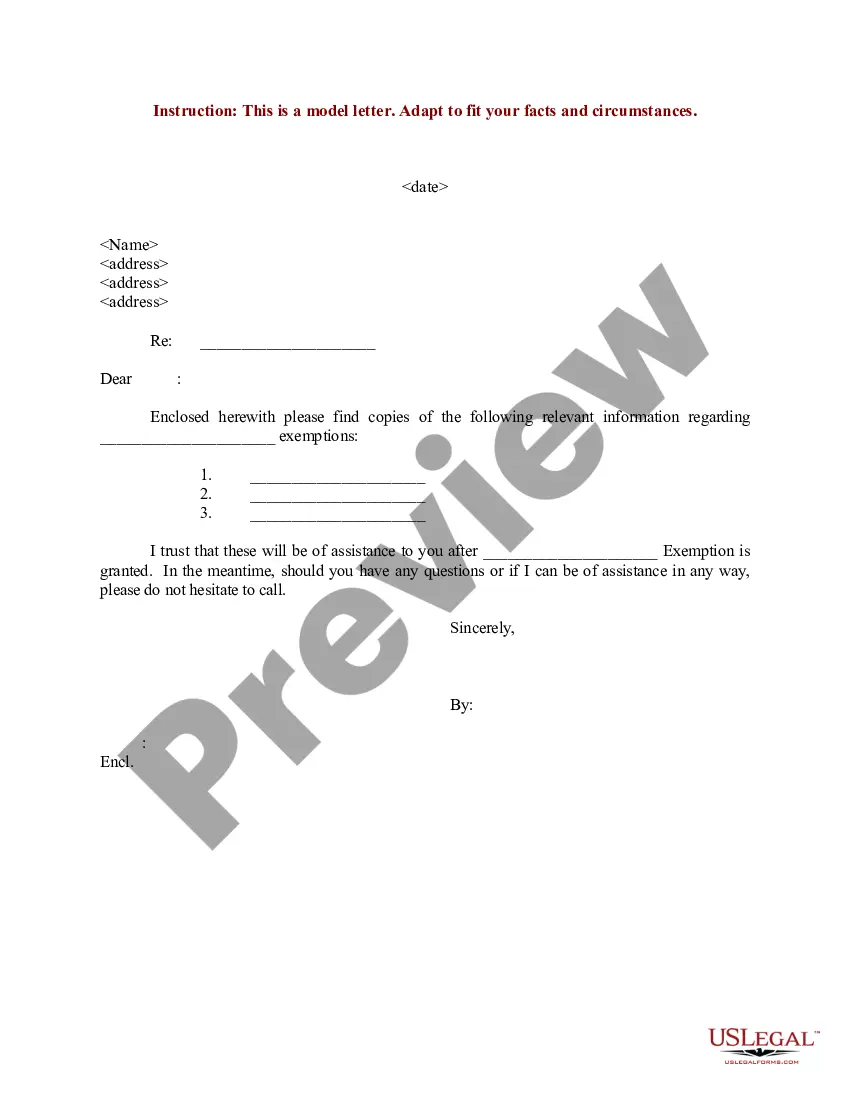
Letter Settlement Estate Sample With Deed Of Donation In Tarrant
Description


Get your form ready online
Our built-in tools help you complete, sign, share, and store your documents in one place.
Make edits, fill in missing information, and update formatting in US Legal Forms—just like you would in MS Word.
Download a copy, print it, send it by email, or mail it via USPS—whatever works best for your next step.
Sign and collect signatures with our SignNow integration. Send to multiple recipients, set reminders, and more. Go Premium to unlock E-Sign.
If this form requires notarization, complete it online through a secure video call—no need to meet a notary in person or wait for an appointment.
We protect your documents and personal data by following strict security and privacy standards.

Make edits, fill in missing information, and update formatting in US Legal Forms—just like you would in MS Word.

Download a copy, print it, send it by email, or mail it via USPS—whatever works best for your next step.

Sign and collect signatures with our SignNow integration. Send to multiple recipients, set reminders, and more. Go Premium to unlock E-Sign.

If this form requires notarization, complete it online through a secure video call—no need to meet a notary in person or wait for an appointment.

We protect your documents and personal data by following strict security and privacy standards.
Looking for another form?







Form popularity
FAQ
Keep in mind that if you receive a benefit for the donation, your tax deduction will be reduced by the value of the benefit you received. For example, if you purchased a ticket for $200 to attend a charity dinner event, but the event has a fair market value (FMV) of $50, your donation is limited to $150.
1. The Basic Donation Letter Format Salutation. Greet your potential donor with a friendly opening, and personalize it with their name whenever possible. Explanation of your mission. Your project, event, or needs. Compelling details. A specific request. A call-to-action.
Here's a template of the essential elements that any effective donation letter will include: Salutation. Explanation of your mission. Your project, event, or needs. Compelling details. A specific request. A call-to-action.
3. Crafting Your Message Begin with something that grabs attention. Maybe it's a fact, a question, or a story about how your cause makes a difference. Clearly say why help is needed. Tell them what their donation will do. Don't beat around the bush. End by thanking them.
This acknowledgment should include the customary information such as gift date and gift amount, basic language referencing that this gift was made in honor of someone, and the honoree's name. Here's an example: Thank you so much for your donation to the Ocean Point Land Trust, made in honor of Natasha Jones.
Typically, a deed of donation does not have a specific expiration date unless otherwise stated in the terms of the agreement. Once the donor voluntarily transfers the property, and the donee accepts it, the deed becomes binding and generally remains effective as long as the conditions in the deed are fulfilled.
Requirements for Deed of Donation in the Philippines Capacity of the Donor and Donee. Both parties must be legally capable to enter into contracts. Written Form. Acceptance by the Donee. Notarization and Witnesses. Required Documents. Donation Taxes. Transfer of Ownership. Conclusion.
Donor's Tax: One of the main costs in a Deed of Donation is the donor's tax. Under the current Philippine Tax Code, donations between parents and children are taxed at a flat rate of 6% of the fair market value (FMV) or zonal value of the property, whichever is higher.
Under Philippine law, a Deed of Donation refers to a legal instrument where one party (the donor) gratuitously transfers ownership of property to another party (the donee). Donations are generally governed by the Civil Code of the Philippines, specifically Title III on "Donations" (Articles 725 to 773).
Donations can be revoked due to ingratitude or other grounds specified by law. Additionally, if a donation infringes on the legitime (compulsory portion) of forced heirs, it may be subject to reduction.

