Suing An Estate Executor For Abuse In Fairfax
Description


Get your form ready online
Our built-in tools help you complete, sign, share, and store your documents in one place.
Make edits, fill in missing information, and update formatting in US Legal Forms—just like you would in MS Word.
Download a copy, print it, send it by email, or mail it via USPS—whatever works best for your next step.
Sign and collect signatures with our SignNow integration. Send to multiple recipients, set reminders, and more. Go Premium to unlock E-Sign.
If this form requires notarization, complete it online through a secure video call—no need to meet a notary in person or wait for an appointment.
We protect your documents and personal data by following strict security and privacy standards.

Make edits, fill in missing information, and update formatting in US Legal Forms—just like you would in MS Word.

Download a copy, print it, send it by email, or mail it via USPS—whatever works best for your next step.

Sign and collect signatures with our SignNow integration. Send to multiple recipients, set reminders, and more. Go Premium to unlock E-Sign.

If this form requires notarization, complete it online through a secure video call—no need to meet a notary in person or wait for an appointment.

We protect your documents and personal data by following strict security and privacy standards.
Looking for another form?


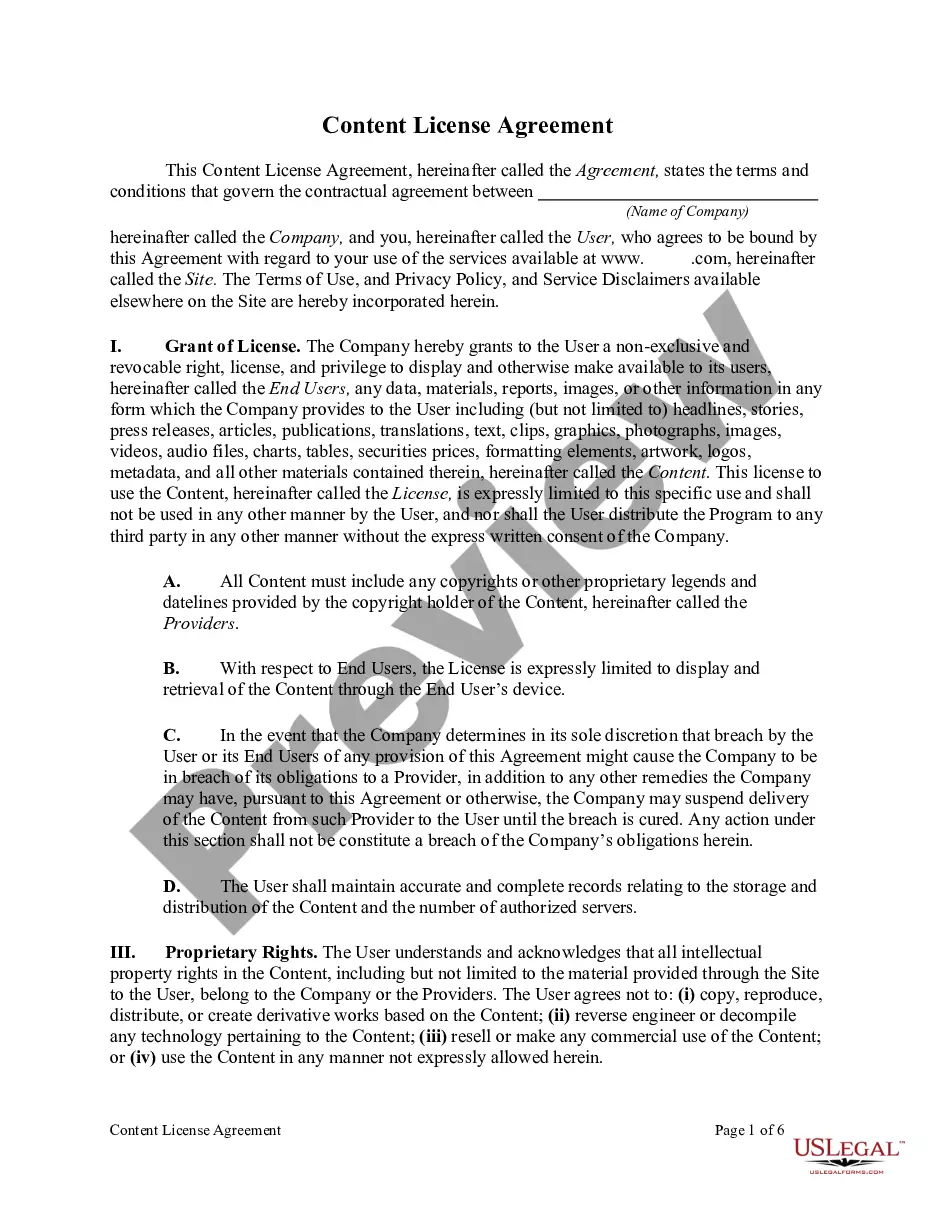
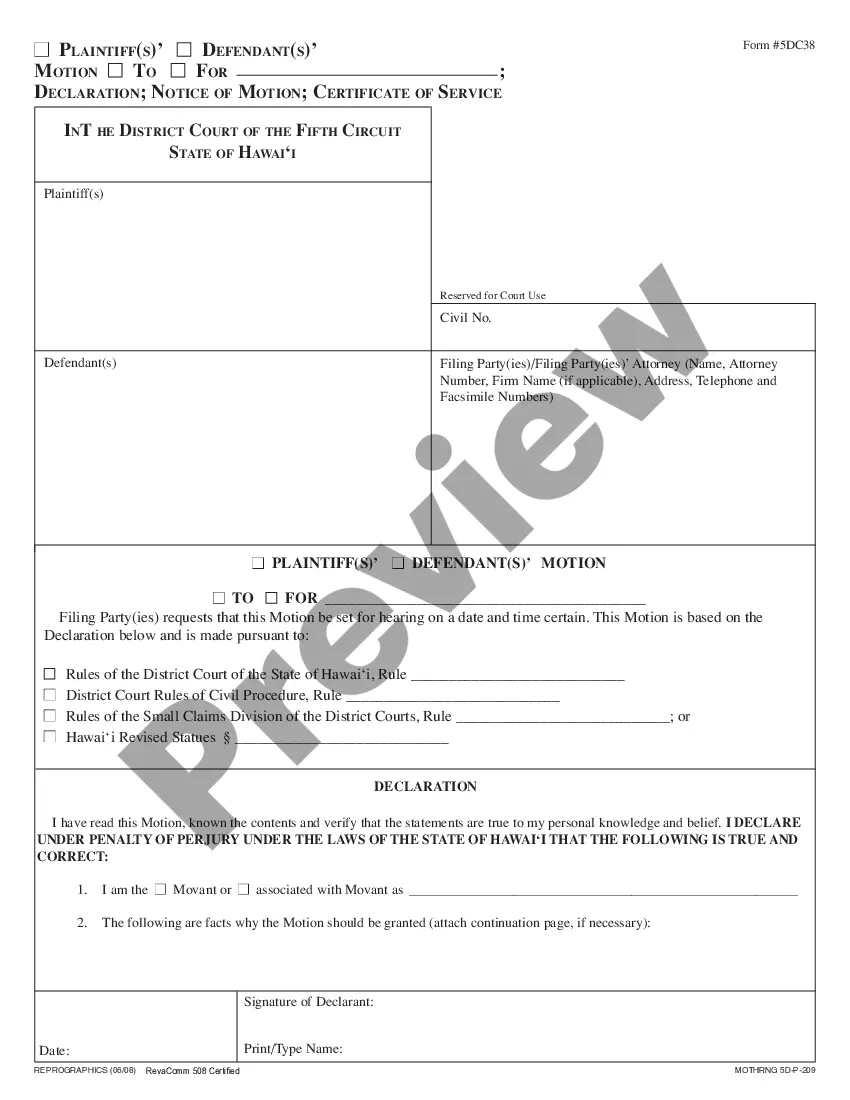





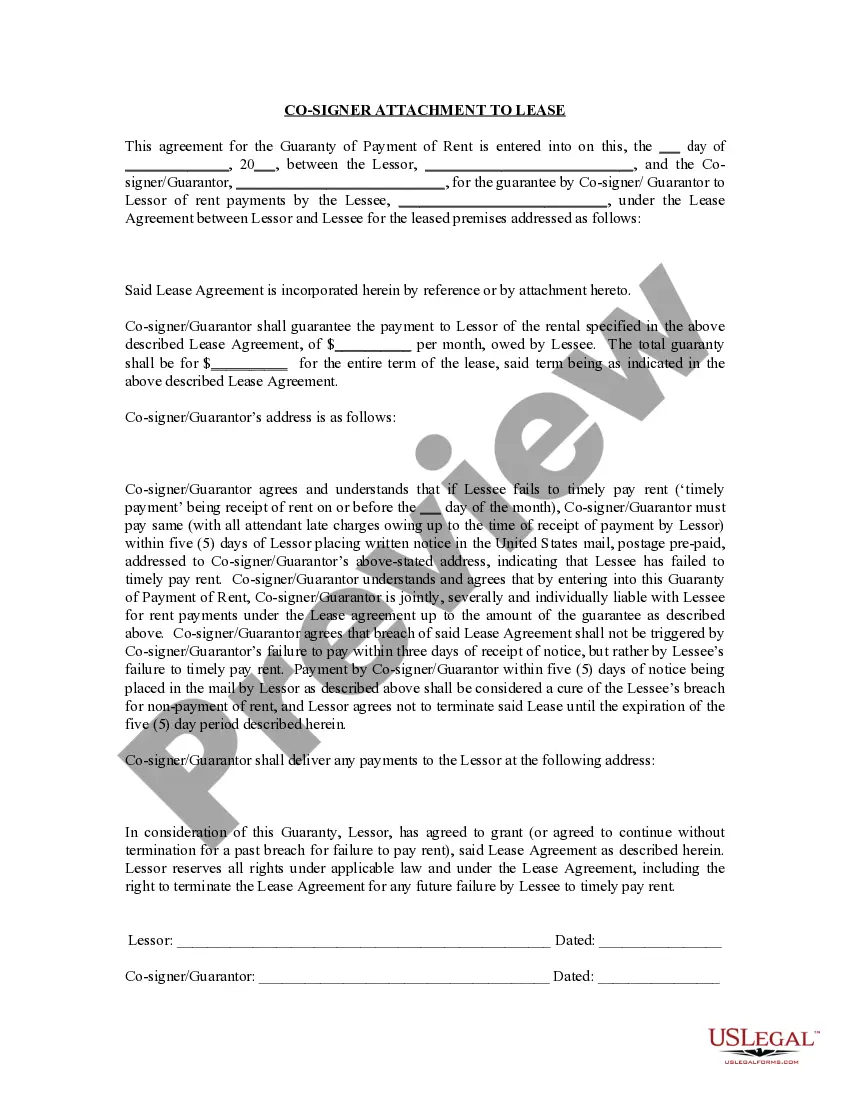
Form popularity
FAQ
In Virginia, the deadline to file most personal injury cases is two years from the date that the injury or accident occurred. That is a firm and hard date. Filing even one day after that two-year mark will mean the party you are suing can have your case dismissed.
In general, following the death of a decedent, a Personal Representative needs to contact the Probate Division of the Circuit Court Clerk's office in the county or city where the decedent (i) had a known place of residence; (ii) if no known place of residence, then where he or she owned real estate; or (iii) if no real ...
If you wish to start a civil action in federal court, but do not have an attorney to represent you, you may bring your case on your own. Bringing a case on your own is called proceeding "pro se".
Cases may be filed either in-person or the cases may be mailed to the court. Filing fees are due at the time of filing. Please see the Filing Forms and Fees page for details on the forms needed (i.e., DC-###) and the amount to be included with the filing. All forms can be found at the state's Civil Forms section.
In Virginia, an estate will need to be probated when a person dies with property valued at more than $50,000. So, to avoid probate, you must either have a very small estate or take steps to ensure that your assets transfer automatically to beneficiaries.
Settling an estate can take anywhere from 18 months to 2 years or longer.
The administrator/executor (herein referred to as “personal representative”) has the responsibility of managing the decedent's estate by receiving all probate assets of the estate, determining and paying all lawful debts of the estate, making distribution to the proper beneficiaries under the will, or in the case of ...
Who Gets What in Virginia? If You Die With:Here's What Happens: children but no spouse children inherit everything spouse but no descendants spouse inherits everything spouse and descendants, all of whom are descendants of that spouse spouse inherits everything3 more rows
Anyone having an interest in the estate may qualify after 60 days have elapsed since written notice has been given to the other heirs. Whoever is appointed as an executor must take an oath to faithfully perform the duties required and must give bond in an amount at least equal to the value of the estate.
Surrogate's Court Procedure Act § 707 states that a nominated executor is ineligible to serve it if they are: (a) an infant; (b) an incompetent or incapacitated person as determined by the Court; (c) a non-citizen or non-permanent resident of the United States; (d) a felon; and (e) one who does not possess the ...

