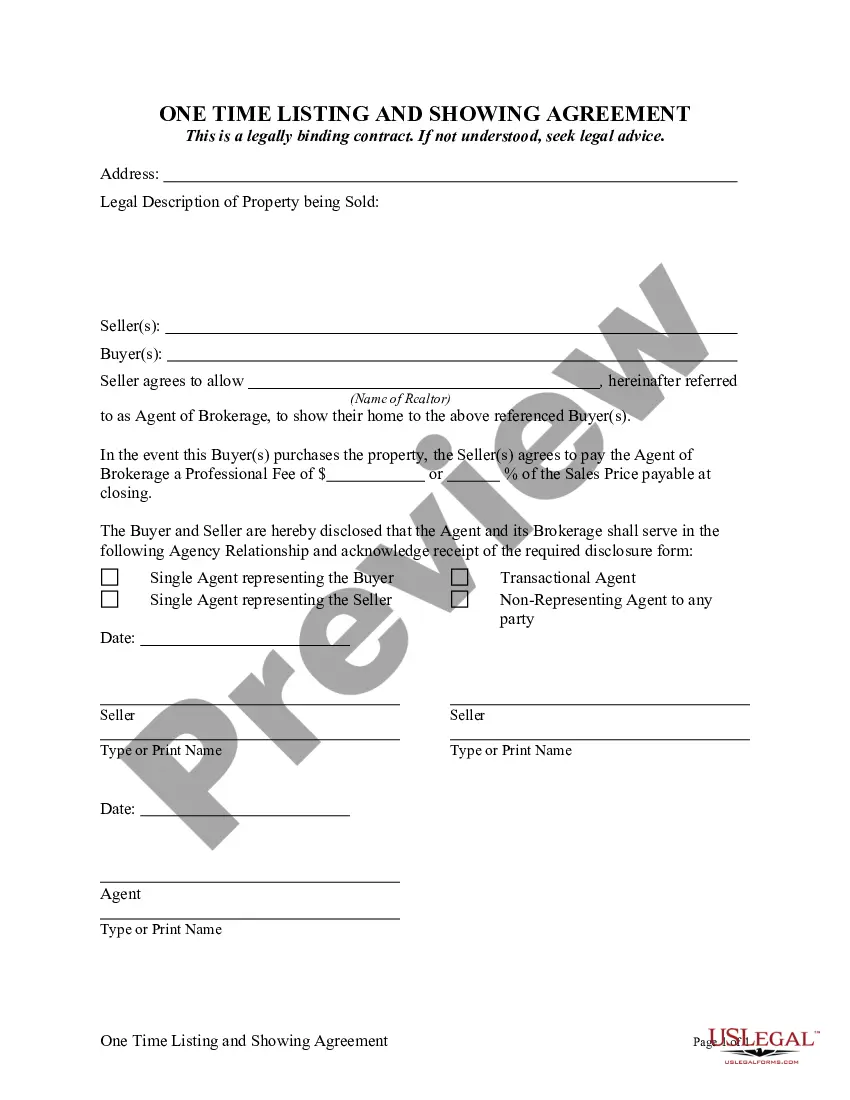
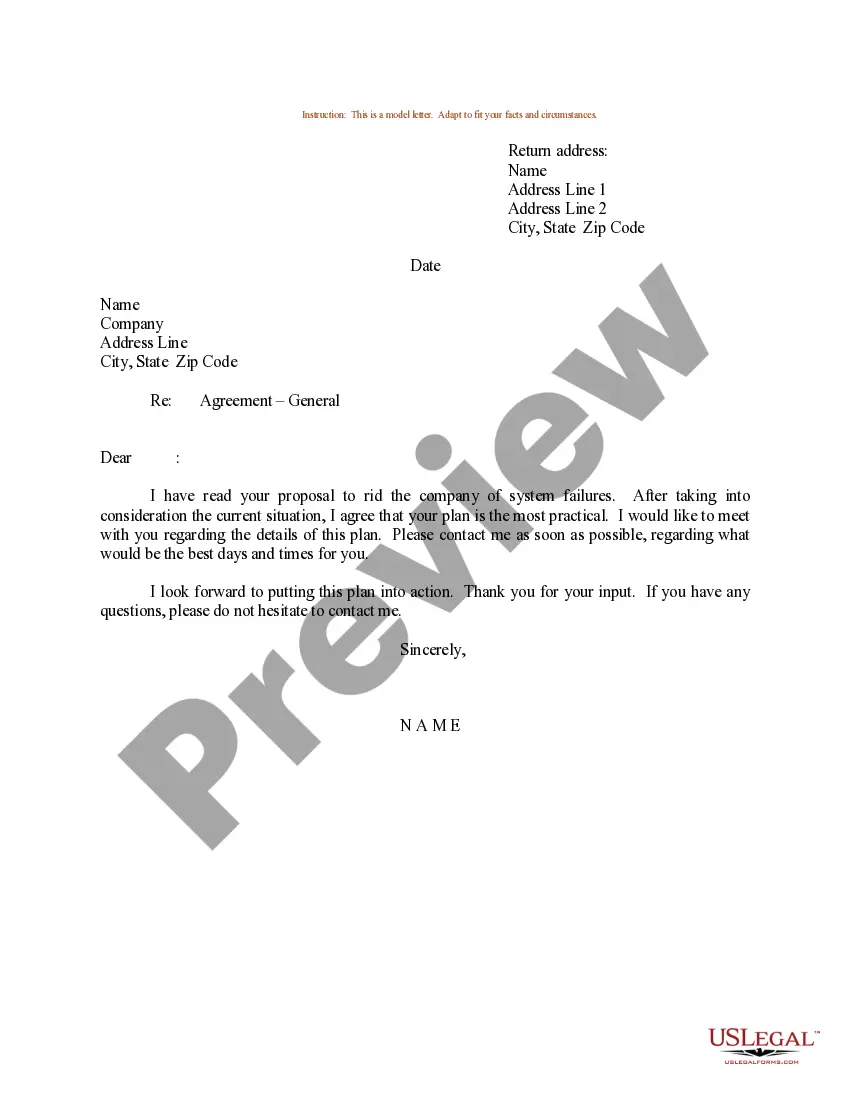
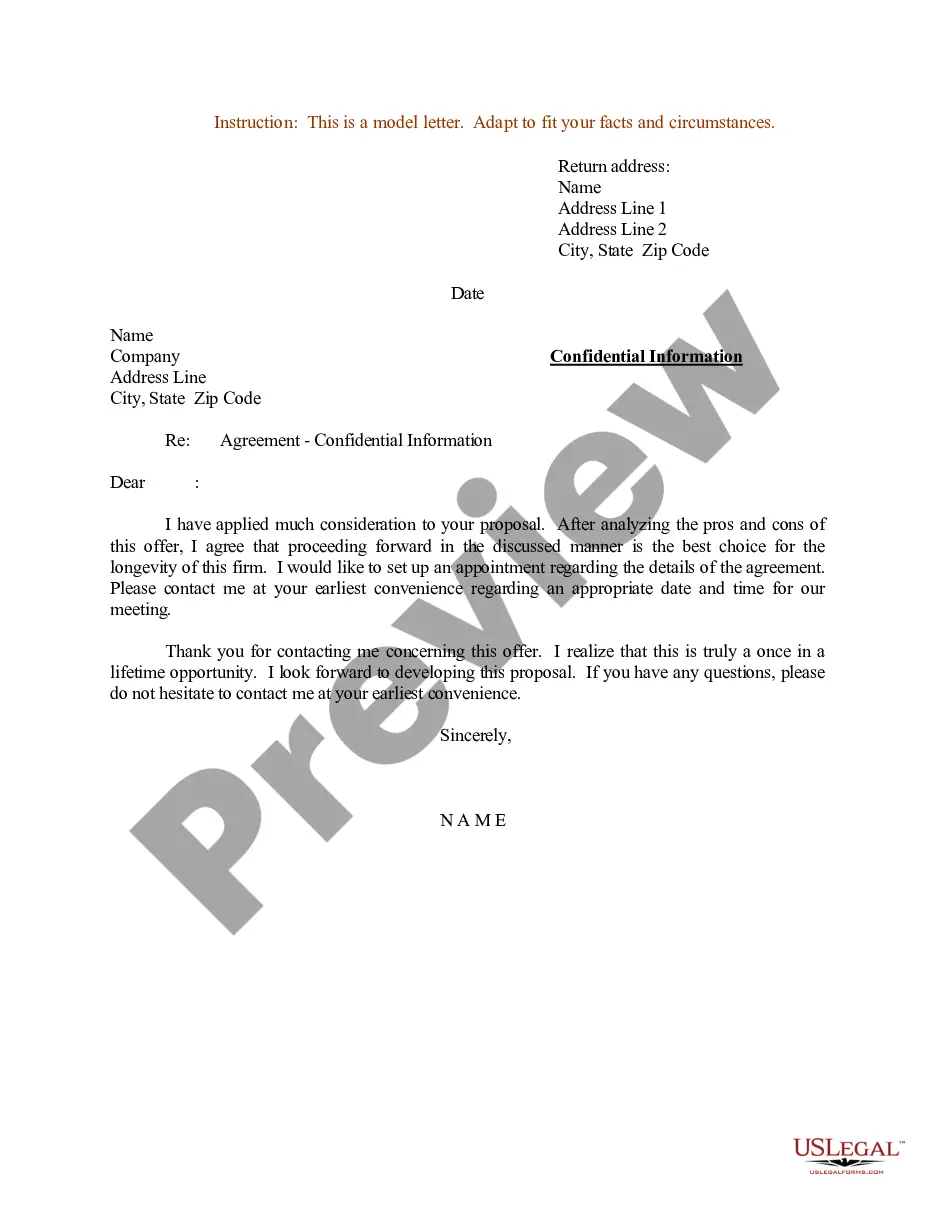
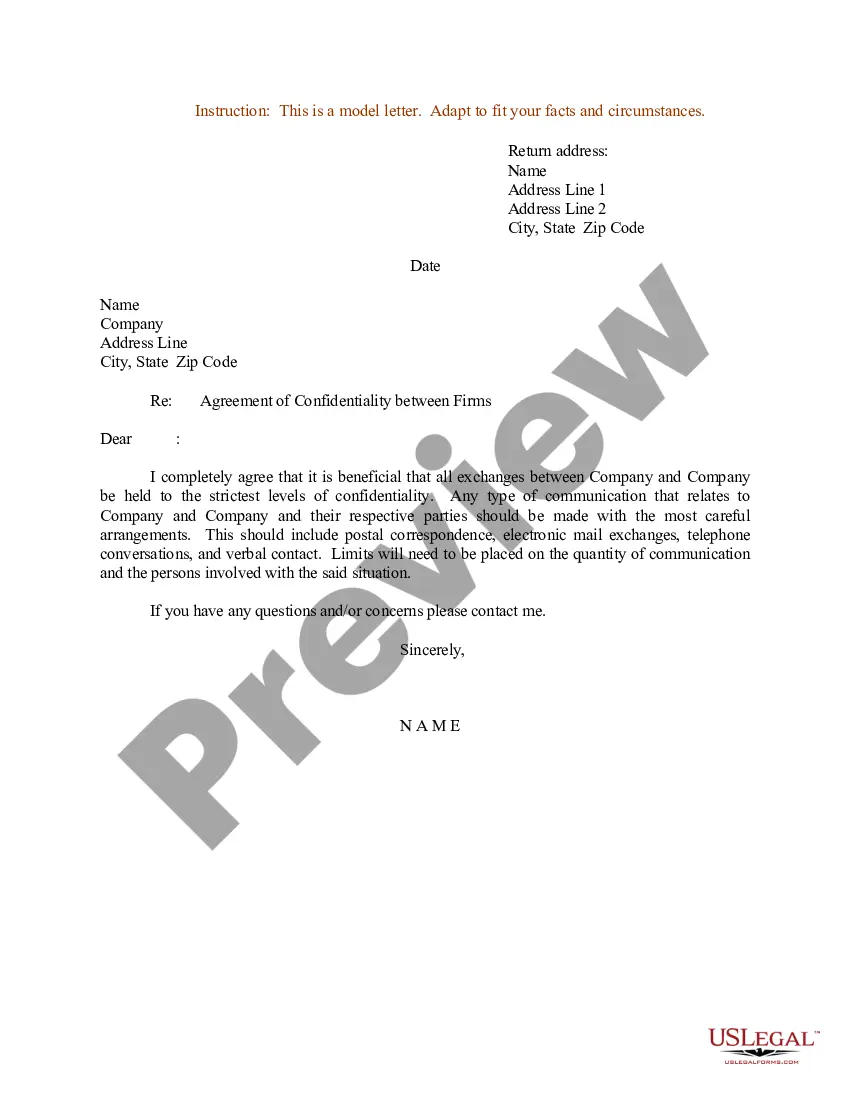
Letter Of Agreement With In Texas
Description
Get your form ready online
Our built-in tools help you complete, sign, share, and store your documents in one place.
Make edits, fill in missing information, and update formatting in US Legal Forms—just like you would in MS Word.
Download a copy, print it, send it by email, or mail it via USPS—whatever works best for your next step.
Sign and collect signatures with our SignNow integration. Send to multiple recipients, set reminders, and more. Go Premium to unlock E-Sign.
If this form requires notarization, complete it online through a secure video call—no need to meet a notary in person or wait for an appointment.
We protect your documents and personal data by following strict security and privacy standards.

Make edits, fill in missing information, and update formatting in US Legal Forms—just like you would in MS Word.

Download a copy, print it, send it by email, or mail it via USPS—whatever works best for your next step.

Sign and collect signatures with our SignNow integration. Send to multiple recipients, set reminders, and more. Go Premium to unlock E-Sign.

If this form requires notarization, complete it online through a secure video call—no need to meet a notary in person or wait for an appointment.

We protect your documents and personal data by following strict security and privacy standards.
Looking for another form?
Form popularity
FAQ
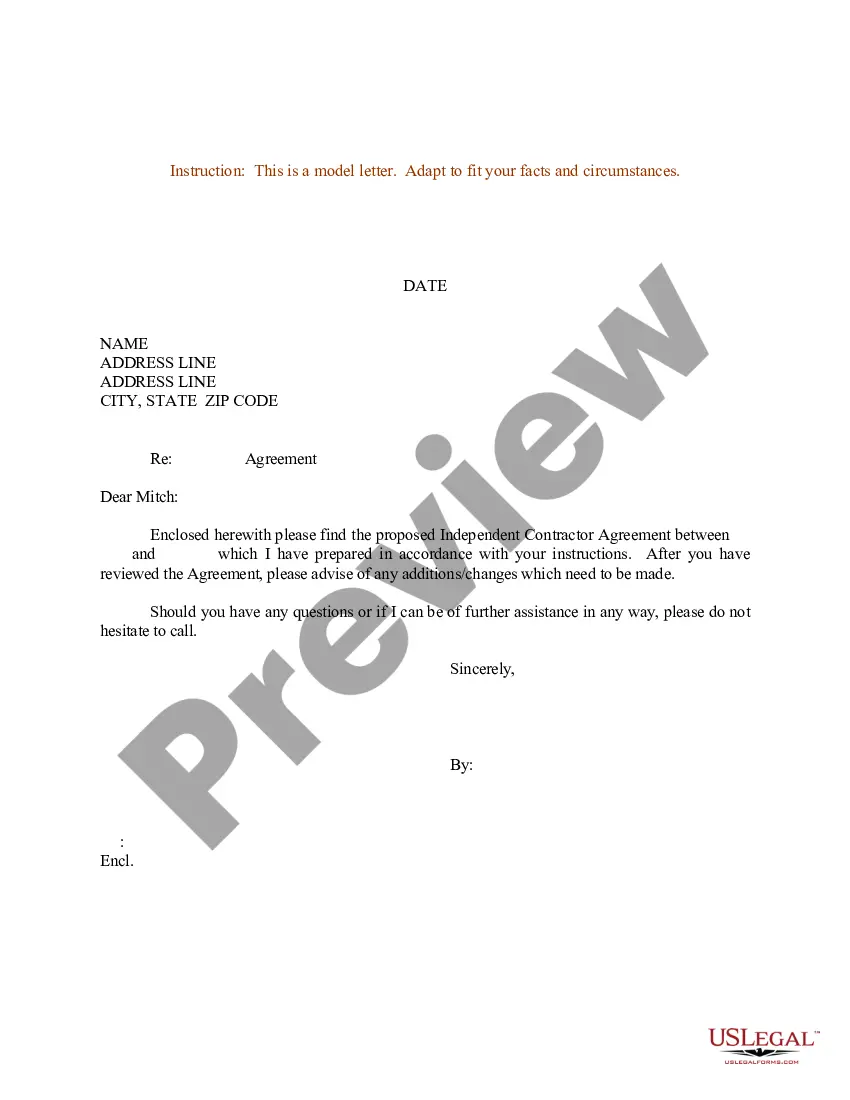
A letter of agreement is a document you can use for business, professional, or commercial purposes to outline the terms and conditions of an agreement. This document gains effect when all relevant parties sign their names to demonstrate their agreement to the terms.
Both involve the meeting of minds and exchange of promises, but a contract typically entails a more formalized arrangement, often documented in writing, and carries legal enforceability. Conversely, an agreement can be informal and may not always be legally binding.
Is a Letter of Agreement the same as a normal contract? A Letter of Agreement is still a formal legally binding document, acting exactly like a contract.
Agreements to Agree In the Future Are Not Enforceable Texas law is clear that contracts calling for parties to negotiate in the future —to agree to agree to material terms at a later point—are unenforceable.
How to write an agreement letter Title your document. Provide your personal information and the date. Include the recipient's information. Address the recipient and write your introductory paragraph. Write a detailed body. Conclude your letter with a paragraph, closing remarks, and a signature. Sign your letter.
A legal agreement can be informal, meaning nothing needs to be witnessed or written down. A contract, on the other hand, is both more formal and legally binding—which means it must be documented. Both an agreement and contract represent specific arrangements between two or more parties.
While a letter agreement may be shorter than other contracts, it generally includes the same kinds of terms as a traditional contract (e.g., description of the goods, services or purpose of the relationship, time of performance, financial terms, etc.).
Enforceability of Letters of Intent If a letter of intent has the essential elements of contract, it can still be legally enforced. However, if the LOI lacks essential terms, is premised on an unfulfilled condition precedent, and lacks a “meeting of the minds,” it is unenforceable.
At its core, Texas law does recognize verbal contracts as binding, with notable exceptions. The key piece of legislation governing this area is Chapter 26 of the Texas Business and Commerce Code, known as the Statute of Frauds, that specifies which types of contracts must be in writing to be enforceable.