Agreement Broker Real Estate Formula In Middlesex
Description


Get your form ready online
Our built-in tools help you complete, sign, share, and store your documents in one place.
Make edits, fill in missing information, and update formatting in US Legal Forms—just like you would in MS Word.
Download a copy, print it, send it by email, or mail it via USPS—whatever works best for your next step.
Sign and collect signatures with our SignNow integration. Send to multiple recipients, set reminders, and more. Go Premium to unlock E-Sign.
If this form requires notarization, complete it online through a secure video call—no need to meet a notary in person or wait for an appointment.
We protect your documents and personal data by following strict security and privacy standards.

Make edits, fill in missing information, and update formatting in US Legal Forms—just like you would in MS Word.

Download a copy, print it, send it by email, or mail it via USPS—whatever works best for your next step.

Sign and collect signatures with our SignNow integration. Send to multiple recipients, set reminders, and more. Go Premium to unlock E-Sign.

If this form requires notarization, complete it online through a secure video call—no need to meet a notary in person or wait for an appointment.

We protect your documents and personal data by following strict security and privacy standards.
Looking for another form?




Form popularity
FAQ
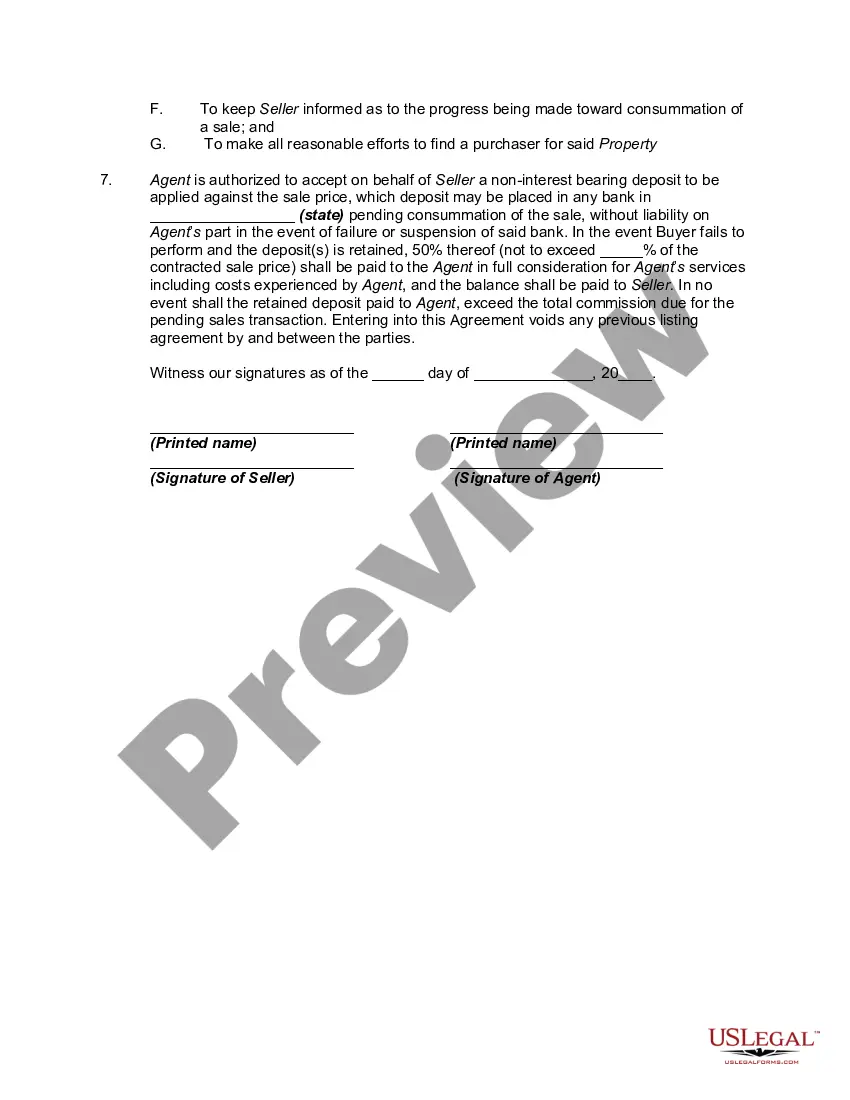
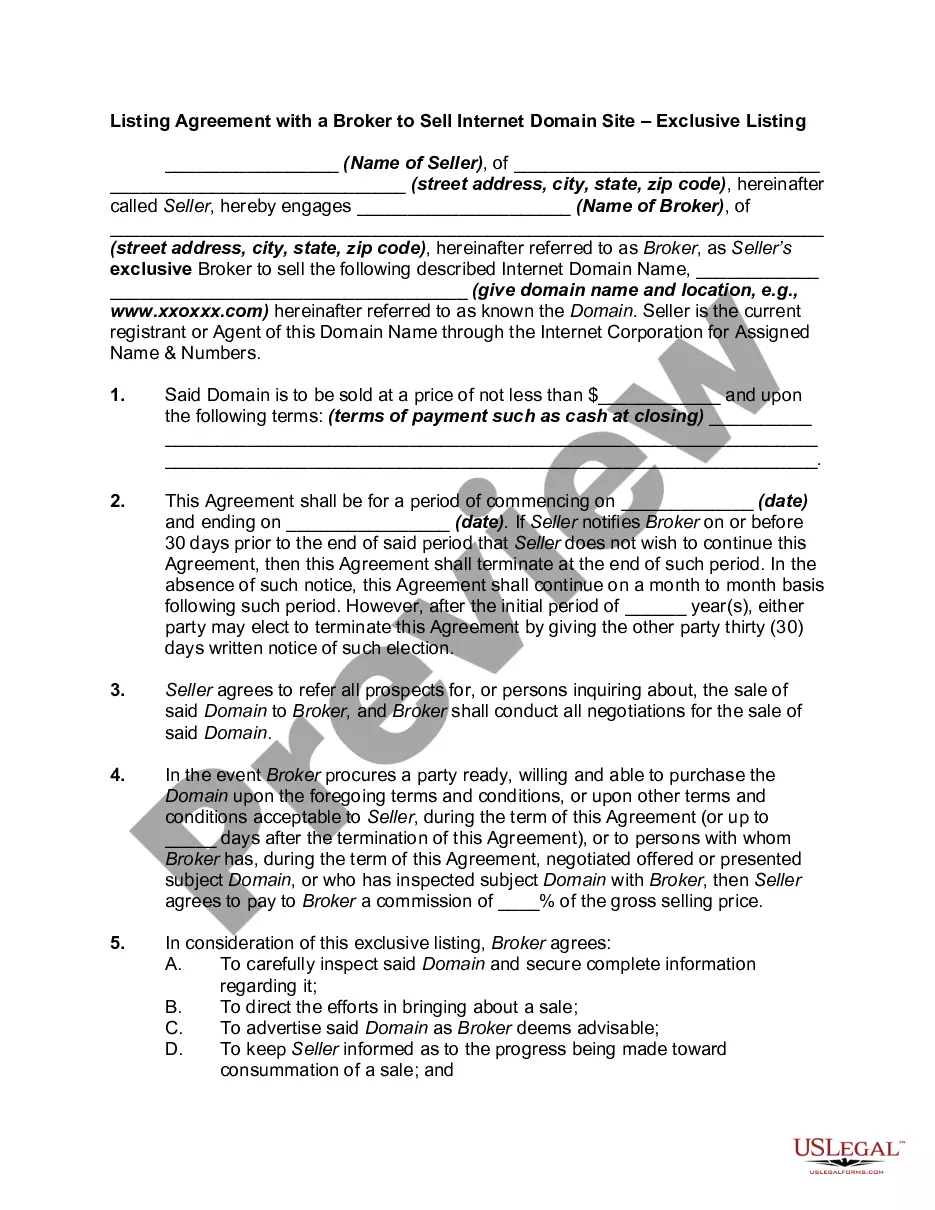
Exclusive right to sell listing agreement An exclusive right to sell listing is the most widely-used listing agreement. Under this agreement, the broker has the exclusive right to market the property for a specified period of time.
The most common is the Exclusive Right to Sell or Lease Listing Agreement. The means there is an agency agreement between the seller and the broker, granting the broker the exclusive right to represent the seller in the sale or lease of the seller's property.
The exclusive right-to-represent contract is the most common buyer representation agreement and best protects the agent. Buyer's agents make significant time and resource investments.
Brokerage agreements typically include specific terms about the broker's role, commission structure, duration, and conditions for termination. Federal and state laws regulate these agreements, especially concerning licensing and prohibited activities in industries like insurance and real estate.
When signing a contract with a realtor to buy, you'll come across a buyer-broker agreement. This is a contract between you (the buyer) and a real estate agent (the broker) who will act on your behalf to help you find the perfect home.
An exclusive right to sell listing is the most widely-used listing agreement. Under this agreement, the broker has the exclusive right to market the property for a specified period of time.
The BROKER is granted the exclusive right to sell the PROPERTY, as the SELLER'S agent, during the term of the Agreement and the SELLER agrees to refer all inquiries to the BROKER, to cooperate in marketing the PROPERTY, including completing lead paint (if property built before 1978) and other forms.
Gives seller more control over who views the property for sale: Exclusive listings are more suitable for sellers who want to control who and how many people are going in and out of their homes during the sale of the property.
In this type of agreement, you as a landlord give exclusive rights to one agent or company to rent your property during a specified period of time. What's unique in this arrangement, is that it entitles the agency to be the exclusive listing agent for that property.
An exclusive right to sell agreement gives one real estate agent and their brokerage the sole right to market and sell a property. That agent is guaranteed a commission on the sale as long as it occurs during the duration of the contract, even if they did not bring in the buyer.
