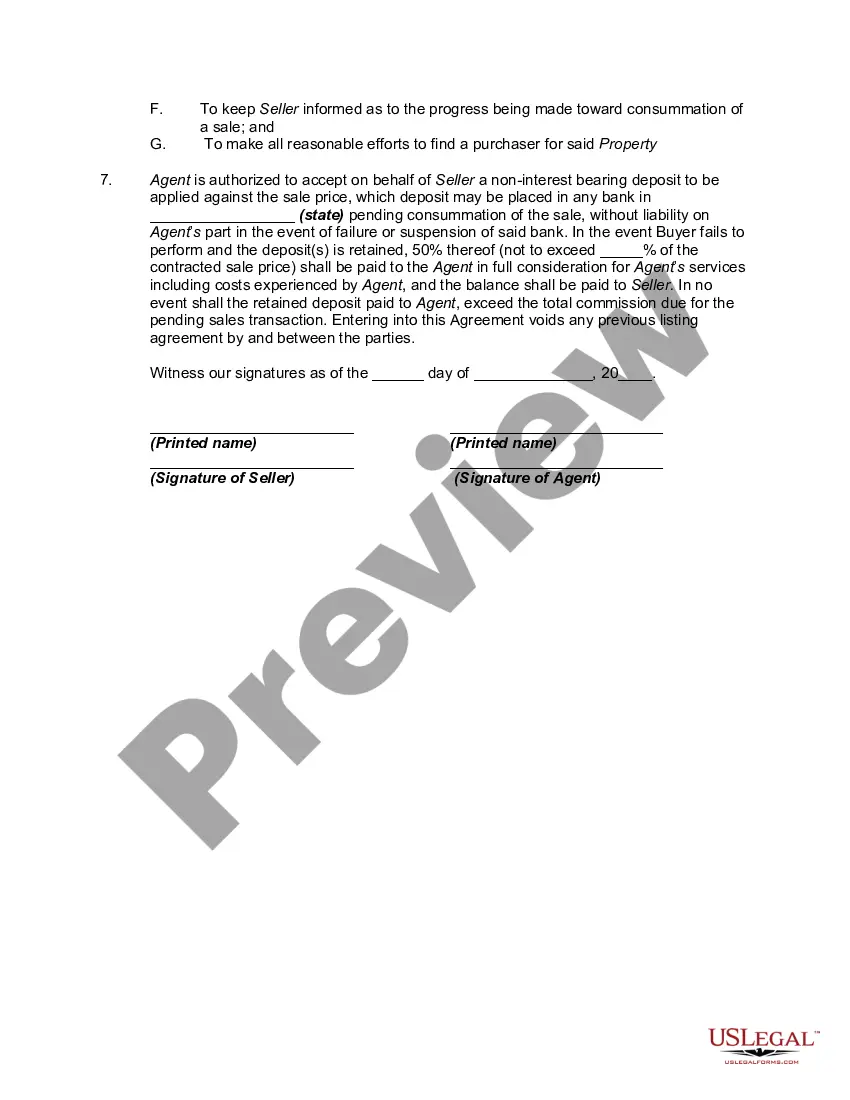
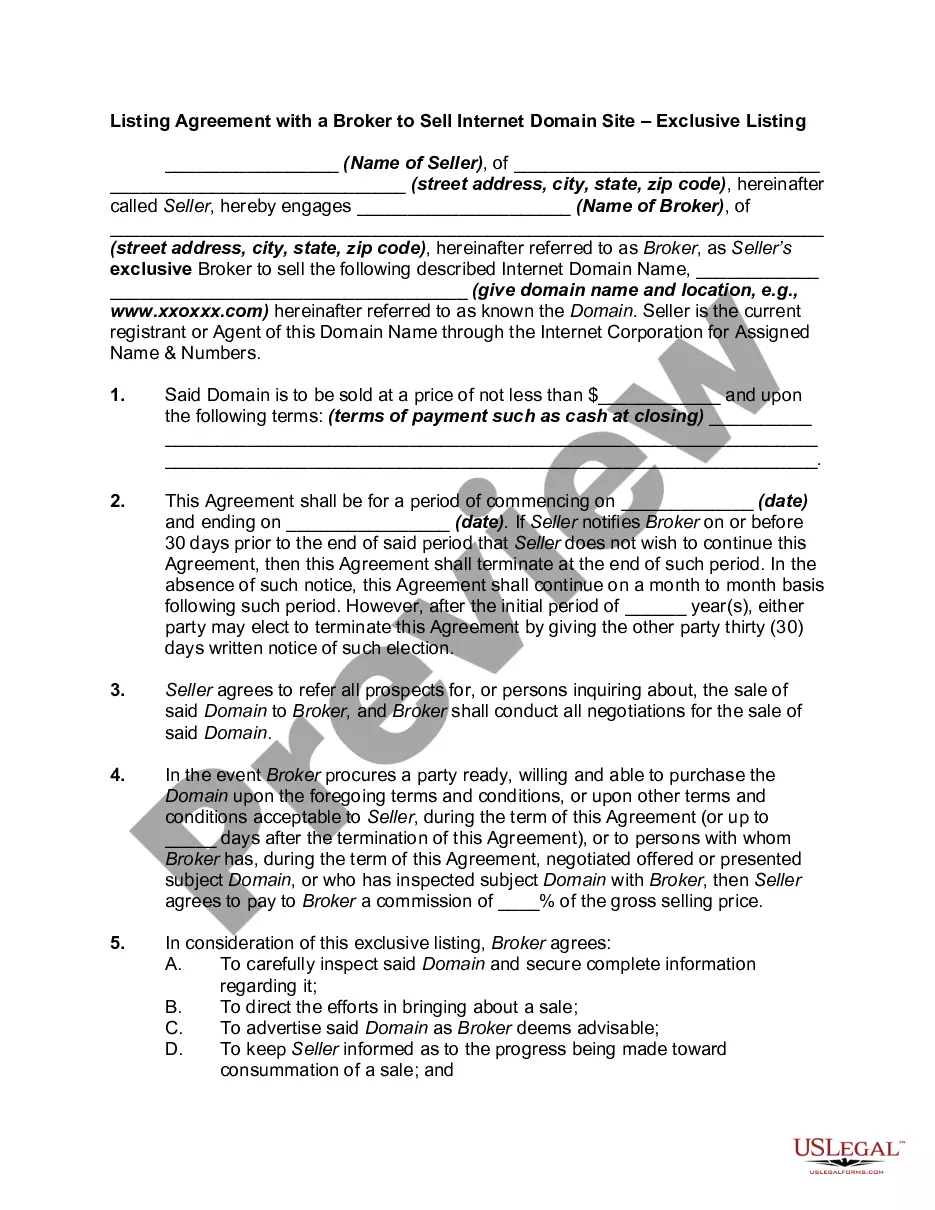
Listing Agreement Commercial With A Self-renewing Clause In Florida
Description


Get your form ready online
Our built-in tools help you complete, sign, share, and store your documents in one place.
Make edits, fill in missing information, and update formatting in US Legal Forms—just like you would in MS Word.
Download a copy, print it, send it by email, or mail it via USPS—whatever works best for your next step.
Sign and collect signatures with our SignNow integration. Send to multiple recipients, set reminders, and more. Go Premium to unlock E-Sign.
If this form requires notarization, complete it online through a secure video call—no need to meet a notary in person or wait for an appointment.
We protect your documents and personal data by following strict security and privacy standards.

Make edits, fill in missing information, and update formatting in US Legal Forms—just like you would in MS Word.

Download a copy, print it, send it by email, or mail it via USPS—whatever works best for your next step.

Sign and collect signatures with our SignNow integration. Send to multiple recipients, set reminders, and more. Go Premium to unlock E-Sign.

If this form requires notarization, complete it online through a secure video call—no need to meet a notary in person or wait for an appointment.

We protect your documents and personal data by following strict security and privacy standards.
Looking for another form?








Form popularity
FAQ
Florida Statute §501.165 requires that automatic renewal provisions in service contracts be clear and conspicuous, and that the consumer be notified no less than 30 days nor more than 60 days before their contract automatically renews, if the initial contract is 12 months or more and if it automatically renews for more ...
There are four common types of listings: open listings, exclusive right-to-sell listings, exclusive agency listings, and net listings. Open listing agreement. An open listing is a non-exclusive contract. Exclusive right to sell listing agreement. Exclusive agency listing agreement. Net listing agreement.
There are several different types of listing contracts, but very few of them are used. The "Exclusive Right to Sell" is the most common, but there is the "open listing," the "exclusive agency listing," and the "one-time show."
The most common is the Exclusive Right to Sell or Lease Listing Agreement. The means there is an agency agreement between the seller and the broker, granting the broker the exclusive right to represent the seller in the sale or lease of the seller's property.
Express contracts are explicitly agreed upon in writing or verbally and contain all terms and conditions. In contrast, implied contracts are created through the conduct of both parties and may not be explicitly agreed upon.
A listing agreement is an example of an agency relationship that is created by express agency. In this context, express agency arises when the principal explicitly states their intention to create an agency relationship with the agent through a written or verbal agreement.
An Exclusive Right to Sell Listing Agreement is more than just a formal arrangement between a homeowner and a real estate agent; it's a partnership that defines how the sale of a property will be handled. In Florida's dynamic real estate market, this agreement plays a pivotal role.
