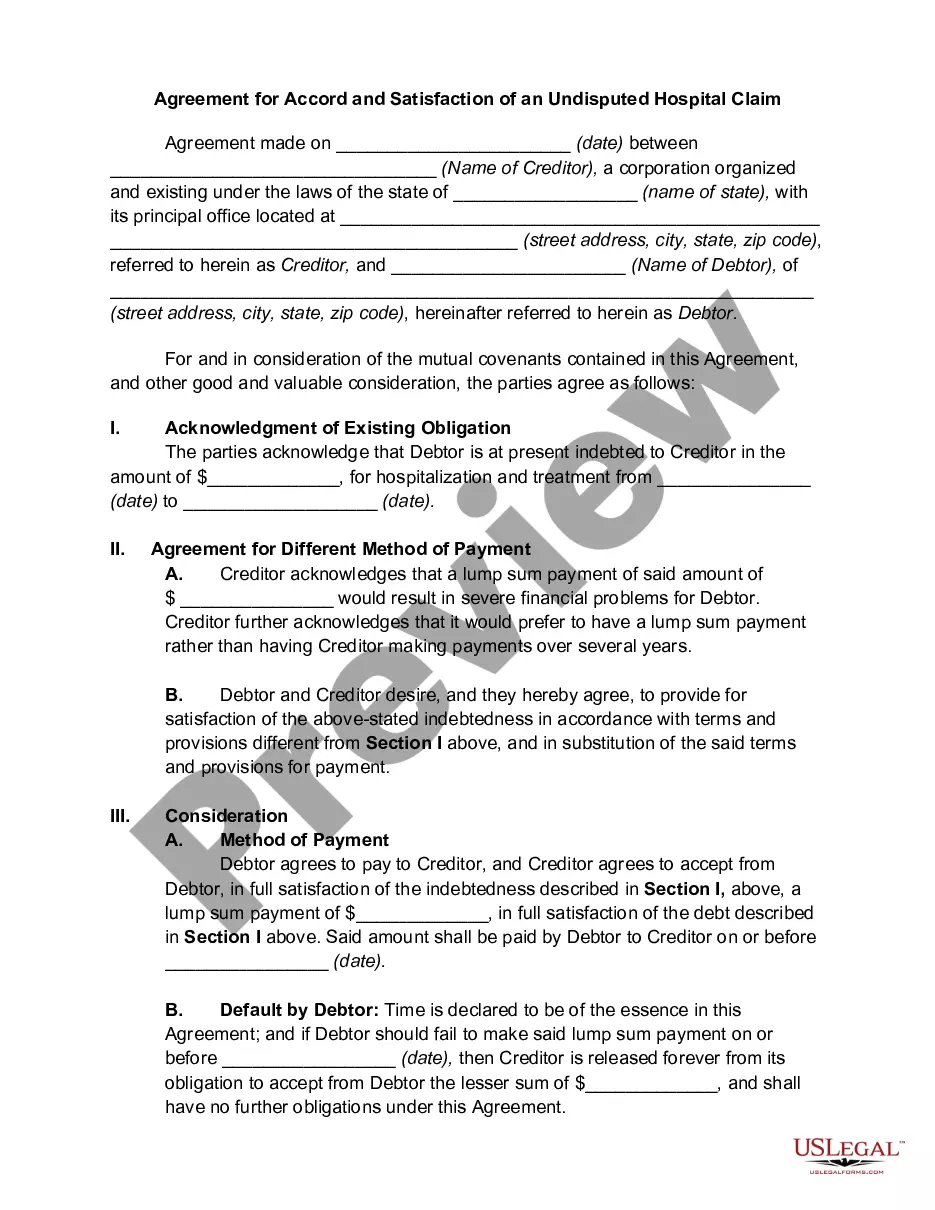
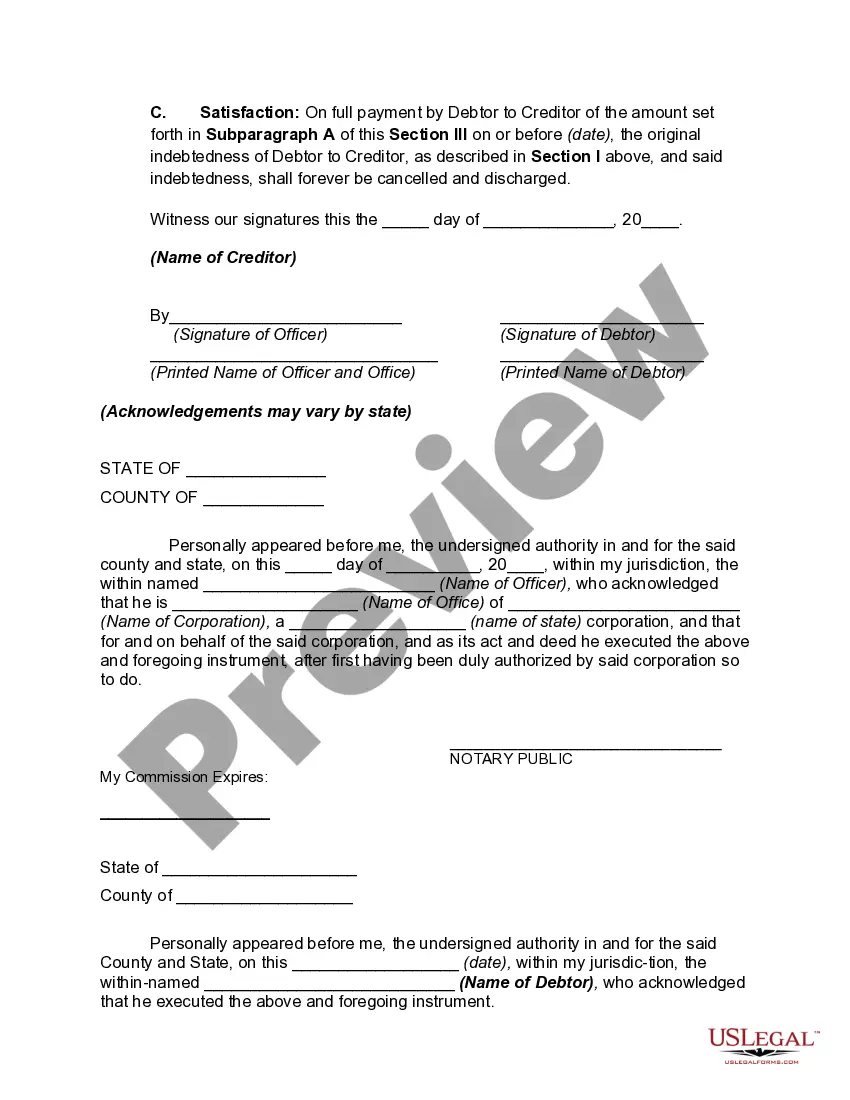
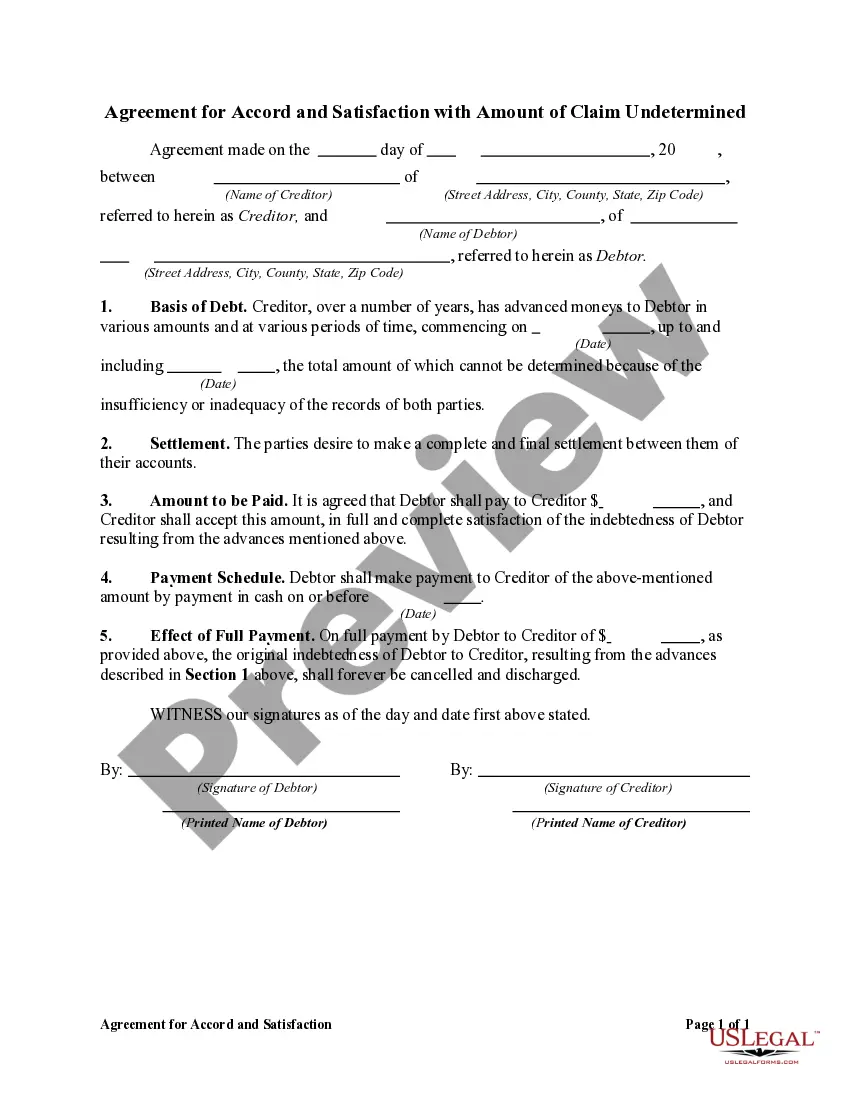
Agreement Satisfaction With Judgment In Sacramento
Description


Get your form ready online
Our built-in tools help you complete, sign, share, and store your documents in one place.
Make edits, fill in missing information, and update formatting in US Legal Forms—just like you would in MS Word.
Download a copy, print it, send it by email, or mail it via USPS—whatever works best for your next step.
Sign and collect signatures with our SignNow integration. Send to multiple recipients, set reminders, and more. Go Premium to unlock E-Sign.
If this form requires notarization, complete it online through a secure video call—no need to meet a notary in person or wait for an appointment.
We protect your documents and personal data by following strict security and privacy standards.

Make edits, fill in missing information, and update formatting in US Legal Forms—just like you would in MS Word.

Download a copy, print it, send it by email, or mail it via USPS—whatever works best for your next step.

Sign and collect signatures with our SignNow integration. Send to multiple recipients, set reminders, and more. Go Premium to unlock E-Sign.

If this form requires notarization, complete it online through a secure video call—no need to meet a notary in person or wait for an appointment.

We protect your documents and personal data by following strict security and privacy standards.
Looking for another form?








Form popularity
FAQ
The one-satisfaction rule is a common law principle that a plaintiff should only recover once for a particular injury , thereby preventing overcompensation of the plaintiff for their injury. Thus, a plaintiff who fully recovers from one tortfeasor may not recover more damages from a joint tortfeasor.
The opposing party shall include with the motion to compel satisfaction of the judgment an affidavit that evidences proof of payment and, if necessary, the due diligence that was performed in attempting to locate the prevailing party. If the motion is granted, the judgment is deemed satisfied.
A judgment becomes dormant and unenforceable when seven years lapse after the granting of the judgment, but may be revived by an additional entry within seven years from the initial judgment. Ga. Code Ann. § 9-12-60.
Satisfaction of a judgment means that the judgment is no longer a lien on the debtor's real property. The courts cannot control the actions of third parties, but usually, the fact of satisfaction is recorded by the major credit reporting agencies and included in the debtor's credit history.
Judgments may be classified as in personam, in rem, or quasi in rem. An in personam, or personal, judgment, the type most commonly rendered by courts, imposes a personal liability or obligation upon a person or group to some other person or group.
The writing of a judgment is one of the most important and time consuming task performed by a Judge. The making and the writing of a judgment and the style in which it is written, varies from Judge to Judge and reflects the characteristic of a Judge. Every Judge, of every rank has his own distinct style of writing.
Enforcing Your Judgment Get in touch with the judgment debtor. Levy (seize) assets that you have personal knowledge of. Examine judgment debtor in court to locate unknown assets. Suspend the judgment debtor's driver's license if the judgment is for auto accident.