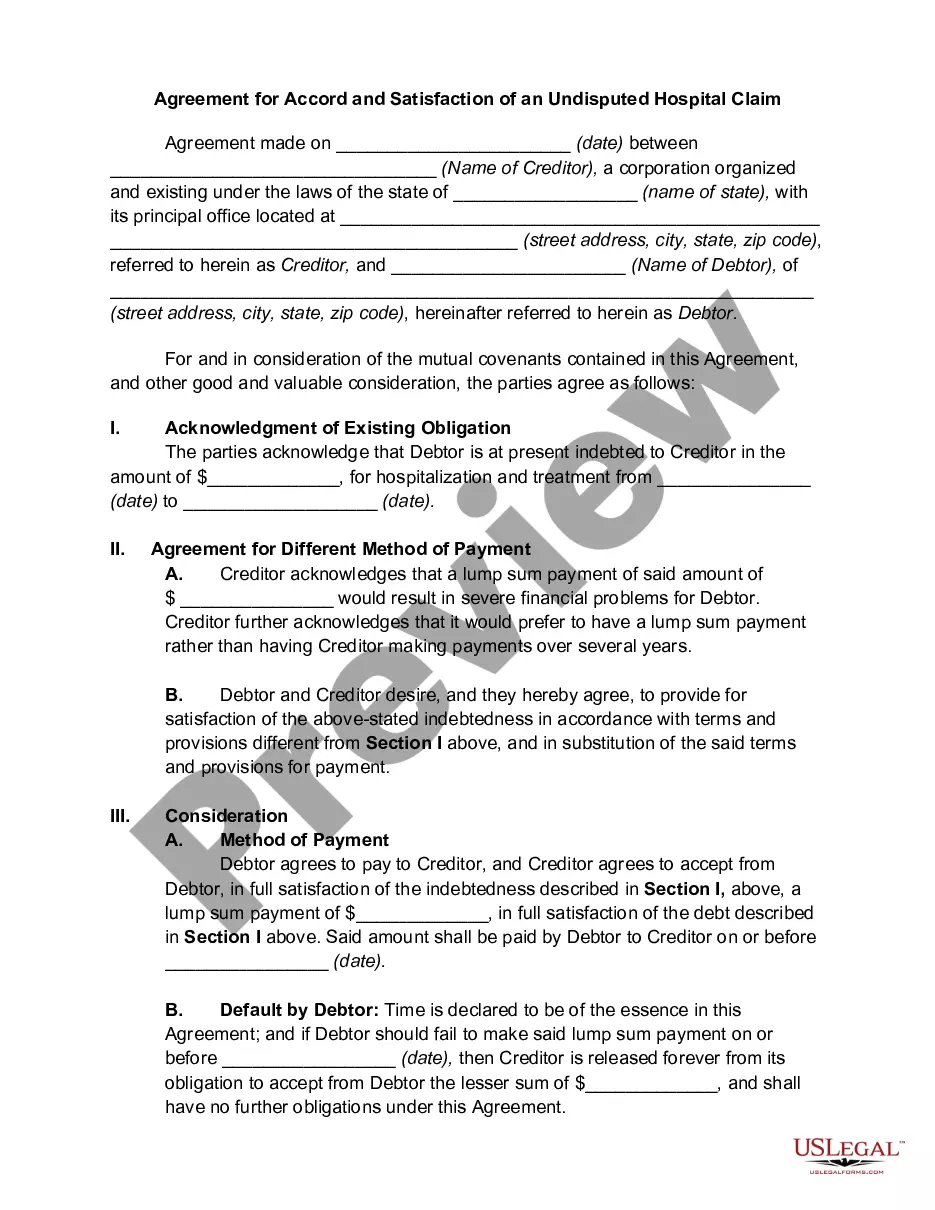
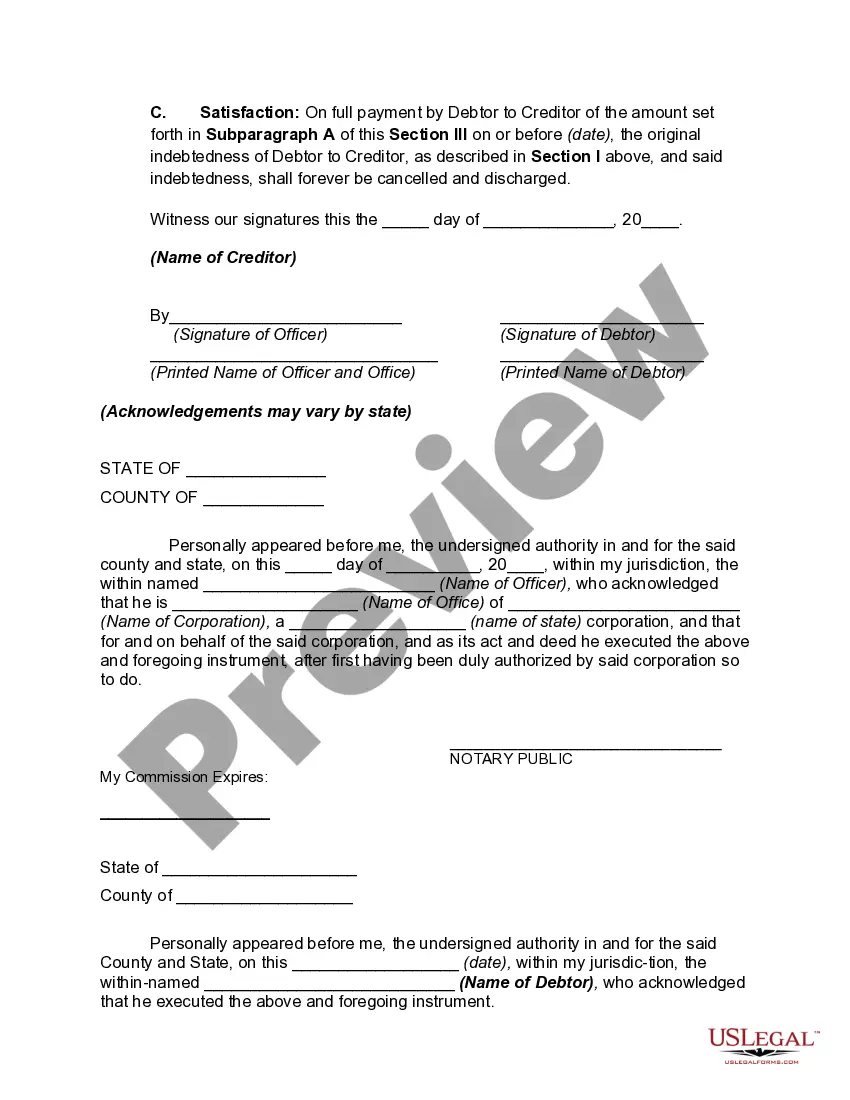
Agreement Satisfaction With Judgment In Philadelphia
Description


Get your form ready online
Our built-in tools help you complete, sign, share, and store your documents in one place.
Make edits, fill in missing information, and update formatting in US Legal Forms—just like you would in MS Word.
Download a copy, print it, send it by email, or mail it via USPS—whatever works best for your next step.
Sign and collect signatures with our SignNow integration. Send to multiple recipients, set reminders, and more. Go Premium to unlock E-Sign.
If this form requires notarization, complete it online through a secure video call—no need to meet a notary in person or wait for an appointment.
We protect your documents and personal data by following strict security and privacy standards.

Make edits, fill in missing information, and update formatting in US Legal Forms—just like you would in MS Word.

Download a copy, print it, send it by email, or mail it via USPS—whatever works best for your next step.

Sign and collect signatures with our SignNow integration. Send to multiple recipients, set reminders, and more. Go Premium to unlock E-Sign.

If this form requires notarization, complete it online through a secure video call—no need to meet a notary in person or wait for an appointment.

We protect your documents and personal data by following strict security and privacy standards.
Looking for another form?








Form popularity
FAQ
How to Deal With Judgement 1) DON'T JUMP TO CONCLUSIONS. 2) WATCH OUT FOR SENSITIVE SPOTS. 3) DON'T BE A JUDGER! 4) DEPERSONALISE THE SUBJECT. 5) PEOPLE SEE WHAT THEY ALREADY BELIEVE. 6) FOCUS ON THE INTENT NOT JUDGEMENT. 7) WHOSE ANXIETY IS IT ANYWAY? 8) GREY-TINTED GLASSES.
The most common way to remove a judgment is by settling the debt that led to the judgment. This involves paying the full amount owed, including any interest or fees that may have accrued. You might also negotiate with the creditor to have the judgment removed.
5 Steps How to Collect a Judgment in Pennsylvania File Your Judgment With the County Courts. File Your Writ of Execution (This the Key for the Sheriff to help you) . Seize Bank Accounts by Sending Questions (Interrogatories) to the Banks. Levy and Sell Personal Assets and Vehicles. Levy and Sell Real Property / Land.
Satisfaction of a judgment means that the judgment is no longer a lien on the debtor's real property. The courts cannot control the actions of third parties, but usually, the fact of satisfaction is recorded by the major credit reporting agencies and included in the debtor's credit history.
This means that, after you “win” part or all of your case and you obtain a judgment, you and your attorney will want to make sure that the judge signed the judgment or order, and that the clerk enters the order or judgment on the register of actions. This is the only way to ensure you can perfect the judgment.
Satisfaction is the fulfillment of an obligation . The term is often used in the context of contract law when one performs their duties under the contract. The term is also often found in the context of judgments in determining whether a party discharged their liability from a judgment. For example, in Lovejoy v.
All complaints are filed by the First Filing Unit, 1339 Chestnut Street, Philadelphia, PA 19107. Mail your complaint to this address. Include a self-address stamped envelope with your filing, to receive your filed complaint, pertinent forms and hearing information.
Satisfied judgments make it easier to get loans. They still hurt your credit score under the FICO formulas used for home loans, car loans, and credit card applications.
Pennsylvania judgments are valid for 5 years. Judgments can be revived every 5 years and should be revived if a creditor is attempting to actively collect on the debt. Judgments also act as a lien against real property for up to 20 years or longer if properly revived.
