Agreement Satisfaction With Judgment In Bronx

State:
Multi-State
County:
Bronx
Control #:
US-00436BG
Format:
Word; 
Rich Text
Instant download

Description

Accord and satisfaction is a method of discharging a claim whereby the parties agree to give and accept something in settlement of the claim and perform the agreement. Accord is the agreement and satisfaction is its execution or performance.


A contract is usually discharged by performance of the terms of the agreement. However, the parties may agree to a different performance. This is called an accord. When the accord is performed, this is called an accord and satisfaction. The original obligation is discharged.


In order for there to be an accord and satisfaction, there must be

(1) a bona fide dispute;

(2) an agreement to settle the dispute; and

(3) the performance of the agreement.


A settlement in which one party promises to forego an undisputed, liquidated claim in exchange for a promise to perform, or the performance of, a pre-existing duty will not be held to be enforceable by many courts, because of the absence of consideration. However, the promise to perform, or the performance of, anything slightly different from the pre-existing duty is sufficient consideration to support a promise to forego the claim. When a claim is disputed in good faith, or when an undisputed claim is unliquidated (the amount owed has not been determined), a settlement of such a claim is clearly enforceable.
Free preview
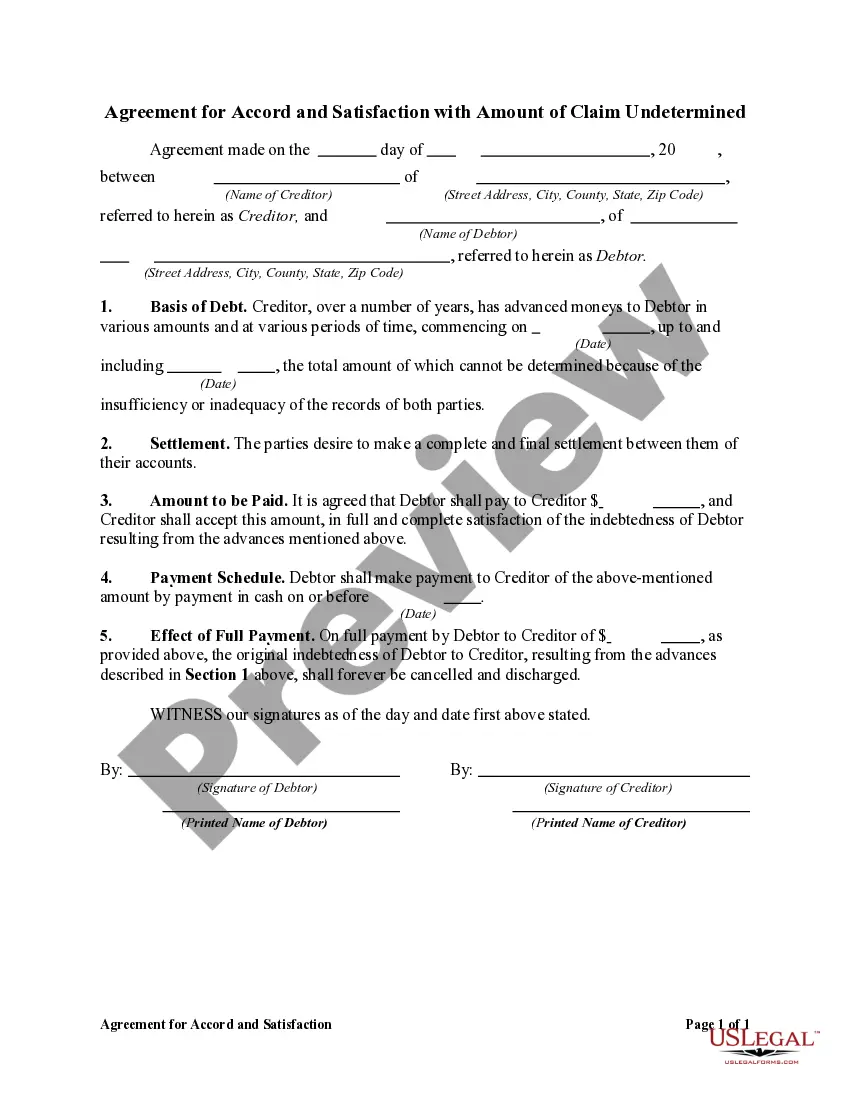
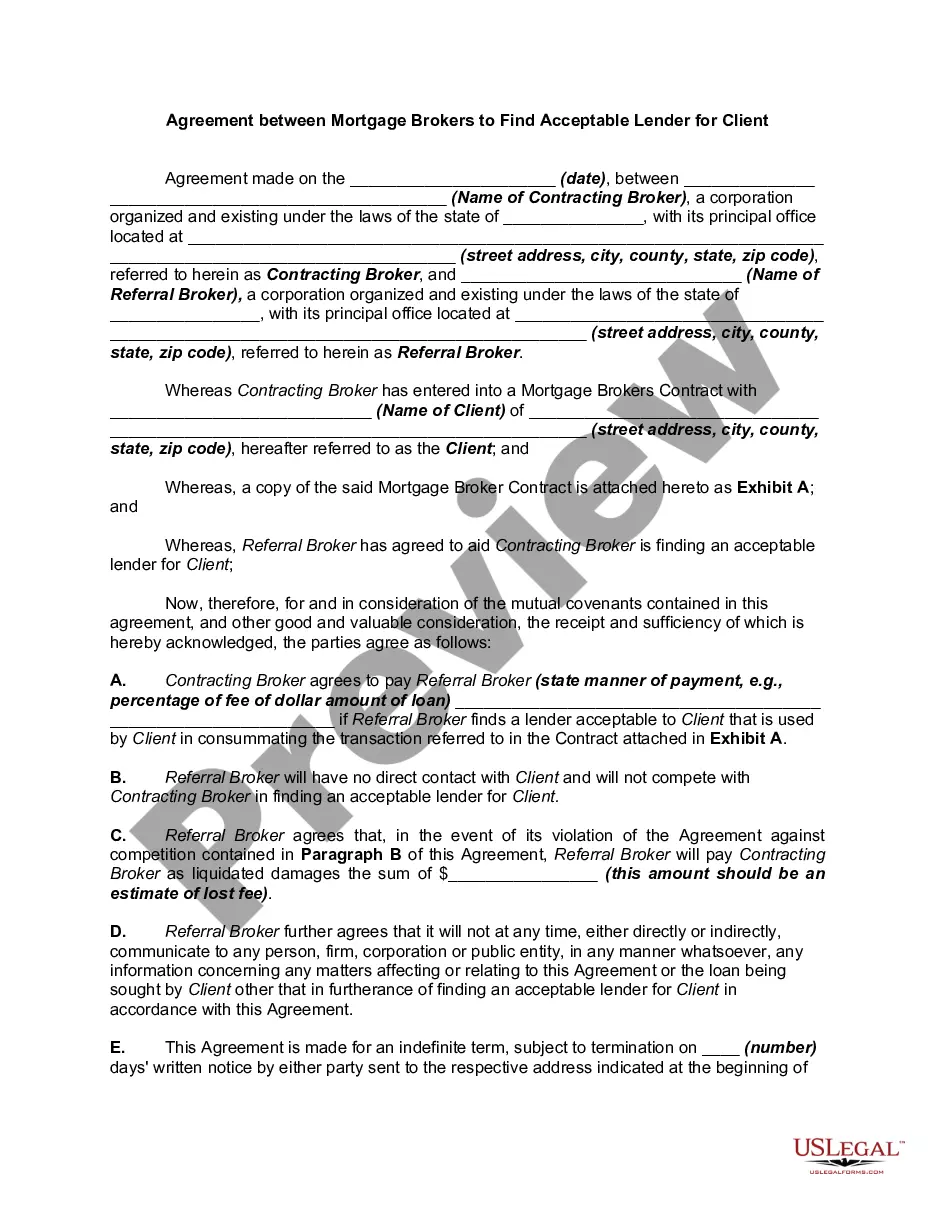
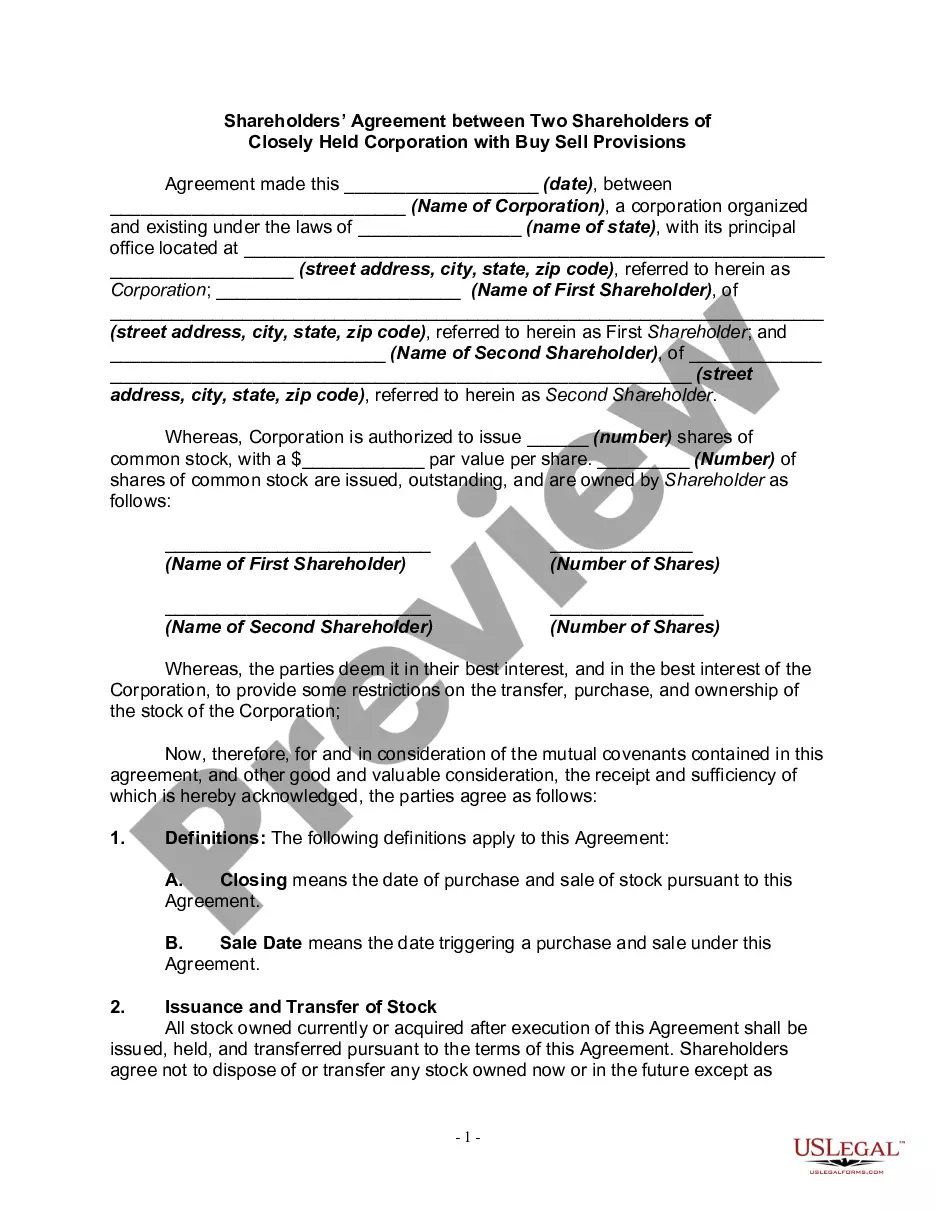
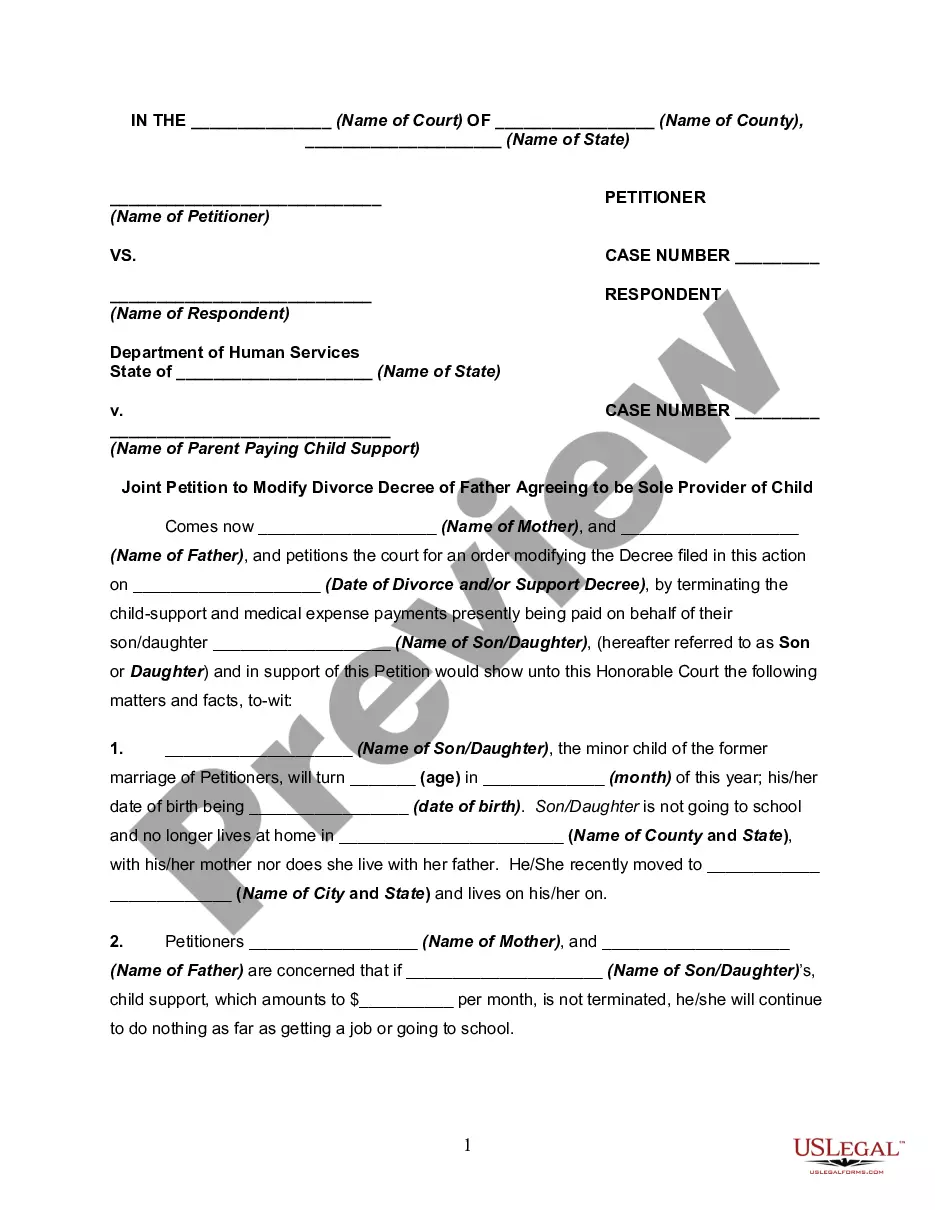
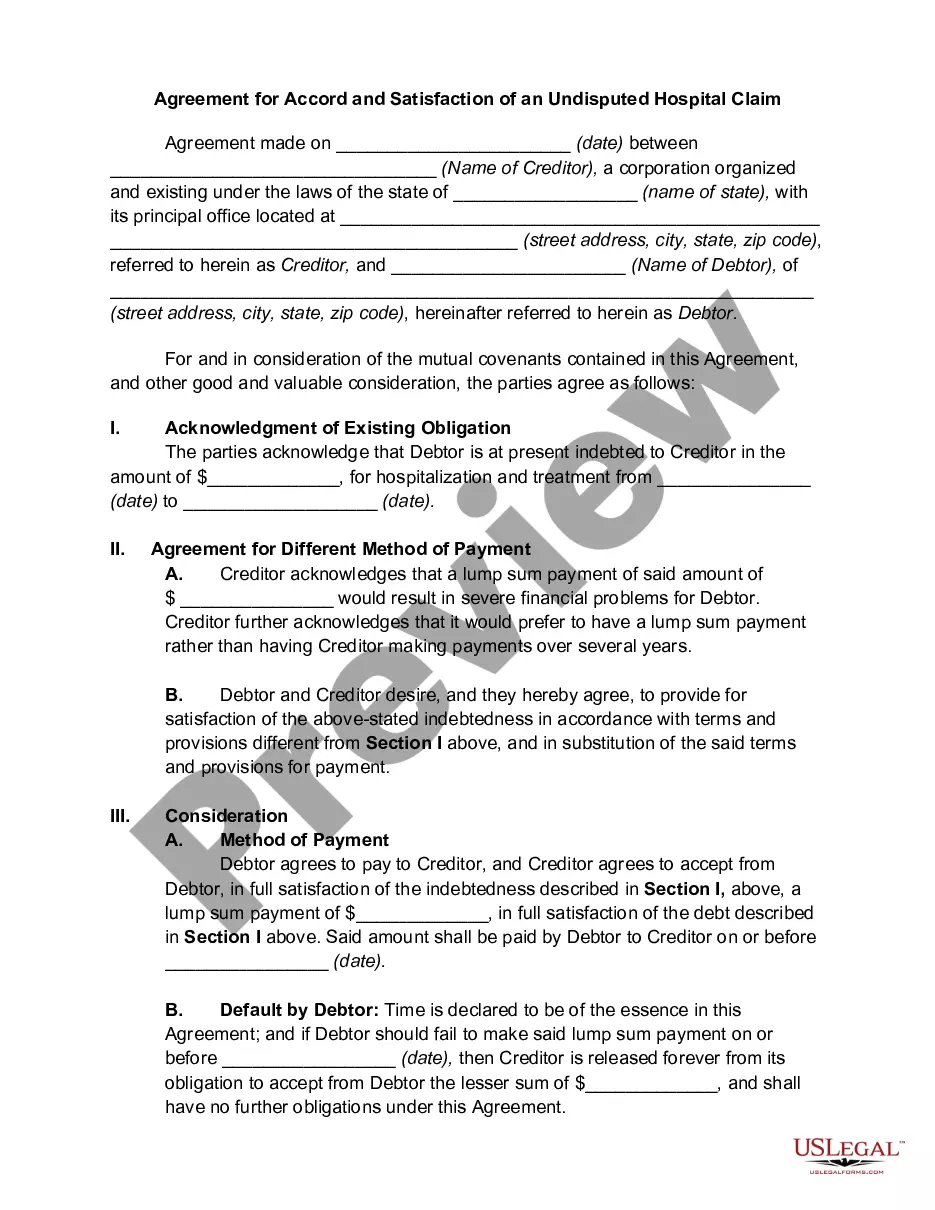
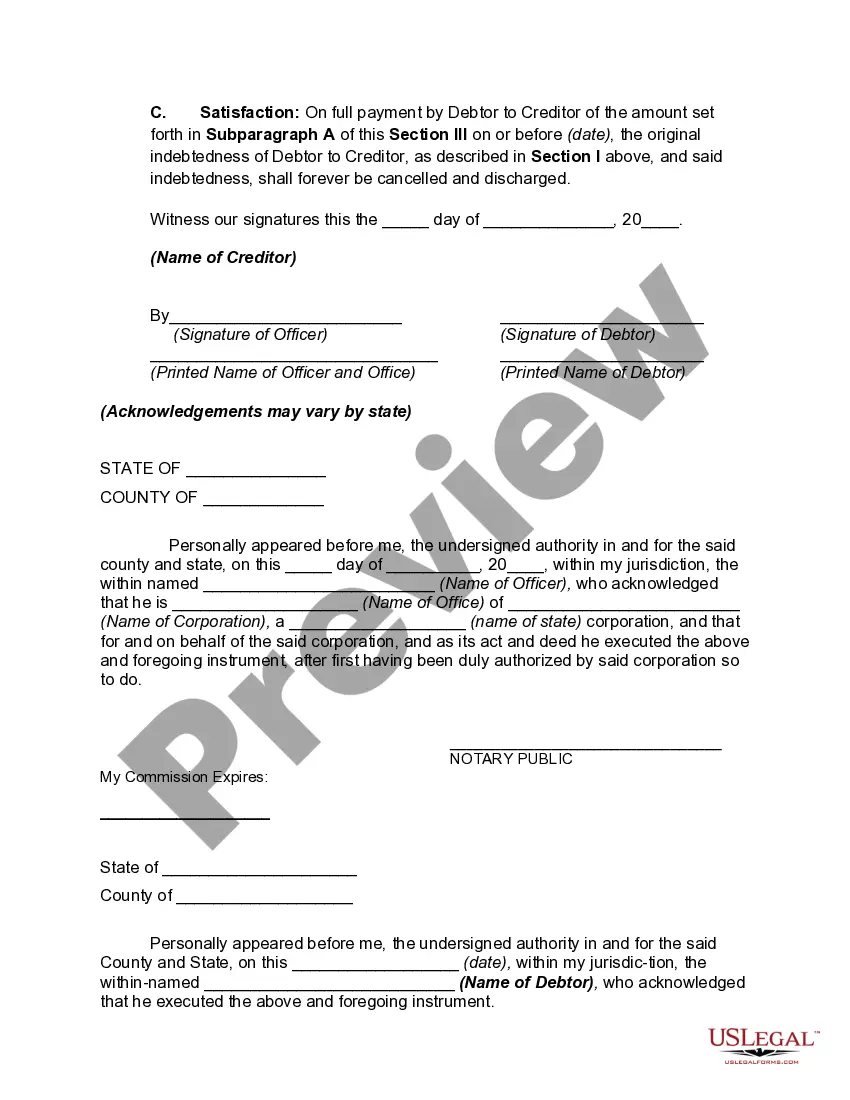
  • Preview Agreement for Accord and Satisfaction of an Undisputed Hospital Claim
  • Preview Agreement for Accord and Satisfaction of an Undisputed Hospital Claim
  • Preview Agreement for Accord and Satisfaction of an Undisputed Hospital Claim

Get your form ready online

Our built-in tools help you complete, sign, share, and store your documents in one place.

Built-in online Word editor

Make edits, fill in missing information, and update formatting in US Legal Forms—just like you would in MS Word.

Export easily

Download a copy, print it, send it by email, or mail it via USPS—whatever works best for your next step.

E-sign your document

Sign and collect signatures with our SignNow integration. Send to multiple recipients, set reminders, and more. Go Premium to unlock E-Sign.

Notarize online 24/7

If this form requires notarization, complete it online through a secure video call—no need to meet a notary in person or wait for an appointment.

Store your document securely

We protect your documents and personal data by following strict security and privacy standards.

Form selector

Make edits, fill in missing information, and update formatting in US Legal Forms—just like you would in MS Word.

Form selector

Download a copy, print it, send it by email, or mail it via USPS—whatever works best for your next step.

Form selector

Sign and collect signatures with our SignNow integration. Send to multiple recipients, set reminders, and more. Go Premium to unlock E-Sign.

Form selector

If this form requires notarization, complete it online through a secure video call—no need to meet a notary in person or wait for an appointment.

Form selector

We protect your documents and personal data by following strict security and privacy standards.

Looking for another form?

This field is required
Ohio
Select state

Form popularity

FAQ

Personal Property Execution If a Judgment Creditor knows that the Judgment Debtor owns a car, truck, motorcycle or other personal property of significant value, the Judgment Creditor may file a Property Execution.

Judgments may be classified as in personam, in rem, or quasi in rem. An in personam, or personal, judgment, the type most commonly rendered by courts, imposes a personal liability or obligation upon a person or group to some other person or group.

The Satisfaction of Judgment form must be filed in the Court that entered the judgment, but if a Transcript of Judgment was filed in the County Clerk's office, it must be filed there; and. Mail a copy of the Satisfaction within 10 days to the debtor; and.

New York Judgment Statute of Limitations The statute of limitations for collecting on a New York judgment is 20 years, which starts the day the judgment creditor is first able to collect on the judgment.

How Long Are Judgments Valid in New York? Judgments are valid for 20 years and may be extended once for an additional period of 10 years. To extend a judgment for an extra ten (10) years, the Judgment Creditor must make written application to the court that issued the original judgment.

The statute of limitations for collecting on a New York judgment is 20 years, which starts the day the judgment creditor is first able to collect on the judgment.

The requirements are as follows: Notarized Affidavit of Defendant. Stating Sum for Which Judgment May be Entered. State County of Residence or Where Entry Authorized. State Facts Out of Which Debt Arose. Contingent liability. Entry of judgment.

You should contact an enforcement officer in the county where the judgment debtor has property. If you do not know where the judgment debtor has property, then contact an enforcement officer in the county where the judgment debtor resides.

How Long Are Judgments Valid in New York? Judgments are valid for 20 years and may be extended once for an additional period of 10 years. To extend a judgment for an extra ten (10) years, the Judgment Creditor must make written application to the court that issued the original judgment.

Trusted and secure by over 3 million people of the world’s leading companies

Agreement Satisfaction With Judgment In Bronx