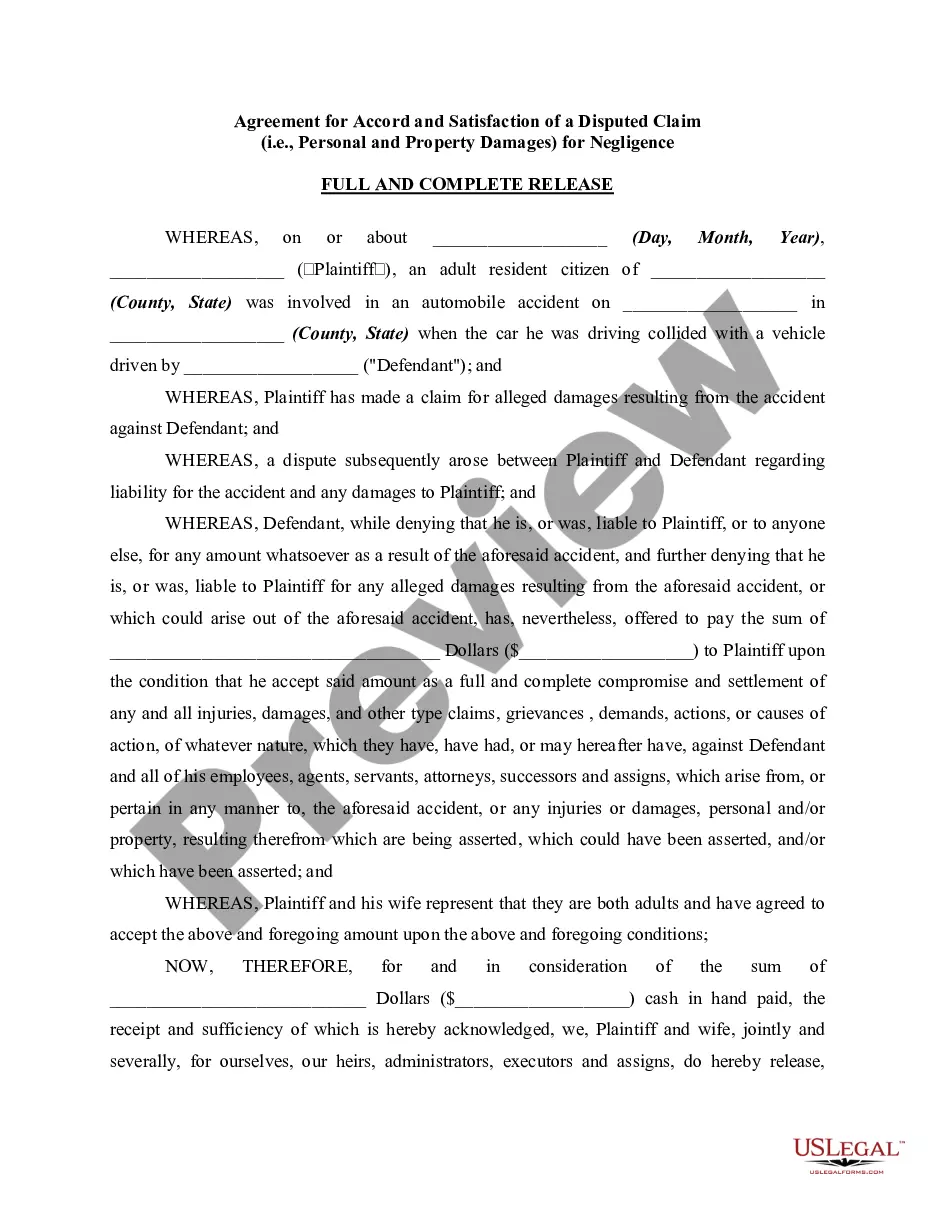
Denied Claim Agreement For Primary Eob In Michigan
Description
Get your form ready online
Our built-in tools help you complete, sign, share, and store your documents in one place.
Make edits, fill in missing information, and update formatting in US Legal Forms—just like you would in MS Word.
Download a copy, print it, send it by email, or mail it via USPS—whatever works best for your next step.
Sign and collect signatures with our SignNow integration. Send to multiple recipients, set reminders, and more. Go Premium to unlock E-Sign.
If this form requires notarization, complete it online through a secure video call—no need to meet a notary in person or wait for an appointment.
We protect your documents and personal data by following strict security and privacy standards.

Make edits, fill in missing information, and update formatting in US Legal Forms—just like you would in MS Word.

Download a copy, print it, send it by email, or mail it via USPS—whatever works best for your next step.

Sign and collect signatures with our SignNow integration. Send to multiple recipients, set reminders, and more. Go Premium to unlock E-Sign.

If this form requires notarization, complete it online through a secure video call—no need to meet a notary in person or wait for an appointment.

We protect your documents and personal data by following strict security and privacy standards.
Looking for another form?









Form popularity
FAQ
What is Denial Code 144. Denial code 144 is related to an incentive adjustment, such as a preferred product or service. This means that the claim has been denied because the insurance company or payer does not cover or provide additional benefits for the specific product or service that was billed.
Remark code N19 indicates that the procedure code billed is considered incidental to the primary procedure. This means that the service provided is not separately payable as it is included in the reimbursement for the primary service performed.
Call the state of Michigan at 1-800-642-3195 to have a hearing request form (DCH-0092) sent to you. Fill out the form and return it to the address on the form.
Denial code 216 is issued when a review organization determines that the claim does not meet the necessary requirements for reimbursement.
Denial code 273 is when the healthcare provider exceeded the coverage or program guidelines, resulting in the claim being denied.
ICD-9-CM (or ICD-10-CM, once mandated) diagnosis codes must be entered in Box 21 only.
As mentioned above, the AT modifier is created to differentiate between active treatment and maintenance treatment. The AT modifier is required on Medicare claims to receive reimbursement for CPT codes ranging from 98940-98942.
Box 23 - TITLE: Prior Authorization Number (this field is also used for CLIA numbers) • INSTRUCTIONS: Enter any of the following: prior authorization number, referral number, or Clinical Laboratory Improvement Amendments (CLIA) number, as assigned by the payer for the current service.
Call the state of Michigan at 1-800-642-3195 to have a hearing request form (DCH-0092) sent to you. Fill out the form and return it to the address on the form.
The use of the JA and JB modifiers is required for drugs which have 1 HCPCS Level II (J or Q) code but multiple routes of administration. Drugs that fall under this category must be billed with JA Modifier for the intravenous infusion of the drug or billed with JB Modifier for subcutaneous injection of the drug.

