Bidding Proposal Contract Without In Nevada
Description


Get your form ready online
Our built-in tools help you complete, sign, share, and store your documents in one place.
Make edits, fill in missing information, and update formatting in US Legal Forms—just like you would in MS Word.
Download a copy, print it, send it by email, or mail it via USPS—whatever works best for your next step.
Sign and collect signatures with our SignNow integration. Send to multiple recipients, set reminders, and more. Go Premium to unlock E-Sign.
If this form requires notarization, complete it online through a secure video call—no need to meet a notary in person or wait for an appointment.
We protect your documents and personal data by following strict security and privacy standards.

Make edits, fill in missing information, and update formatting in US Legal Forms—just like you would in MS Word.

Download a copy, print it, send it by email, or mail it via USPS—whatever works best for your next step.

Sign and collect signatures with our SignNow integration. Send to multiple recipients, set reminders, and more. Go Premium to unlock E-Sign.

If this form requires notarization, complete it online through a secure video call—no need to meet a notary in person or wait for an appointment.

We protect your documents and personal data by following strict security and privacy standards.
Looking for another form?

Form popularity
FAQ
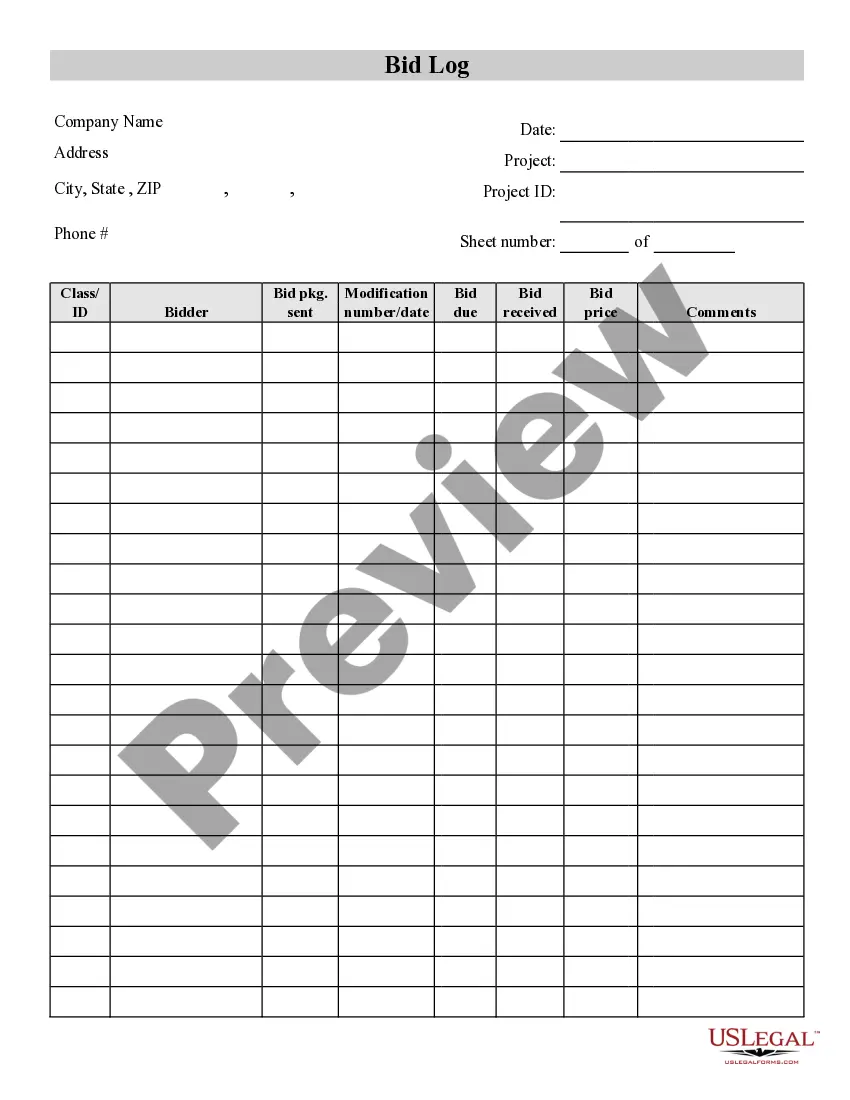
Bid solicitation. Bid submission. Bid selection. Contract formation. Project delivery.
Every project requires bidders to submit supporting documents, which vary with the project type. Review the bid package to see which documents the client requests. In most cases, they'd request financial documents to prove the bidder's liquidity. They'd also request licenses, certificates, and insurance documents.
A bid submission is a response by a bidder to an invitation to bid (ITB) or request for proposal (RFP) made by a client. A client first creates a bid package highlighting the project's scope, qualifications, and deadlines to solicit bids from qualified bidders.
Forms of 'To Bid': FormBid V1 Base Form (Infinitive): Bid V2 Simple Past Tense: Bid V3 Past Participle: Bid V4 3rd Person Singular: Bids1 more row
What are the key steps in the bid process? The key stages include bid document preparation, bid invitation, bid evaluation, supplier selection and contract award. Every step protects against favoritism and collusion, and helps advance the procurement objectives of good value, transparency and accountability.
The bid management process consists of five steps, namely bid solicitation, bid submission, bid selection, contract formation, and project delivery.
2 Companies should conduct a bid/no-bid analysis to determine valid reasons for not bidding before writing a no-bid letter. 3 The no-bid letter should thank the contact, provide specific reasons for not bidding, and reiterate the company's interest in future projects.
bystep guide to presenting a proposal Research your audience. As always, start with research. Craft a clear agenda. Select an appropriate presentation format. Put together your presentation. Open by naming a challenge. Sell a solution, not a product. Lay out the next steps. Follow up promptly.
How to write a bid weigh up the decision. Different organisations have different priorities, so this process will be different for everyone. understand the buying organisation. answer the question and provide relevant examples. use plain English and simple formatting. get someone to sense check. ask for feedback.
Here are the key elements you need to include in a contract proposal when sending it to a potential client: Introduce Yourself: Start by saying who you are and what your business does. State the Problem: Explain the issue you plan to solve for the client. Present the Solution: Explain how you will solve the problem.