Libel For Action In Arizona
Description

Get your form ready online
Our built-in tools help you complete, sign, share, and store your documents in one place.
Make edits, fill in missing information, and update formatting in US Legal Forms—just like you would in MS Word.
Download a copy, print it, send it by email, or mail it via USPS—whatever works best for your next step.
Sign and collect signatures with our SignNow integration. Send to multiple recipients, set reminders, and more. Go Premium to unlock E-Sign.
If this form requires notarization, complete it online through a secure video call—no need to meet a notary in person or wait for an appointment.
We protect your documents and personal data by following strict security and privacy standards.

Make edits, fill in missing information, and update formatting in US Legal Forms—just like you would in MS Word.

Download a copy, print it, send it by email, or mail it via USPS—whatever works best for your next step.

Sign and collect signatures with our SignNow integration. Send to multiple recipients, set reminders, and more. Go Premium to unlock E-Sign.

If this form requires notarization, complete it online through a secure video call—no need to meet a notary in person or wait for an appointment.

We protect your documents and personal data by following strict security and privacy standards.
Looking for another form?







Form popularity
FAQ
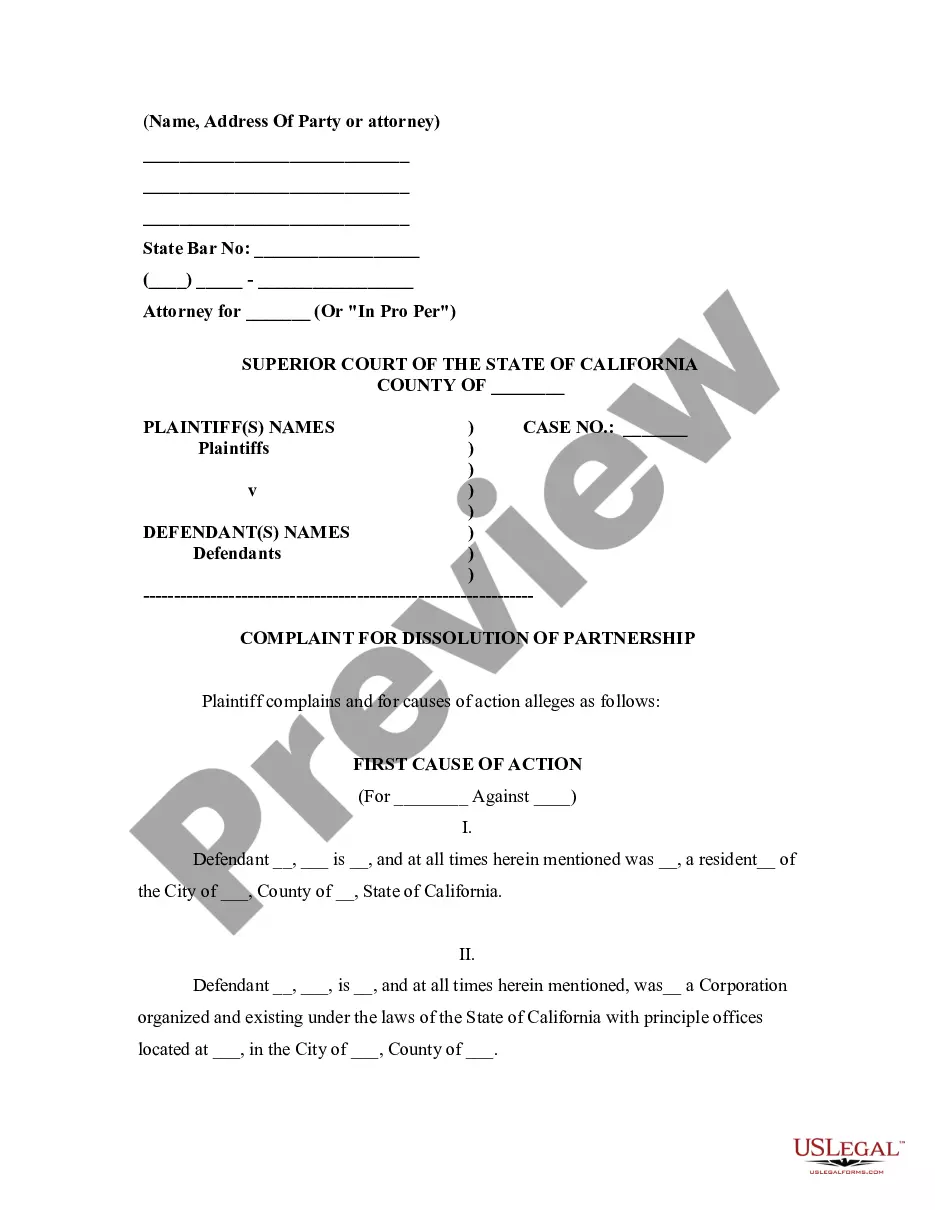
A plaintiff representing herself may obtain and fill out a prepared Complaint form from the Clerk of the Court at the courthouse or online at each county court website or by visiting . The Complaint must be filed with the Clerk of the appropriate court.
It's safe to say that pursuing a defamation suit against someone can be difficult, but it is not impossible. To prove defamation, you must determine that the statement can easily be described as false, published, harmful, or unprivileged.
That the statement was made (published) to a third party; That the person who made the statement did so negligently, recklessly or intentionally; and. That as a result of the statement, your reputation was damaged.
In Arizona, the elements of a defamation claim are: a false statement concerning the plaintiff; the statement was defamatory; the statement was published to a third party; the requisite fault on the part of the defendant; and. the plaintiff was damaged as a result of the statement.
Being libel-proof means, quite simply, that the plaintiff's reputation is so bad that any false statement could not lower that person in the eyes of the community any further. The thought is that such a plaintiff's claim must fail because that plaintiff has suffered no harm as a result of the false statement.
If someone writes for publication a defamatory statement (a statement in which a person's reputation is seriously damaged), and that statement is false, and that person is identified in print, even without a name, then libel charges can be brought.
Arizona recognizes both per se slander and libel, in addition to per quod slander and libel. Per se is a legal standard in which damage is presumed, whereas per quod, is when the plaintiff must prove the damages caused by the defamatory act.
In order to prove a libel or slander claim, the employee must prove: (1) false communication; (2) unprivileged statement of fact (not opinion); (3) it was made about the plaintiff; (4) published to a third party; and (5) caused damage to the plaintiff.
Although libel or defamation is now primarily a civil claim, it once was primarily a criminal offense, prosecuted by the government and punishable by imprisonment or a fine.
Is it hard to win a defamation case? Defamation lawsuits are challenging because they require a lot of fact-finding. It may require experts to testify on your behalf about the psychological and emotional harm you've suffered. Unless your lawyer is working on a contingency basis, it can also be quite costly.

