Overpayment Notice To Employee In Bronx
Description
Get your form ready online
Our built-in tools help you complete, sign, share, and store your documents in one place.
Make edits, fill in missing information, and update formatting in US Legal Forms—just like you would in MS Word.
Download a copy, print it, send it by email, or mail it via USPS—whatever works best for your next step.
Sign and collect signatures with our SignNow integration. Send to multiple recipients, set reminders, and more. Go Premium to unlock E-Sign.
If this form requires notarization, complete it online through a secure video call—no need to meet a notary in person or wait for an appointment.
We protect your documents and personal data by following strict security and privacy standards.

Make edits, fill in missing information, and update formatting in US Legal Forms—just like you would in MS Word.

Download a copy, print it, send it by email, or mail it via USPS—whatever works best for your next step.

Sign and collect signatures with our SignNow integration. Send to multiple recipients, set reminders, and more. Go Premium to unlock E-Sign.

If this form requires notarization, complete it online through a secure video call—no need to meet a notary in person or wait for an appointment.

We protect your documents and personal data by following strict security and privacy standards.
Looking for another form?










Form popularity
FAQ
The employer may make deductions to recover overpayments for a period of six (6) years from the original overpayment; (b) Frequency. The employer shall recover overpayments by wage deduction no more frequently than once per wage payment, provided that such deduction complies with this Part.
Employers should fix any payroll errors right away. For most employers, that means by the next paycheck.
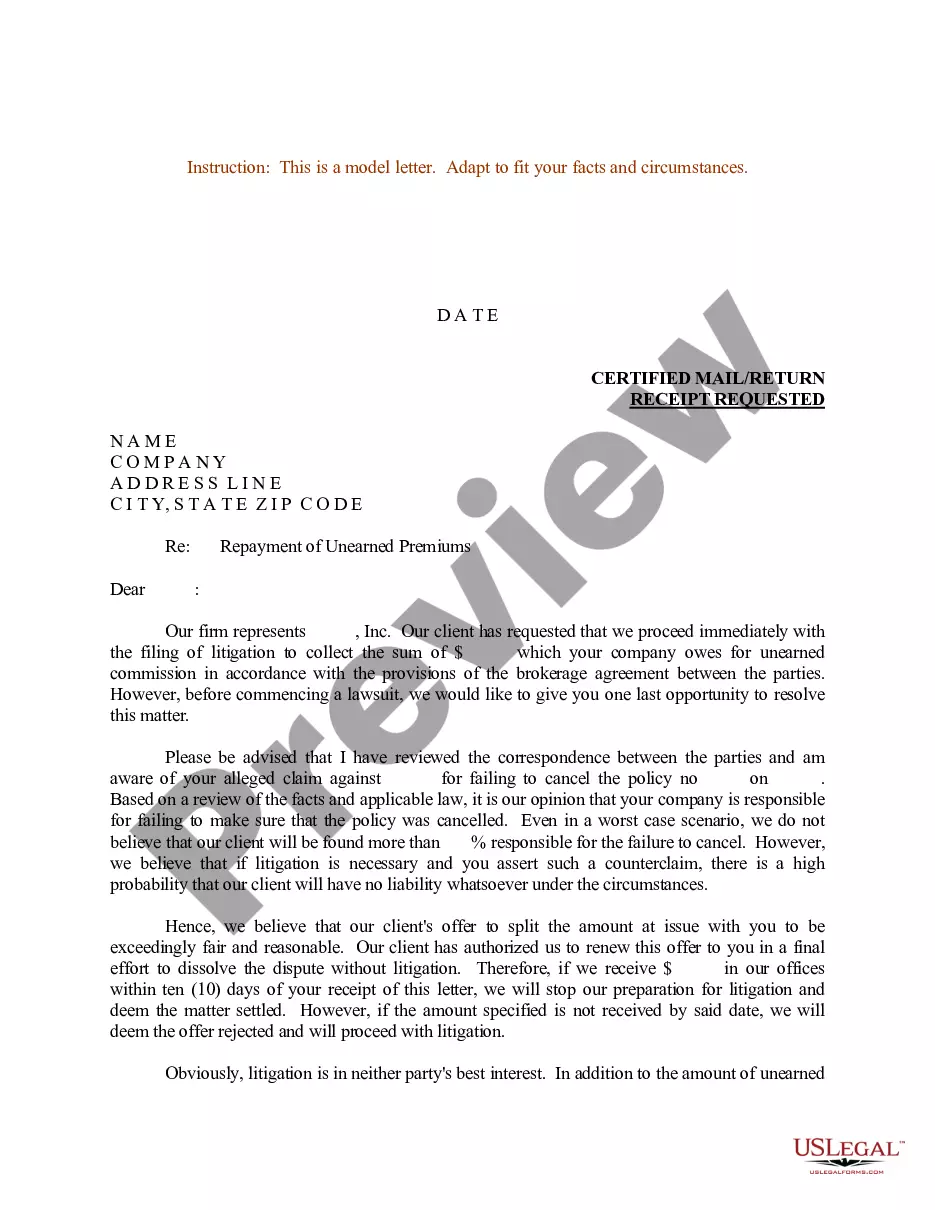
Dear insert name The purpose of this letter is to inform you that, insert company name (Company) has discovered a payroll error that has resulted in you being overpaid the amount of insert amount. The details of this overpayment are as follows: List the relevant dates and amounts of overpayment.
Section 193, subdivision 1(d), of the New York State Labor Law permits an employer to make deductions from an employee's wages for repayment of advances of salary or wages made by the employer to the employee.
The employer may make deductions to recover overpayments for a period of six (6) years from the original overpayment; (b) Frequency. The employer shall recover overpayments by wage deduction no more frequently than once per wage payment, provided that such deduction complies with this Part.
Notify any employee terminated from employment, in writing, of the exact date of such termination as well as the exact date of cancellation of employee benefits connected with such termination. In no case shall notice of such termination be provided more than five working days after the date of such termination.
Notify the employee of the fact that an overpayment has been made, providing them with an explanation as to how this has arisen, together with a breakdown, including the dates and amounts. In this way, both parties will be clear as to the reason for the overpayment and exactly what will need to be repaid in due course.

