Forgery Forged Instrument In Suffolk
Description

Get your form ready online
Our built-in tools help you complete, sign, share, and store your documents in one place.
Make edits, fill in missing information, and update formatting in US Legal Forms—just like you would in MS Word.
Download a copy, print it, send it by email, or mail it via USPS—whatever works best for your next step.
Sign and collect signatures with our SignNow integration. Send to multiple recipients, set reminders, and more. Go Premium to unlock E-Sign.
If this form requires notarization, complete it online through a secure video call—no need to meet a notary in person or wait for an appointment.
We protect your documents and personal data by following strict security and privacy standards.

Make edits, fill in missing information, and update formatting in US Legal Forms—just like you would in MS Word.

Download a copy, print it, send it by email, or mail it via USPS—whatever works best for your next step.

Sign and collect signatures with our SignNow integration. Send to multiple recipients, set reminders, and more. Go Premium to unlock E-Sign.

If this form requires notarization, complete it online through a secure video call—no need to meet a notary in person or wait for an appointment.

We protect your documents and personal data by following strict security and privacy standards.
Looking for another form?






Form popularity
FAQ
Forging is the manufacturing process of hammering, pressing or rolling metal into shape. This is either delivered from a hammer, press or die. It is essentially the art of heating and working hot metal to design or shape that is fit for a specific purpose or use.
What are the three types of forgery? Three common types of forgery are signature forgery, art forgery, and document forgery. Each of these types of forgery involves different methods of creating or altering documents, signifiers, and objects with the intent to deceive.
A FORGED INSTRUMENT means a written instrument which has been falsely made, completed or altered. 6 The words "written instrument," "falsely made," "falsely completed," and "falsely altered" used in the definition of "forged instrument" also have their own special meanings.
Generally speaking, you are guilty of Criminal Possession of a Forged Instrument, regardless of whether you are charged with NY PL 170.20, 170.25 or 170.30, if you possess a completed or modified written instrument you know is and you do so with the intent to defraud or deceive another.
Criminal Possession of a Forged Instrument in the Third Degree pursuant to New York Penal Law 170.20 is an “A” misdemeanor punishable by as much as one year in jail. This misdemeanor conviction will not be expunged from your record on a later date merely because it is not a felony offense.
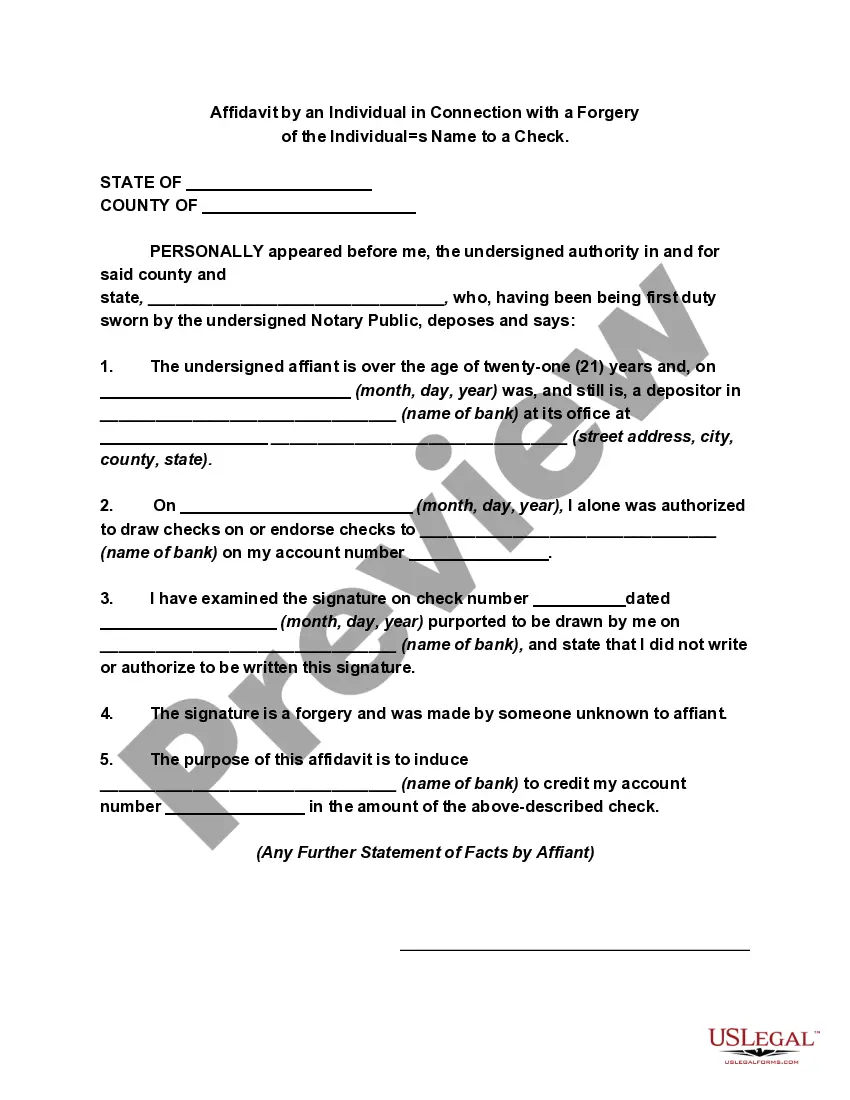
Some of the potential examples include: Forged Check: If you try to forge a check in someone else's name, you could be guilty of uttering a forged instrument. You do not necessarily need to create an entirely new check.
Second-Degree Criminal Possession of a Forged Instrument Examples might include: Forged checks or credit card receipts. driver's licenses or state IDs. Altered legal documents like wills or deeds.
Criminal Possession of a Forged Instrument in the Third Degree pursuant to New York Penal Law 170.20 is an “A” misdemeanor punishable by as much as one year in jail. This misdemeanor conviction will not be expunged from your record on a later date merely because it is not a felony offense.
India Code: Section Details. Whoever commits forgery, intending that the 1 document or electronic record forged shall be used for the purpose of cheating, shall be punished with imprisonment of either description for a term which may extend to seven years, and shall also be liable to fine.
Simply, if you delete, alter or make a false entry in the business records of an enterprise and you do so with the intent to defraud, you have run afoul of the misdemeanor crime. If when you do so, you also have the intent to further or conceal another criminal offense, then you have committed the felony crime.