Deferred Compensation Plan Tax Treatment In Harris
Description

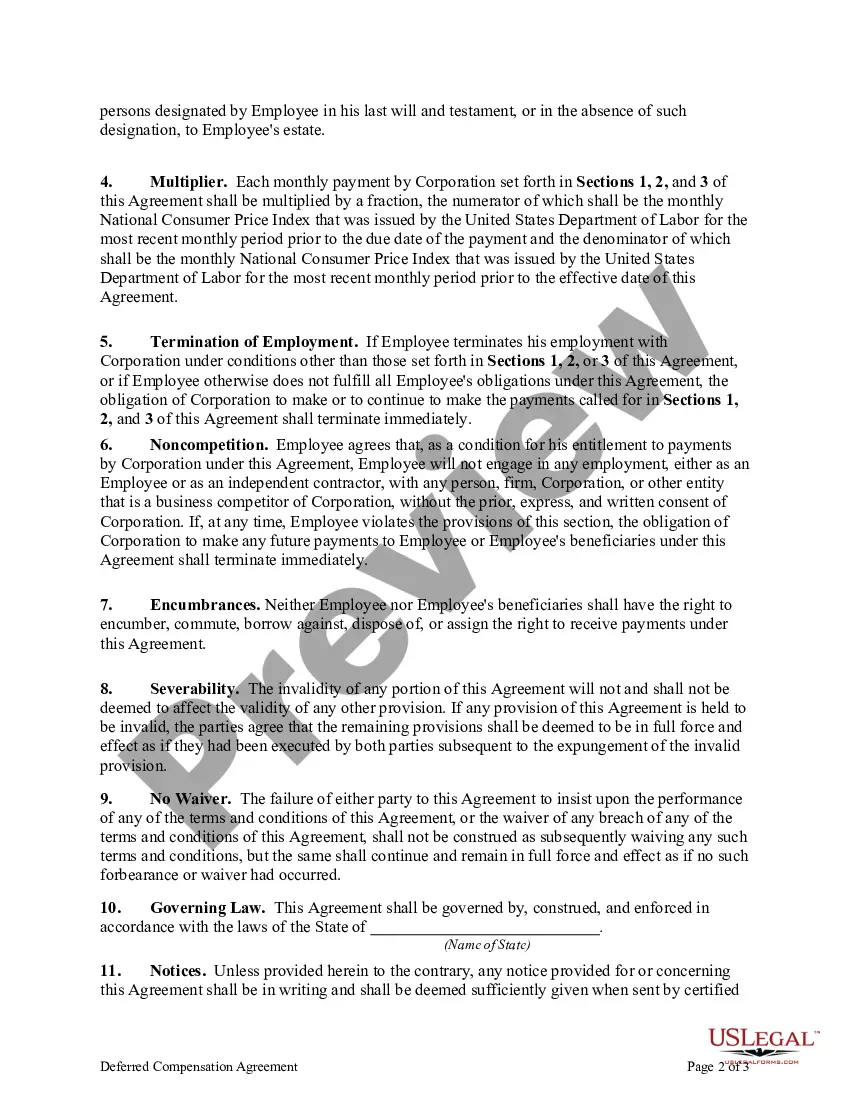
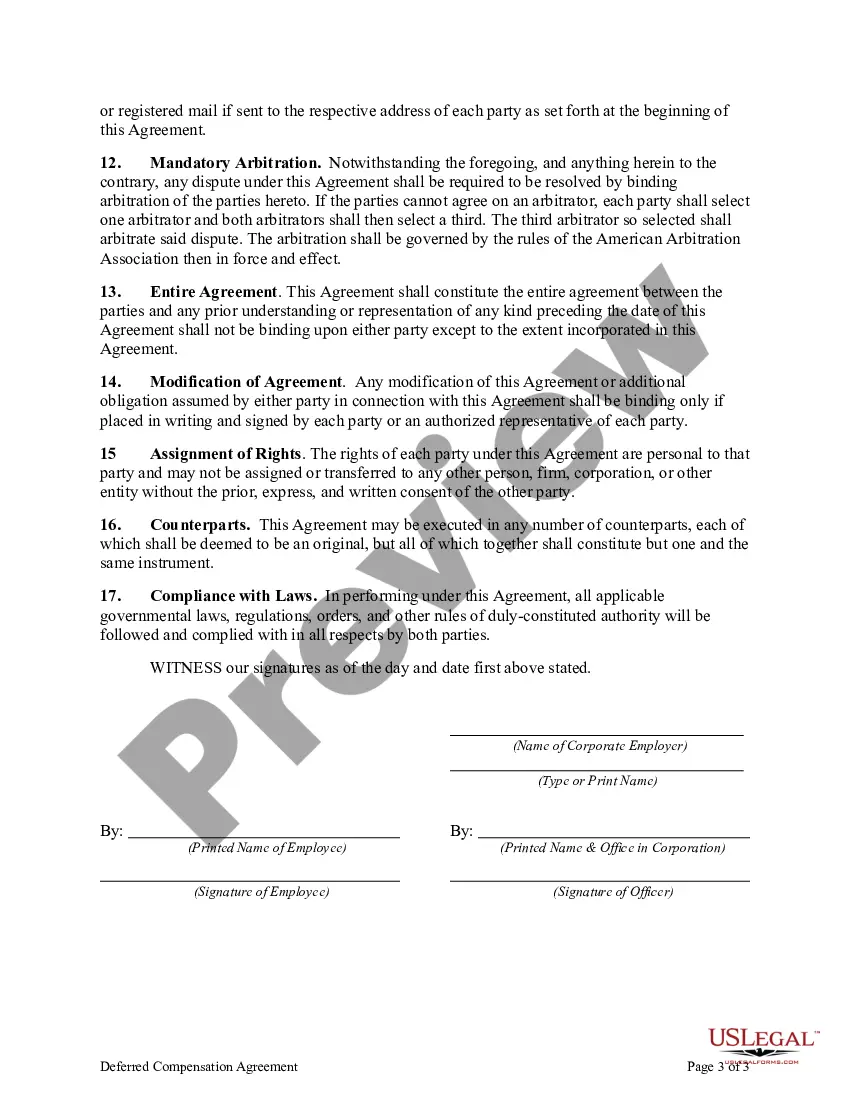

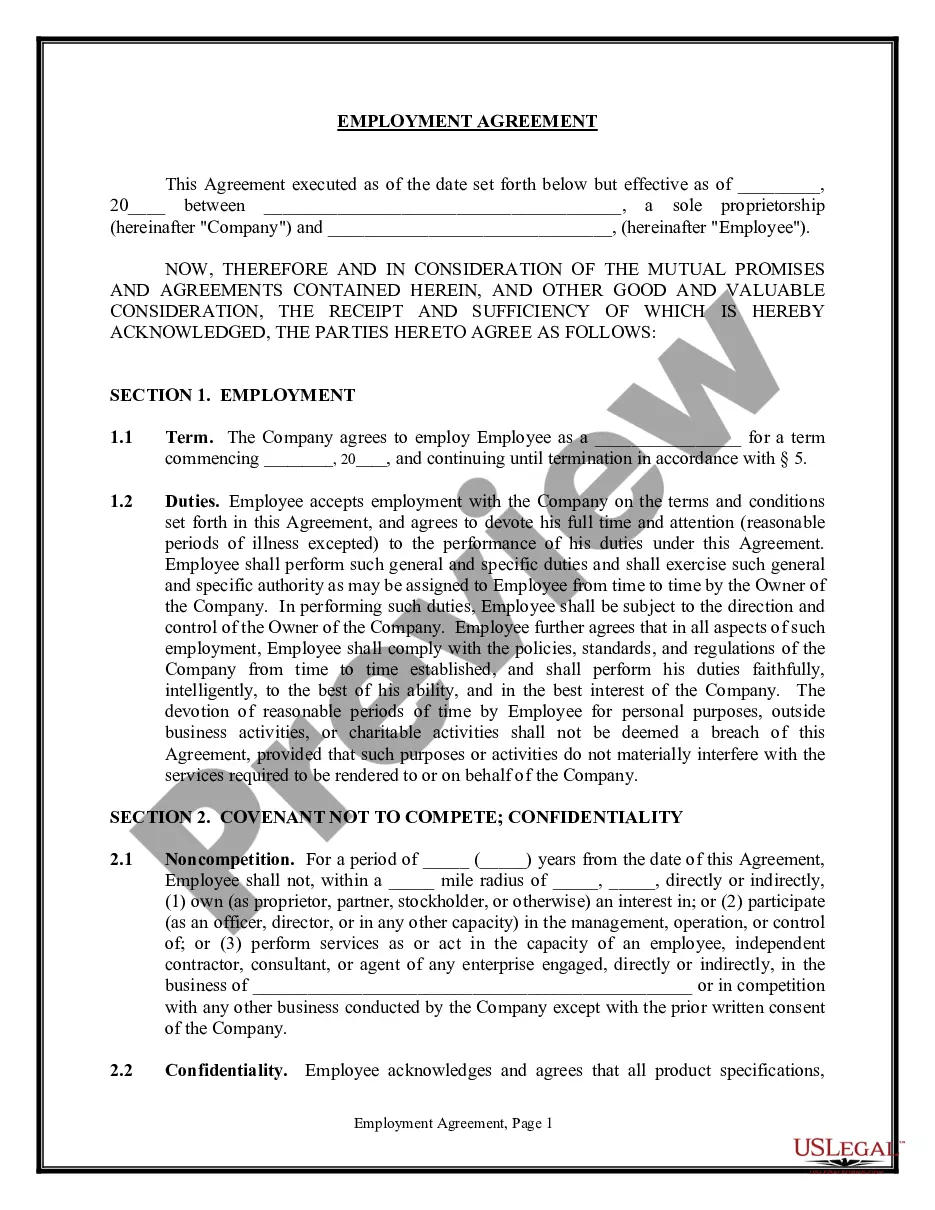
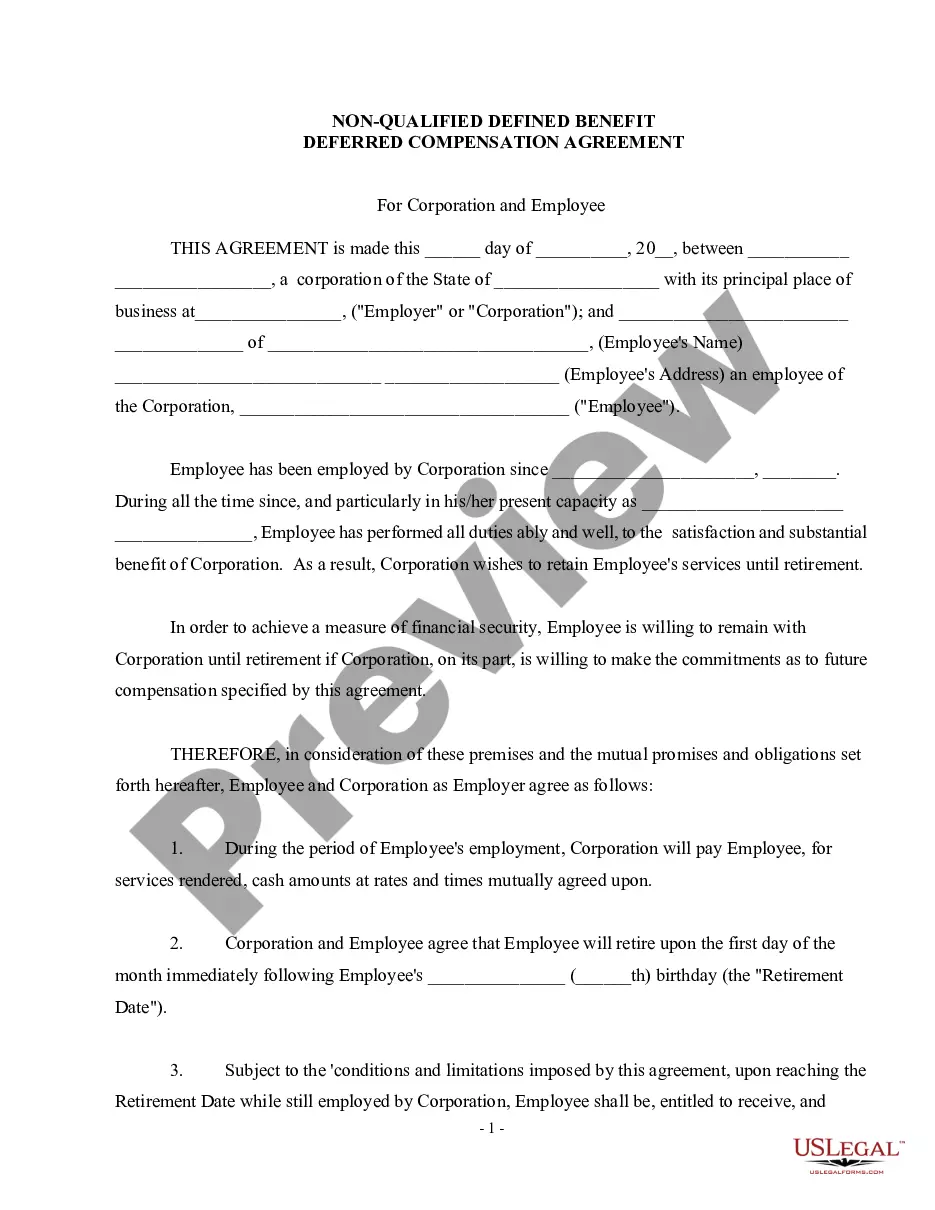
Get your form ready online
Our built-in tools help you complete, sign, share, and store your documents in one place.
Make edits, fill in missing information, and update formatting in US Legal Forms—just like you would in MS Word.
Download a copy, print it, send it by email, or mail it via USPS—whatever works best for your next step.
Sign and collect signatures with our SignNow integration. Send to multiple recipients, set reminders, and more. Go Premium to unlock E-Sign.
If this form requires notarization, complete it online through a secure video call—no need to meet a notary in person or wait for an appointment.
We protect your documents and personal data by following strict security and privacy standards.

Make edits, fill in missing information, and update formatting in US Legal Forms—just like you would in MS Word.

Download a copy, print it, send it by email, or mail it via USPS—whatever works best for your next step.

Sign and collect signatures with our SignNow integration. Send to multiple recipients, set reminders, and more. Go Premium to unlock E-Sign.

If this form requires notarization, complete it online through a secure video call—no need to meet a notary in person or wait for an appointment.

We protect your documents and personal data by following strict security and privacy standards.
Looking for another form?
Form popularity
FAQ
Qualified variable annuities, meaning financial products set up with pre-tax dollars, can be rolled over into a traditional IRA. Non-qualified variable annuities, meaning products set up with after-tax dollars, can't be rolled over into a traditional IRA.
IRAs: You can roll over all or part of any distribution from your IRA except: A required minimum distribution or. A distribution of excess contributions and related earnings.
If you roll your DCP funds directly over into a traditional IRA or eligible retirement plan, the funds won't be taxed until you withdraw them. If you roll over into a Roth account, the rules could be different. Check with the IRS to learn how this choice will impact you.
If you're age 50 or older in a governmental 457(b) plan: $26,000 to each plan if both plans allow age-50 catch-ups ($6,500 additional in 2021) If you're age 50 or older in a nongovernmental 457(b) plan: $26,000 to the 403(b) plan and $19,500 to the 457(b) plan.
The basic limit on elective deferrals is $23,000 in 2024, $22,500 in 2023, $20,500 in 2022, $19,500 in 2020 and 2021, and $19,000 in 2019, or 100% of the employee's compensation, whichever is less.
Deferred revenue can impact your tax liability depending on the tax regulations in your jurisdiction. Generally, you won't owe taxes on that deferred revenue until you've actually earned it. It's a nice perk that offers some leeway for planning and resource allocation.
The deferred tax expense is the increase in the balance of the deferred tax asset plus the increase in the balance of the deferred tax liability. increase in the balance of the deferred tax asset minus the increase in the balance of the deferred tax liability.
