Deferred Compensation Agreement Template Withdrawal Rules In Sacramento
Description

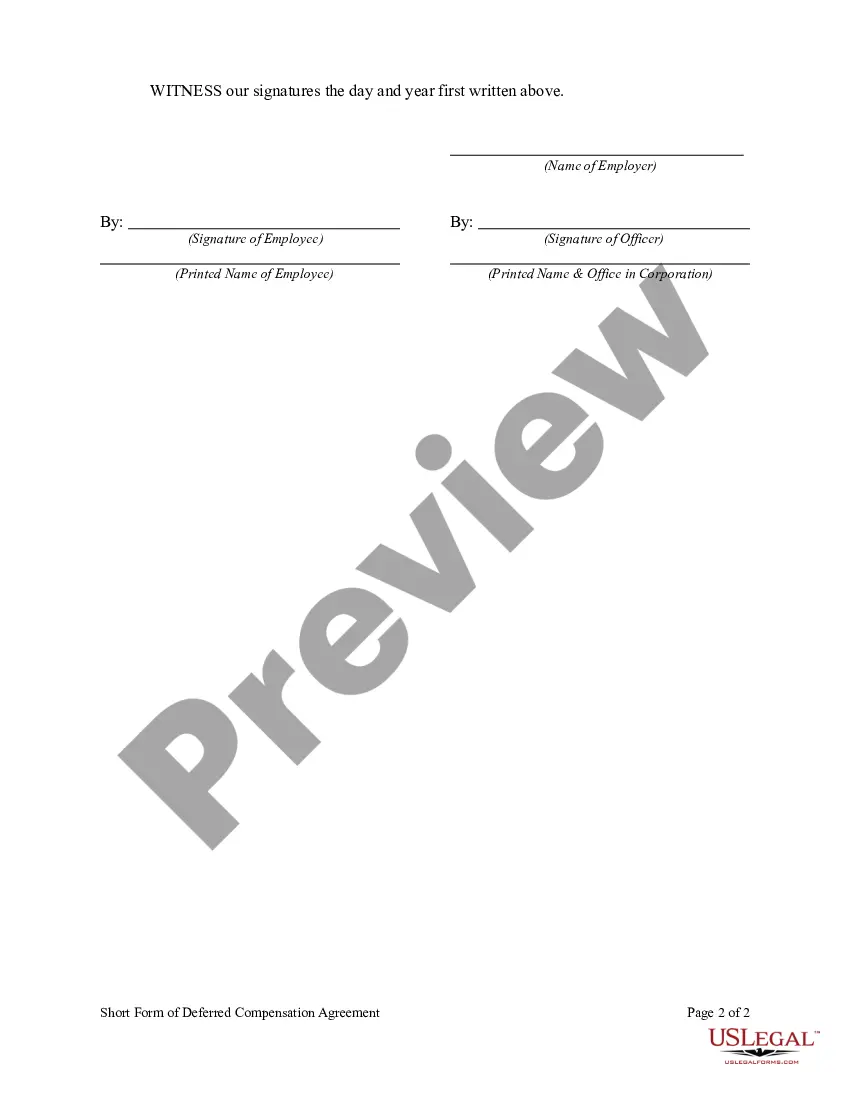



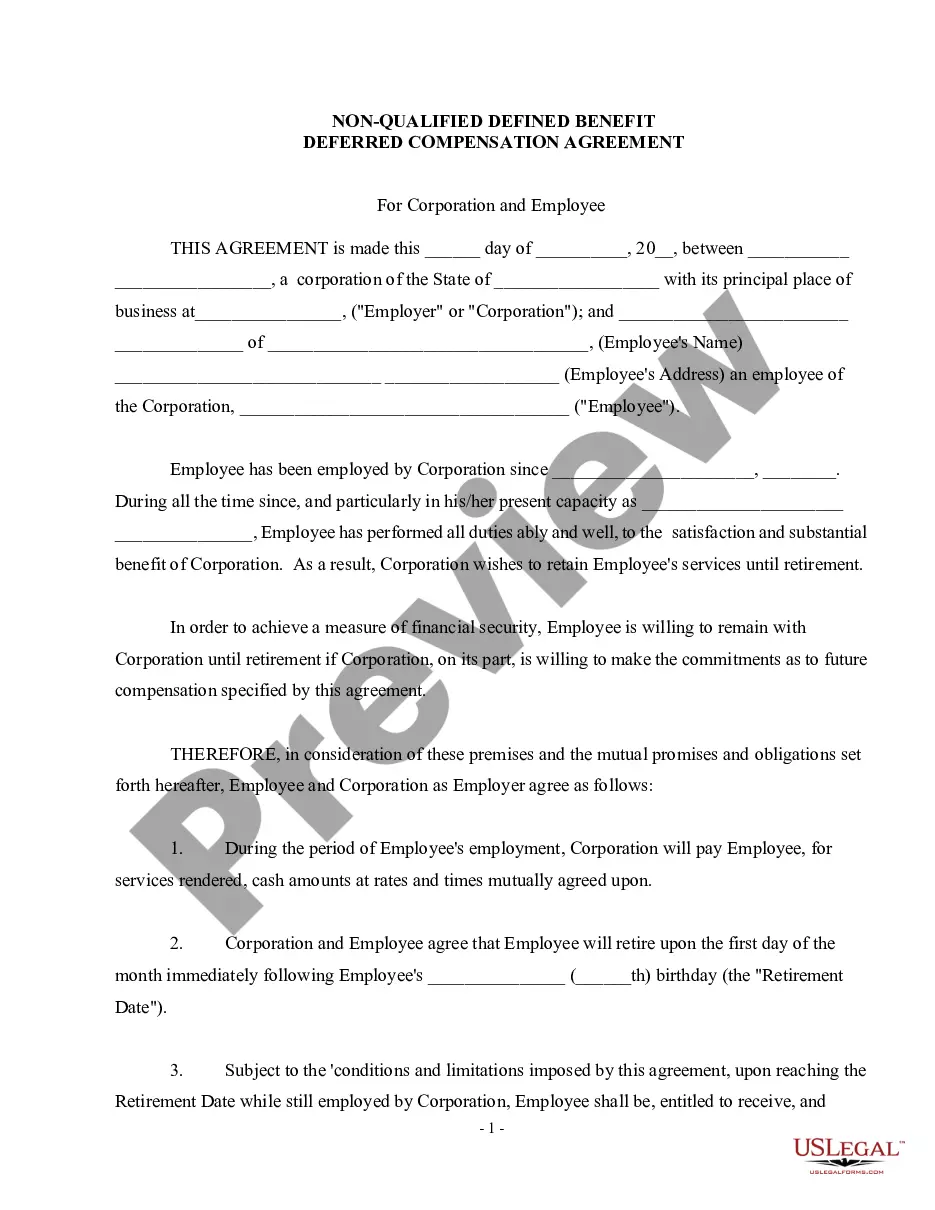
Get your form ready online
Our built-in tools help you complete, sign, share, and store your documents in one place.
Make edits, fill in missing information, and update formatting in US Legal Forms—just like you would in MS Word.
Download a copy, print it, send it by email, or mail it via USPS—whatever works best for your next step.
Sign and collect signatures with our SignNow integration. Send to multiple recipients, set reminders, and more. Go Premium to unlock E-Sign.
If this form requires notarization, complete it online through a secure video call—no need to meet a notary in person or wait for an appointment.
We protect your documents and personal data by following strict security and privacy standards.

Make edits, fill in missing information, and update formatting in US Legal Forms—just like you would in MS Word.

Download a copy, print it, send it by email, or mail it via USPS—whatever works best for your next step.

Sign and collect signatures with our SignNow integration. Send to multiple recipients, set reminders, and more. Go Premium to unlock E-Sign.

If this form requires notarization, complete it online through a secure video call—no need to meet a notary in person or wait for an appointment.

We protect your documents and personal data by following strict security and privacy standards.
Looking for another form?



Form popularity
FAQ
If you take your deferred compensation payments over a period of 10 years or more, those payments will be taxed in the state where you reside, rather than in the state in which you earned the compensation, possibly reducing your state income taxes.
Using Your 457(b) for an Emergency Foreclosure of your primary residence. Eviction from your primary residence. Funeral expenses. Involuntary lost wages. Legal fees involving criminal charges. Unreimbursed medical expenses. Property damage due to accident or natural disaster (beyond insurance reimbursement)
A 457(b) plan's annual contributions and other additions (excluding earnings) to a participant's account cannot exceed the lesser of: 100% of the participant's includible compensation, or. the elective deferral limit ($23,000 in 2024; $22,500 in 2023; $20,500 in 2022; $19,500 in 2020 and in 2021).
The County of Sacramento offers two types of deferred compensation plans. The 457(b) Plan (“457 Plan”) is a Deferred Compensation plan available to all eligible full-time and covered part-time employees. The 457 Plan complies with the Internal Revenue Code section 457 and other applicable laws and regulations.
Receiving your deferred compensation in installments over several years can reduce your tax bill, because the smaller installment payments will typically be taxed at a lower rate than a larger lump-sum payment will be.
How Can I Reduce My California Taxable Income? Claim Your Home Office Deduction. Start a Health Savings Account. Write Off Business Trips. Itemize Your Deductions. Claim Military Members Deductions. Donate Stock to Avoid Capital Gains Tax. Defer Your Taxes. Shift Your Income In Other Directions.
Elective deferral limit The amount you can defer (including pre-tax and Roth contributions) to all your plans (not including 457(b) plans) is $23,000 in 2024 ($22,500 in 2023; $20,500 in 2022; $19,500 in 2020 and 2021; $19,000 in 2021).
Mandatory Tax Withheld- A mandatory 20 percent federal income tax is withheld on full and partial withdrawal, and periodic payments completed in less than 10 years (except when it is an RMD). Periodic Payments - made over more than 10 years – federal taxation is determined by you, the participant.
The CalPERS 457 Plan is a voluntary deferred retirement savings plan that allows you to defer any amount, subject to annual limits, from your paycheck on a pre-tax and/or Roth after-tax basis.
California Public Employees' Retirement System.
