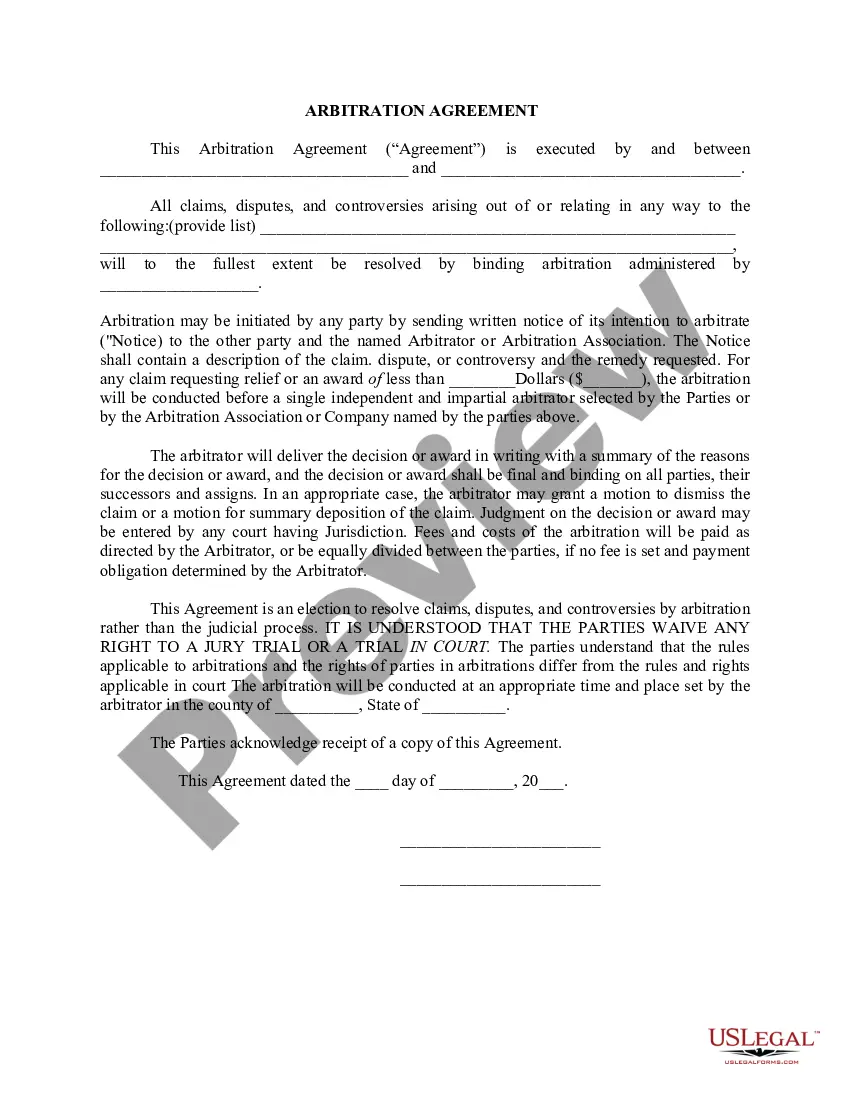
Arbitration Disputes Examples In Queens
Description

Get your form ready online
Our built-in tools help you complete, sign, share, and store your documents in one place.
Make edits, fill in missing information, and update formatting in US Legal Forms—just like you would in MS Word.
Download a copy, print it, send it by email, or mail it via USPS—whatever works best for your next step.
Sign and collect signatures with our SignNow integration. Send to multiple recipients, set reminders, and more. Go Premium to unlock E-Sign.
If this form requires notarization, complete it online through a secure video call—no need to meet a notary in person or wait for an appointment.
We protect your documents and personal data by following strict security and privacy standards.

Make edits, fill in missing information, and update formatting in US Legal Forms—just like you would in MS Word.

Download a copy, print it, send it by email, or mail it via USPS—whatever works best for your next step.

Sign and collect signatures with our SignNow integration. Send to multiple recipients, set reminders, and more. Go Premium to unlock E-Sign.

If this form requires notarization, complete it online through a secure video call—no need to meet a notary in person or wait for an appointment.

We protect your documents and personal data by following strict security and privacy standards.
Looking for another form?
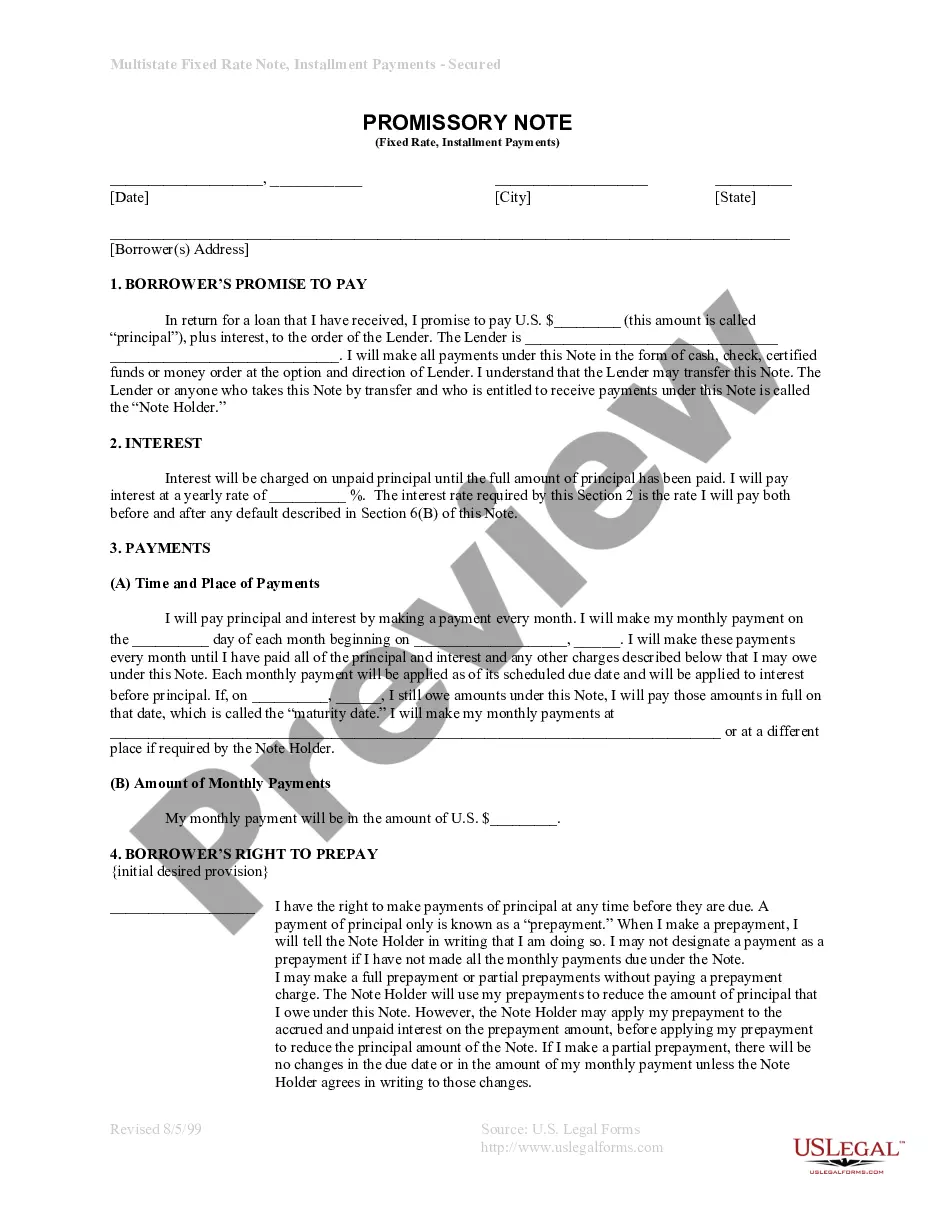

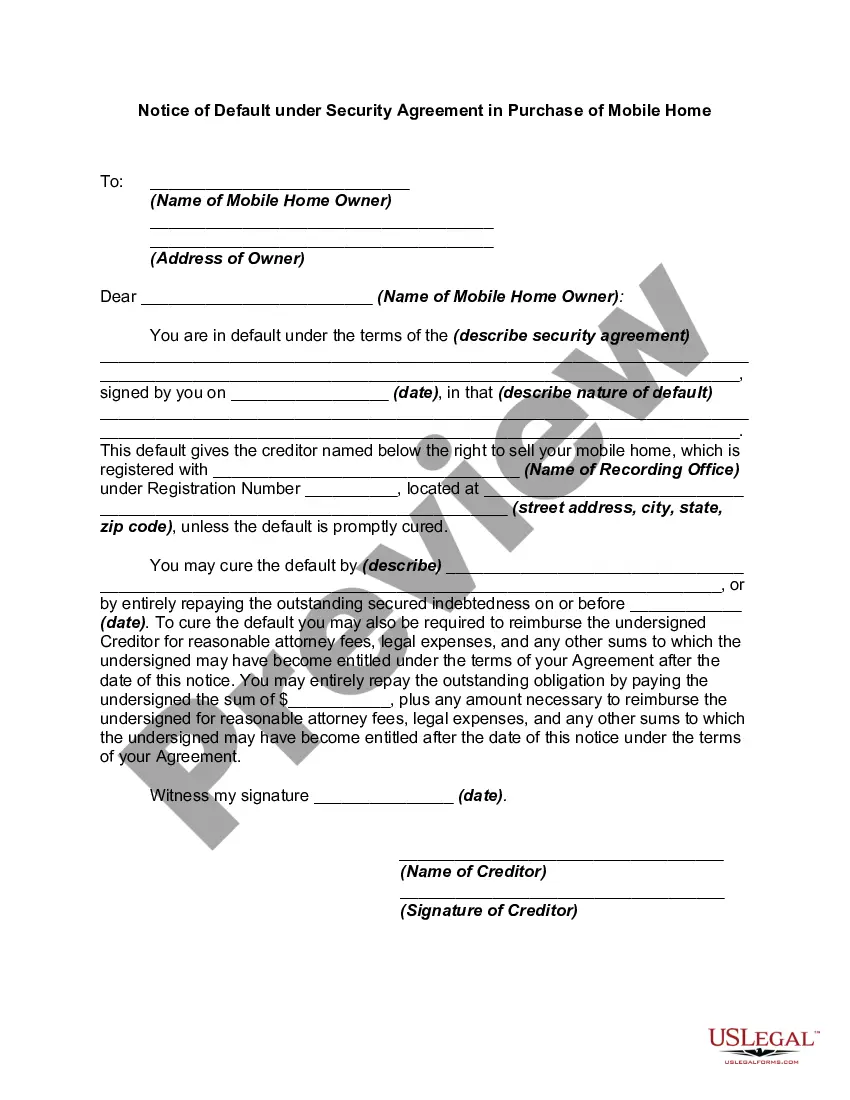
Form popularity
FAQ
Arbitration is a private, informal process by which all parties agree, in writing, to submit their disputes to one or more impartial persons authorized to resolve the controversy by rendering a final and binding decision called an Award.
Arbitrators are usually lawyers, business professionals, or retired judges with expertise in a particular field. As impartial third parties, they hear and decide disputes between opposing parties.
Arbitration can be used in nearly any type of civil court case if both parties agree to it. This includes everything from personal injury to employment discrimination.
Arbitration is a procedure in which a dispute is submitted, by agreement of the parties, to one or more arbitrators who make a binding decision on the dispute. In choosing arbitration, the parties opt for a private dispute resolution procedure instead of going to court.
What is an example of arbitration? If two companies contract to engage in commerce and the contract includes an arbitration agreement, then the two companies are required to use arbitration rather than the court system to settle disputes.
Common types of arbitration include the settlement of disputes between private entities regarding their commercial relationship (commercial arbitration), between States (inter-State arbitration), and between a private investor and a State (investor-State arbitration).
Types of ADR. The most common types of ADR for civil cases are mediation, settlement conferences, neutral evaluation, and arbitration.
Learn about the methods we use to resolve disputes – arbitration, mediation, conciliation and case appraisal.
A claimant will typically start arbitration by sending a document known as a “request for arbitration” or a “notice to arbitrate” to its opponent.
Basic Principles of ADR VOLUNTARY. ADR is a voluntary option for the parties. TIMELINESS. ADR should shorten, not prolong, proceedings. GOOD FAITH. Those who engage in ADR should do so in an attempt to reach agreement--not to delay or secure tactical advantage. CONFIDENTIALITY.