Joint Tenancy Definition In Real Estate In Georgia
Description





Form popularity
FAQ
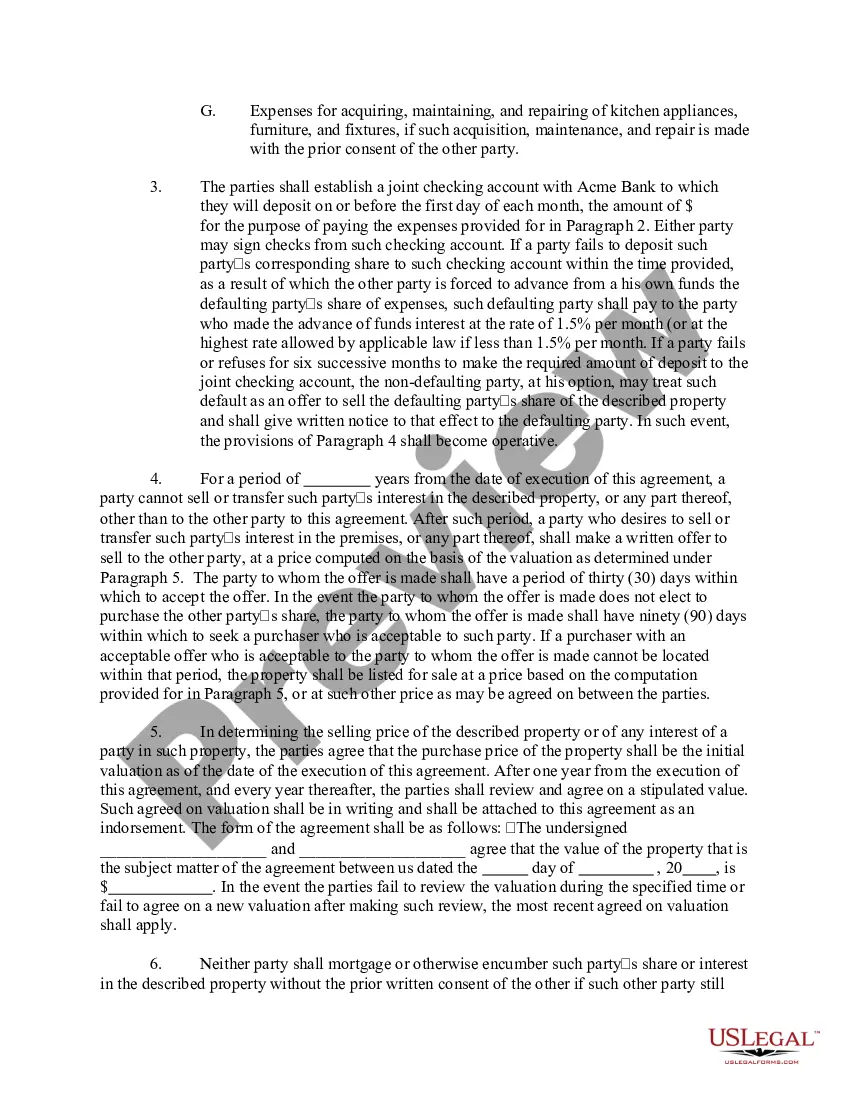
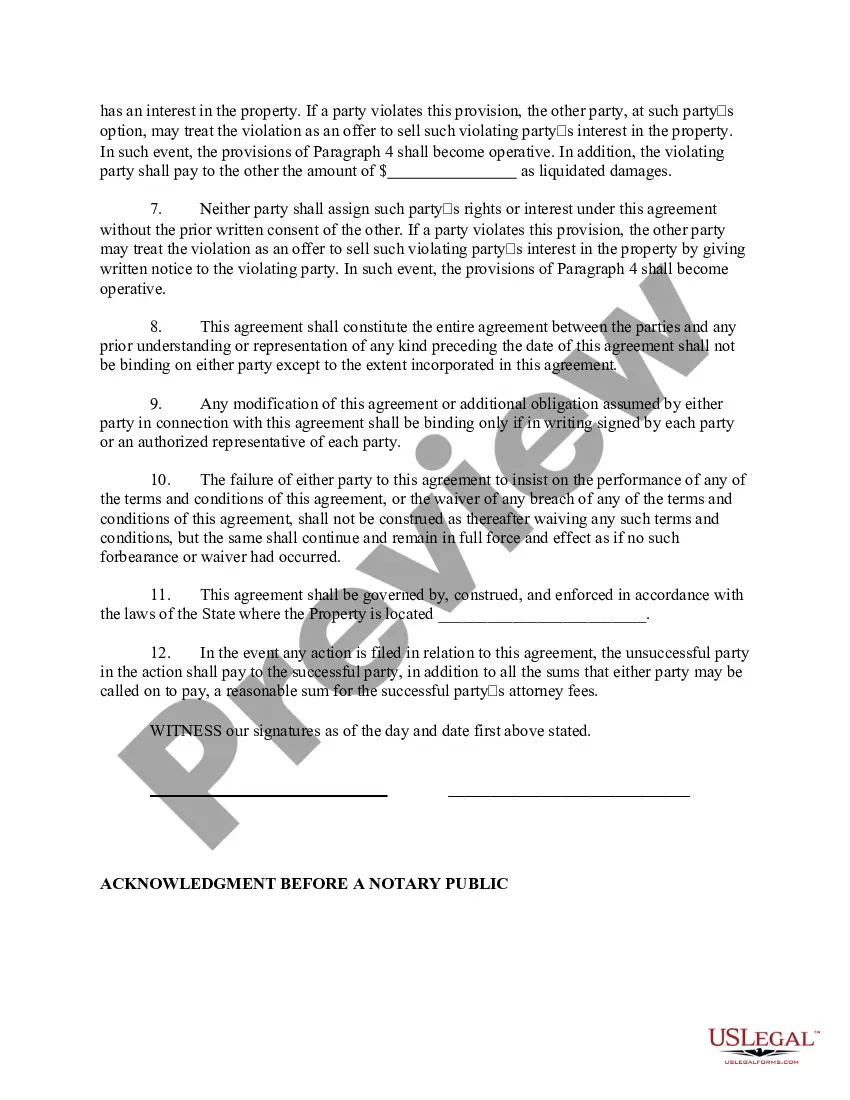
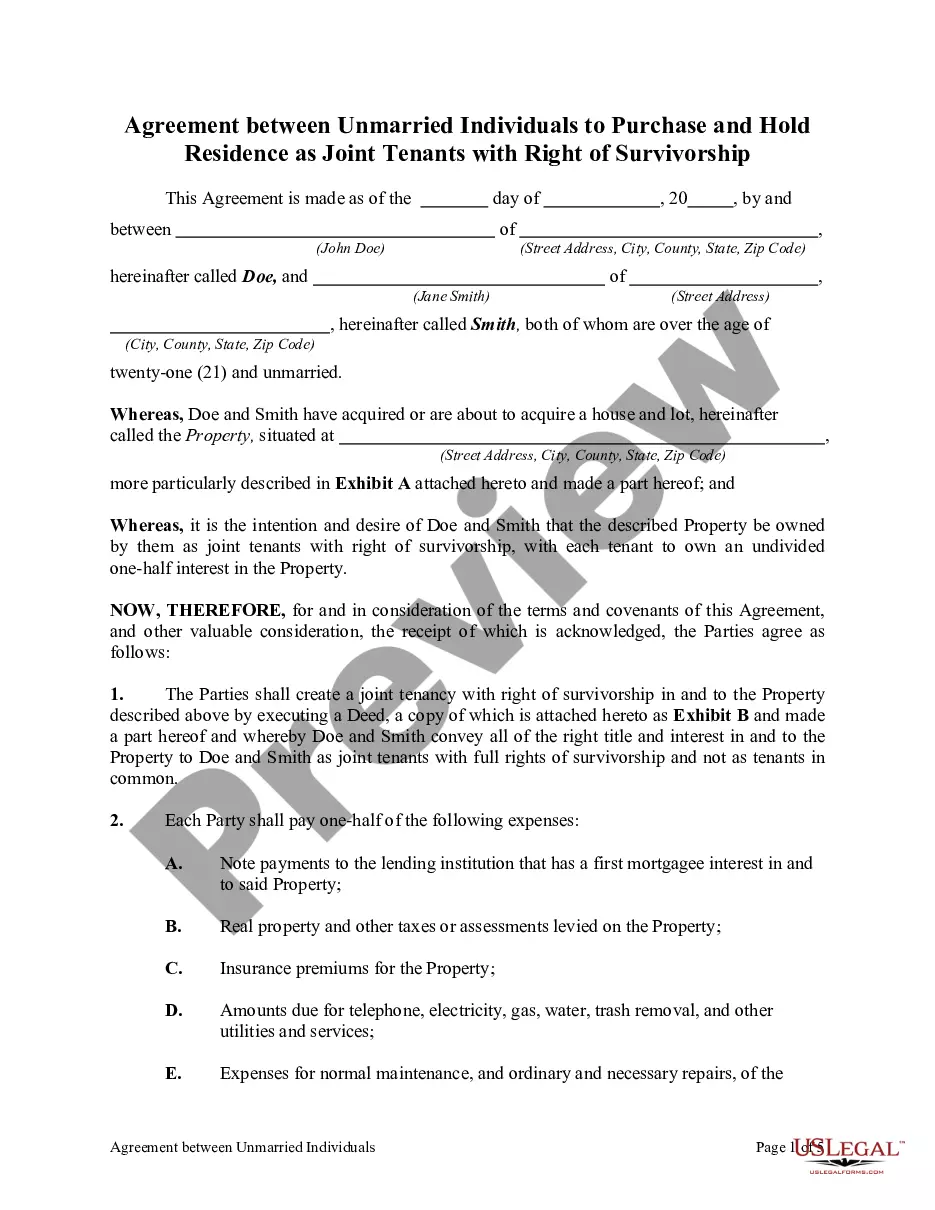
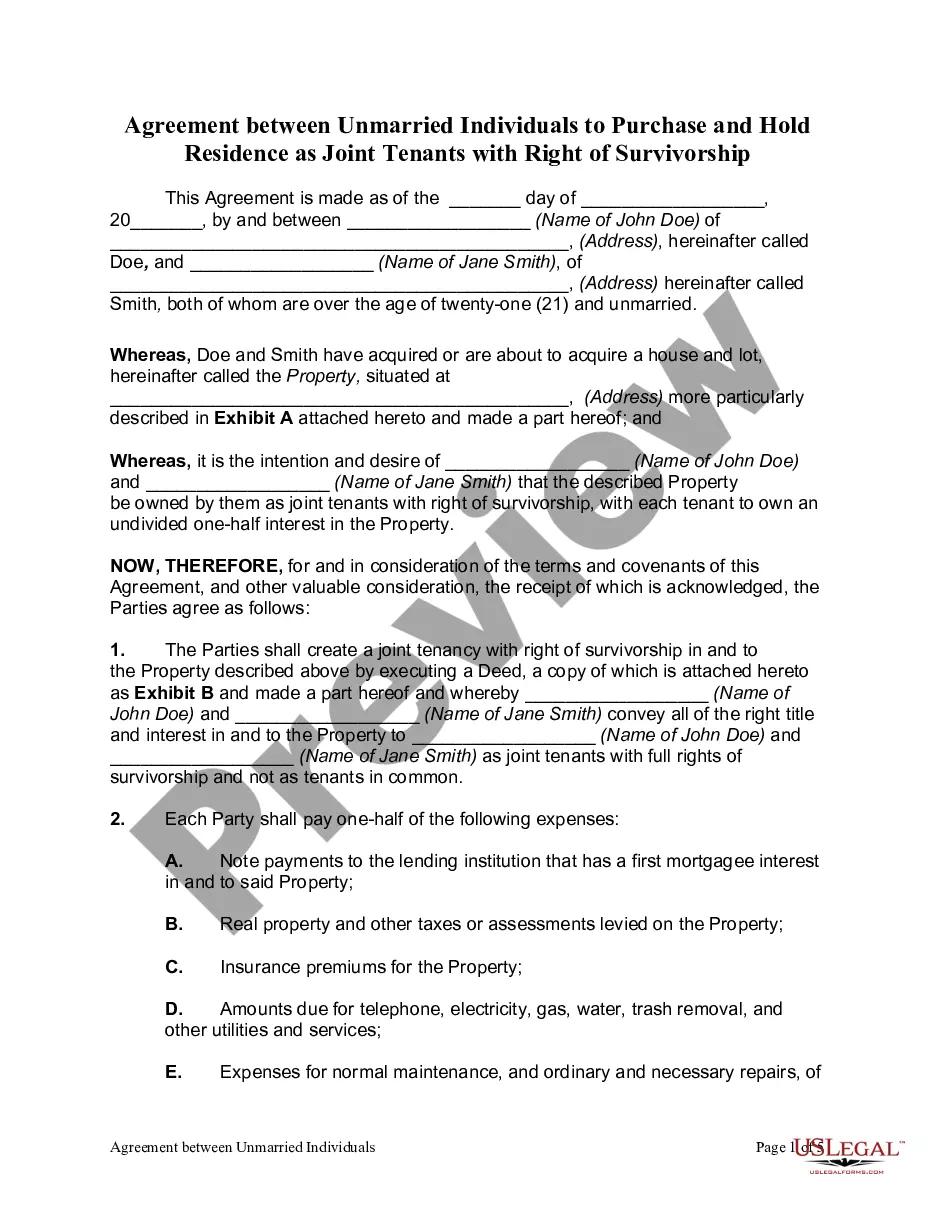
If all the joint owners of an asset intended that when one of them died their share would pass to the other joint owner(s), then this is a survivorship asset. This type of asset is always owned equally and the deceased's share of the asset passes to the other joint owner(s) by survivorship.
For example, if two unmarried partners make equal contributions toward purchasing a inium and they choose to hold title as joint tenants, the surviving joint tenant will automatically become the sole and separate owner of the inium after the first joint tenant dies.
Joint tenancy is a type of joint ownership of property in the field of property law , where each owner has an undivided interest in the property. This type of ownership creates a right of survivorship , which means that when one owner dies, the other owners absorb the deceased owner's interest .
Joint tenancy supersedes the terms of a will if one of the tenants changes his mind. If you pass away, you cannot transfer your property shares to your heirs. In the JTWROS meaning, when a co-owner dies, his share of the home passes immediately to the surviving co-owners.
Joint tenancy is most common among married couples because it helps property owners avoid probate. Without joint tenancy, a spouse would have to wait for their partner's Last Will to go through a legal review process—which can take months or even years.
To challenge the right of survivorship, the party contesting the right must file a lawsuit and prove their case in court with the help of a lawyer.
Community Property with Right of Survivorship For example, let's say that married couple Joe and Jane own a inium as community property with the Right of Survivorship. If Jane dies, Joe automatically becomes the sole owner of the condo without going through the probate process.
(3) Any instrument of title using one of the forms of expression referred to in paragraph (2) of this subsection or language essentially the same as one of these forms of expression shall create a joint tenancy estate or interest that may be severed as to the interest of any owner by the recording of an instrument ...
Georgia does not recognize community property or homestead, meaning that either spouse can buy, sell, or own property without involvement of the other spouse. Georgia recognizes joint tenancy with right of survivorship as a common form of joint ownership.
Some states have community property laws that cause shared assets to be split equally with half going to one spouse and half going to the other. But Georgia doesn't recognize community property laws and is, instead, an equitable distribution state. This means that equity is more important than an equal split of assets.
