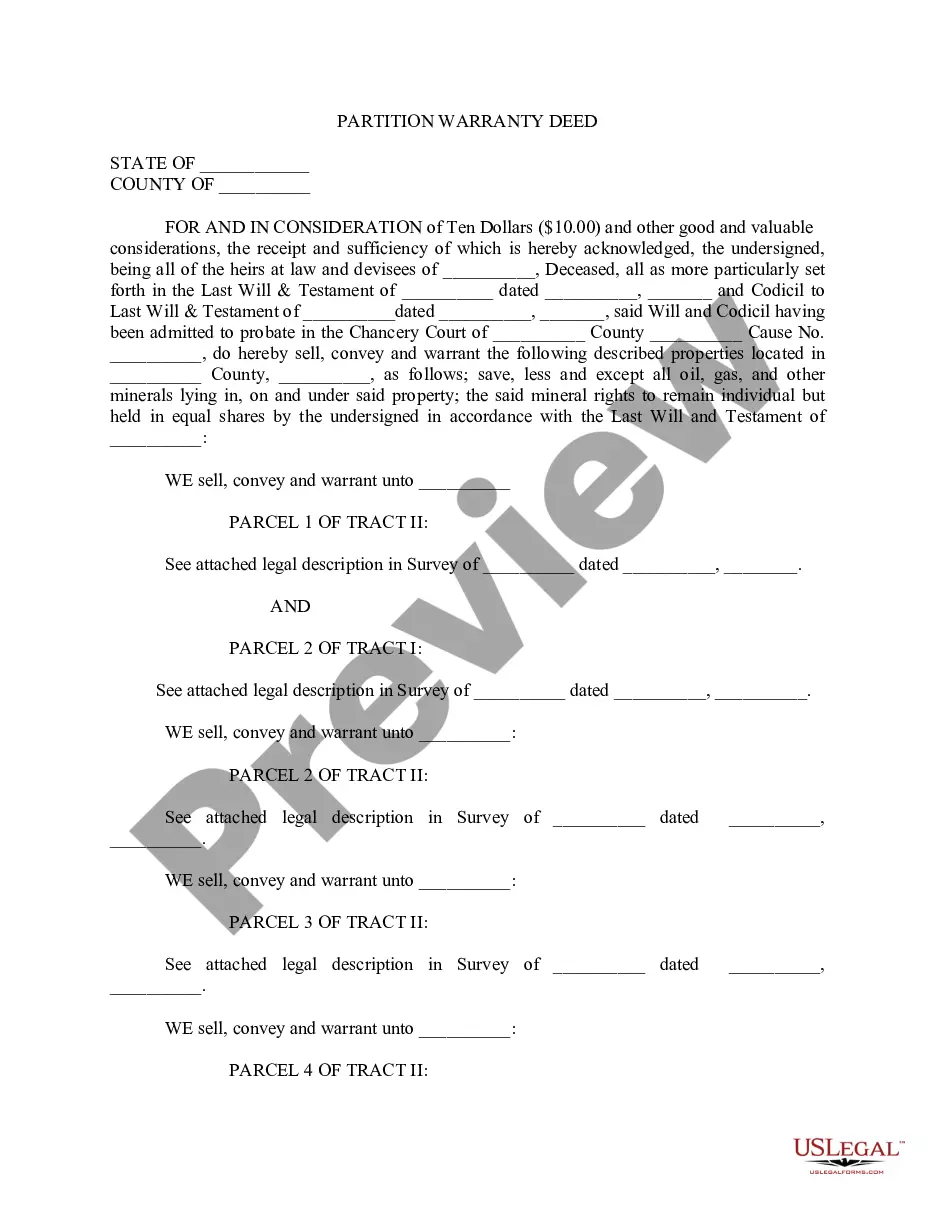
Partition Rules In Texas
Description

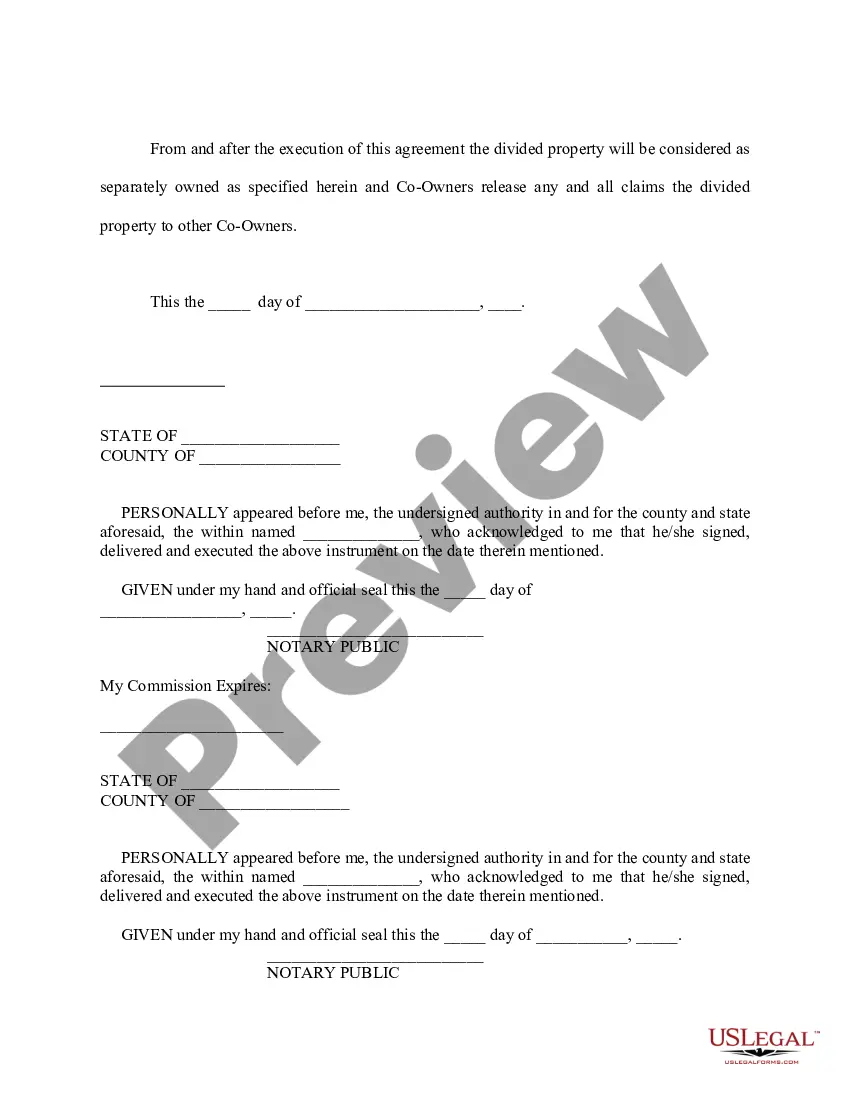
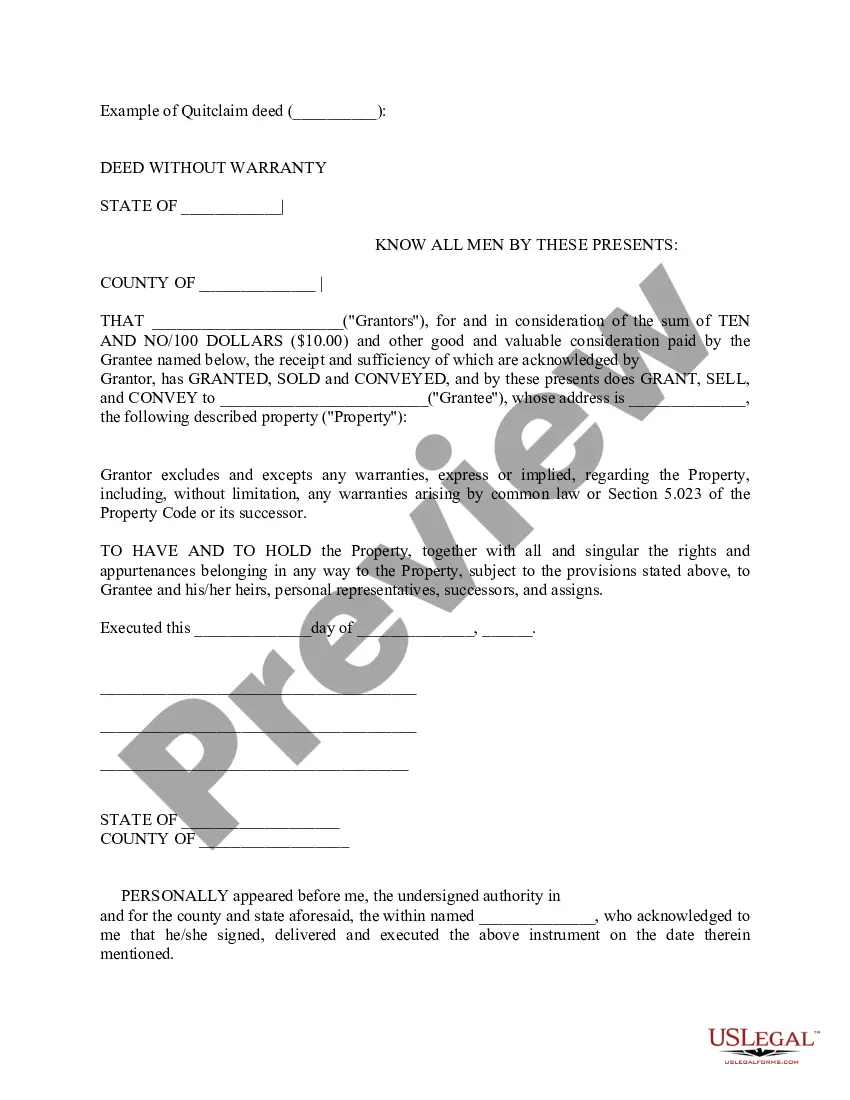

Get your form ready online
Our built-in tools help you complete, sign, share, and store your documents in one place.
Make edits, fill in missing information, and update formatting in US Legal Forms—just like you would in MS Word.
Download a copy, print it, send it by email, or mail it via USPS—whatever works best for your next step.
Sign and collect signatures with our SignNow integration. Send to multiple recipients, set reminders, and more. Go Premium to unlock E-Sign.
If this form requires notarization, complete it online through a secure video call—no need to meet a notary in person or wait for an appointment.
We protect your documents and personal data by following strict security and privacy standards.

Make edits, fill in missing information, and update formatting in US Legal Forms—just like you would in MS Word.

Download a copy, print it, send it by email, or mail it via USPS—whatever works best for your next step.

Sign and collect signatures with our SignNow integration. Send to multiple recipients, set reminders, and more. Go Premium to unlock E-Sign.

If this form requires notarization, complete it online through a secure video call—no need to meet a notary in person or wait for an appointment.

We protect your documents and personal data by following strict security and privacy standards.
Looking for another form?








Form popularity
FAQ
Here are three of the most popular strategies defendants will use to stop someone from selling jointly owned real estate: Review contractual agreements. Sell your share to another co-owner. Secure a buyout of your co-owner's share.
How Partition In Texas Works. Texas law provides each co-owner of real property with an absolute right to have their property partitioned through a forced judicial sale. Texas courts are required to partition property even if only one co-owner makes such a request, and the courts have no wiggle room or discretion.
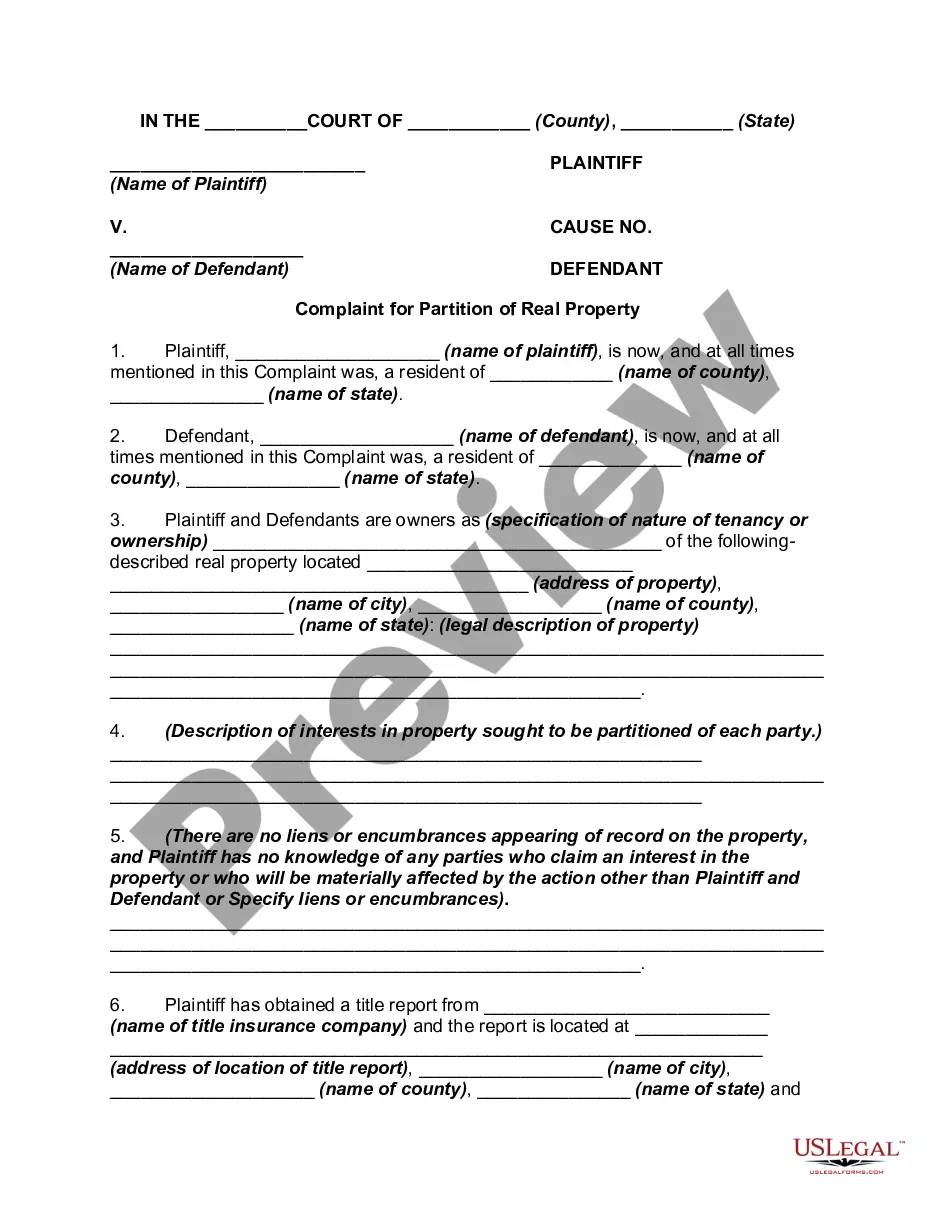
Legal Notice: If no agreement is reached, a legal notice must be served to all parties, informing them of the intent to partition the property. Filing a Partition Suit: In case of disagreements, a partition suit can be filed in court. The court examines all evidence and issues a decree for the division of property.
When someone dies without a will or transfer on death deed, their property is automatically distributed to heirs through a process called intestacy. Intestacy laws determine who inherits the home and other assets. The deceased person's spouse and children are typically first in line to inherit the home.
Any co-owner—called a co-tenant—or a creditor can force a sale of the property. A creditor can also seize at least a portion of the debtor's property or the proceeds of a sale.
Typically, a partition action cannot be stopped once a lawsuit is filed because anyone who wants to dissolve ownership that is jointly owned with another person has a legal right to sell his/her interest if desired.
One common misconception among divorcing couples in Texas is that all assets are automatically split 50/50. The automatic 50/50 split is a myth!
Every co-owner of an interest in the property (no matter how small) must agree in order for a voluntary partition to occur. The remedy when agreement cannot be reached is for one or more of the co-owners to seek a court-ordered division by means of a partition suit.
It is presumed that any property on hand at the time of divorce is community property. The spouse who is claiming an asset as his/her separate property has the burden of proving that claim by clear and convincing evidence.