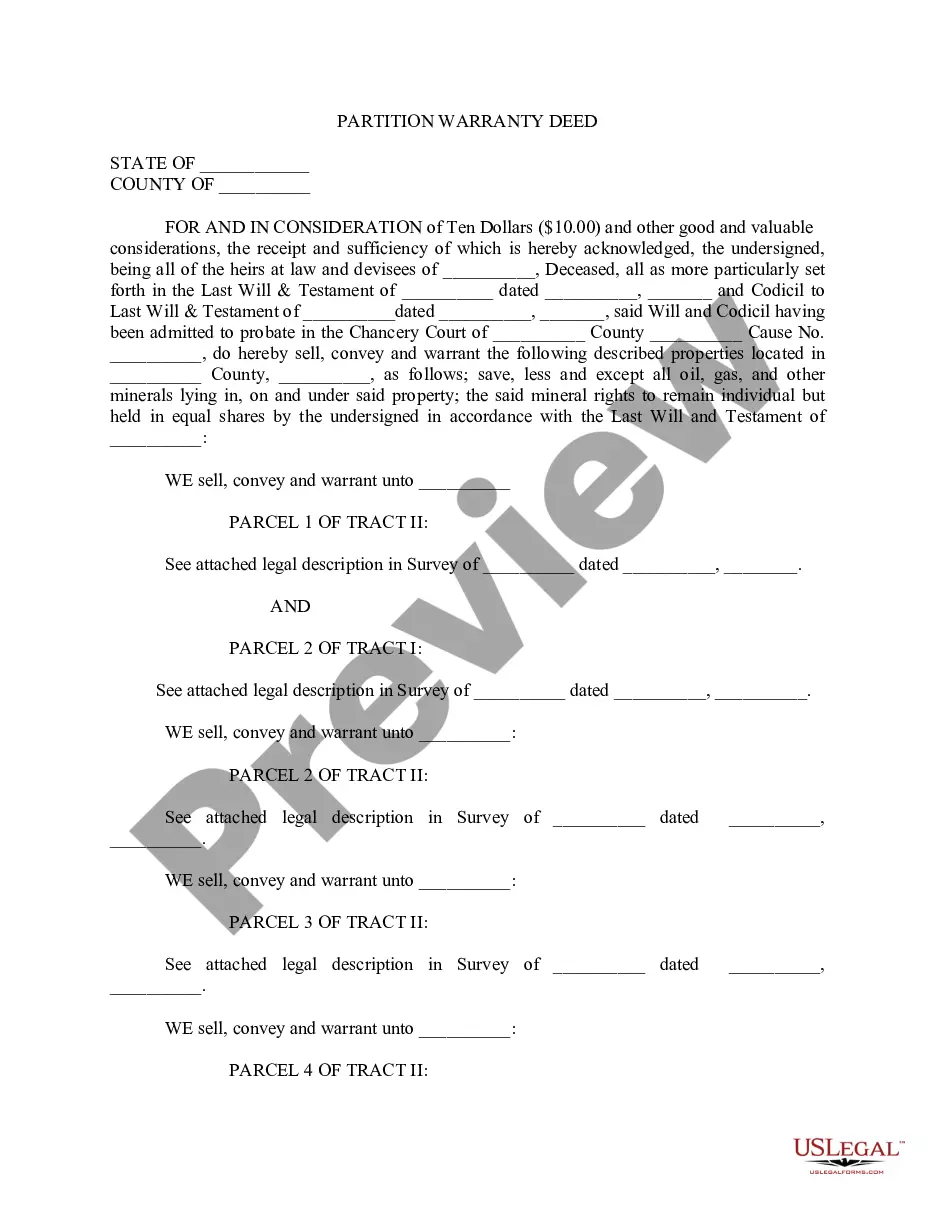
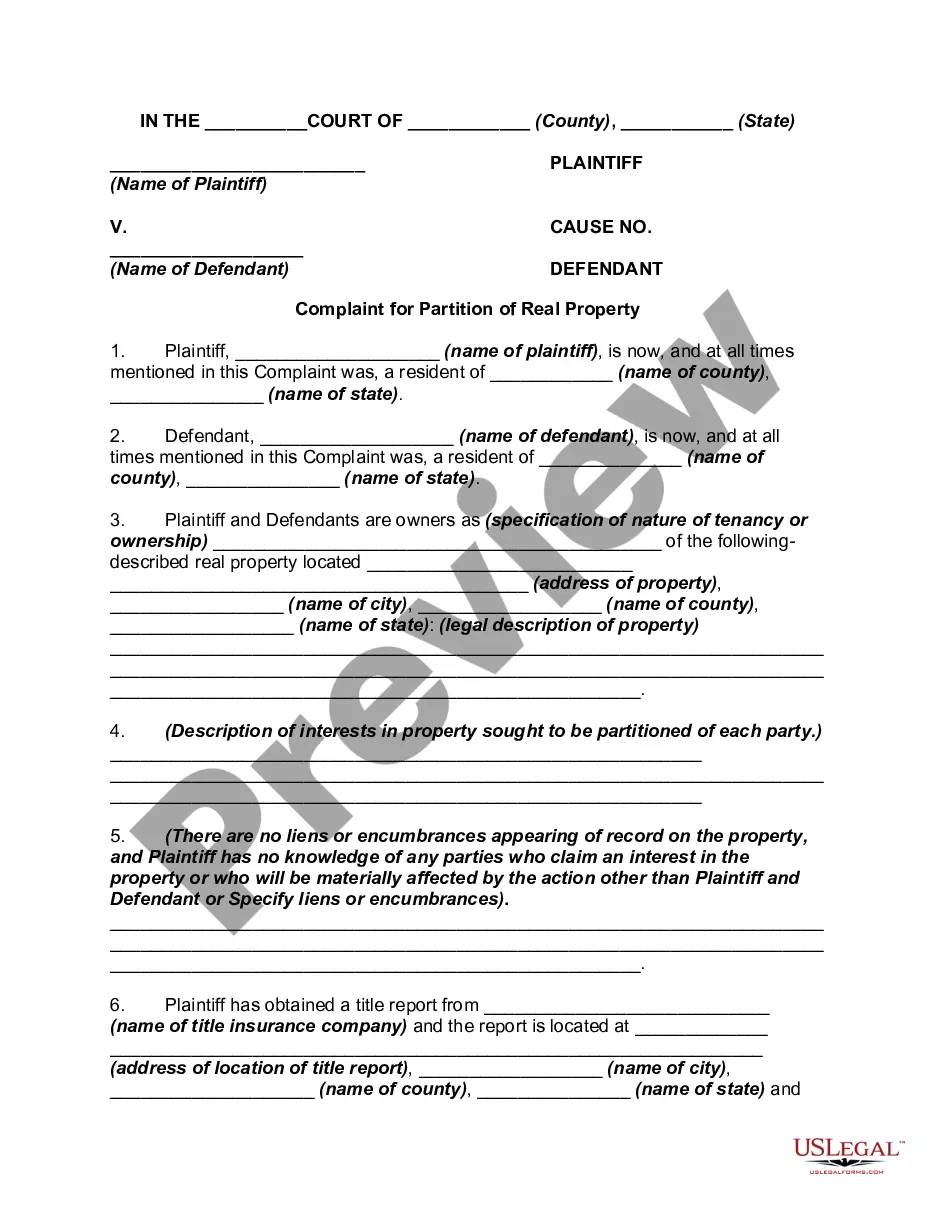
Partition Agreement Of Land In Phoenix
Description


Get your form ready online
Our built-in tools help you complete, sign, share, and store your documents in one place.
Make edits, fill in missing information, and update formatting in US Legal Forms—just like you would in MS Word.
Download a copy, print it, send it by email, or mail it via USPS—whatever works best for your next step.
Sign and collect signatures with our SignNow integration. Send to multiple recipients, set reminders, and more. Go Premium to unlock E-Sign.
If this form requires notarization, complete it online through a secure video call—no need to meet a notary in person or wait for an appointment.
We protect your documents and personal data by following strict security and privacy standards.

Make edits, fill in missing information, and update formatting in US Legal Forms—just like you would in MS Word.

Download a copy, print it, send it by email, or mail it via USPS—whatever works best for your next step.

Sign and collect signatures with our SignNow integration. Send to multiple recipients, set reminders, and more. Go Premium to unlock E-Sign.

If this form requires notarization, complete it online through a secure video call—no need to meet a notary in person or wait for an appointment.

We protect your documents and personal data by following strict security and privacy standards.
Looking for another form?







Form popularity
FAQ
To begin the partition process, you must file a complaint in the appropriate California court. The complaint should outline the co-ownership of the property, the reason for the partition request, and any efforts you have made to resolve the dispute.
Partition lawsuits can be expensive, with costs potentially ranging from tens of thousands to hundreds of thousands of dollars. The biggest expenses typically include attorney fees, court costs, and expert witness fees.
In Arizona, the partition of real estate refers to the division of property rights among co-owners. This process is typically initiated when divorcing parties cannot agree, or when there is a disagreement or dispute between co-owners regarding the management, use, or disposition of the property.
Three to nine months is the usual time it takes to resolve a partition action. However, co-owners who hire a lawyer other than a partition attorney may find that it will take much longer due to the lack of skill in ending co-ownership disputes.
To demand a partition or division of the common property is in with Article 494 of the Civil Code, that is, no co-owner shall be obliged to remain in the co-ownership and that each co-owner may demand at any time partition of the thing owned in common insofar as his or her share is concerned.
Arizona Partition Actions File in superior court in the county in which the property is located; Identify the names and residences of each of the known owners, Identify everyone? s known ownership interests and claims; and. Include a description of the property, and it's estimated value.
The process of subdividing an improvement in the Philippines typically requires: A Deed of Partition or Agreement: A document that stipulates how the house or building will be subdivided among the landowners. If co-owners agree to physically partition the improvement, they can state their rights in this document.
