Partition And Exchange Agreement With 100 In Minnesota
Description

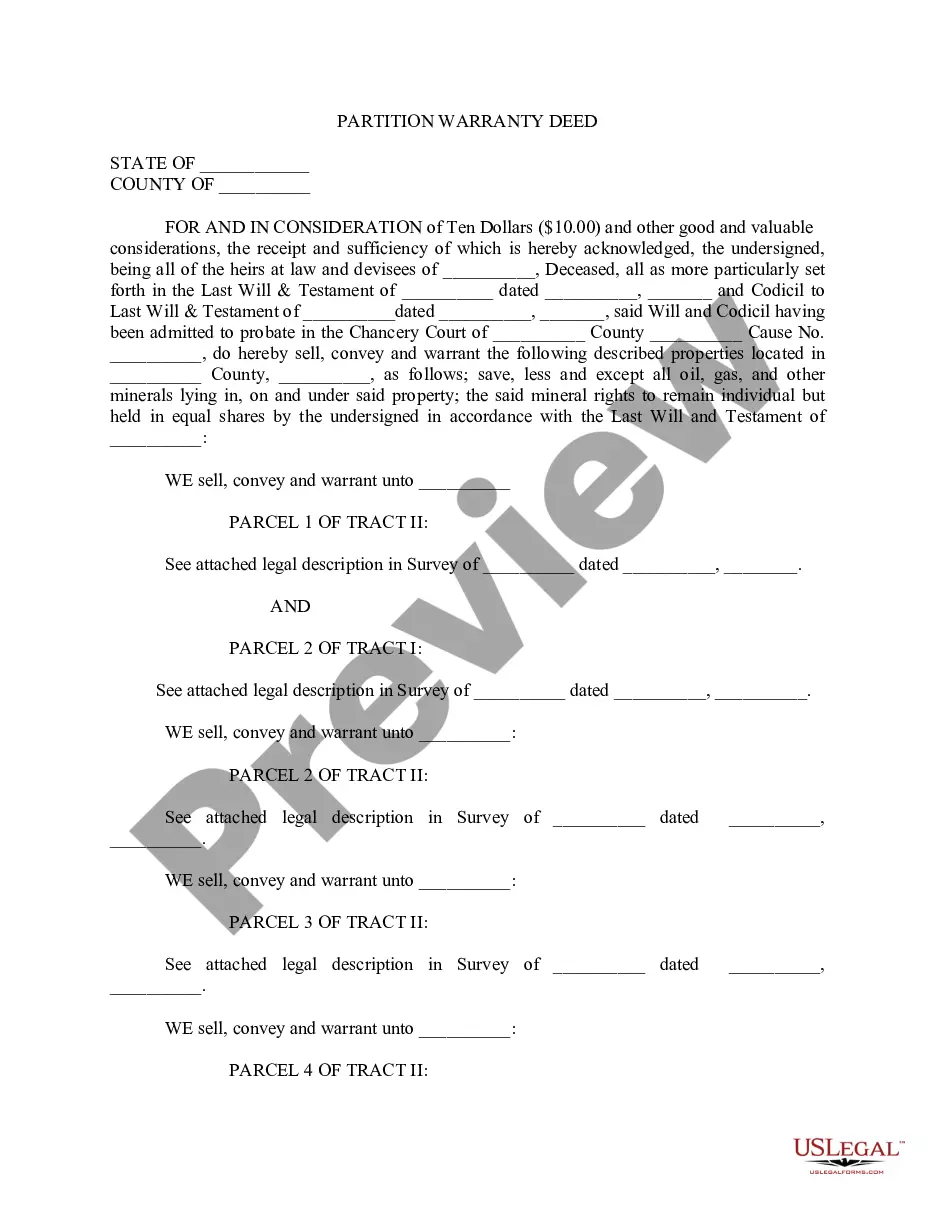
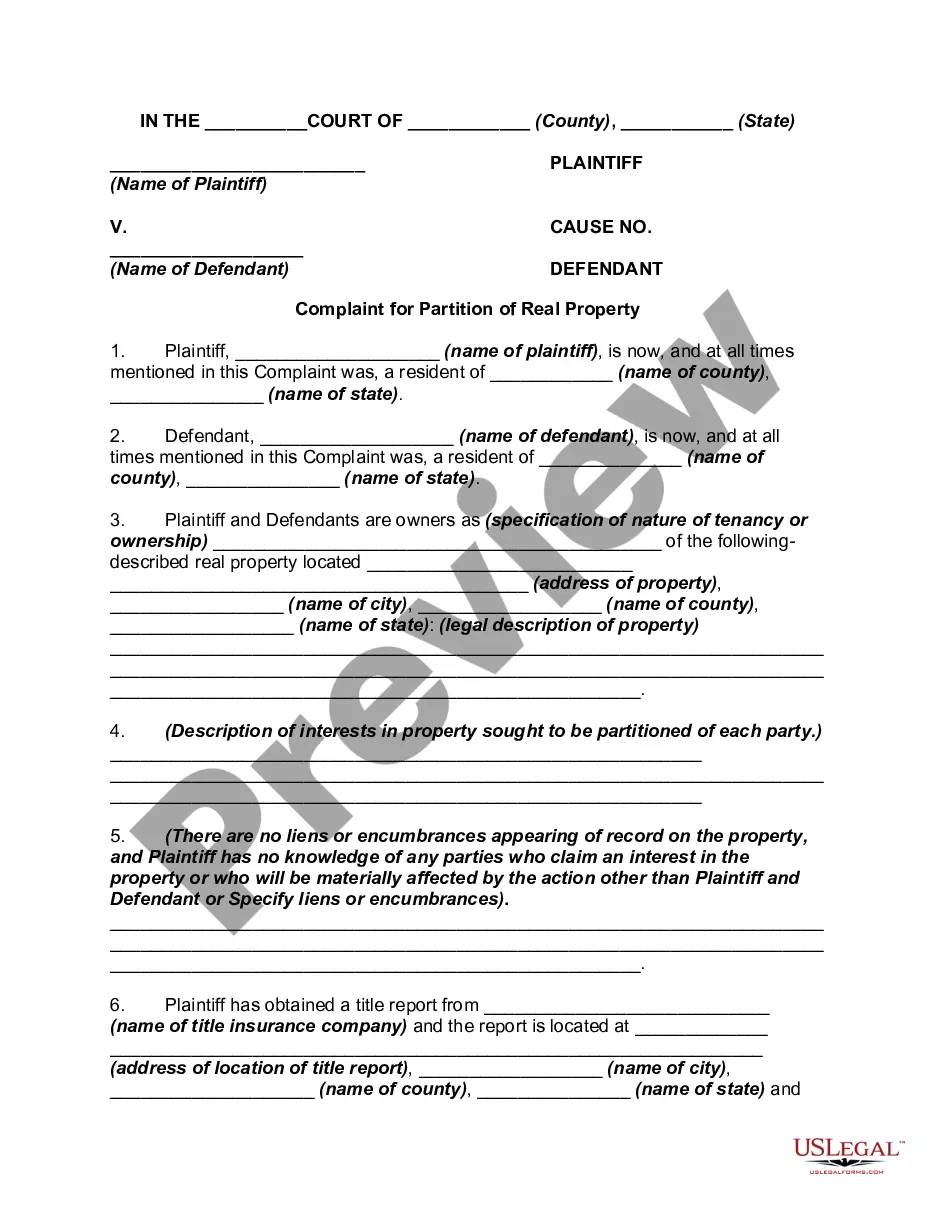
Get your form ready online
Our built-in tools help you complete, sign, share, and store your documents in one place.
Make edits, fill in missing information, and update formatting in US Legal Forms—just like you would in MS Word.
Download a copy, print it, send it by email, or mail it via USPS—whatever works best for your next step.
Sign and collect signatures with our SignNow integration. Send to multiple recipients, set reminders, and more. Go Premium to unlock E-Sign.
If this form requires notarization, complete it online through a secure video call—no need to meet a notary in person or wait for an appointment.
We protect your documents and personal data by following strict security and privacy standards.

Make edits, fill in missing information, and update formatting in US Legal Forms—just like you would in MS Word.

Download a copy, print it, send it by email, or mail it via USPS—whatever works best for your next step.

Sign and collect signatures with our SignNow integration. Send to multiple recipients, set reminders, and more. Go Premium to unlock E-Sign.

If this form requires notarization, complete it online through a secure video call—no need to meet a notary in person or wait for an appointment.

We protect your documents and personal data by following strict security and privacy standards.
Looking for another form?




Form popularity
FAQ
However Minnesota, like most states, follow the equitable distribution method—meaning, the court will divide all marital property between the spouses a way it decides is equitable or fair, but not necessarily in an equal 50/50 split.
Unless you create a properly executed cohabitation agreement, you have no rights to the assets or earnings of the person you're cohabitating with, regardless of how long you've been together.
If you are going through a divorce, your marital property will be divided based on principles of equity and fairness. This doesn't mean you automatically receive 50% of each asset. You, your spouse, and your attorneys can negotiate how to divide the property depending on your needs, and your goals.
However Minnesota, like most states, follow the equitable distribution method—meaning, the court will divide all marital property between the spouses a way it decides is equitable or fair, but not necessarily in an equal 50/50 split.
There is no set number of years after which you become automatically entitled to half of all marital property in Minnesota. The court has broad discretion to divide assets equitably based on the facts of each case. That said, marriages lasting 20 years or longer often tend closer to an equal, 50/50 split of assets.
No, it does not legally matter who files for divorce first in Minnesota. When one party files the petition, the other party must respond to the court within 30 days or the divorce will be considered uncontested, which means the unresponsive party is giving up their rights to have a say in the divorce proceedings.
In the marriage dissolution, the income, assets and debts accumulated during the marriage must be allocated between you and your spouse. The law is that you and your spouse are financial partners during the marriage and are presumed entitled to share in both the assets and income the partnership made.
While inheritance typically falls under the category of non-marital assets in Minnesota, there are circumstances where it may be considered marital property and subject to division. This can occur when the inheritance funds are commingled with marital assets or utilized for the benefit of both spouses.
However Minnesota, like most states, follow the equitable distribution method—meaning, the court will divide all marital property between the spouses a way it decides is equitable or fair, but not necessarily in an equal 50/50 split.
