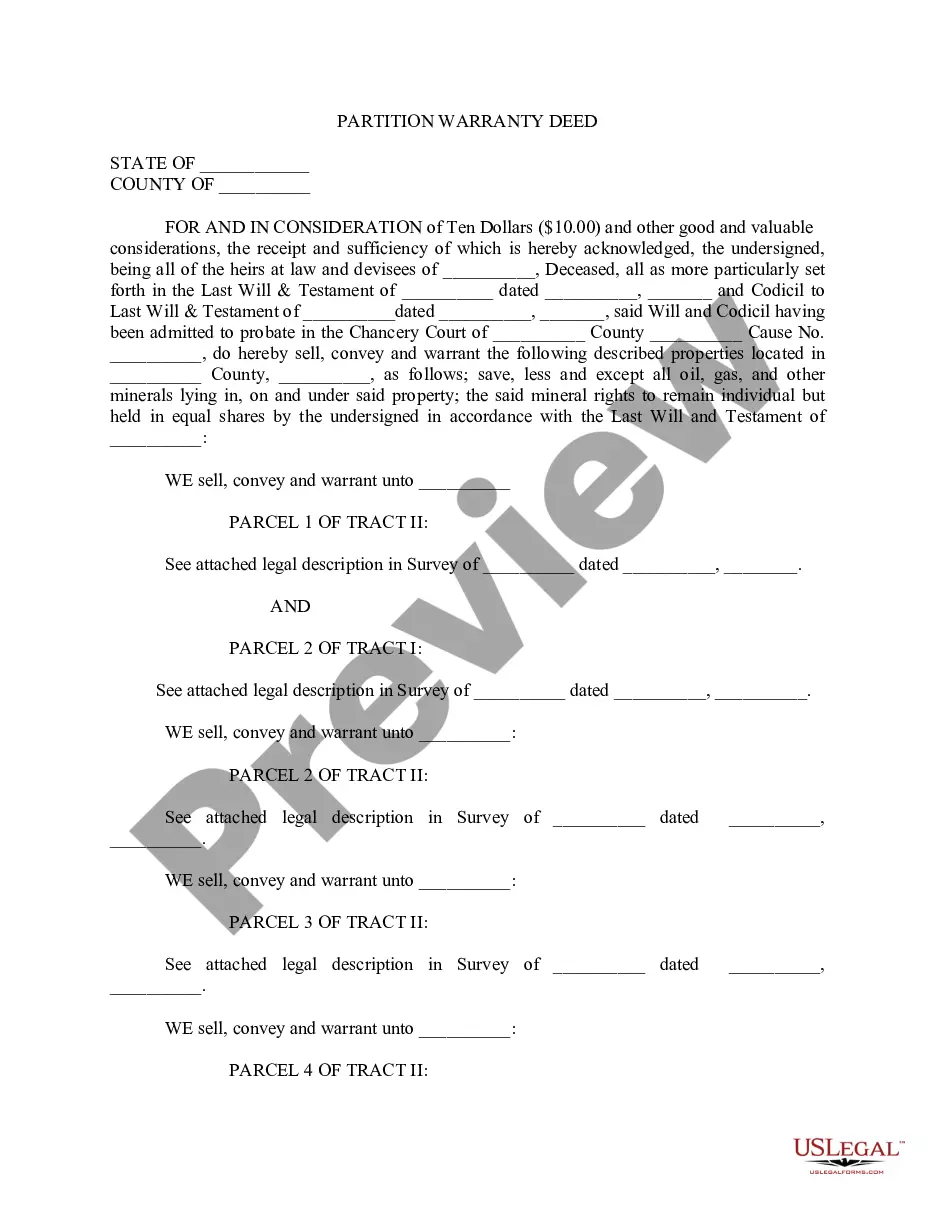
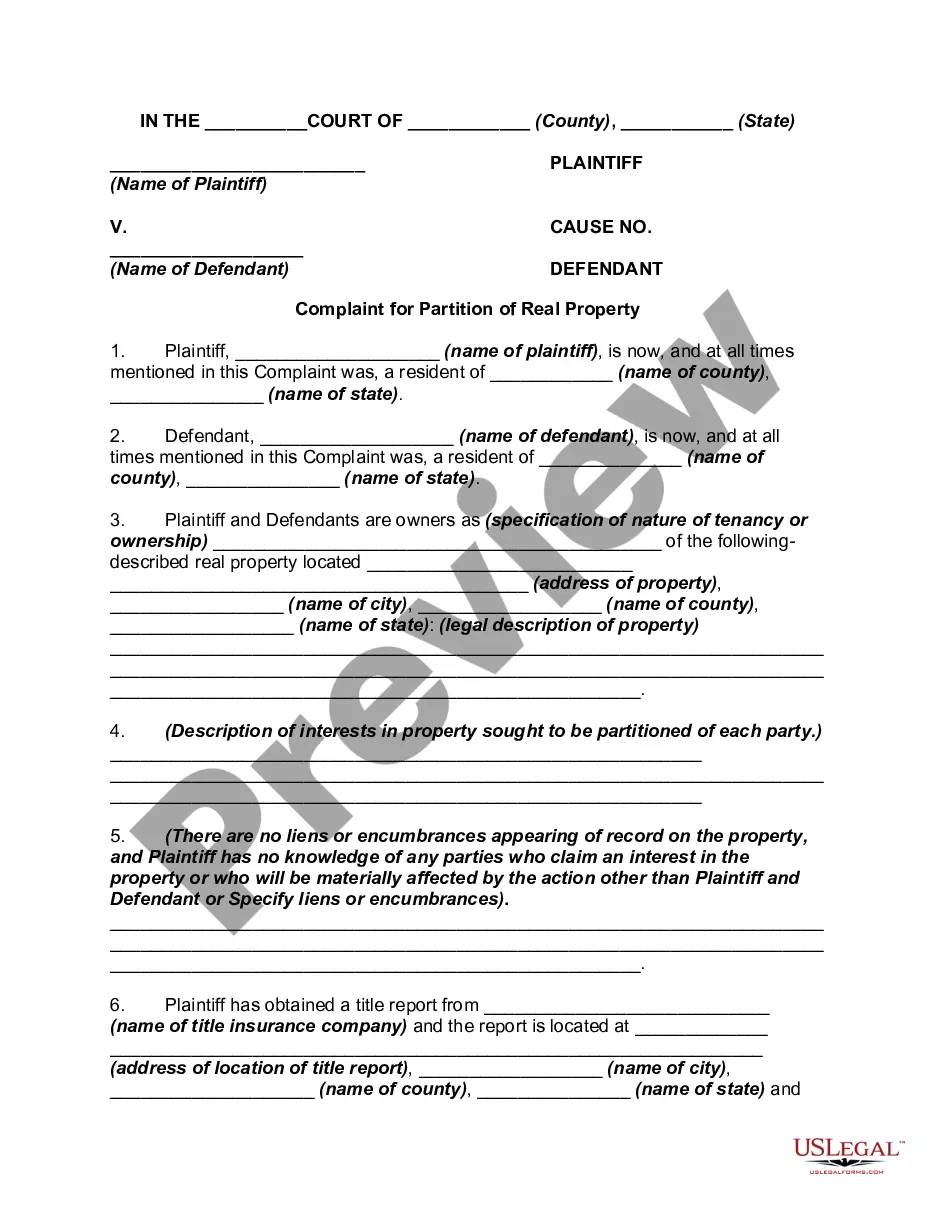
Sample Format Of Partition Agreement In Florida
Description


Get your form ready online
Our built-in tools help you complete, sign, share, and store your documents in one place.
Make edits, fill in missing information, and update formatting in US Legal Forms—just like you would in MS Word.
Download a copy, print it, send it by email, or mail it via USPS—whatever works best for your next step.
Sign and collect signatures with our SignNow integration. Send to multiple recipients, set reminders, and more. Go Premium to unlock E-Sign.
If this form requires notarization, complete it online through a secure video call—no need to meet a notary in person or wait for an appointment.
We protect your documents and personal data by following strict security and privacy standards.

Make edits, fill in missing information, and update formatting in US Legal Forms—just like you would in MS Word.

Download a copy, print it, send it by email, or mail it via USPS—whatever works best for your next step.

Sign and collect signatures with our SignNow integration. Send to multiple recipients, set reminders, and more. Go Premium to unlock E-Sign.

If this form requires notarization, complete it online through a secure video call—no need to meet a notary in person or wait for an appointment.

We protect your documents and personal data by following strict security and privacy standards.
Looking for another form?








Form popularity
FAQ
The actual time it takes from when a partition case is filed to when the land is partitioned physically, by sale, or by set-off varies from case to case. In general, partition cases can take several months or even years to resolve.
To win a partition action can take anywhere from a couple of months to reach a settlement agreement to a year or more if it goes to a court trial.
There's no set length for how long a civil lawsuit takes in Florida. Most Florida civil lawsuits take several months to a few years. Different factors determine their length before their conclusion. This includes the type of case, its complexity, witnesses and injury severity.
Defenses to the Partition Actions in Florida The only applicable defense to a partition action would be if the owners waived their right to partition. The three ways in which the owners may waive their rights to partition are: (1) verbally, (2) in an implied manner, or (3) in writing.
The co-owner who wishes to sell the property or the estate's personal representative can file a partition action, or a formal adversarial lawsuit, in the probate proceeding under Florida Statutes §733.814 at any time before the estate is closed.
In another words, it is a way for co-owners of land to terminate their relationship with the other co-owners. In a partition case, the Court will order an equal division of the property if the property can be spilt into equal parts of equal value or apportioned ing to ownership interests.
