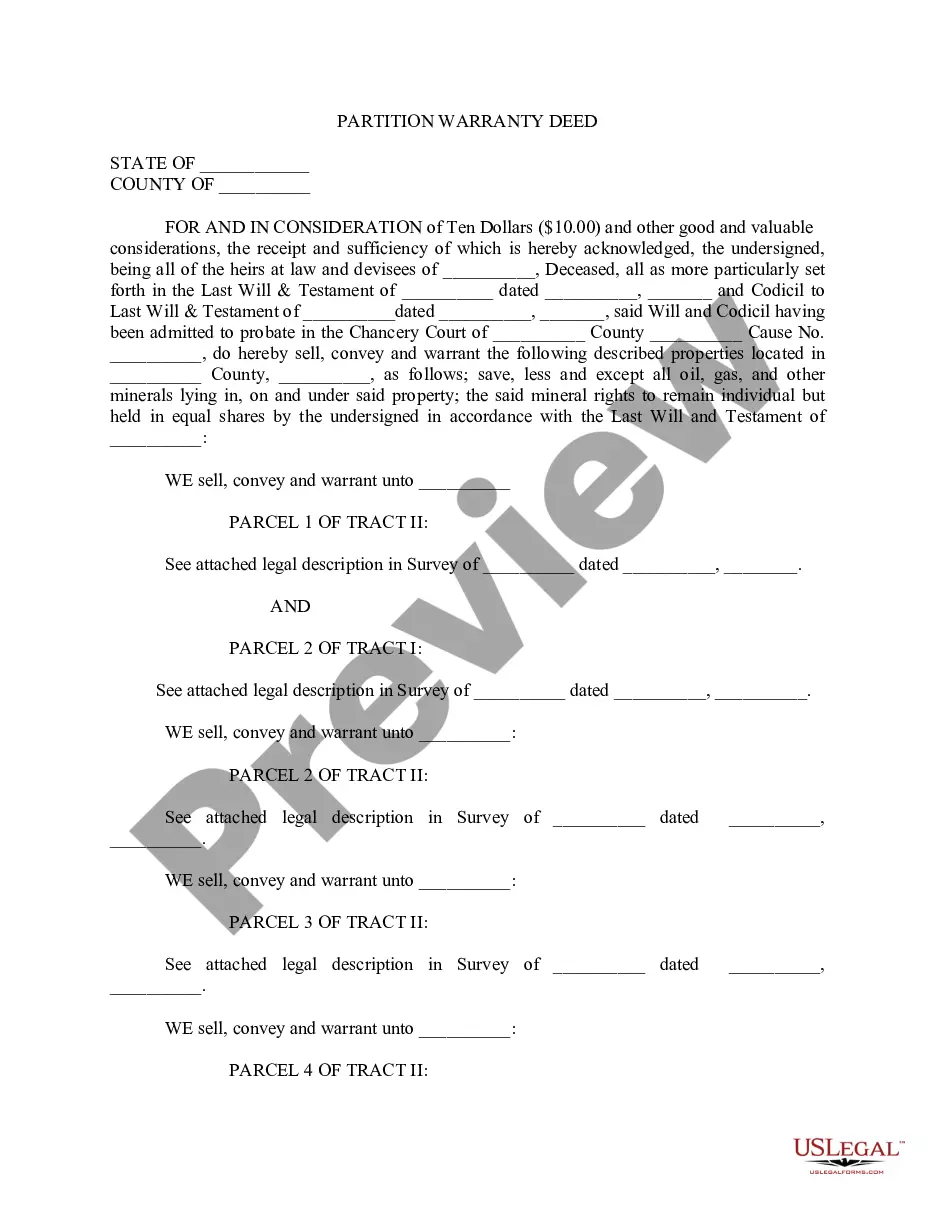
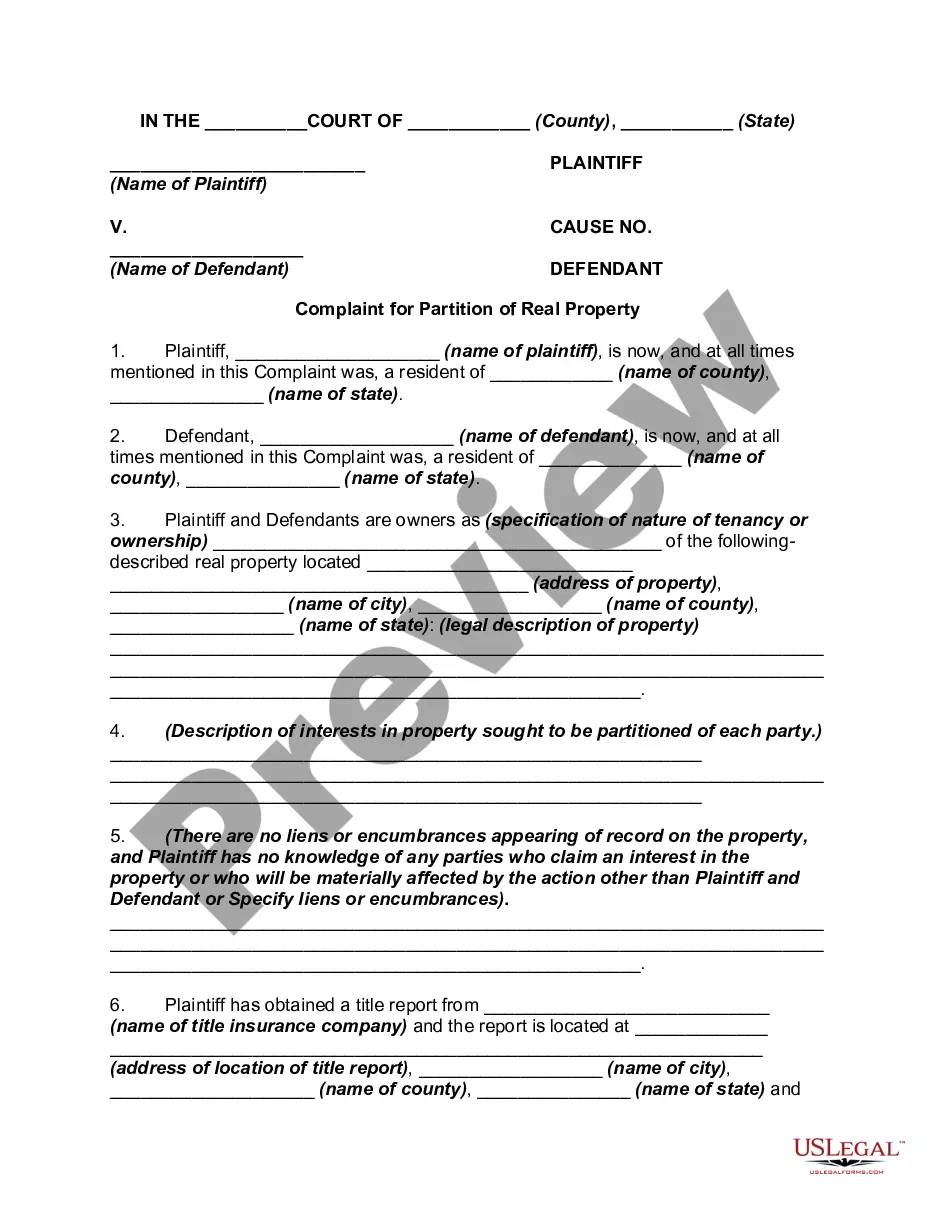
Partition Agreement Template With Sale In Florida
Description

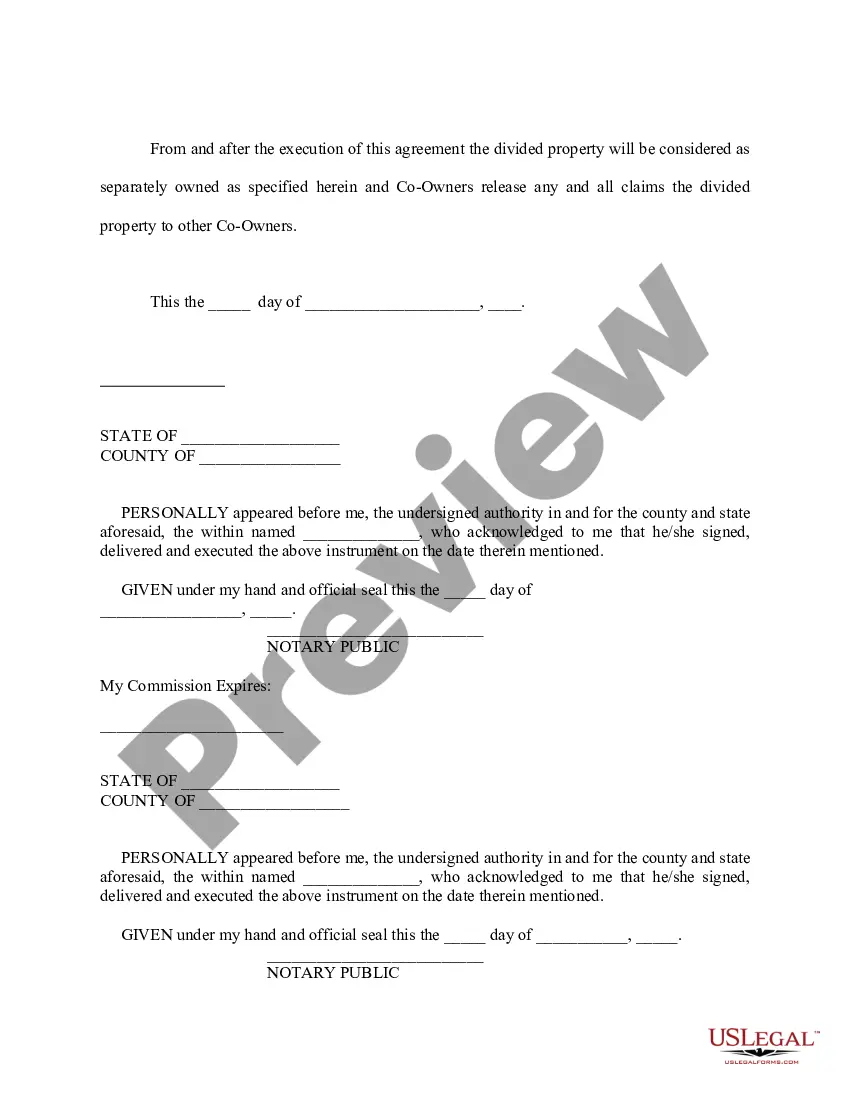
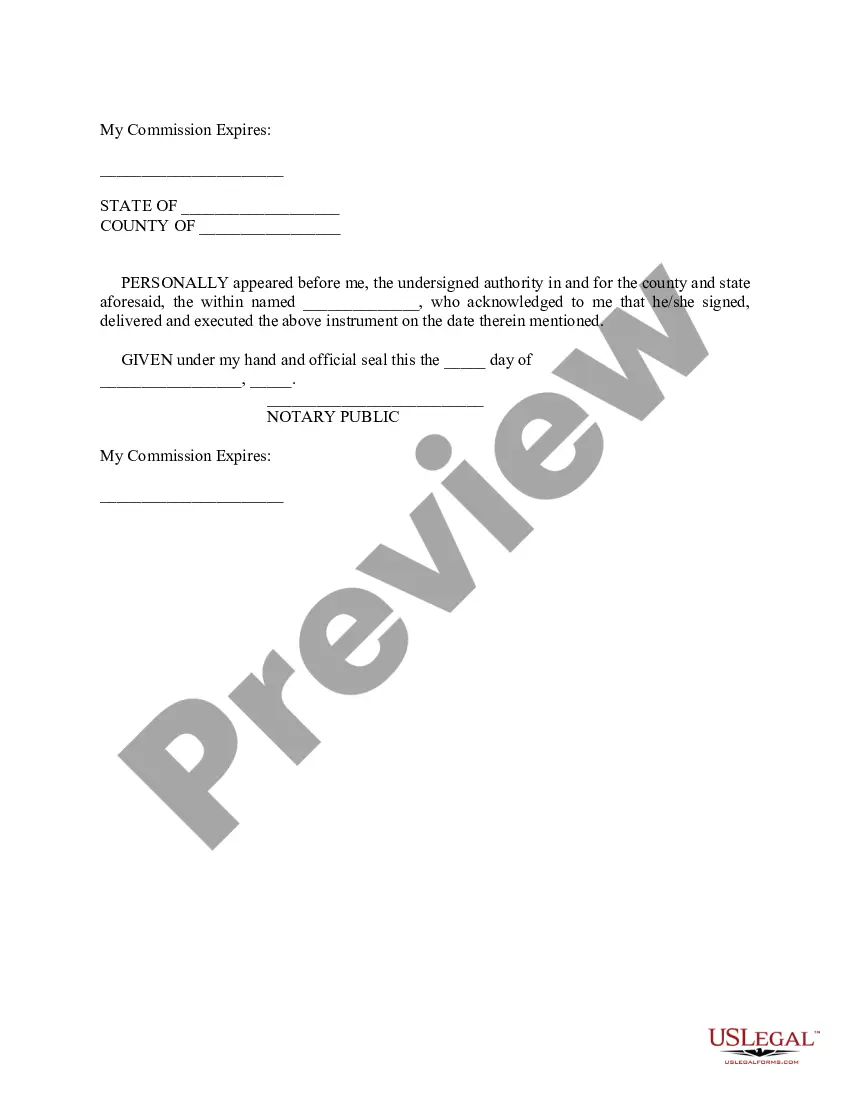
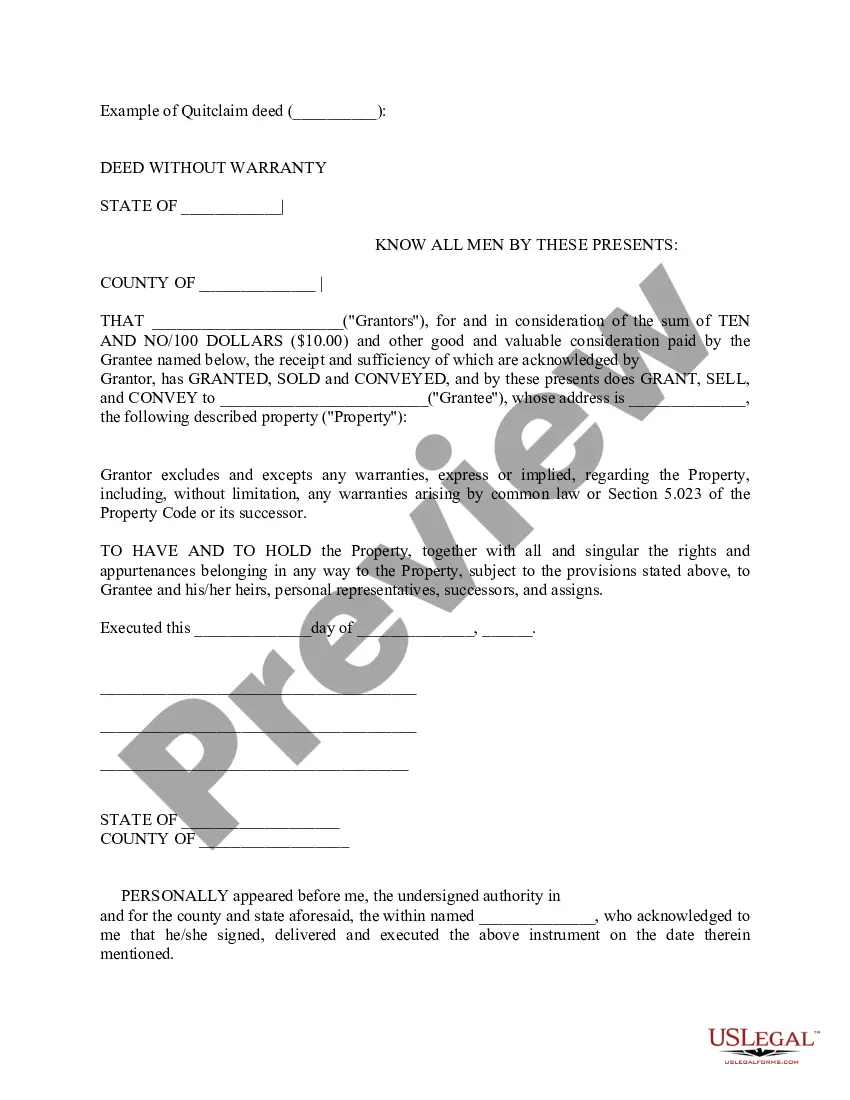
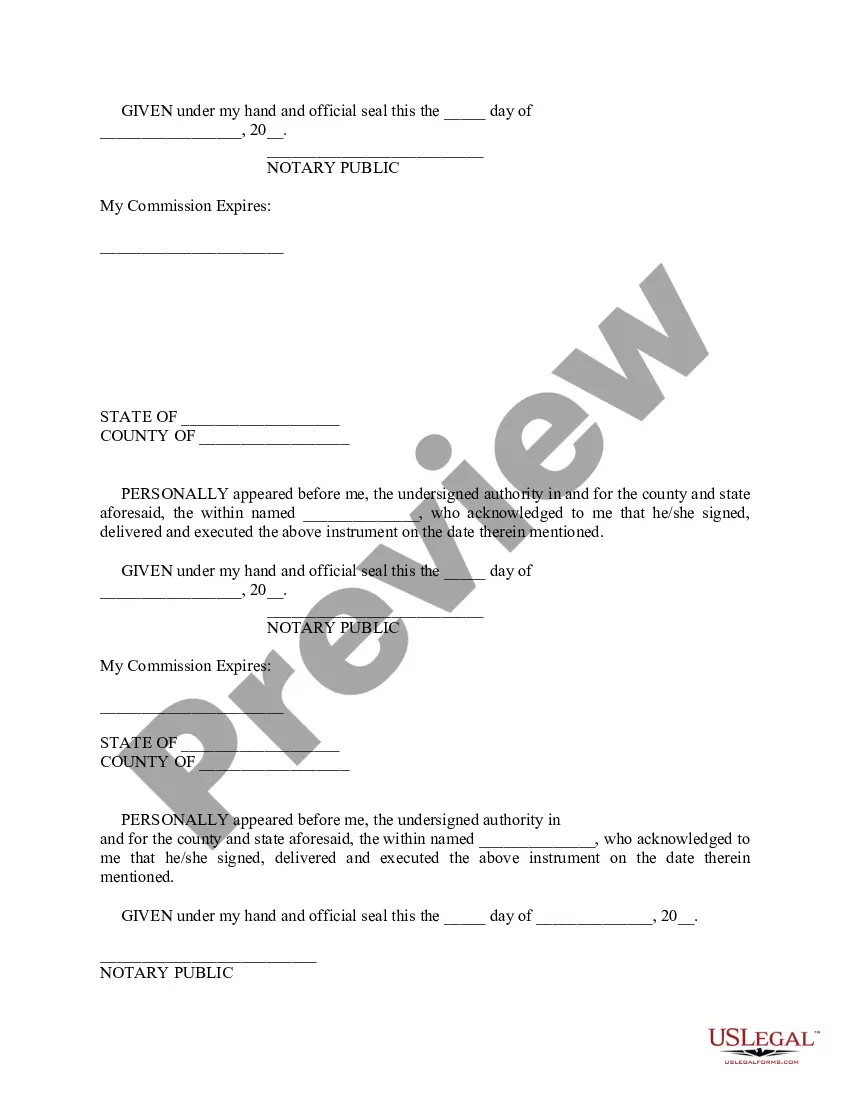

Get your form ready online
Our built-in tools help you complete, sign, share, and store your documents in one place.
Make edits, fill in missing information, and update formatting in US Legal Forms—just like you would in MS Word.
Download a copy, print it, send it by email, or mail it via USPS—whatever works best for your next step.
Sign and collect signatures with our SignNow integration. Send to multiple recipients, set reminders, and more. Go Premium to unlock E-Sign.
If this form requires notarization, complete it online through a secure video call—no need to meet a notary in person or wait for an appointment.
We protect your documents and personal data by following strict security and privacy standards.

Make edits, fill in missing information, and update formatting in US Legal Forms—just like you would in MS Word.

Download a copy, print it, send it by email, or mail it via USPS—whatever works best for your next step.

Sign and collect signatures with our SignNow integration. Send to multiple recipients, set reminders, and more. Go Premium to unlock E-Sign.

If this form requires notarization, complete it online through a secure video call—no need to meet a notary in person or wait for an appointment.

We protect your documents and personal data by following strict security and privacy standards.
Looking for another form?


Form popularity
FAQ
Litigants or parties representing themselves in court without the assistance of an attorney are known as pro se litigants. "Pro se" is Latin for "in one's own behalf." The right to appear pro se in a civil case in federal court is contained in a statute 28 U.S.C. § 1654.
To successfully bring a property partition case, the parties must demonstrate an irreconcilable difference in their asset holdings. They should also argue that the division of assets would be in the best interests of both parties.
In Florida, under the language of the Florida Partition Statute (Florida Statute 64.031), a partition action is not available to an owner of a life estate seeking to partition against remaindermen. Related: If you found this information helpful, please share this article and bookmark it for your future reference.
Under Florida law, the partition process must comply with the Florida Statutes – Chapter 64 – titled “Partition of Property.” The first part of the partition action is the filing of the complaint. By statute, the complaint shall include the following: “A description of the lands of which partition is demanded”
In Florida, under the language of the Florida Partition Statute (Florida Statute 64.031), a partition action is not available to an owner of a life estate seeking to partition against remaindermen. Related: If you found this information helpful, please share this article and bookmark it for your future reference.
