Restrictive Covenants In Land Law In Pima
Description

Get your form ready online
Our built-in tools help you complete, sign, share, and store your documents in one place.
Make edits, fill in missing information, and update formatting in US Legal Forms—just like you would in MS Word.
Download a copy, print it, send it by email, or mail it via USPS—whatever works best for your next step.
Sign and collect signatures with our SignNow integration. Send to multiple recipients, set reminders, and more. Go Premium to unlock E-Sign.
If this form requires notarization, complete it online through a secure video call—no need to meet a notary in person or wait for an appointment.
We protect your documents and personal data by following strict security and privacy standards.

Make edits, fill in missing information, and update formatting in US Legal Forms—just like you would in MS Word.

Download a copy, print it, send it by email, or mail it via USPS—whatever works best for your next step.

Sign and collect signatures with our SignNow integration. Send to multiple recipients, set reminders, and more. Go Premium to unlock E-Sign.

If this form requires notarization, complete it online through a secure video call—no need to meet a notary in person or wait for an appointment.

We protect your documents and personal data by following strict security and privacy standards.
Looking for another form?








Form popularity
FAQ
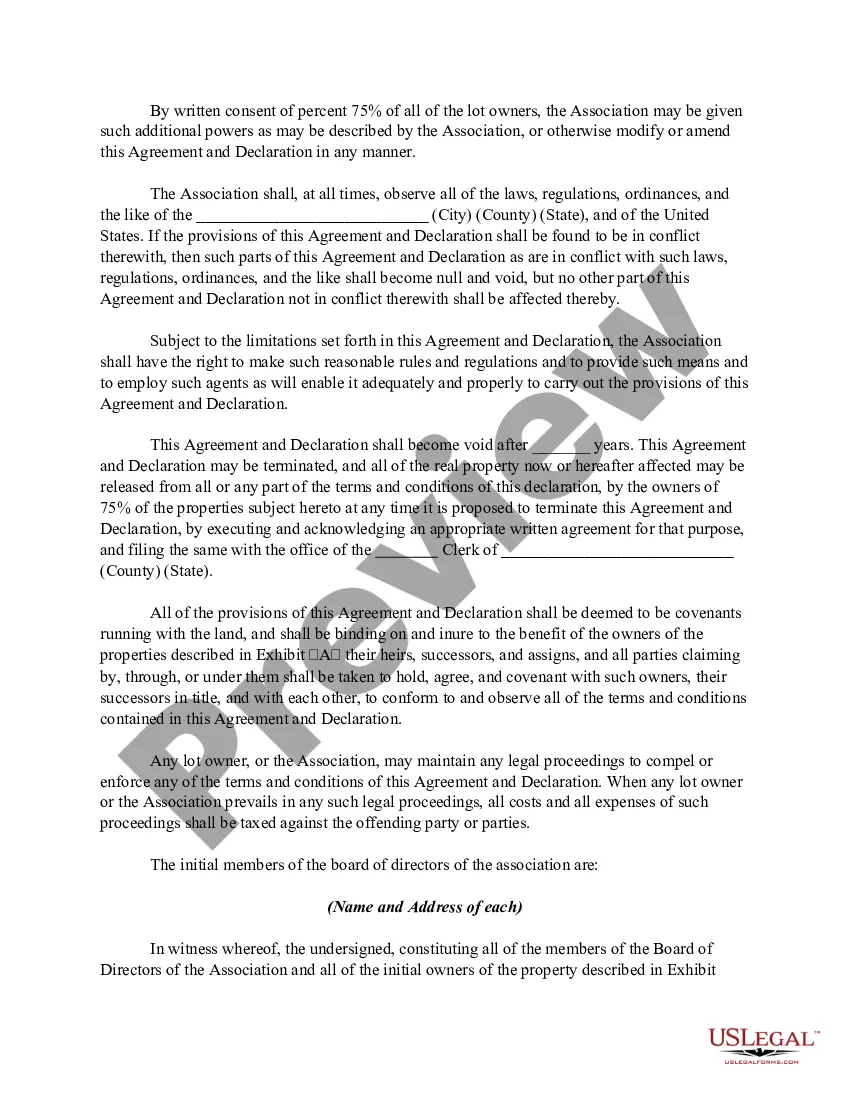
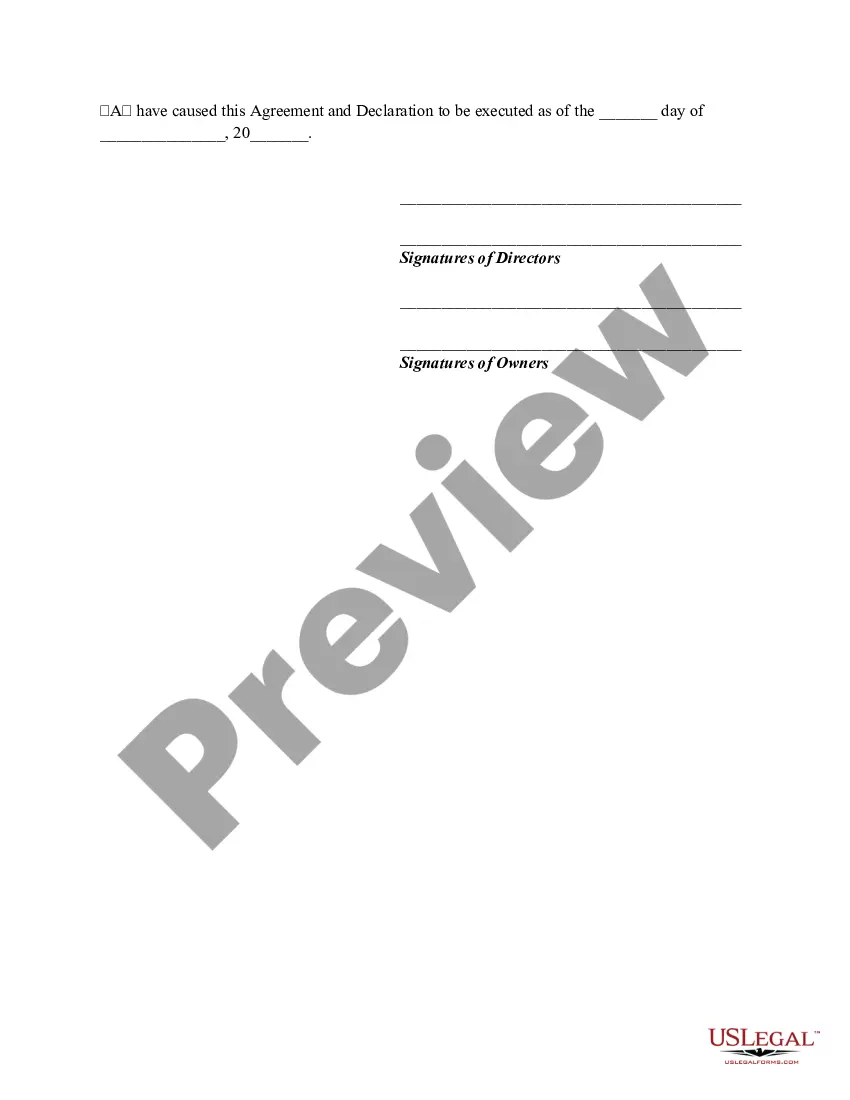
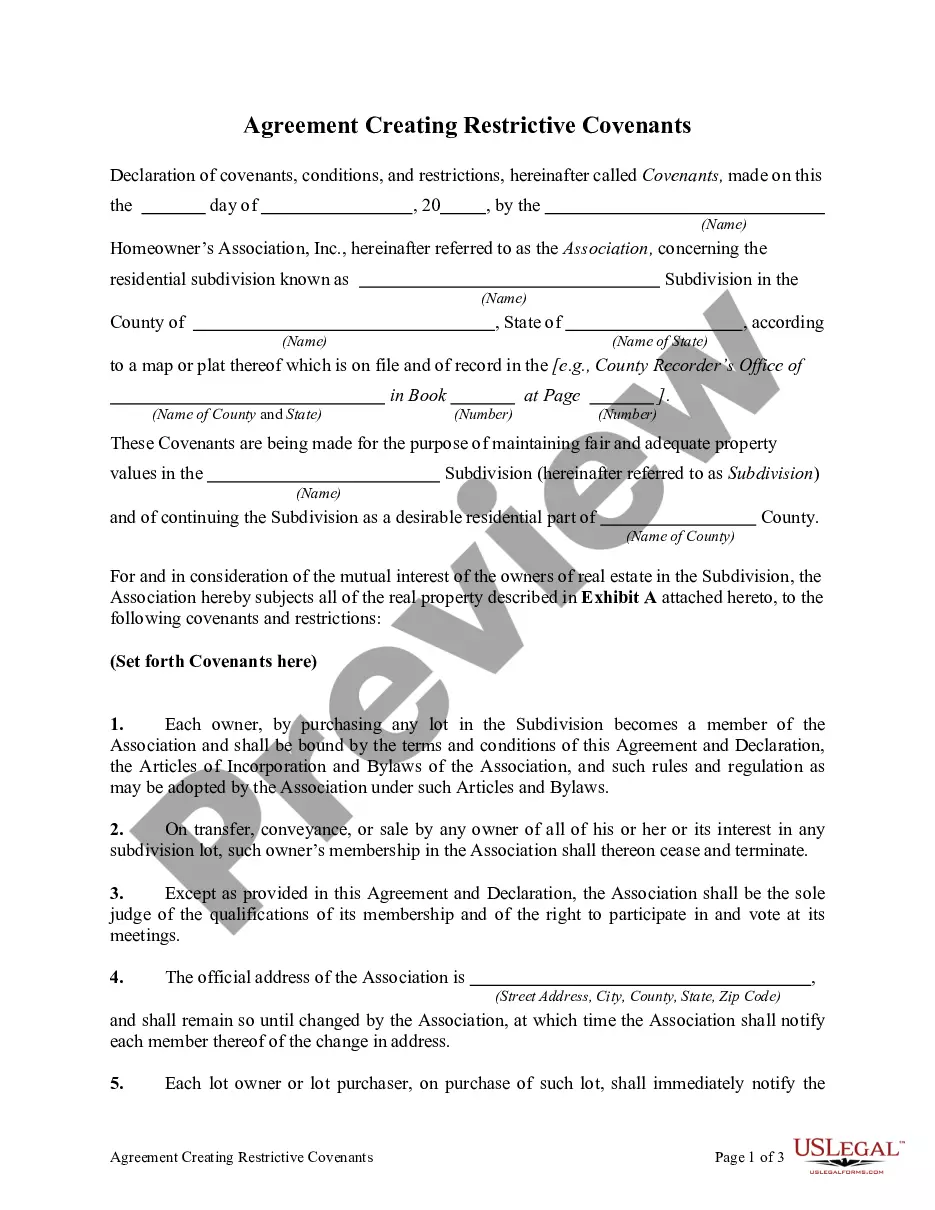
The prerequisites for a covenant to “run with the land” are these: (1) the covenants must have been enforceable between the original parties, such enforceability being a question of contract law except insofar as the covenant must satisfy the statute of frauds; (2) the covenant must “touch and concern” both the land to ...
In the United States, employers generally use four types of restrictive covenants: (1) covenants not to compete for a certain period of time following the employee's termination from employment (or following a business transaction such as a sale, merger, etc.); (2) covenants not to solicit customers or clients for a ...
A restrictive covenant is simply an agreement whereby an employee agrees to, upon conclusion of the employment relationship, forego engaging in certain competitive conduct with the former employer for a specified period of time and within a set location.
In Arizona, CC&Rs are usually enforced by homeowners associations (HOAs). In many cases, however, they may also be enforced by individual homeowners.
411, 417 (Ct. App. 2013) (“A restriction on a former employee's right to compete against a former employer is enforceable, but only if the restriction is limited in time and in geography.”); Valley Med. Specialists, 194 Ariz.
In the minority of jurisdictions, like California, courts will likewise disregard the fact that something is labelled as a covenant not to solicit customers and/or clients, and may instead deem it akin to a covenant not to compete and treat it as such.
The easiest way to elude the requirements of a restrictive covenant is to simply ignore it. Covenants can become unenforceable if they expire, if there is a history of the covenant being violated, or if there is no individual or group benefiting from them.
A Deed of Release: This is a legal document, signed by all parties, that formally removes restrictive covenants from a property. Typically, all beneficiaries are party to this deed, as it releases them from their benefits over the property.
How do I challenge a restrictive covenant? Express release: It may be possible to negotiate the release or variation of a restrictive covenant. Indemnity insurance: It is possible to obtain indemnity insurance to protect against the risk of a person with the benefit of a restrictive covenant seeking to enforce it.
Deed restrictions are often used to protect the value of neighboring properties by limiting the types of activities that can take place on the restricted property. Common examples of deed restrictions include prohibitions against commercial development, minimum lot size, and maximum building height.
