Covenant Agreement Meaning In Contra Costa
Description

Get your form ready online
Our built-in tools help you complete, sign, share, and store your documents in one place.
Make edits, fill in missing information, and update formatting in US Legal Forms—just like you would in MS Word.
Download a copy, print it, send it by email, or mail it via USPS—whatever works best for your next step.
Sign and collect signatures with our SignNow integration. Send to multiple recipients, set reminders, and more. Go Premium to unlock E-Sign.
If this form requires notarization, complete it online through a secure video call—no need to meet a notary in person or wait for an appointment.
We protect your documents and personal data by following strict security and privacy standards.

Make edits, fill in missing information, and update formatting in US Legal Forms—just like you would in MS Word.

Download a copy, print it, send it by email, or mail it via USPS—whatever works best for your next step.

Sign and collect signatures with our SignNow integration. Send to multiple recipients, set reminders, and more. Go Premium to unlock E-Sign.

If this form requires notarization, complete it online through a secure video call—no need to meet a notary in person or wait for an appointment.

We protect your documents and personal data by following strict security and privacy standards.
Looking for another form?








Form popularity
FAQ
Here are some fundamental differences: While a contract is legally binding, a covenant is a spiritual agreement. A contract is an agreement between parties while a covenant is a pledge. A contract is an agreement you can break while a covenant is a perpetual promise.
In my experience, corporate lawyers generally use obligation and covenant interchangeably, except that many use only covenant when referring to obligations that are grouped together in a contract and that address how a given party is to conduct itself between signing and closing, while a debt remains outstanding, or in ...
Whereas two parties sign a contract, with covenants, two parties exchange promises. The big difference is even though a commitment is asked of the other party, their fulfillment of this commitment does not affect the covenant.
The three types of covenants are positive, negative, and financial. Each contains a unique set of requirements and stipulations. Positive and negative covenants are not interchangeable as good or bad but rather refer to what borrowers can or cannot do.
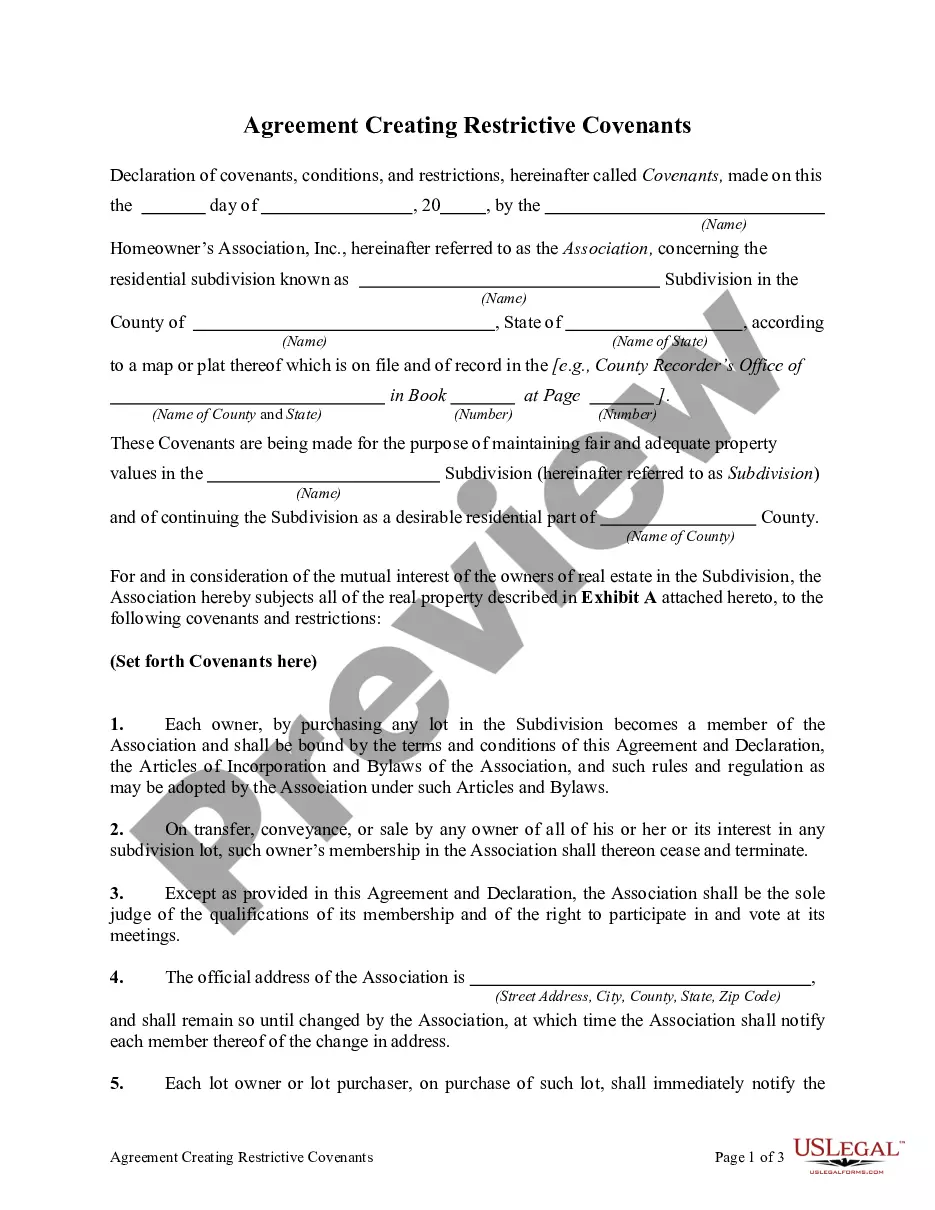
A covenant agreement is akin to a contractual agreement between parties. It often outlines terms and conditions where a party will perform a certain action or refrain from performing a certain action. Covenants are legally binding and enforceable.
Covenant: Has a party promised to do something in the future? A covenant creates a duty to perform, also known as an obligation.
Covenants are clauses in the agreement that require the borrower to do or avoid doing certain things and are often tied to the business' financial performance. A single agreement can include multiple covenants.
A bond covenant sets out certain activities that must be undertaken, or what activities are forbidden, by a bond issuer. Covenants are legally binding clauses, and if breached will trigger compensatory or other legal action.
