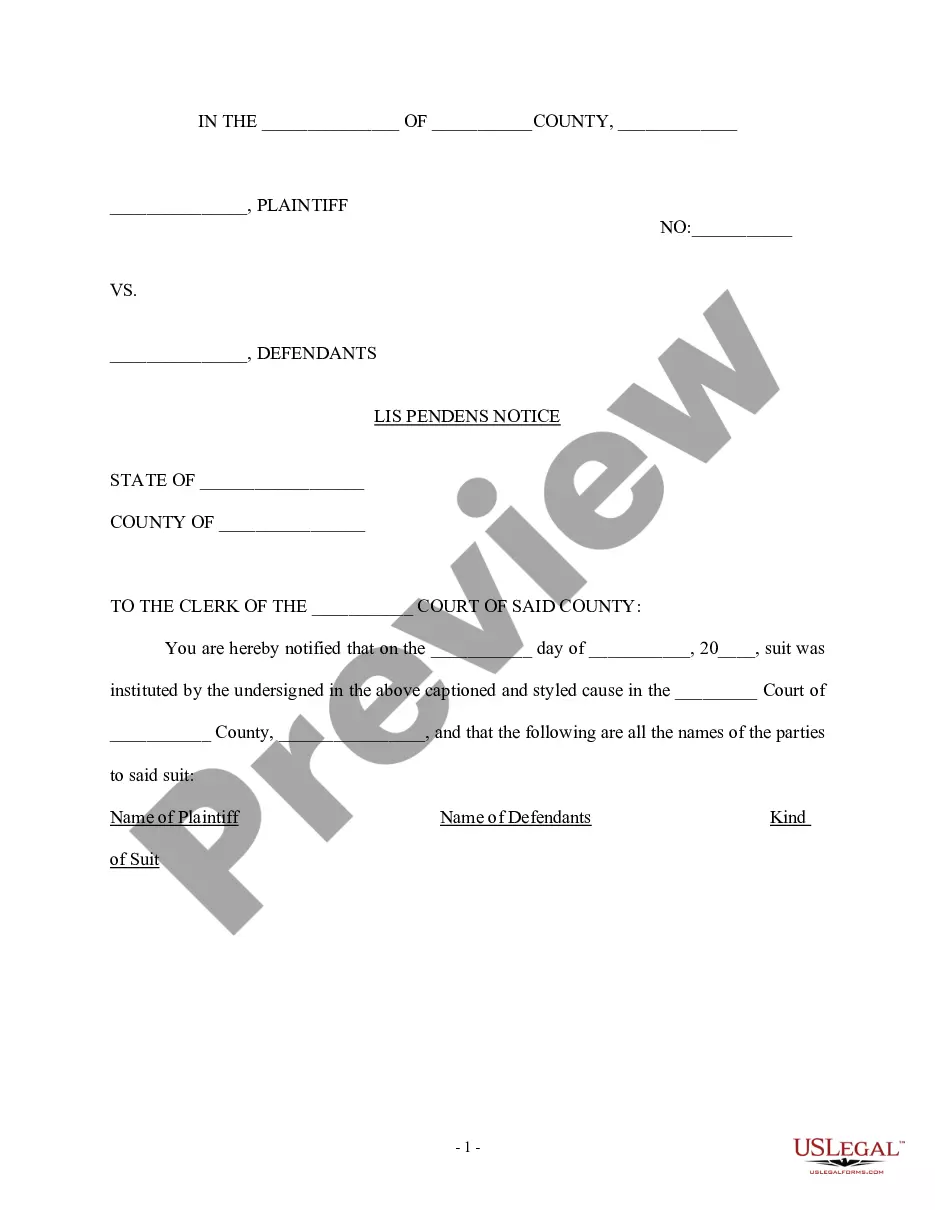
Release Lis Pendens Form Withdrawal In Hillsborough
Description

Get your form ready online
Our built-in tools help you complete, sign, share, and store your documents in one place.
Make edits, fill in missing information, and update formatting in US Legal Forms—just like you would in MS Word.
Download a copy, print it, send it by email, or mail it via USPS—whatever works best for your next step.
Sign and collect signatures with our SignNow integration. Send to multiple recipients, set reminders, and more. Go Premium to unlock E-Sign.
If this form requires notarization, complete it online through a secure video call—no need to meet a notary in person or wait for an appointment.
We protect your documents and personal data by following strict security and privacy standards.

Make edits, fill in missing information, and update formatting in US Legal Forms—just like you would in MS Word.

Download a copy, print it, send it by email, or mail it via USPS—whatever works best for your next step.

Sign and collect signatures with our SignNow integration. Send to multiple recipients, set reminders, and more. Go Premium to unlock E-Sign.

If this form requires notarization, complete it online through a secure video call—no need to meet a notary in person or wait for an appointment.

We protect your documents and personal data by following strict security and privacy standards.
Looking for another form?








Form popularity
FAQ
To change your name legally as an adult, you must petition the court for permission to do so. An adult is 18 years or older in age. The petition must be filed in the county where you live. Fingerprints are required for all name changes, except where a previous name is being restored.
To change your name legally as an adult, you must petition the court for permission to do so. An adult is 18 years or older in age. The petition must be filed in the county where you live. Fingerprints are required for all name changes, except where a previous name is being restored.
To do so, you will need to complete the following steps: Have your fingerprints taken. Make a Petition for Name Change. Notarize your completed Florida Name Change Petition. File your notarized Florida Name Change Petition with your local court. Attend the hearing on your court date. Get certified copies of the Order.
This description usually includes the legal description found in the previous deed the streetMoreThis description usually includes the legal description found in the previous deed the street address. And the property folio number used by the property appraiser. Once you have all the documents.
What Does Lis Pendens Mean? Lis pendens is a Latin term that literally means “lawsuit pending.” In a modern context, it is a notice filed against real estate that is under the control of the courts because of a pending lawsuit. It is often referred to as a “cloud on title”.
A wrongfully filed lis pendens can be removed by the judge in the case in which it was filed. The party seeking to remove it must file a motion and address why the lis pendens is improper under Florida law.
Recording Services Recording Services and Fees are limited to recording, indexing, and filing any instrument not greater than 8 1/2 X 14 inches. First page or fraction thereof$10.00 Each additional page $19.50 Preparing Affidavit of Domicile $5.00 Lis Pendens first page $5.006 more rows
(2) A notice of lis pendens is not effectual for any purpose beyond 1 year from the commencement of the action and will expire at that time, unless the relief sought is disclosed by the pending pleading to be founded on a duly recorded instrument or on a lien claimed under part I of chapter 713 against the property ...
A lis pendens can be challenged if it is not “founded on a duly recorded instrument.” When a pending pleading does not show that an action is “founded on a duly recorded instrument,” a court may control and discharge the recorded notice of lis pendens.

