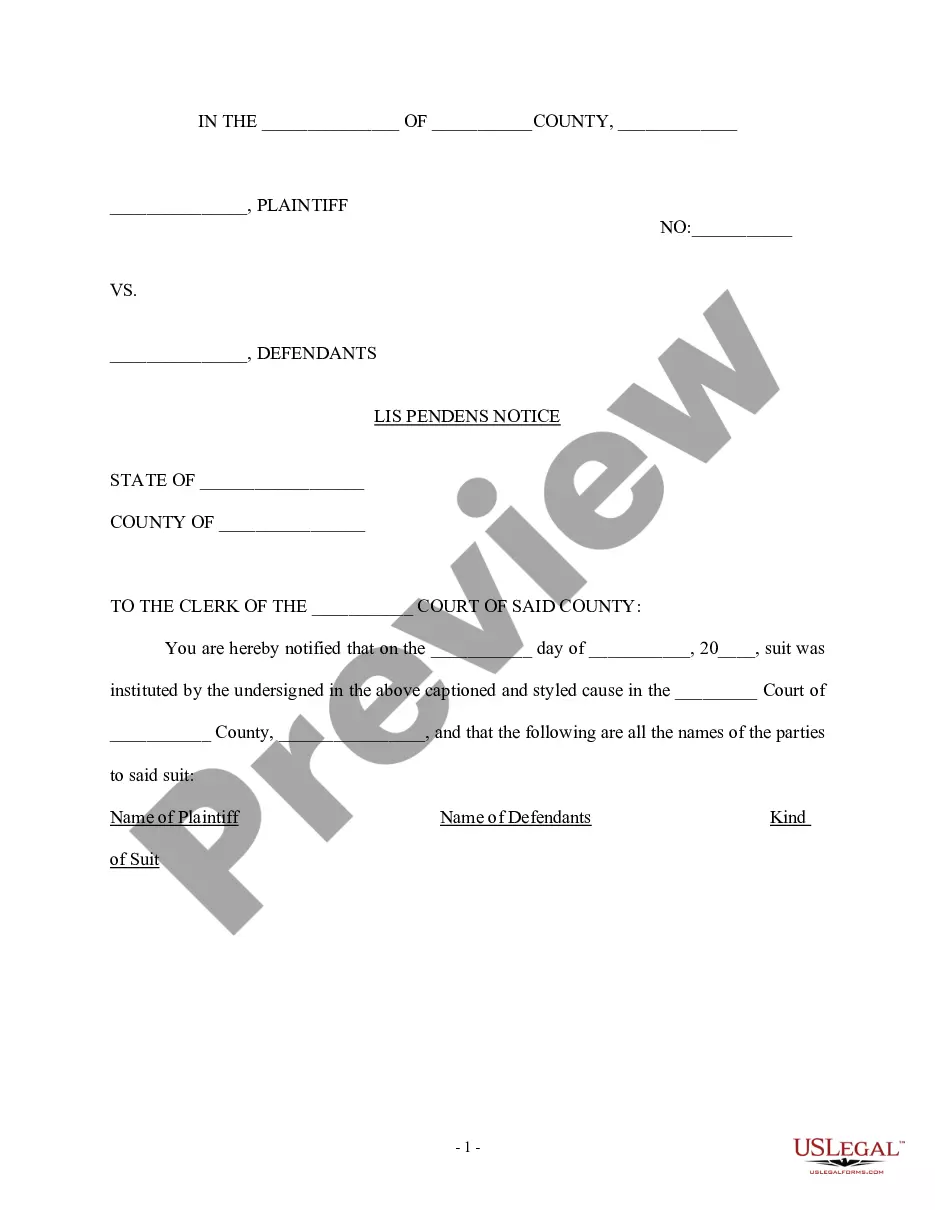
Lis Pendens Withdrawal Form California In Cook
Description

Get your form ready online
Our built-in tools help you complete, sign, share, and store your documents in one place.
Make edits, fill in missing information, and update formatting in US Legal Forms—just like you would in MS Word.
Download a copy, print it, send it by email, or mail it via USPS—whatever works best for your next step.
Sign and collect signatures with our SignNow integration. Send to multiple recipients, set reminders, and more. Go Premium to unlock E-Sign.
If this form requires notarization, complete it online through a secure video call—no need to meet a notary in person or wait for an appointment.
We protect your documents and personal data by following strict security and privacy standards.

Make edits, fill in missing information, and update formatting in US Legal Forms—just like you would in MS Word.

Download a copy, print it, send it by email, or mail it via USPS—whatever works best for your next step.

Sign and collect signatures with our SignNow integration. Send to multiple recipients, set reminders, and more. Go Premium to unlock E-Sign.

If this form requires notarization, complete it online through a secure video call—no need to meet a notary in person or wait for an appointment.

We protect your documents and personal data by following strict security and privacy standards.
Looking for another form?








Form popularity
FAQ
There is no specific time frame for how long a lis pendens is valid. Rather, a lis pendens is valid until it is expunged or the underlying case is resolved. If not expunged, a lis pendens is often removed as part of a settlement agreement reached between the parties.
The signature on the notice of release of a lis pendens must be notarized. The notice must then be recorded in the office of the county recorder for the county in which the original lis pendens was recorded.
Releasing a lis pendens in California requires that the party that signed the original lis pendens, or their successor in interest, must sign and record the notice of release of lis pendens . The signature on the notice of release of a lis pendens must be notarized.
Second, sellers can file a request with the Court to cancel the Notice of Pendency for legal reasons early in the case. This takes longer than an agreement, but is much faster than going through the entire case before the lien is dismissed.
California Code of Civil Procedure section 405.30 allows a property owner to remove a lis pendens by bringing a “motion to expunge.” There are several bases for a motion to expunge, including: (1) the lack of a real property claim, (2) the claimant's failure to establish a “probable validity of their claim, or (3) the ...
Other than resolution of the pending lawsuit, the only way to remove a lis pendens is by expungement, which requires a court order from a circuit judge. If you refuse service or the action is otherwise delayed, the lis pendens remains intact, making it difficult to sell or otherwise transfer a property.
Only an attorney or the court can sign a lis pendens. If your attorney filed the lis pendens, then ask her to sign and record a Notice of Withdrawal of Lis Pendens. Give a copy of the title officer. You can record a certified copy of the dismissal of the case and that will extinguish a lis pendens.
Removing a Lis Pendens in California Other than resolution of the pending lawsuit, the only way to remove a lis pendens is by expungement, which requires a court order from a circuit judge.
